America Leaves Iraq
The U.S. mission in Iraq has ended. The competition to shape the country has already begun.
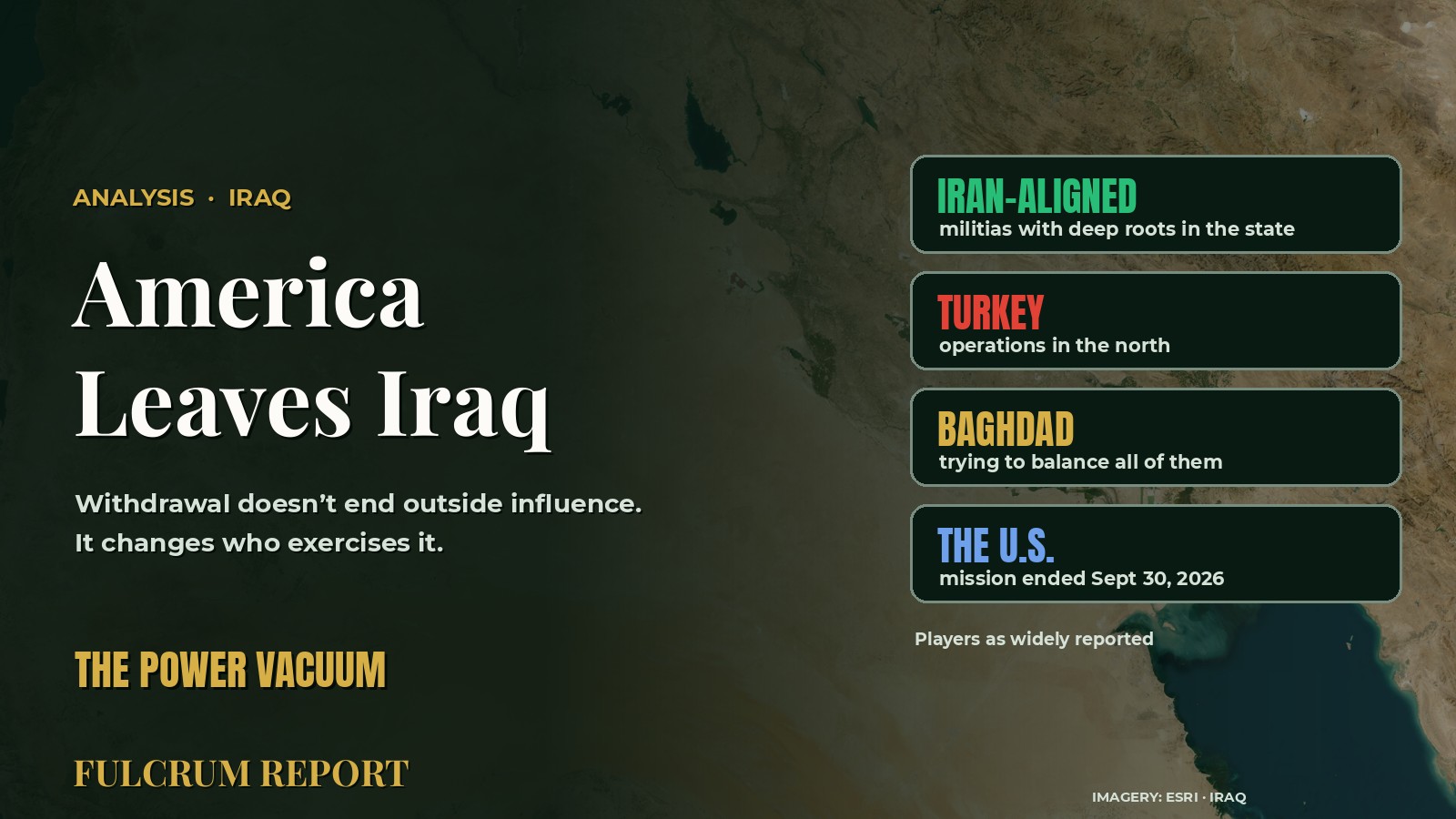
On September 30, America's military mission in Iraq officially came to an end. There was no dramatic last helicopter, no farewell parade. And that quiet is part of why I think it deserves more attention than it got.
The struggle over who shapes Iraq next didn't wait for the paperwork. It had already started.
What actually changed
The end date comes from the agreement Baghdad and Washington reached in 2024 to wind down the U.S.-led coalition mission. As reported, the drawdown has included removing Patriot and C-RAM air defense systems from the Kurdistan Region, the systems that had been protecting places like the air base at Erbil from rockets and drones.
That detail matters more than it sounds. Air defense is the kind of thing you only notice when it's gone. For the Kurdistan Region, which has spent years absorbing strikes from across the border, losing that umbrella changes the math.
Two other things happened around the same time. The deadline for disarming Iraq's armed factions, originally set for the same September 30 date, was reportedly pushed back to June 30, 2027 after talks with the Coordination Framework, the bloc of mostly Shia parties that dominates parliament. At least one of the most powerful groups, Kataib Hezbollah, has been reported as rejecting the timelines altogether.
And on October 12, drones hit the Azadi camp near Koya in the Kurdistan Region, home to families linked to the Kurdistan Democratic Party of Iran, an Iranian Kurdish opposition group. Reports attributed the strike to Iran and said the site had been evacuated, with no casualties. It wasn't a one-off either. There was another strike in Khabat district a few days earlier, and Kurdish officials have counted more than a thousand Iranian attacks on the region since late February, as reported.
Put those three things side by side, the air defenses leaving, the disarmament deadline slipping and the drones still flying, and you get a pretty clear picture of a country where the pressure didn't leave with the Americans.
The idea that explains it
Political scientists have a fairly blunt way of describing this. When a dominant power withdraws, others compete to fill the space. It's usually called a power vacuum, and I'll be honest, the phrase is a little overused. But it fits here, with one caveat I'll come back to.
The point isn't that the United States was holding Iraq together on its own. It wasn't. The point is that its presence shaped what everyone else thought they could get away with. Take it out, and every other actor recalculates.
Who's competing
In Iraq, I'd say three players stand out.
The first is the network of Iran-aligned militias. Many of them sit under the umbrella of the Popular Mobilization Forces, which are formally part of the Iraqi state and draw state salaries. That's what makes them so hard to deal with. They aren't outsiders knocking on the door. They're already inside the house, with seats in parliament and a stake in the budget. A delayed disarmament deadline gives them more time to make that position permanent.
The second is Turkey. For years Ankara has carried out military operations against the PKK in the mountains of northern Iraq, with bases and outposts well inside Iraqi territory, as has been widely reported. Turkey doesn't need the U.S. gone to operate there, but a smaller American footprint means one less major power watching what happens in the north.
The third is the government in Baghdad itself. Prime Minister Ali al-Zaidi's government is trying to do something genuinely difficult: keep good relations with Tehran, with Ankara, with Washington and with the Gulf, while also convincing its own people that Iraq is a sovereign country making its own decisions. Balancing everyone is a strategy. It's also exhausting, and it only works as long as nobody forces you to pick.
The caveat
Here's where I'd push back a bit on the simple version of the story. "Vacuum" suggests empty space. Iraq was never empty. Iran's influence has been there for two decades. Turkey's operations have been there for years. What changes is the balance between them.
That's the line I kept from the reel, because I think it's the most useful way to put it: withdrawal doesn't end outside influence. It changes who exercises it.
What I'd watch
A few things would tell us where this is going. Whether the June 2027 deadline holds, or quietly slides again. Whether strikes on the Kurdistan Region increase now that the air defenses are gone. Whether Baghdad can keep its balancing act going if the region heats up. And whether Washington's relationship with Baghdad shifts into something lighter, like training and arms sales, that keeps it in the conversation without boots on the ground.
I don't know how this ends. This is analysis, not a prediction. But I'm fairly confident about one thing: America is leaving Iraq, and the competition for Iraq isn't going anywhere.
So I'll ask you what I asked on the reel. Who do you think gains the most: Iran, Turkey or Baghdad? Tell me in the comments, and follow @fulcrumreport for analysis without agenda.

About the author
Fulcrum Report
Independent Middle East analyst holding a PhD in Political Science. Fulcrum Report offers rigorous, framework-driven coverage of politics and geopolitics across the Levant and the wider region — analysis without agenda.
Related reading
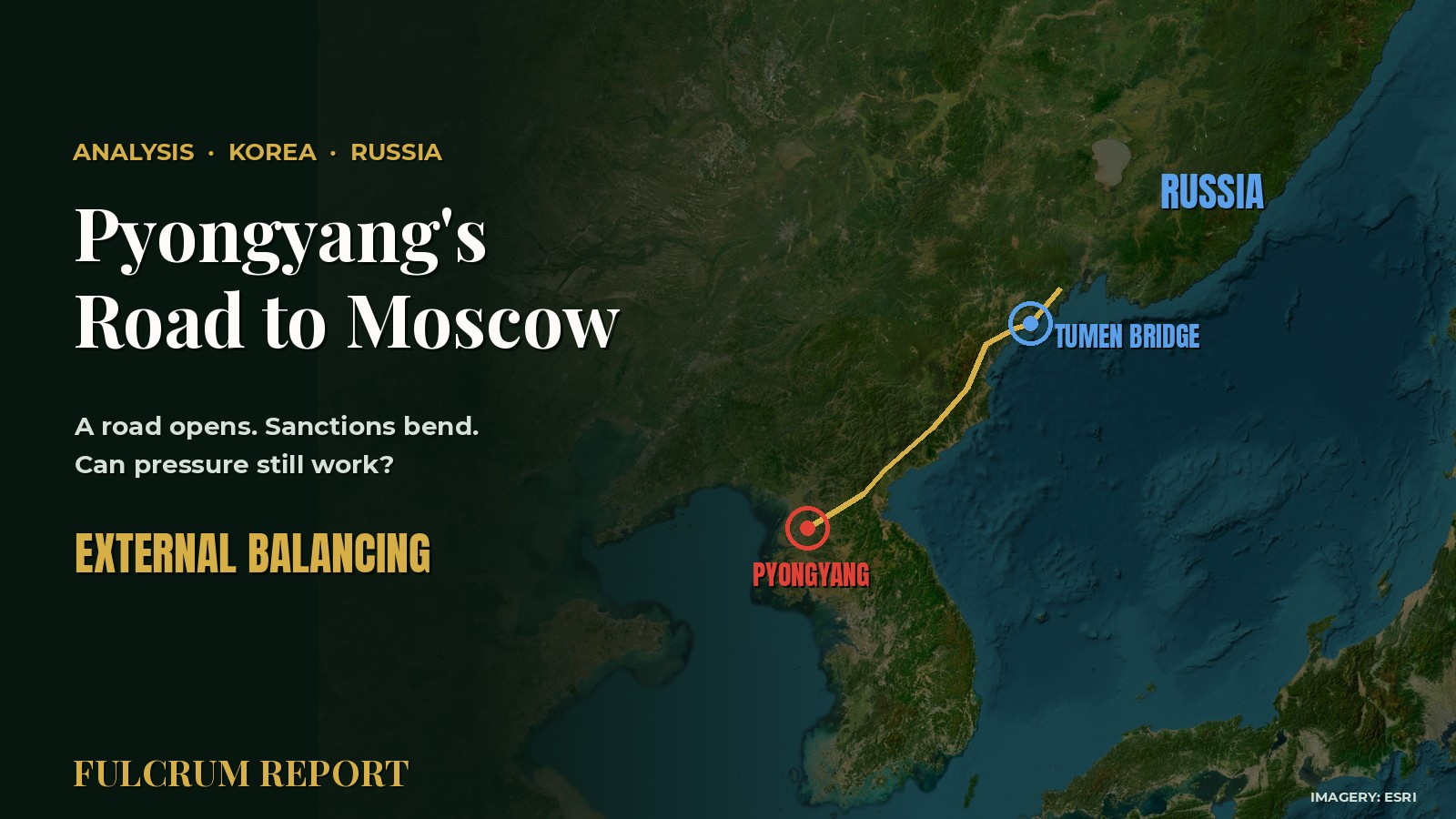
Pyongyang's Road to Moscow: Can Sanctions Still Work?
A second enrichment facility is reportedly going up at Yongbyon, and the Tumen River road bridge to Russia reportedly opened on September 8. When a major power offers a way around sanctions, how much pressure is left? An explainer on external balancing.
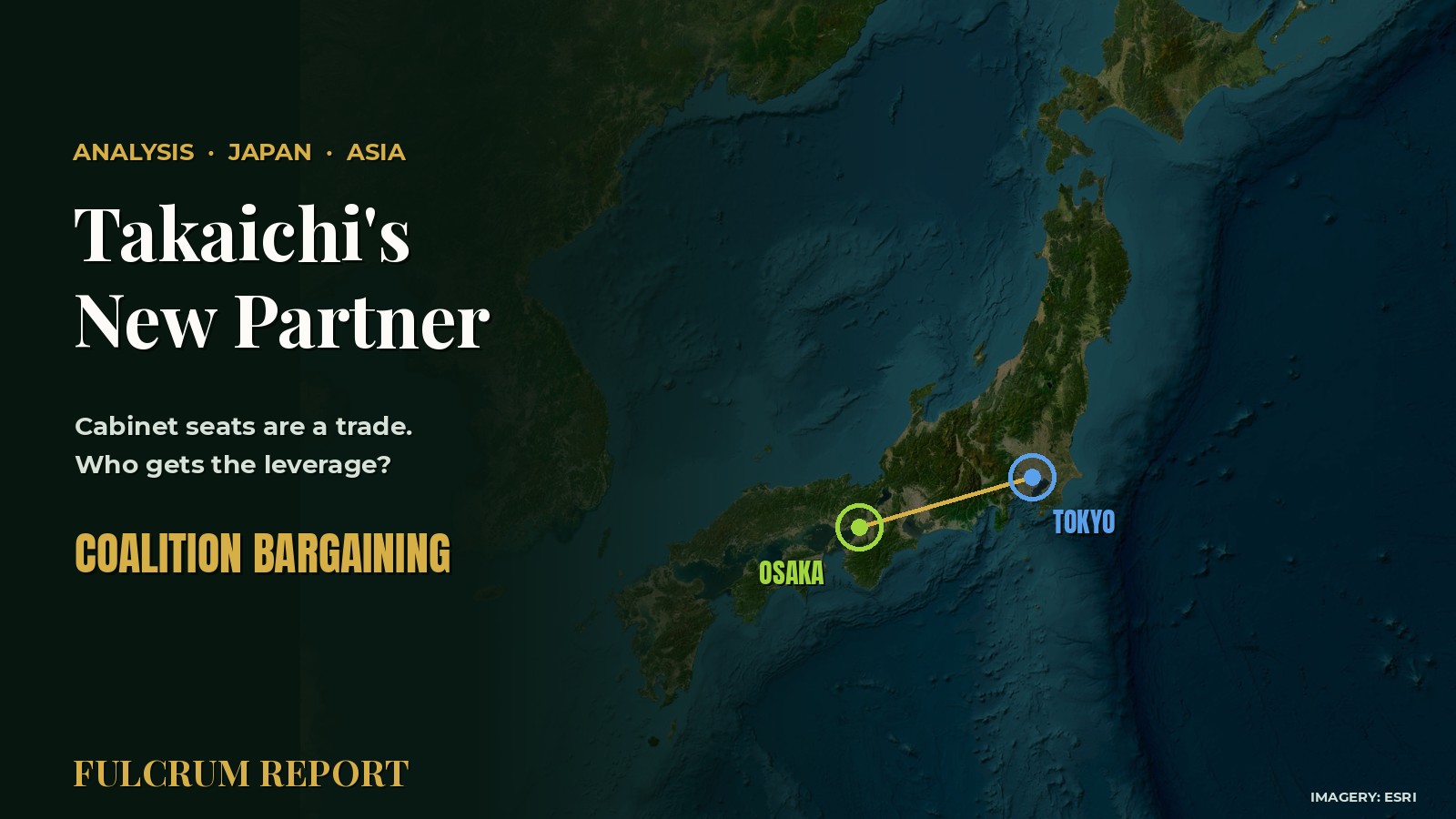
Takaichi's New Partner: Why Cabinet Seats Are a Trade
Sanae Takaichi reportedly reshuffled her cabinet on September 16 and 17, bringing in the Japan Innovation Party (Ishin) for the first time. Her camp holds two-thirds of the lower house but lacks an upper-house majority. A look at coalition bargaining and who gets the leverage.
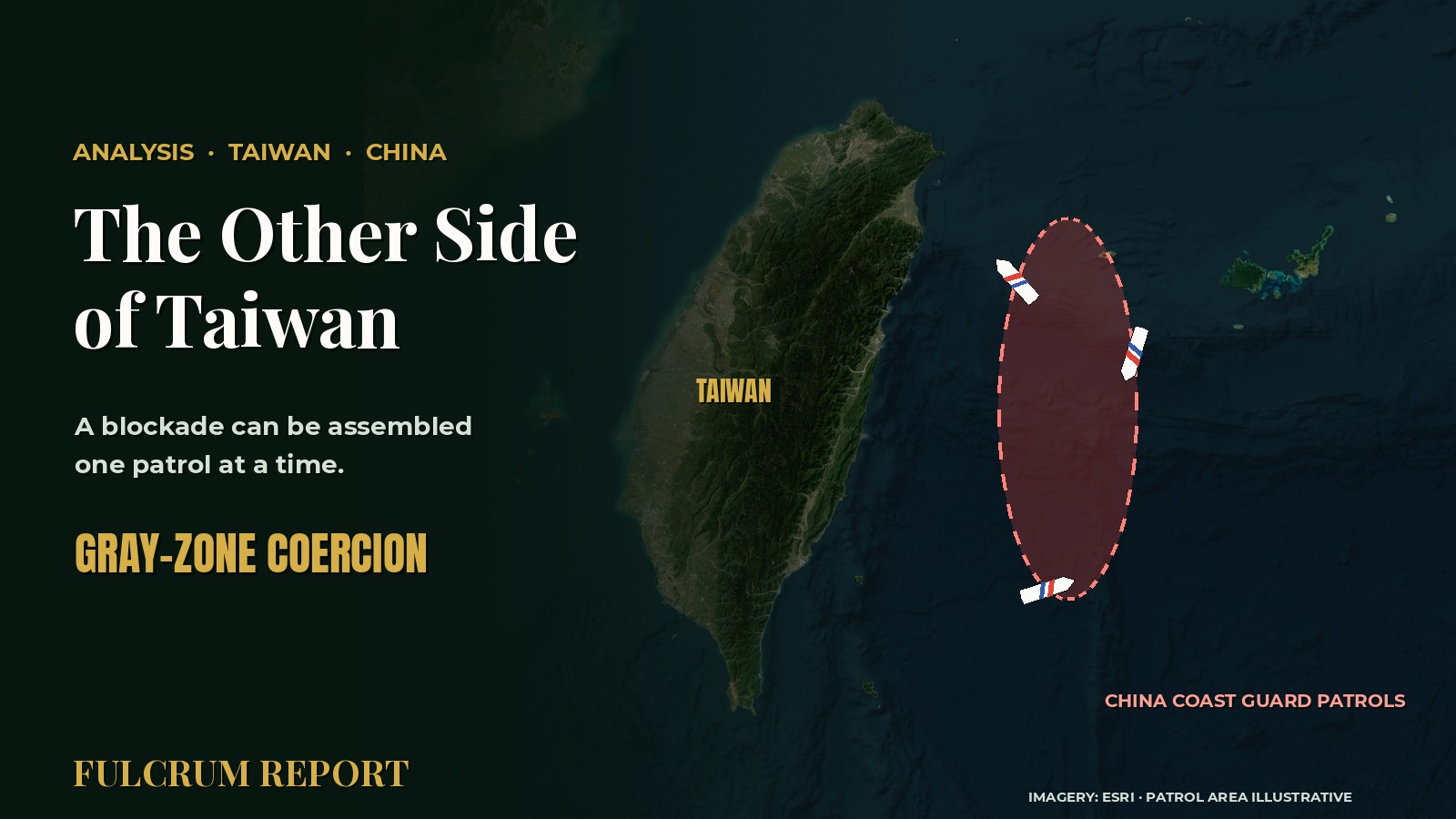
The Other Side of Taiwan: How a Blockade Gets Built Without Being Declared
China's Coast Guard has reportedly set up a regular presence east of Taiwan, framed as law enforcement, while a $14 billion U.S. arms package is pending. A look at gray-zone coercion, salami tactics and escalation control.