The Other Side of Taiwan: How a Blockade Gets Built Without Being Declared
China's Coast Guard is reportedly patrolling east of Taiwan and calling it law enforcement. Why gray-zone coercion makes control look routine.
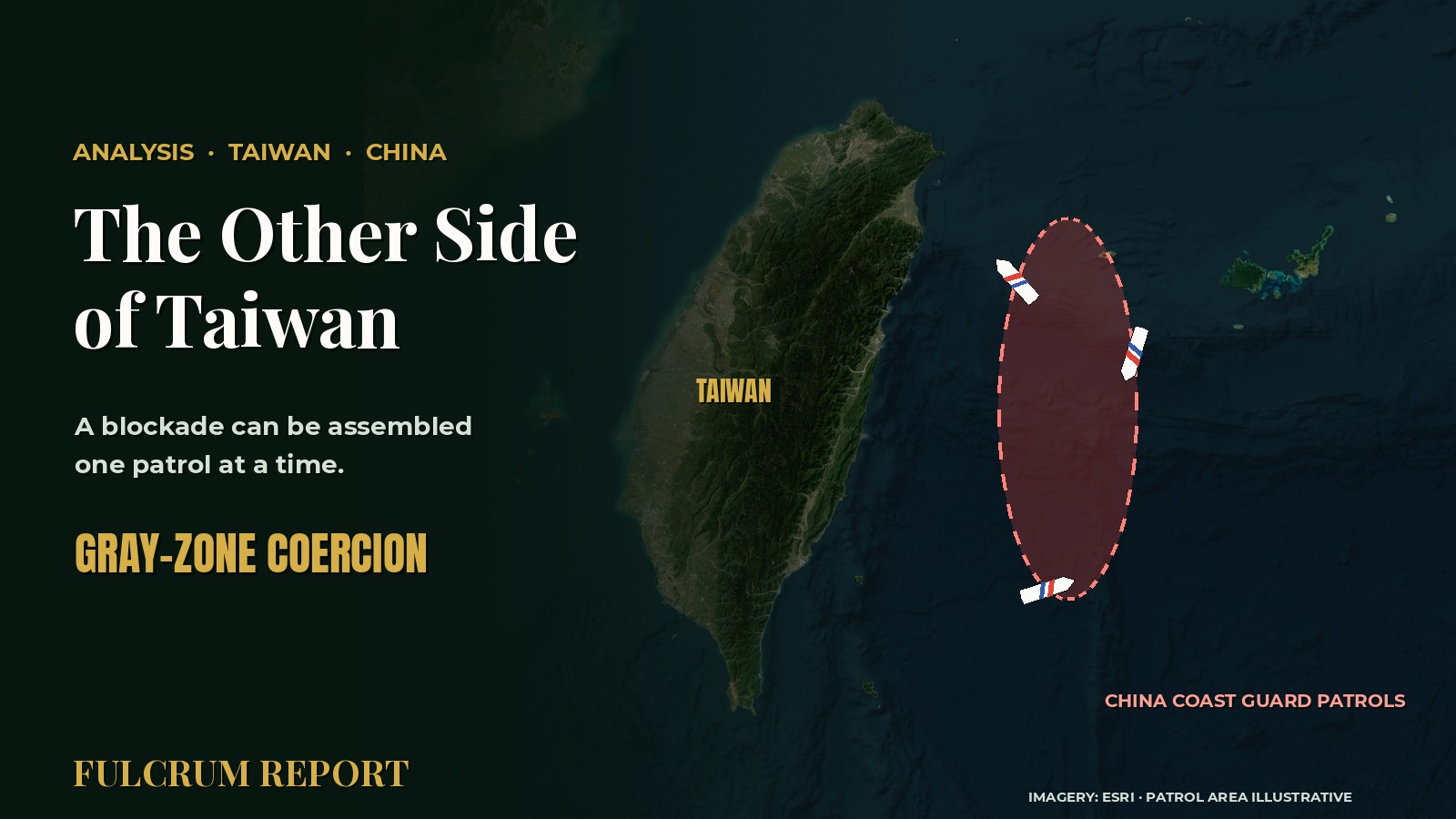
Most of the maps we see of China and Taiwan point west. The Taiwan Strait is where the exercises get filmed, where the median line sits, and where analysts usually draw their arrows. So when reports came out that China's Coast Guard had set up a regular presence on the other side of the island, east of Taiwan and out toward the Pacific, I thought it deserved more attention than it was getting.
The ships aren't warships, and nobody has announced a blockade. That's exactly why I think it matters.
What's been reported
According to reports, China Coast Guard vessels have started operating regularly in waters east of Taiwan, and Beijing describes these patrols as law enforcement. Around the same time, a U.S. arms package for Taiwan worth a reported $14 billion is still pending. I'm treating both of these as reported rather than confirmed. Patrol patterns are hard to verify from the outside, and arms packages often change shape between the first headlines and the final paperwork.
Even with those caveats, the direction is clear enough to think about.
Why the east side matters
Taiwan's west coast faces China. Its east coast faces the open Pacific, and for a long time that was its safer side. The east is where Taiwan keeps some of its most protected military assets, including air bases near Hualien and Taitung, with aircraft shelters that have been widely reported to be dug into the mountains. In a crisis, the eastern sea lanes are also how help would most likely arrive. Fuel, food and supplies from partners like Japan, the Philippines and the United States would come in from that direction.
So a Chinese presence east of Taiwan is about more than adding one more patrol area. It's about the side of the island that Taiwan has counted on to stay open.
The idea in the reel
The concept I used to explain this is gray-zone coercion. Michael Mazarr's 2015 study for the U.S. Army War College, Mastering the Gray Zone, gives a useful working definition. Gray-zone strategies use pressure that stays below the threshold of war. They try to win gradually, through steps that are each too small or too ambiguous to justify a strong response.
The choice of a coast guard instead of a navy is the clearest example. A warship parked off someone's coast looks like a military threat. A coast guard cutter looks like policing. If the navy were doing these patrols, Taiwan and its partners could call them a military threat. Because the coast guard is doing them, Beijing can call them routine.
And routine is the goal. Each patrol builds familiarity. It also works as a test. How fast does Taiwan's coast guard show up? Do Japan or the Philippines say anything? Does Washington comment, or does it stay quiet? Every answer tells Beijing something about how the next step will be received.
There's a legal side to this as well. China's Coast Guard Law, which took effect in February 2021, allows the coast guard to use force, including weapons, against foreign vessels in waters Beijing considers under its jurisdiction. When the coast guard says it's "enforcing the law" somewhere, it's also making a claim about whose law applies there.
We've seen this before
None of this is new, which is part of what makes it worth taking seriously.
In 2012, a standoff at Scarborough Shoal began after a Philippine navy ship tried to arrest Chinese fishermen there. Chinese government vessels moved in, both sides stayed, and when the standoff wound down, China kept control of the shoal. It didn't fire a shot. It just kept showing up and never left.
Closer to Taiwan, in February 2024, two Chinese fishermen died after their speedboat capsized while being chased by Taiwan's coast guard near Kinmen, the Taiwanese-controlled islands just off China's coast. Within days, China's Coast Guard announced regular law enforcement patrols around Kinmen. A tragic accident gave Beijing an opening, and it used the language of policing to step through it.
China's large military drills around Taiwan, the Joint Sword exercises in 2024 and the drills reported as Strait Thunder in 2025, have also included coast guard ships alongside the military, practicing the same encircling patterns. The east-side patrols look like the next piece of the same picture.
The problem for Taiwan
The real advantage of this approach is escalation control, and I think it's the part people underestimate.
Think about what Taiwan can actually do. If it ignores the patrols, they become normal. If it pushes back, Beijing can portray Taiwan as resisting law enforcement rather than defending open waters. If Taiwan sends a warship to shadow a coast guard cutter, Taipei looks like the one raising the stakes. Beijing stays on the lowest rung of the ladder and gets to decide when, or whether, to climb.
Thomas Schelling called this kind of strategy salami tactics in his 1966 book Arms and Influence. You take a slice small enough that the other side won't fight over it, then another, then another. Robert Haddick later applied the term to China's behavior in the South China Sea. No single slice is worth a war, and that's the point. By the time the whole salami is gone, there was never one moment when it made sense to say stop.
Why the baseline matters
This is what worries me most. Over time, the pressure shifts what counts as normal. If Chinese coast guard ships are already operating east of Taiwan every week, then a future blockade wouldn't require a dramatic new deployment. The ships, the routes and the habits would already be in place. A blockade would be easier for Beijing to enforce and harder for anyone else to challenge, because challenging it would mean confronting something the world had already gotten used to.
That's also why the pending arms package matters, though probably not in the way headlines suggest. Weapons help Taiwan deter an invasion. They're much less useful against a coast guard cutter that's officially there to check paperwork. The gray zone is designed to make hard power look like an overreaction.
I don't want to overstate it. Regular patrols aren't a blockade, and there are plenty of reasons Beijing might never try to impose one. A real blockade would carry huge economic and diplomatic costs, and it would be very hard to keep ambiguous once ships were being turned away. But building the option is cheap, and that's what these patrols seem to be doing.
Where this leaves us
A blockade doesn't have to be announced. It can be assembled one patrol at a time. If that's what's happening east of Taiwan, the most important moment won't be a declaration. It'll be the slow point where nobody quite remembers when the patrols started.
I asked in the reel whether you think this is a blockade in the making, and I'd genuinely like to hear your read.
Further reading: Michael J. Mazarr, Mastering the Gray Zone: Understanding a Changing Era of Conflict (U.S. Army War College, 2015); Thomas C. Schelling, Arms and Influence (1966); Robert Haddick, Fire on the Water: China, America, and the Future of the Pacific (2014); the Coast Guard Law of the People's Republic of China (in force February 1, 2021).

About the author
Fulcrum Report
Independent Middle East analyst holding a PhD in Political Science. Fulcrum Report offers rigorous, framework-driven coverage of politics and geopolitics across the Levant and the wider region — analysis without agenda.
Related reading
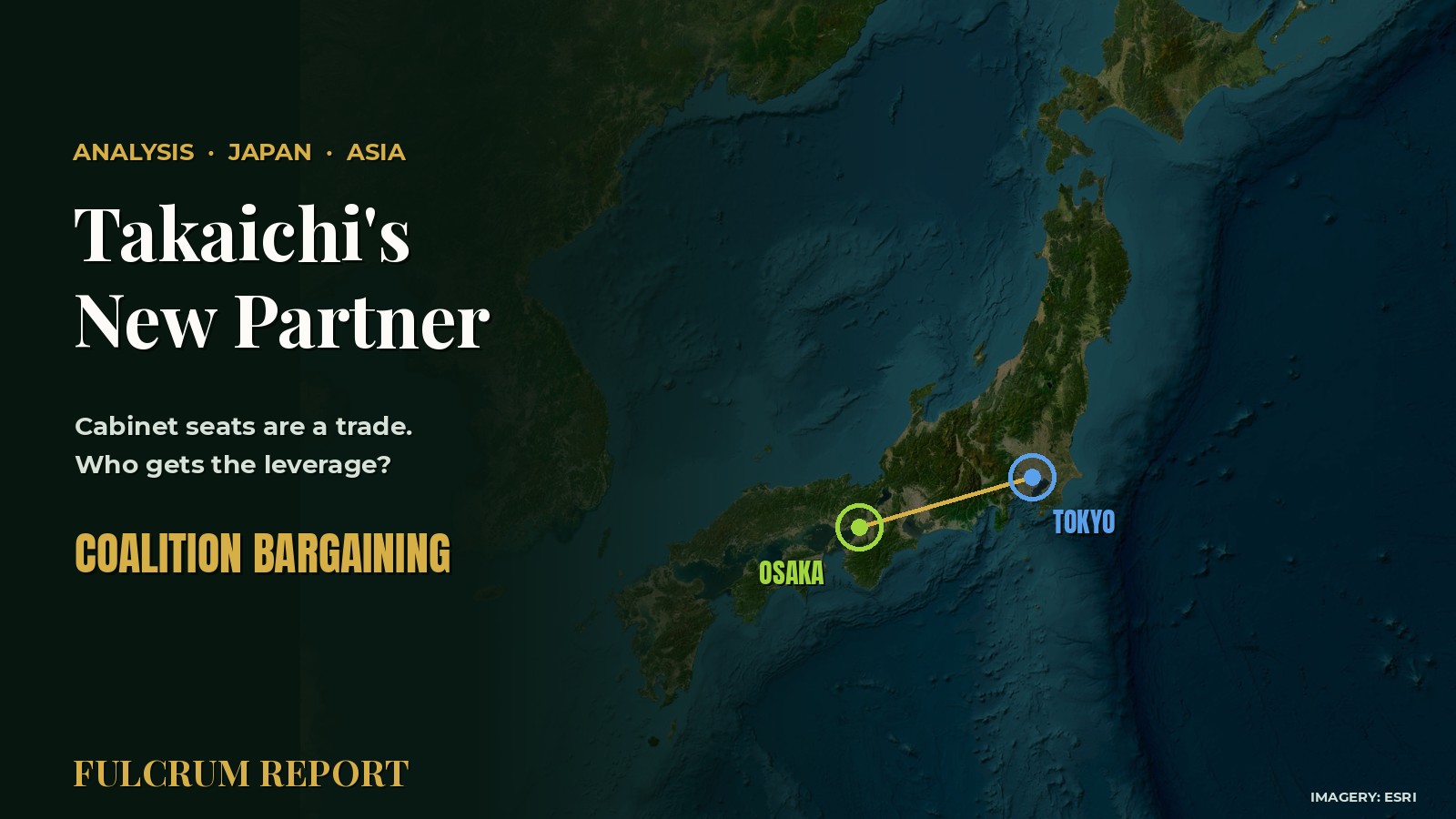
Takaichi's New Partner: Why Cabinet Seats Are a Trade
Sanae Takaichi reportedly reshuffled her cabinet on September 16 and 17, bringing in the Japan Innovation Party (Ishin) for the first time. Her camp holds two-thirds of the lower house but lacks an upper-house majority. A look at coalition bargaining and who gets the leverage.
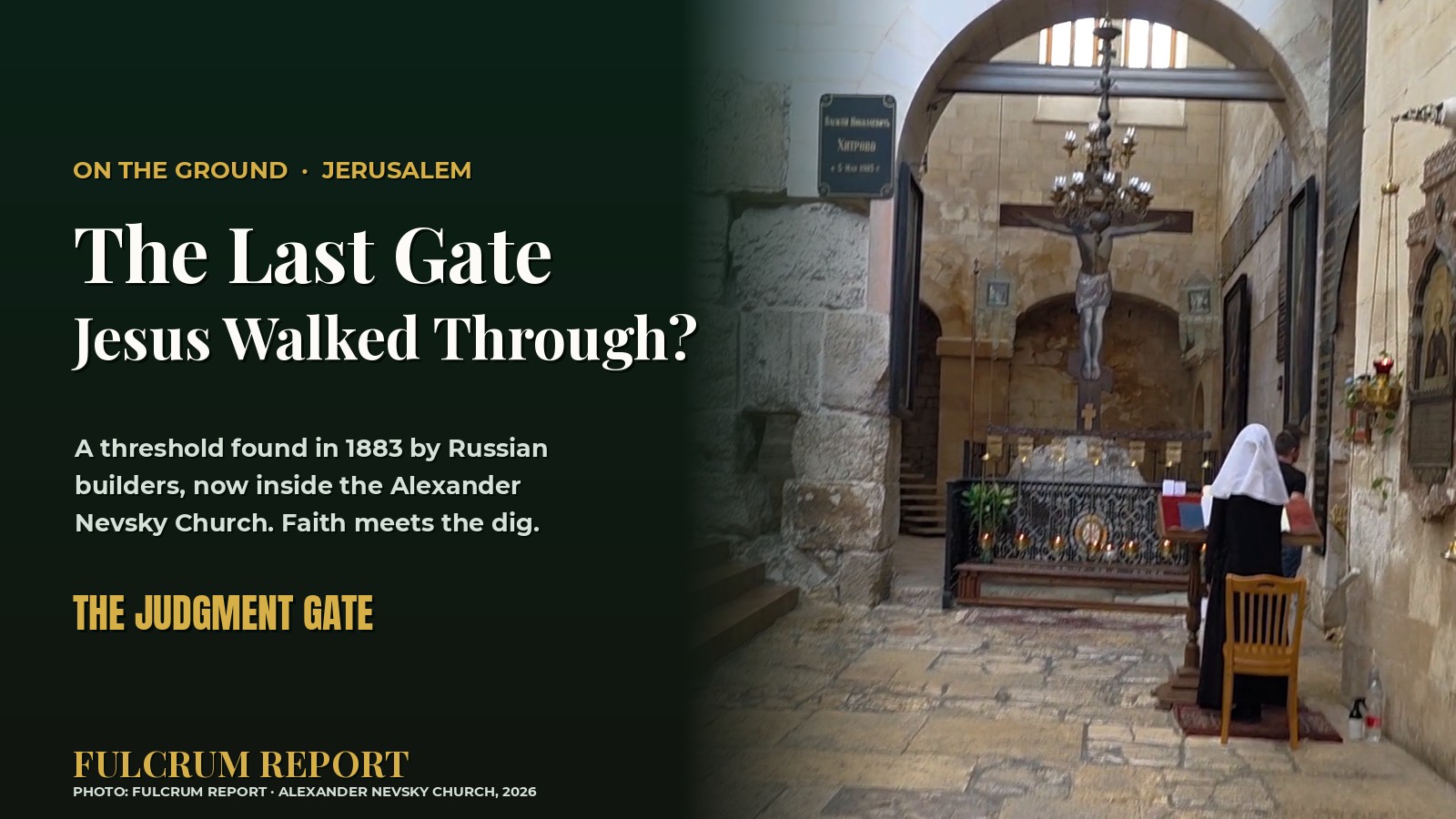
The Last Gate Jesus Walked Through?
The Threshold of the Judgment Gate, the "Eye of the Needle" and Constantine’s lost front door, inside Jerusalem’s Alexander Nevsky Church.
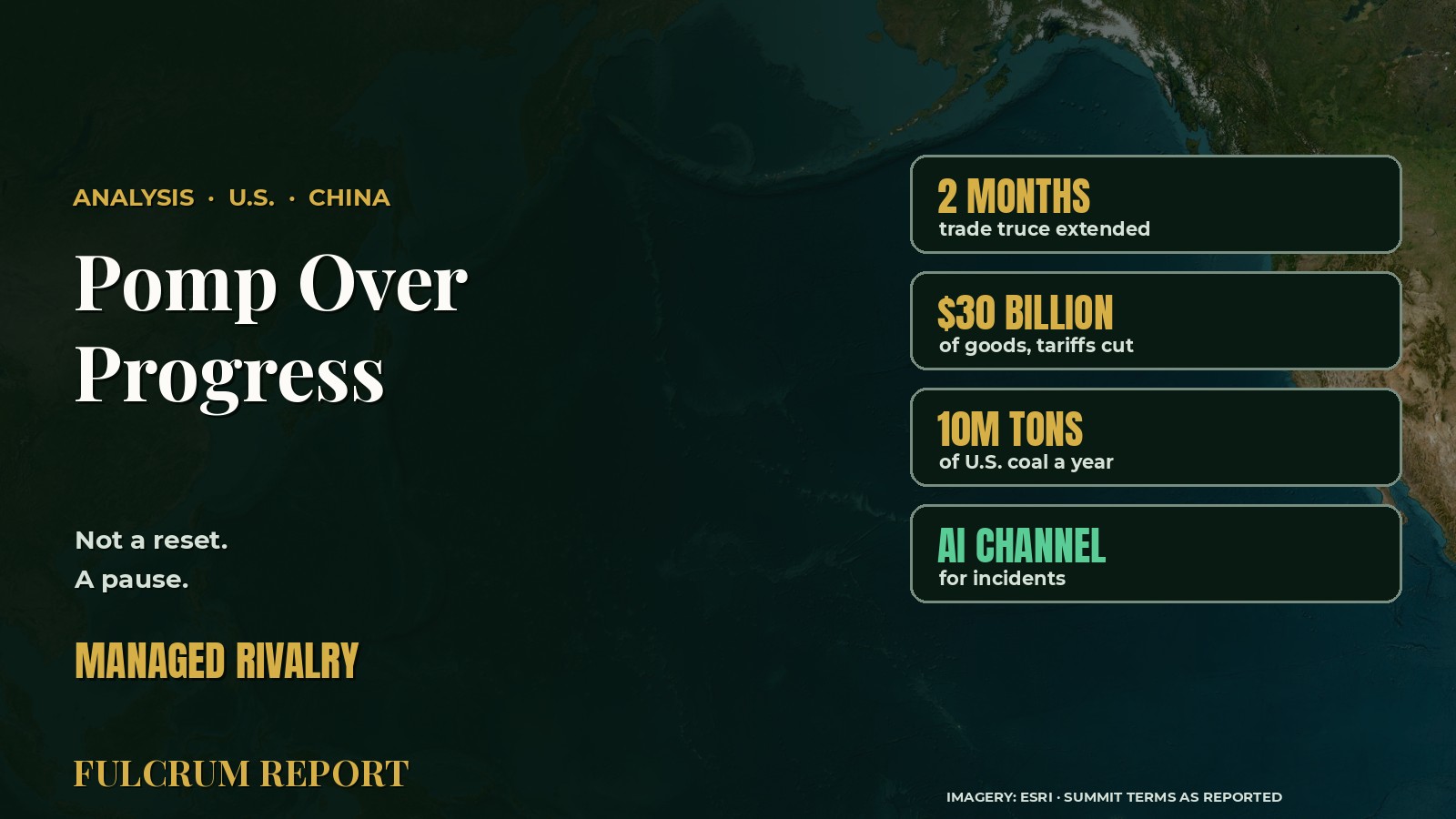
Pomp Over Progress: What Xi's Washington Visit Actually Bought
Xi Jinping's state visit ended with the trade truce extended two months, tariff cuts on $30 billion of goods, a coal deal and an AI incident channel. A look at managed rivalry and why guardrails matter.