The Story Off-Camera Is Usually the Real One
How the attention economy of world politics turns a distant war into cover for what happens where the cameras are not.
I have spent enough years reading the daily flood of foreign-policy coverage to notice a pattern that the coverage itself is designed to hide. When one story grows large enough, it does not simply crowd the others off the page. It hands everyone with something to hide a reason to look away.
That is where I want to start, because it is easy to miss. While nearly every camera has been trained on Iran, the West Bank has been changing in the dark. Reporting through the middle of 2026 describes surging settler violence, mosques set alight, attacks on Palestinian communities, and journalists harassed as they try to document it. Israel has been running major operations across the territory, and whole herding communities in Area C have been emptied out. None of this is hidden, exactly. It is just happening faster than the world's attention can follow.
I do not think that timing is an accident. Attention creates cover, and cover gets used.
## Scrutiny is a finite resource
We tend to talk about international pressure as if it were limitless, as if the world could hold every actor accountable for everything at once. It cannot. There are only so many front-page slots, only so many diplomats working a file, only so many hours a foreign ministry can spend on a crisis before something else lands on the desk. Public outrage runs on the same budget. People can hold a certain number of emergencies in their heads, and no more.
That scarcity is the whole game. Think of it as the attention economy of world politics. Coverage, diplomatic energy, and public demand are the currency, and there is never enough to go around. When a major war shows up, it does not just dominate the headlines. It raises the political cost of responding to anything else. A government that might have issued a statement about demolitions in the West Bank now has to weigh that against a conflict it considers existential. The smaller story loses, every time, not because it matters less but because the ledger only balances one way.
## Distraction as strategy, not side effect
Here is the part I want to be careful about, because it is where analysis usually gets lazy. It would be too simple to say someone starts a war to distract from a demolition order. That is not the claim, and the evidence does not support it.
What I am describing is quieter and, honestly, more useful to the actors involved. A large conflict opens a window. It creates a stretch of time when scrutiny is elsewhere and the cost of acting is low. Into that window go the slow, grinding changes that would draw fire under normal conditions: another ring of settlement expansion, another round of demolitions, another displaced community that will not make the evening broadcast. These are not dramatic single events. They are incremental, and incremental change is exactly what thrives when no one is keeping count.
The distraction, in other words, is not merely a byproduct of the big story. It shifts the balance of what an actor can do without paying a price. That shift is the point.
## Why this is worth naming
I keep insisting on this framing because naming it is the only defense against it. Once you understand that the loud story can function as cover, you start reading the news differently. You ask what is not being covered while everyone stares at the same fire. You notice that the absence of reporting is itself a kind of information.
This is not a conspiracy theory. It is closer to a structural fact about how limited attention interacts with power. Actors do not need to coordinate a grand distraction; they only need to recognize the opening and move through it. Most of the time they do.
So when the world's gaze locks onto a single war, I try to force myself to look at the edges of the frame. That is usually where the durable changes are happening, the ones that will still be shaping the map long after the headline war has faded. The story you are not being shown is often the one that matters most. Keeping it in frame is, in the end, most of the job.

About the author
Fulcrum Report
Independent Middle East analyst holding a PhD in Political Science. Fulcrum Report offers rigorous, framework-driven coverage of politics and geopolitics across the Levant and the wider region — analysis without agenda.
Related reading
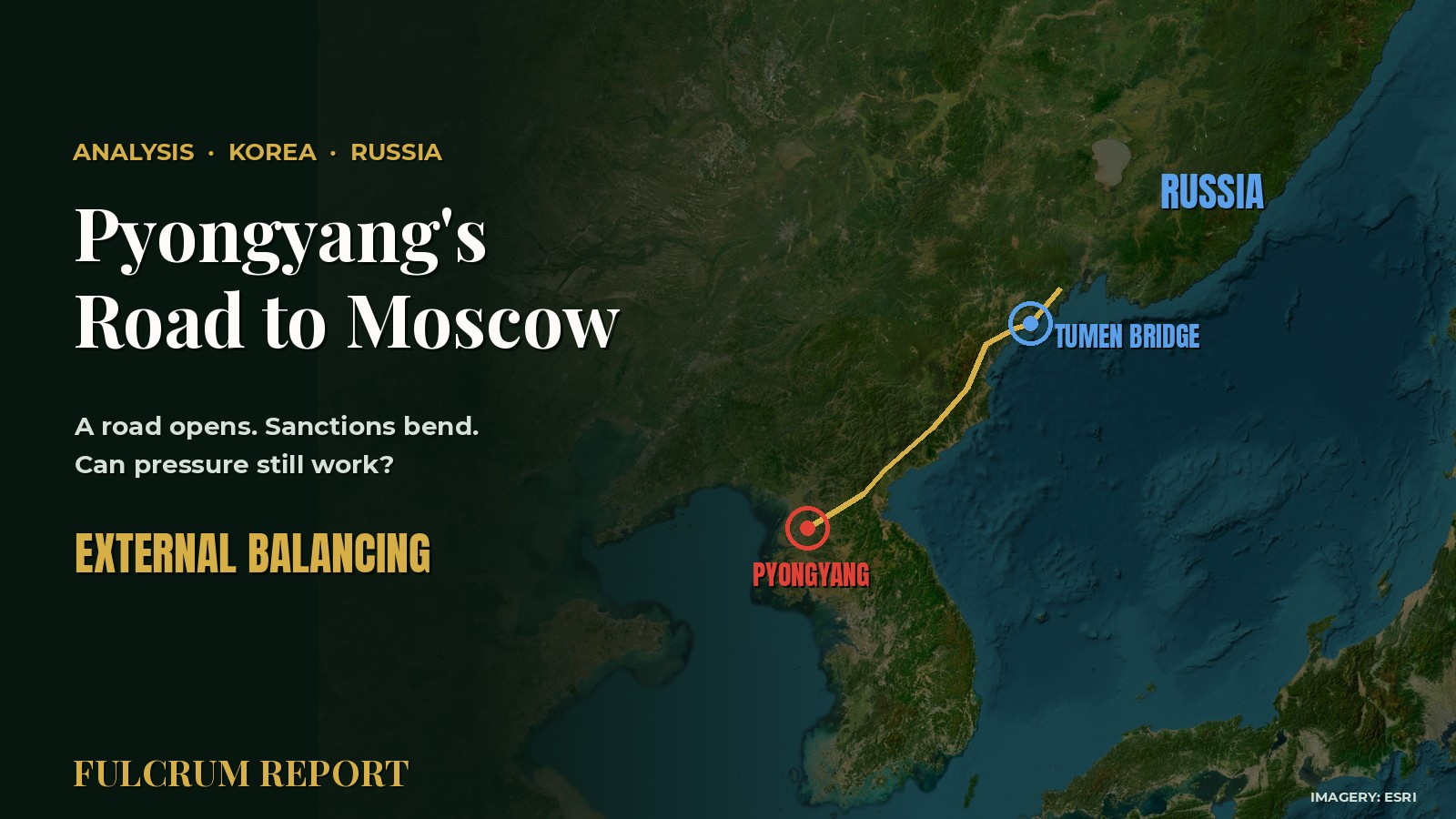
Pyongyang's Road to Moscow: Can Sanctions Still Work?
A second enrichment facility is reportedly going up at Yongbyon, and the Tumen River road bridge to Russia reportedly opened on September 8. When a major power offers a way around sanctions, how much pressure is left? An explainer on external balancing.
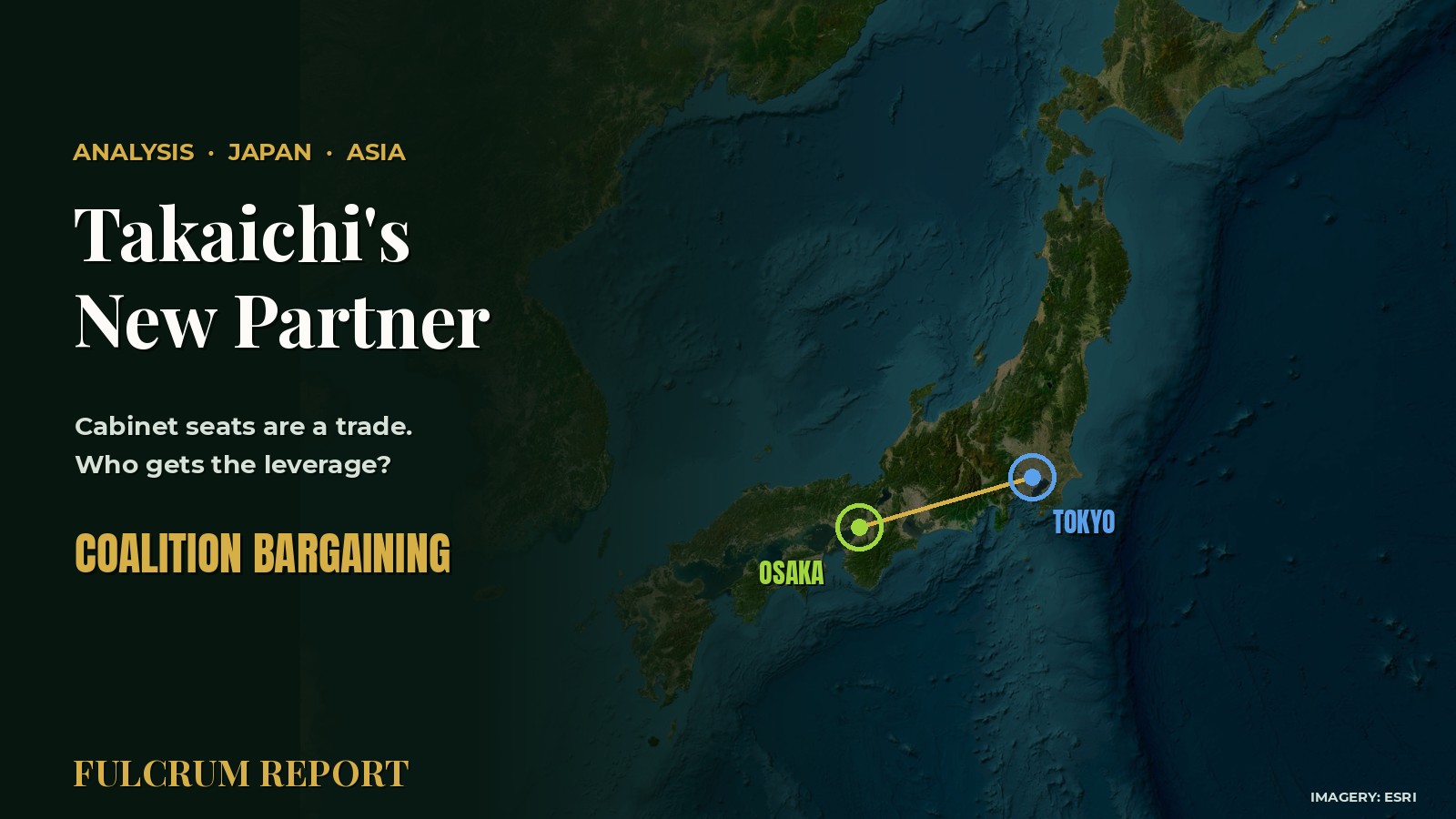
Takaichi's New Partner: Why Cabinet Seats Are a Trade
Sanae Takaichi reportedly reshuffled her cabinet on September 16 and 17, bringing in the Japan Innovation Party (Ishin) for the first time. Her camp holds two-thirds of the lower house but lacks an upper-house majority. A look at coalition bargaining and who gets the leverage.
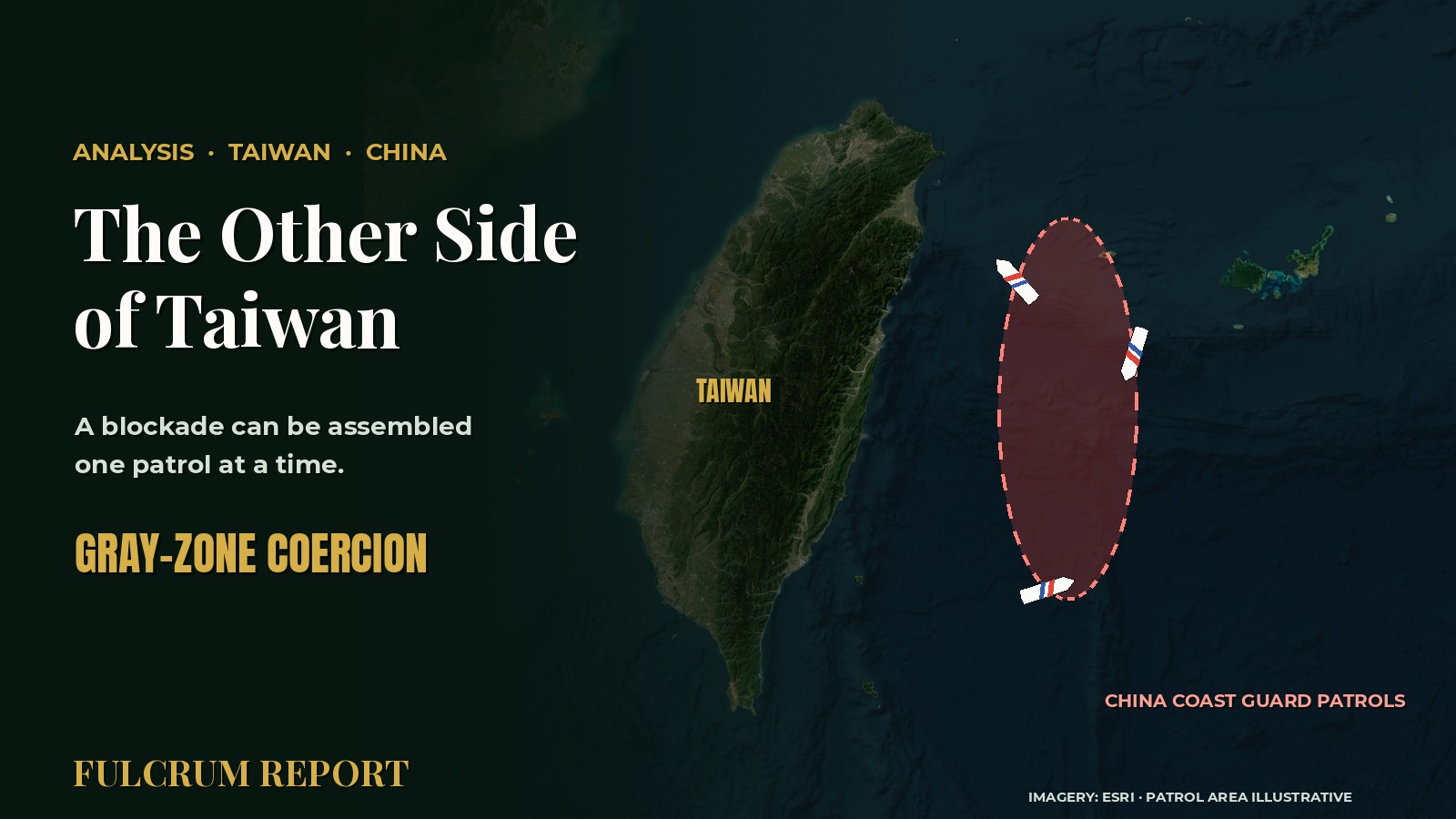
The Other Side of Taiwan: How a Blockade Gets Built Without Being Declared
China's Coast Guard has reportedly set up a regular presence east of Taiwan, framed as law enforcement, while a $14 billion U.S. arms package is pending. A look at gray-zone coercion, salami tactics and escalation control.