You Can Bomb a Facility. You Can't Bomb a Motive.
Why six months of strikes on Iran may have accelerated the very decision they were meant to prevent.
More than six months of bombing Iran's nuclear sites may have produced the one outcome Washington feared most. Not stopping the bomb, but convincing Tehran to build it faster. That is the uncomfortable possibility hanging over the campaign that began with the strikes on Natanz, Fordow, and Esfahan, and it is the reason military success and strategic success are not the same thing.
Consider the target that came to symbolize the whole effort. Fordow is not a warehouse on the surface; it is an enrichment hall buried beneath a mountain, engineered from the start to survive exactly the kind of airstrike that was eventually launched against it. Even the heaviest bunker-busting munitions, delivered through ventilation shafts, can collapse tunnels and wreck centrifuges without guaranteeing that the program itself is finished. Damage is visible. Destruction of a capability is much harder to confirm.
That confirmation problem has only deepened. In the aftermath, Iran restricted the international inspectors who once provided the outside world its clearest window into the program, while independent assessments indicated that Tehran still held a stockpile of near-weapons-grade fuel — by some estimates enough material, if further enriched, for up to ten devices. The paradox is stark: a campaign meant to increase security has left the world with less visibility into what Iran actually has and where it is.
To understand why bombing may backfire, it helps to separate two ideas that are easy to blur together: capability and intent. Capability is the hardware — the centrifuges, the facilities, the fuel. Intent is the political decision to actually weaponize. Airstrikes are very good at degrading capability for a period of time. They are far less effective against intent. You can flatten a building and set a timeline back by months. You cannot bomb away the scientific knowledge inside a nation's universities and laboratories, and you may well strengthen the motive to rebuild.
This is the security dilemma that scholars of international relations have described for generations. A move one state makes to feel safer — a strike, a deployment, a new weapon — can convince a rival that its own survival is now in doubt, pushing it toward the very capability the first state was trying to prevent. In this case, a strike intended to disarm Iran can persuade its leadership that only the ultimate deterrent, a nuclear weapon, can guarantee the regime against future attack.
If that is the lesson Tehran draws, the takeaway is not that the program was too dangerous to keep. It is that the program was too vulnerable to leave exposed. Harden it further. Bury it deeper. Disperse it more widely. Reduce the transparency that made it a target in the first place. Each of those responses is rational from Tehran's point of view, and each makes the next round of coercion harder and costlier than the last.
So the campaign may have purchased time while making the political decision to build a bomb more likely, not less. Tactical delay can produce strategic acceleration. The months bought by the strikes are real, but if they arrive alongside a hardened resolve to weaponize and a collapse in verification, the net effect on long-term security is ambiguous at best.
None of this means force never has a place, or that delay has no value. It means the metric matters. Judging the operation by craters and damage assessments answers the wrong question. The right question is whether the strike changed the calculation in Tehran — and if it changed that calculation toward building rather than bargaining, then the facilities were the easy part. You can bomb a facility. You cannot bomb a motive. And in the end, it is the motive that decides whether there is ever a bomb at all.

About the author
Fulcrum Report
Independent Middle East analyst holding a PhD in Political Science. Fulcrum Report offers rigorous, framework-driven coverage of politics and geopolitics across the Levant and the wider region — analysis without agenda.
Related reading
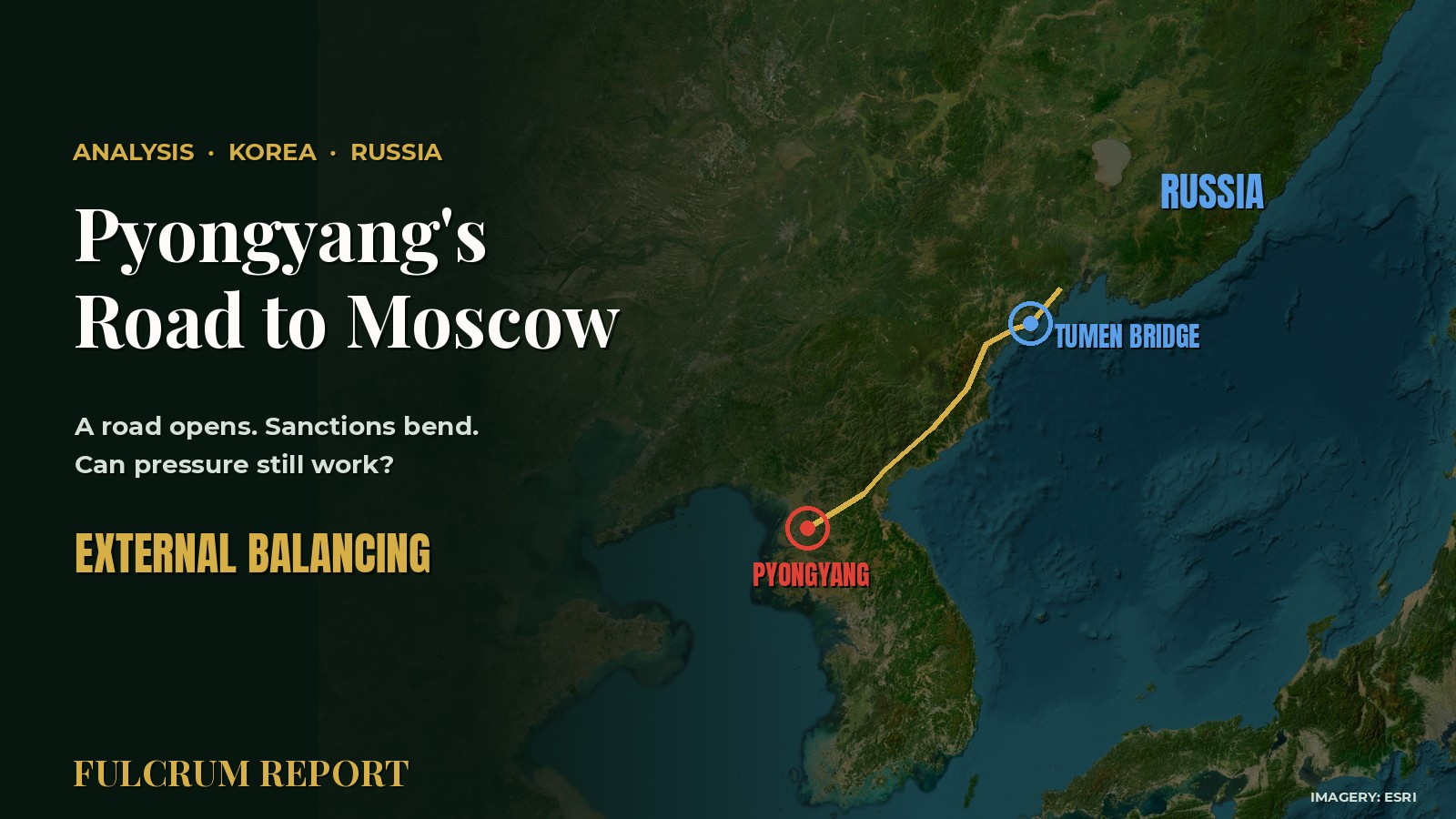
Pyongyang's Road to Moscow: Can Sanctions Still Work?
A second enrichment facility is reportedly going up at Yongbyon, and the Tumen River road bridge to Russia reportedly opened on September 8. When a major power offers a way around sanctions, how much pressure is left? An explainer on external balancing.
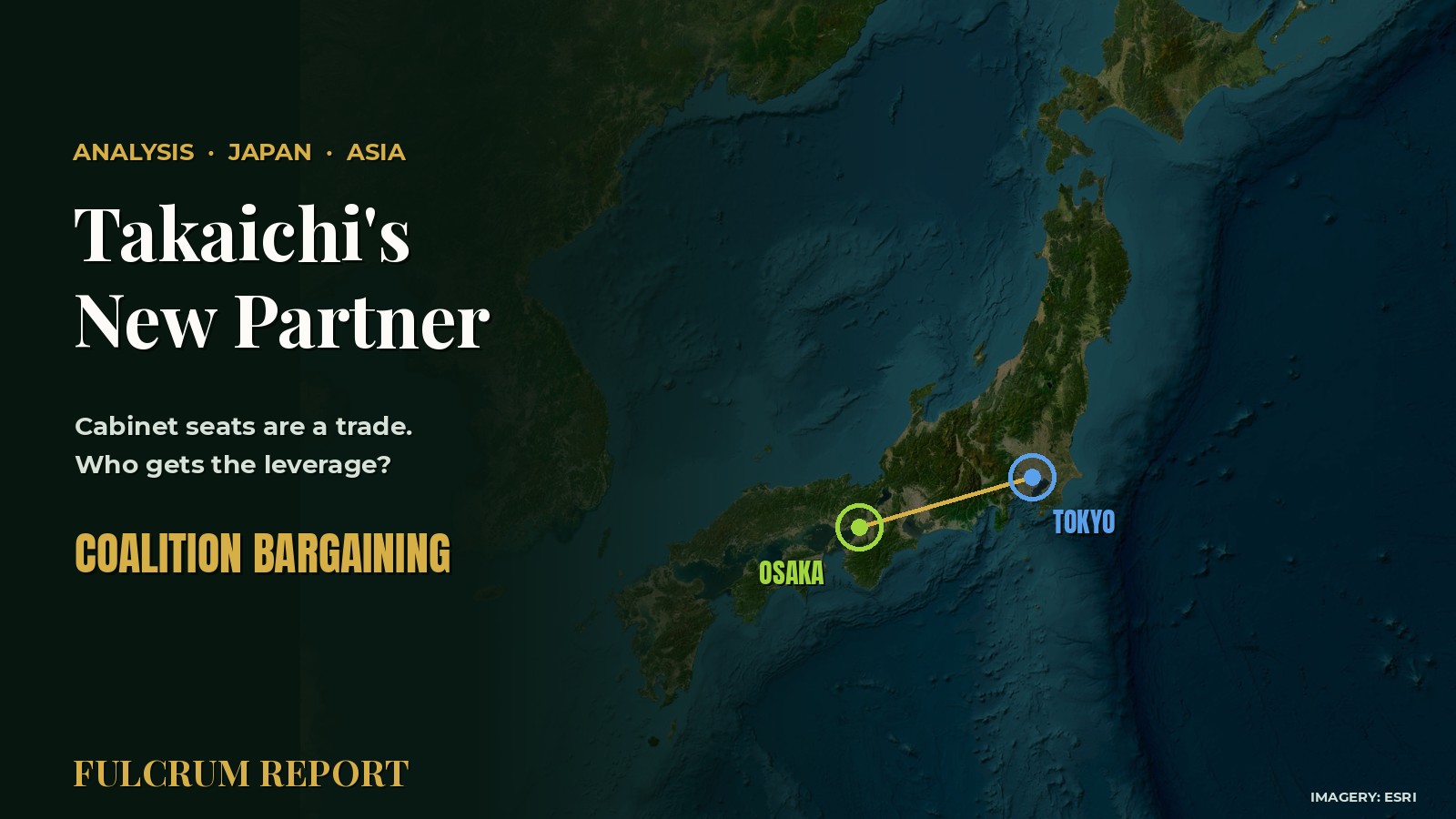
Takaichi's New Partner: Why Cabinet Seats Are a Trade
Sanae Takaichi reportedly reshuffled her cabinet on September 16 and 17, bringing in the Japan Innovation Party (Ishin) for the first time. Her camp holds two-thirds of the lower house but lacks an upper-house majority. A look at coalition bargaining and who gets the leverage.
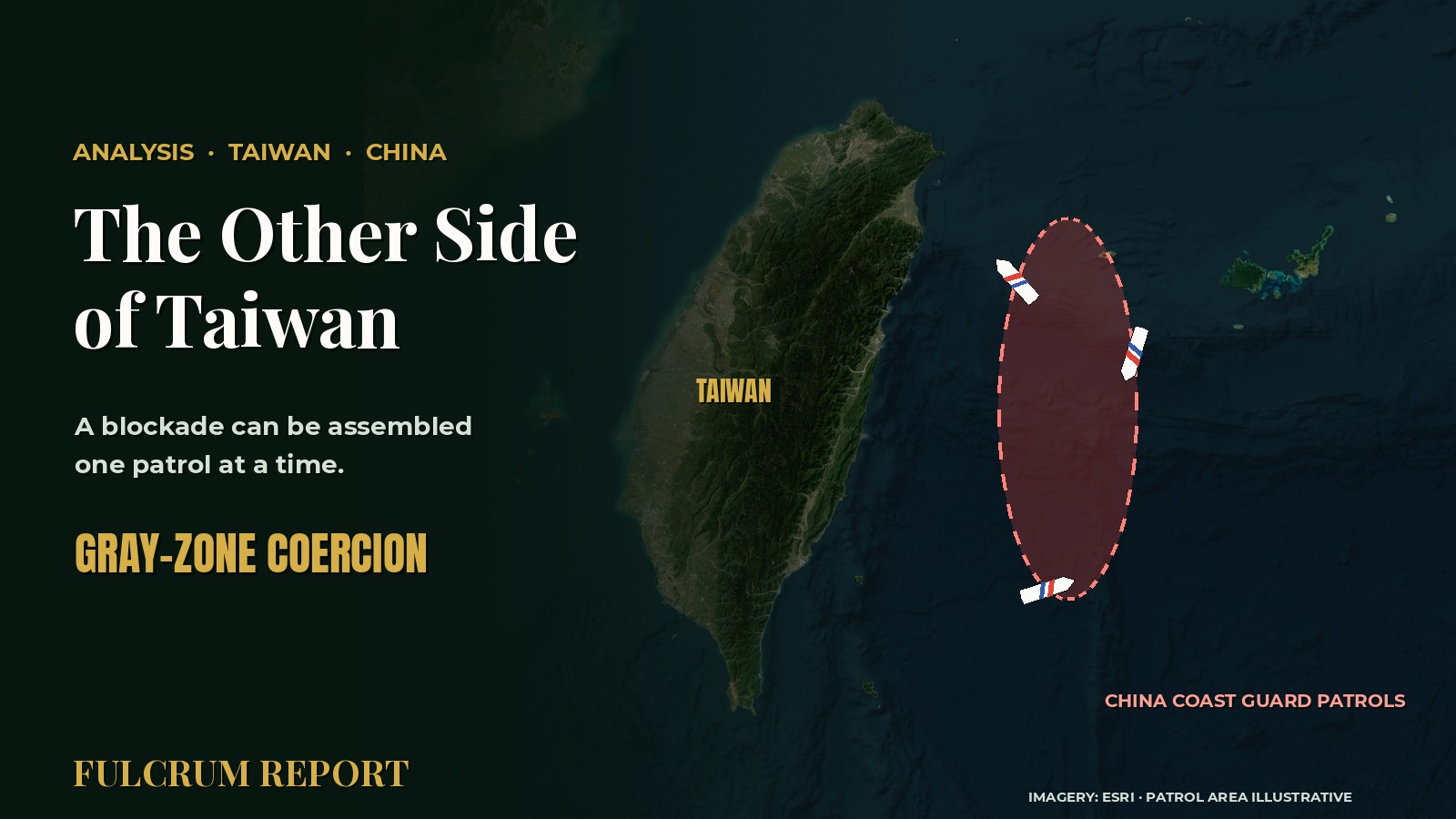
The Other Side of Taiwan: How a Blockade Gets Built Without Being Declared
China's Coast Guard has reportedly set up a regular presence east of Taiwan, framed as law enforcement, while a $14 billion U.S. arms package is pending. A look at gray-zone coercion, salami tactics and escalation control.