The Buffer Zone Trap
Israel calls its buffer zone in southern Syria insurance. Damascus calls it occupation. The security dilemma explains why both can feel less safe.
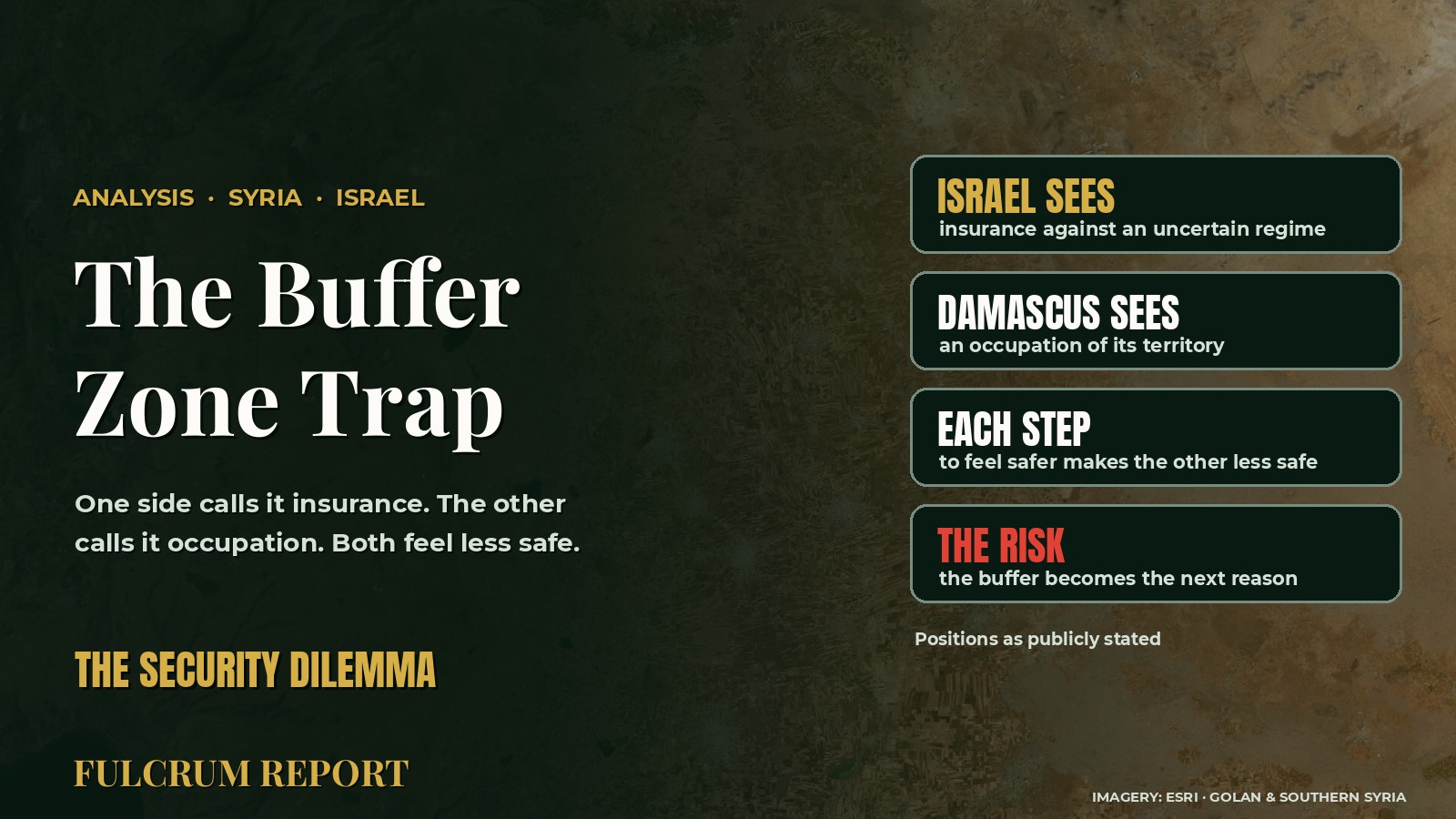
Syria has a new government. And yet, in the country's south, Israeli troops are still moving around as if the old map no longer applies.
That contrast is what made me want to do this one. Israeli incursions are reported to be continuing in Quneitra and Daraa provinces. At the same time, the government in Damascus is courting foreign investors and breaking up ISIS cells, which is exactly the kind of thing a government does when it wants to be taken seriously. Two very different stories are playing out in the same corner of the map.
What each side wants
Put simply, Ahmad al-Sharaa's government wants legitimacy. It wants to be treated as a normal state, with control over its own territory, money coming in and a seat at the table.
Israel wants a buffer. It wants distance between its communities on the Golan Heights and whatever armed groups might end up on the other side of the line.
Neither of those goals is crazy. That's the uncomfortable part.
A little background
This line has a history. After the 1973 war, Israel and Syria signed a disengagement agreement in 1974 that set up a strip of land between their forces, patrolled by UN peacekeepers known as UNDOF. For roughly fifty years, that arrangement more or less held. It was boring, and in that part of the world boring is a compliment.
Then the Assad government fell in December 2024. As widely reported at the time, Israel moved forces into the buffer zone and beyond, including positions on the Syrian side of Mount Hermon, arguing that the old arrangement had collapsed along with the regime that signed it. The incursions we're hearing about now are the continuation of that.
The idea that explains it
There's a concept in political science that fits this situation almost too well. It's called the security dilemma. The term goes back to John Herz in 1950, and Robert Jervis developed it in a famous 1978 article, "Cooperation Under the Security Dilemma."
The core of it is simple: one state's defensive measures look offensive to its neighbors.
You build a wall because you're scared. Your neighbor sees the wall and wonders what you're planning behind it. You put troops on a hill so nobody can use that hill against you. Your neighbor sees troops on a hill overlooking their towns.
What I find useful about the idea is that nobody has to be the villain for it to work. Both sides can be acting out of fear, and the result can still be more danger for everyone.
How each side sees it
I want to be fair to both readings here, because both are real.
From Israel's point of view, the buffer zone is insurance. The new government in Damascus came out of an armed opposition movement, and its leadership has a past that worries a lot of people in Israel. Nobody knows yet what this government will look like in five years, or who might fill any gap it can't control. If you're responsible for the safety of towns a few kilometres away, holding ground until you know more feels like the cautious choice.
From Damascus's point of view, it's an occupation. A government trying to show its own people and the world that it controls its territory has foreign troops operating inside its borders. Every patrol undercuts the message that Syria is a sovereign state again. And a government that looks weak at home has fewer reasons to make compromises abroad.
Both of those things can be true at once. That's what makes it a dilemma rather than a simple dispute.
The spiral
Here's how it tends to unfold. Every step one side takes to feel safer makes the other feel less safe. Israel holds positions to reduce risk. Damascus sees a threat and looks for ways to push back, whether that's diplomatic pressure, rallying support or, eventually, something harder. Israel sees that response as proof the buffer was needed. Each move is defensive in the mind of the person making it, and each one raises the temperature a little.
I'm not predicting a war. I don't know how this ends, and anyone who tells you they do is guessing. There are ways out of a security dilemma: agreements, monitors, gradual withdrawals that are tied to verifiable steps, guarantees from outside powers. Jervis himself wrote about the conditions that make cooperation easier. But those ways out need both sides to believe the other is acting out of fear, not ambition, and that's hard to believe while troops are on the ground.
What I'd watch
A few things would tell us which way this is heading. Whether there's any renewed arrangement around the old 1974 lines, with UN monitors playing a real role again. Whether the incursions shrink over time or settle into a permanent presence. Whether Damascus keeps its response diplomatic. And whether outside powers with influence on both sides decide this is worth their attention.
The trap
The line I ended the reel on is the one I keep coming back to: buffer zones built for safety can become the next reason for conflict.
That's the trap. The thing meant to keep the peace becomes the grievance that breaks it.
So I'll ask you what I asked on the reel. Where do you think this goes: a deal, a standoff or conflict? Tell me in the comments, and follow @fulcrumreport for analysis without agenda.
About the author
Fulcrum Report
Independent Middle East analyst holding a PhD in Political Science. Fulcrum Report offers rigorous, framework-driven coverage of politics and geopolitics across the Levant and the wider region — analysis without agenda.
Related reading
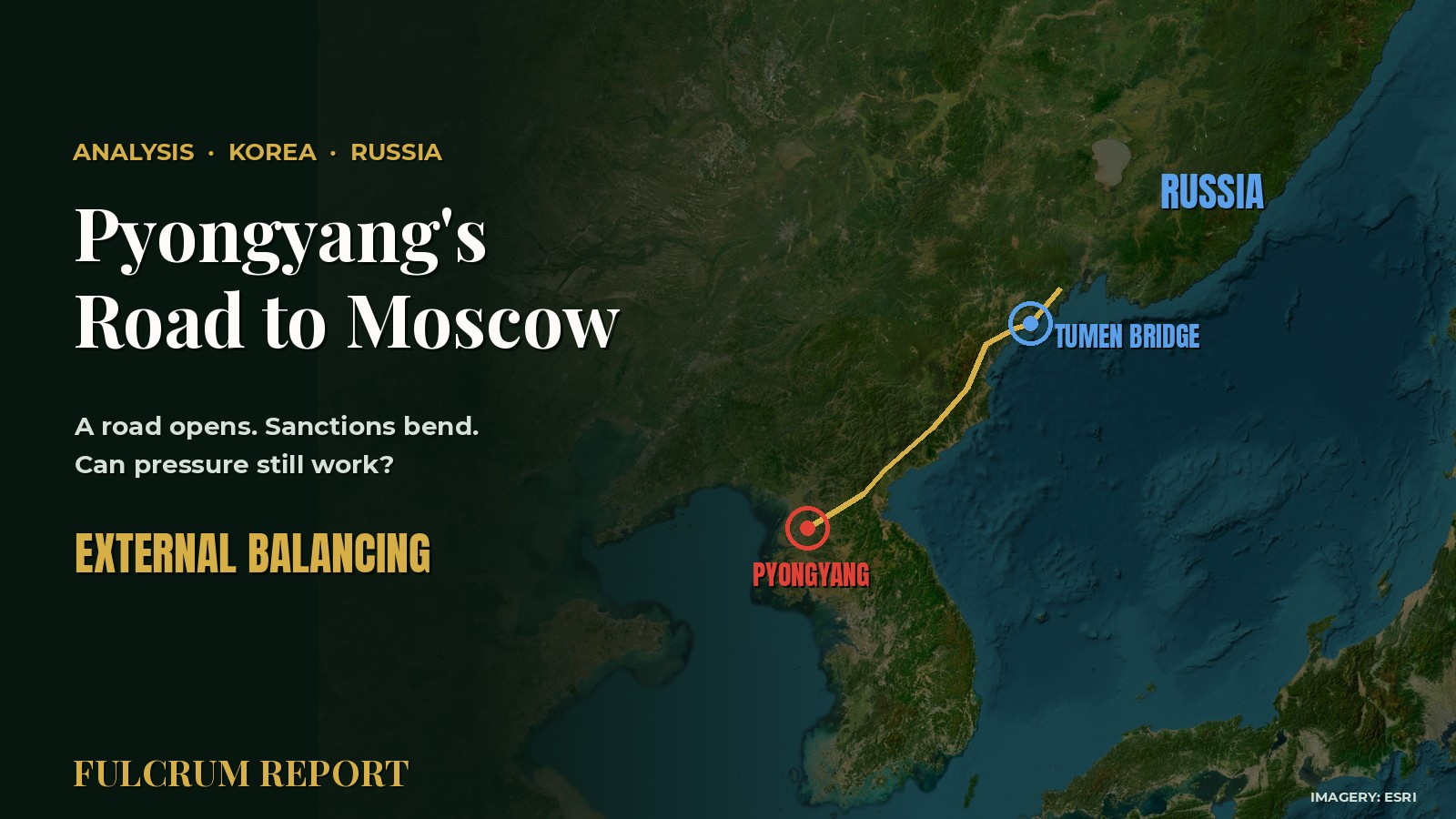
Pyongyang's Road to Moscow: Can Sanctions Still Work?
A second enrichment facility is reportedly going up at Yongbyon, and the Tumen River road bridge to Russia reportedly opened on September 8. When a major power offers a way around sanctions, how much pressure is left? An explainer on external balancing.
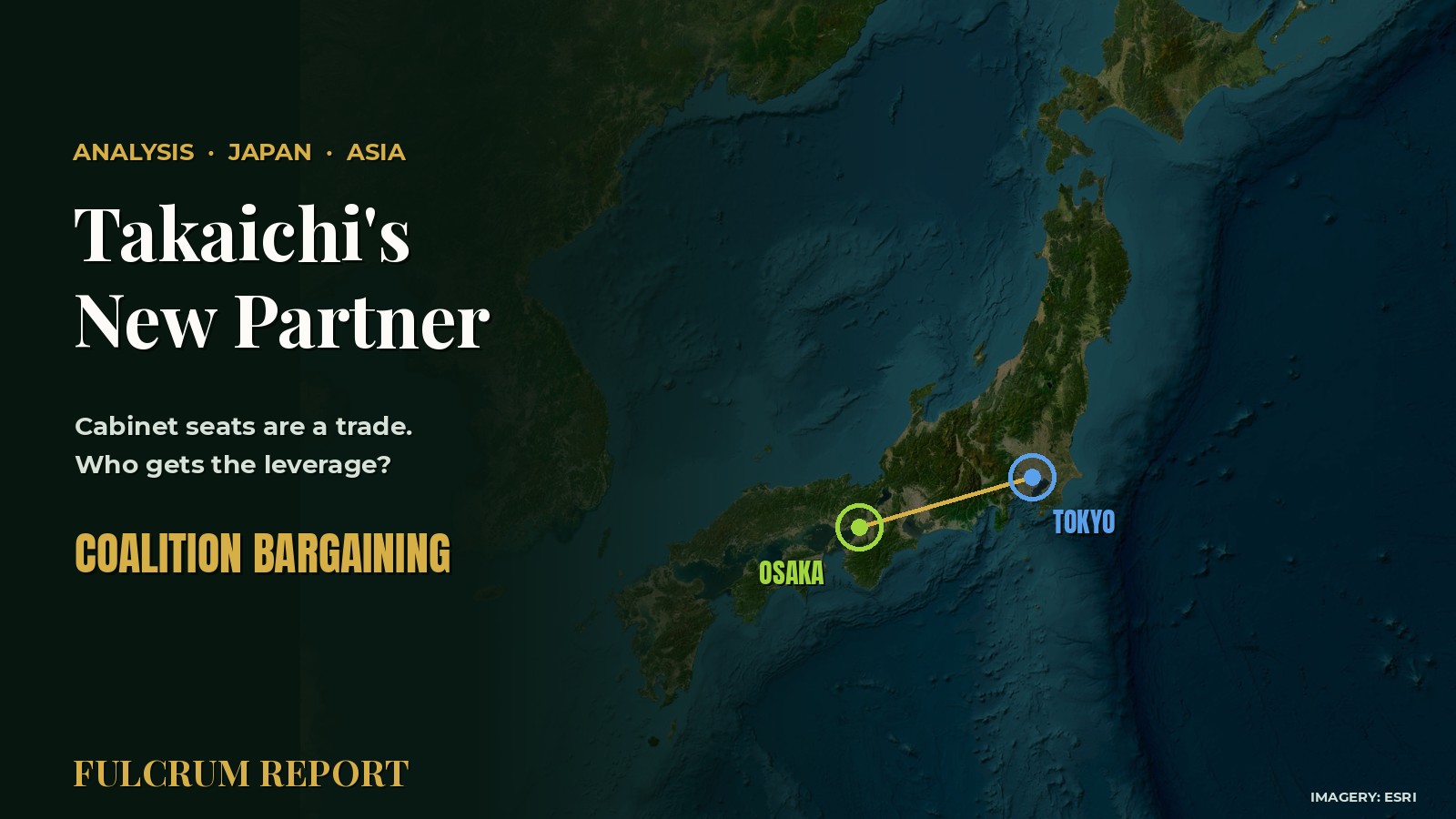
Takaichi's New Partner: Why Cabinet Seats Are a Trade
Sanae Takaichi reportedly reshuffled her cabinet on September 16 and 17, bringing in the Japan Innovation Party (Ishin) for the first time. Her camp holds two-thirds of the lower house but lacks an upper-house majority. A look at coalition bargaining and who gets the leverage.
The Other Side of Taiwan: How a Blockade Gets Built Without Being Declared
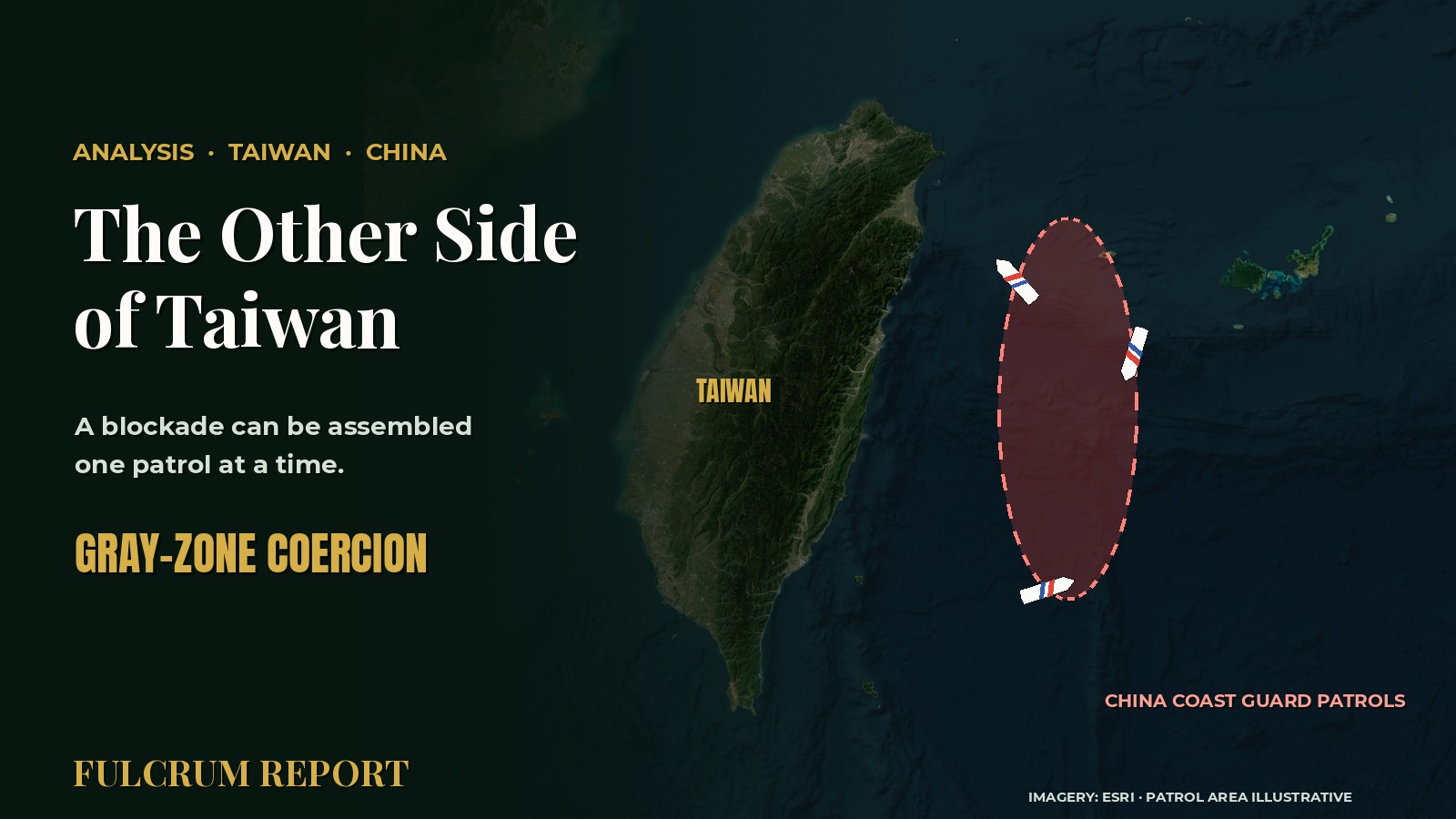
China's Coast Guard has reportedly set up a regular presence east of Taiwan, framed as law enforcement, while a $14 billion U.S. arms package is pending. A look at gray-zone coercion, salami tactics and escalation control.