Can Anyone Count to 61?
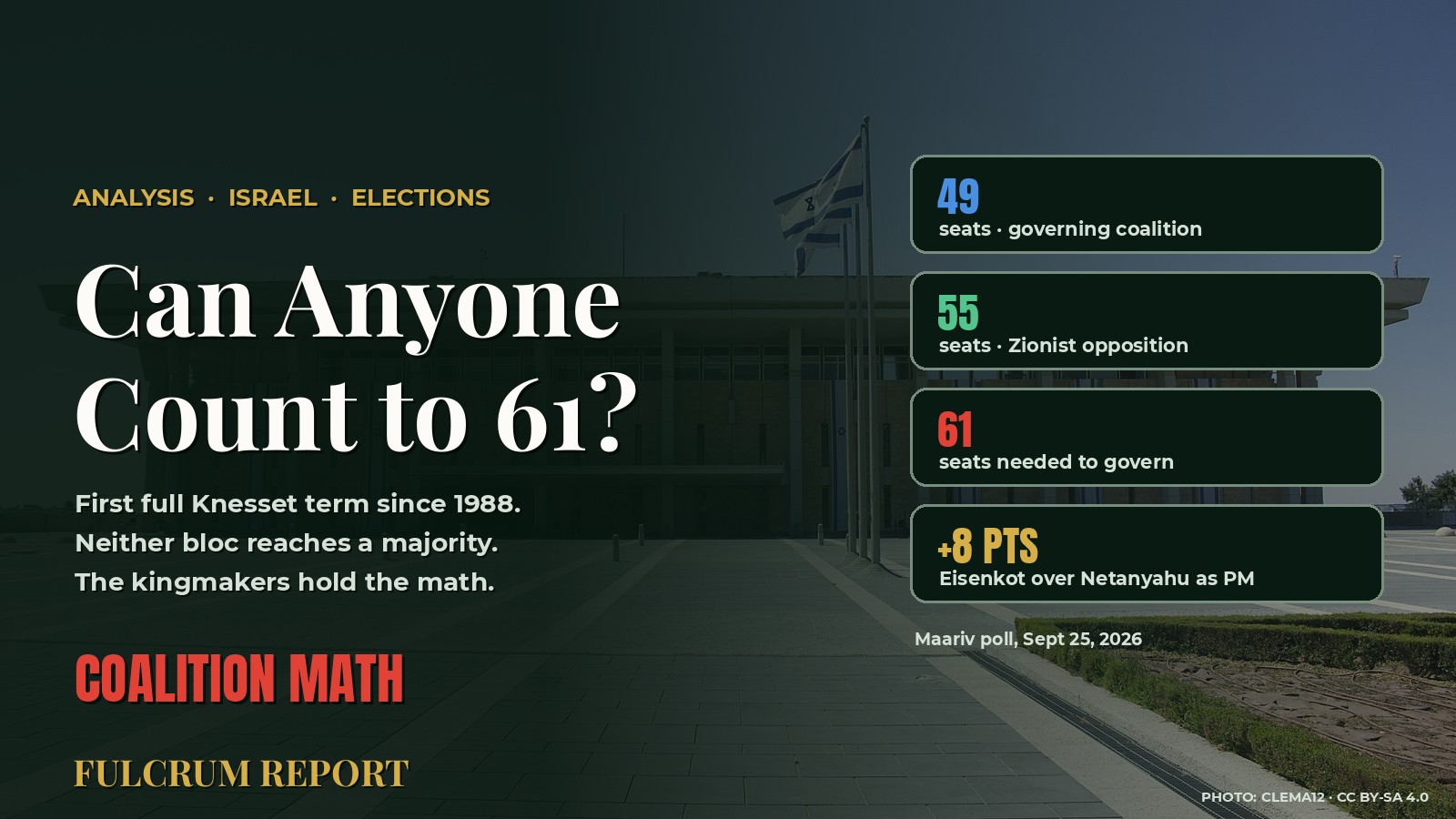
Israel votes October 27. A Maariv poll gives the coalition 49 seats and the Zionist opposition 55. Neither reaches the 61 needed to govern.
For the first time since 1988, an Israeli Knesset has served out its full term. No early collapse, no snap election called halfway through. That alone is unusual for a country that has gone to the polls five times between 2019 and 2022. And in about three weeks, Benjamin Netanyahu faces voters again.
I want to explain why I think the headline polls are the least interesting part of this election.
The vote
Israelis vote on October 27. The country uses a single national list system. You don't vote for a local candidate, you vote for a party, and seats in the 120-member Knesset are handed out roughly in proportion to the national vote. Parties need to clear a threshold of 3.25% to get in at all, which is why small parties merge, split and re-merge so often before an election.
What the latest poll says
A Maariv poll published September 25 gave the governing coalition 49 seats and the Zionist opposition 55. The number that matters is 61, a majority of 120. That's the line a government needs to pass a vote of confidence.
Do the simple arithmetic and you see the problem. The coalition is 12 seats short. The opposition is 6 seats short. And 120 minus 49 minus 55 leaves 16 seats that sit outside both blocs.
One poll is one poll. Seat projections move, and Israeli polls have missed before. But the shape of this one is the shape I keep coming back to: nobody gets there alone.
The Eisenkot number
The same poll asked who is more suited to be prime minister. Gadi Eisenkot, the former chief of staff of the Israel Defense Forces, led Netanyahu by 8 points.
That's a striking number for someone who has never been prime minister, running against the longest-serving PM in the country's history. It's also a question about a person, not a seat count. In a parliamentary system, being the most popular candidate doesn't make you prime minister. Being able to build a majority does.
How a government actually gets formed
This is the part I think gets lost in election coverage. After the vote, Israel's president consults with every party that made it into the Knesset and asks them who they'd back as prime minister. The president then gives the mandate to the lawmaker seen as most likely to put together a government. That person gets a few weeks, with a possible extension, to sign up enough partners to reach 61. If they can't, the mandate can pass to someone else. If nobody can, the country can end up voting again.
So the race isn't really about who comes first. It's about coalition formation, not the popular vote.
The kingmakers
When neither bloc reaches 61, the parties in the middle become the most important people in the room. In this election that means the Arab parties and the smaller factions.
This is my analysis, not a forecast. The Arab parties have usually stayed out of Israeli governments, but that changed in 2021, when Ra'am joined the coalition that briefly replaced Netanyahu. That precedent matters, because it means an Arab party backing or joining a government is no longer unthinkable. Whether any of them would be willing to do that this time, and whether the other partners would sit with them, is one of the biggest open questions of the campaign.
The smaller factions matter for a different reason. In a tight race, a party that barely clears the threshold can add four seats to one side. A party that just misses it can take votes off the table entirely. A couple of points either way can change the whole map.
The rally effect
This is a wartime election, and that brings in an idea political scientists have argued about for decades. John Mueller described the rally-round-the-flag effect in 1970: when a country faces a crisis, support for the people in charge tends to jump.
The catch is that the effect usually fades. Early on, a crisis helps incumbents because people want unity. Later, the same crisis turns into a referendum on accountability. Voters start asking who was responsible, what was promised, and what actually got delivered.
I'd treat that as a general pattern, not a prediction. But I think it helps explain why a sitting prime minister can be trailing on the suitability question while his bloc is still in the race. The question for October 27 is which phase Israeli voters are in.
What I'm watching
First, the 16 seats outside both blocs, and especially who says out loud who they would or wouldn't sit with. Pre-election promises in Israel get tested fast once the mandate is handed out.
Second, the threshold. Watch for any small party polling close to 3.25%. Whether it gets in or drops out can swing the math by several seats.
Third, turnout, particularly among Arab voters. It has moved a lot from election to election, and it changes how many seats the Arab parties actually win.
The question isn't who wins the most seats. It's who can count to 61.
So here's my question for you: who do you think gets there first, and who do they need to do it?

About the author
Fulcrum Report
Independent Middle East analyst holding a PhD in Political Science. Fulcrum Report offers rigorous, framework-driven coverage of politics and geopolitics across the Levant and the wider region — analysis without agenda.
Related reading
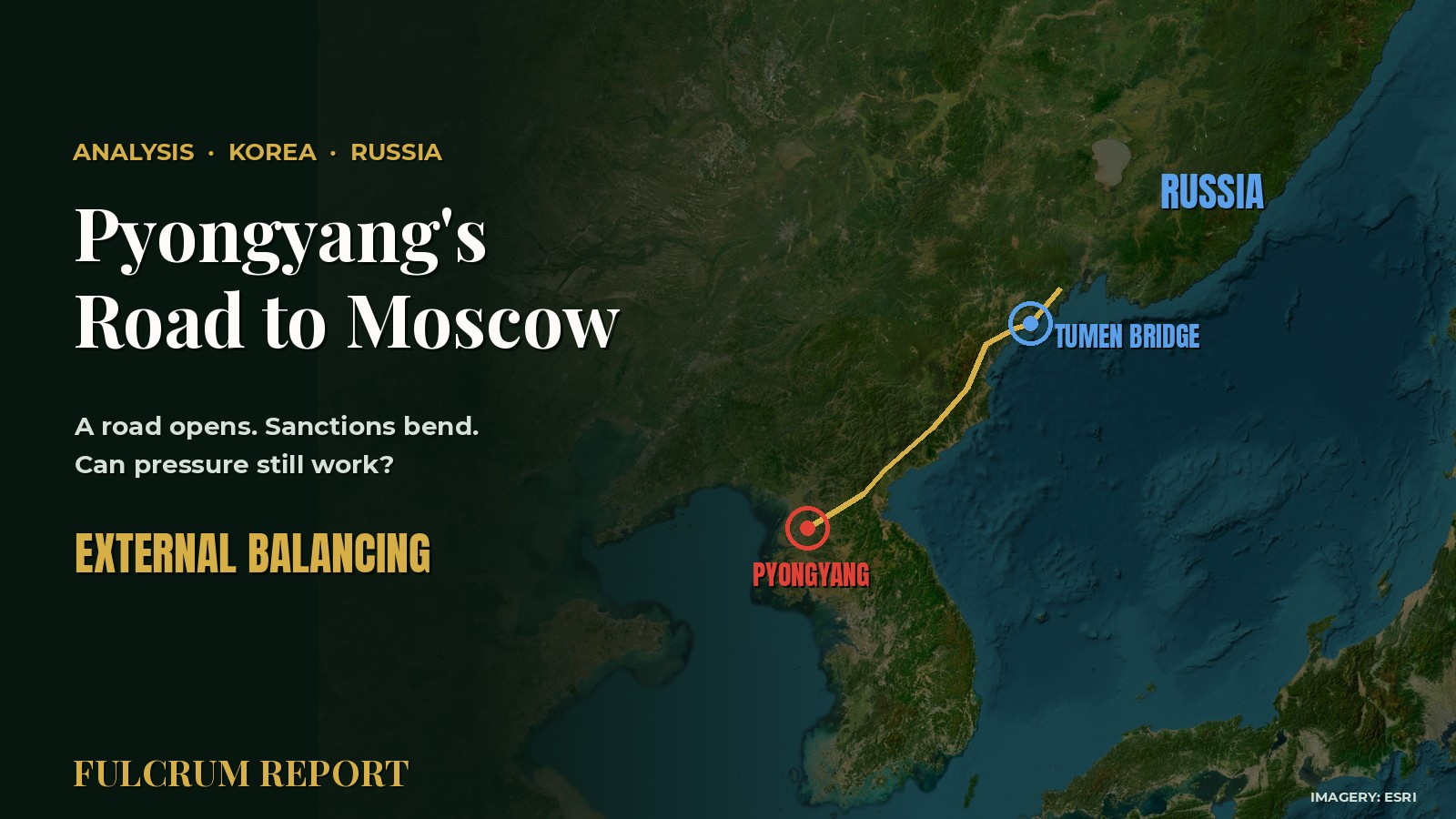
Pyongyang's Road to Moscow: Can Sanctions Still Work?
A second enrichment facility is reportedly going up at Yongbyon, and the Tumen River road bridge to Russia reportedly opened on September 8. When a major power offers a way around sanctions, how much pressure is left? An explainer on external balancing.

Takaichi's New Partner: Why Cabinet Seats Are a Trade
Sanae Takaichi reportedly reshuffled her cabinet on September 16 and 17, bringing in the Japan Innovation Party (Ishin) for the first time. Her camp holds two-thirds of the lower house but lacks an upper-house majority. A look at coalition bargaining and who gets the leverage.
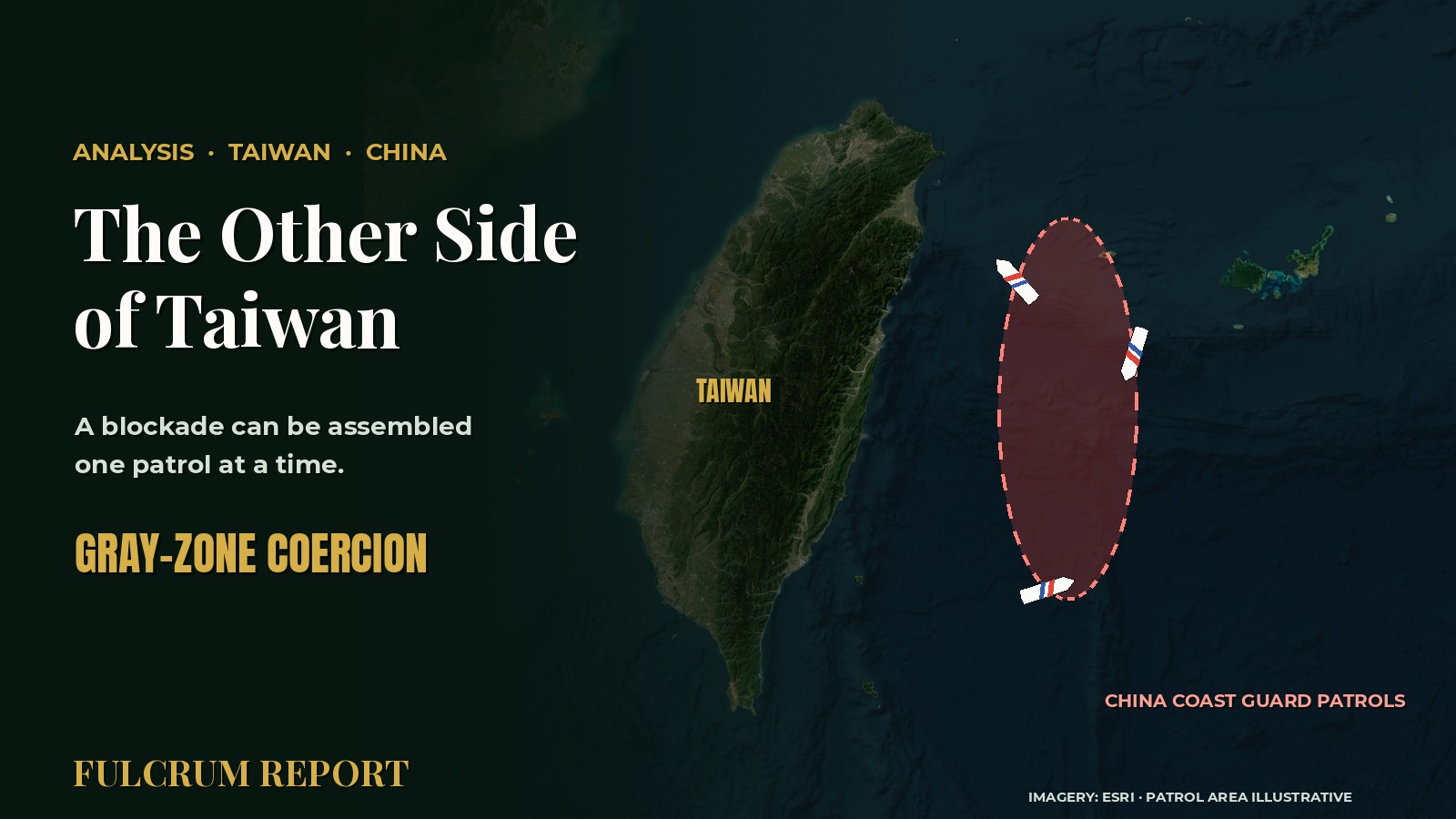
The Other Side of Taiwan: How a Blockade Gets Built Without Being Declared
China's Coast Guard has reportedly set up a regular presence east of Taiwan, framed as law enforcement, while a $14 billion U.S. arms package is pending. A look at gray-zone coercion, salami tactics and escalation control.