A Ceasefire in Name Only
Gaza’s truce has held on paper since October 9, 2025, but more than 1,300 people have been killed since. Conflict scholars have a name for this: negative peace.
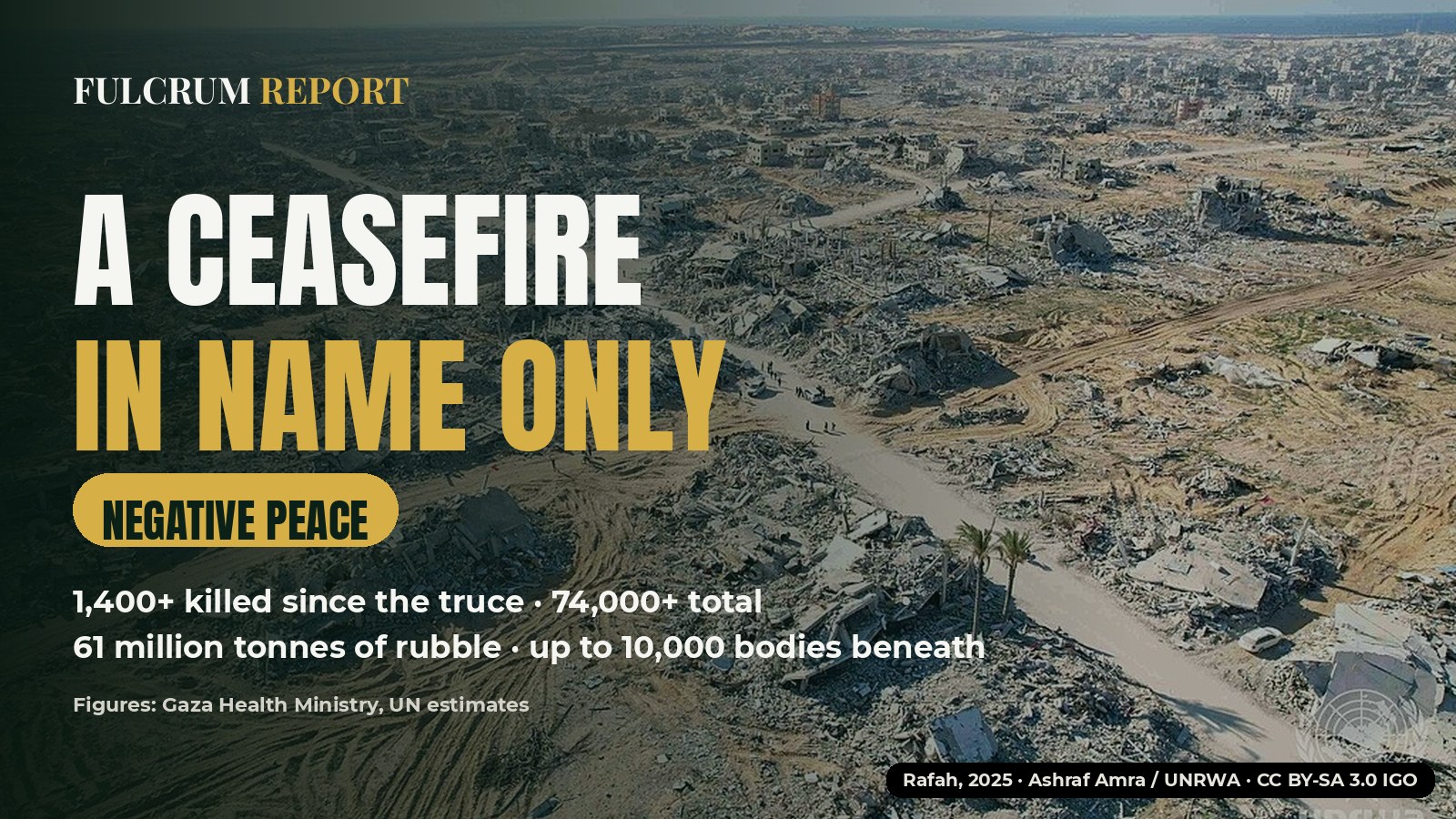
Gaza has had a ceasefire for almost a year. In that time, more than 1,300 people have been killed there. I keep coming back to those two facts sitting side by side, because they describe something we don't have good everyday language for. It isn't war, at least not the kind we saw for two years. But it isn't peace either.
What the truce looks like now
The agreement was reached on October 9, 2025, took effect the next day, and was celebrated at a signing ceremony in Sharm el-Sheikh on October 13. On paper, it still exists. Nobody has formally walked away from it.
On the ground, the numbers tell a different story. When I recorded the reel, the Gaza Health Ministry put the number of Palestinians killed since the truce at 1,386. By its late-September update, that figure had passed 1,400, and the total death toll since October 2023 stood at 74,016. Those are the ministry's figures. Israel disputes how they're counted, and says many of its strikes since the truce were responses to violations by Hamas. Hamas, in turn, accuses Israel of breaking the deal. I'm not going to settle that argument here. What I can say is that people keep dying under an agreement that was supposed to stop the killing.
Then there's what the war left behind. The UN estimates Gaza holds about 61 million tonnes of rubble. Somewhere under it, by UN estimates, are between 8,000 and 10,000 people who have never been recovered. Families still don't have bodies to bury. Only a small fraction of that rubble has been cleared.
Aid is the other measure I watch. In mid-September, according to reports, only 244 of the 1,109 trucks that passed through the Kerem Shalom crossing carried humanitarian aid. The rest carried other cargo. I couldn't independently confirm that breakdown, so treat it as a reported figure, but it fits a broader pattern aid groups have described all year: goods are moving, just not the ones people in Gaza need most.
What negative peace means
There's a name for this situation. The Norwegian sociologist Johan Galtung, one of the people who built peace research into a field, drew a line between two kinds of peace. Negative peace is simply the absence of open war. Positive peace is the presence of the things that make peace last: basic safety, enough food and medicine, the chance to rebuild, and some kind of political settlement people can live with.
Gaza right now is about as clear an example of negative peace as I can think of. There's no full-scale war. The large ground offensives and the daily bombardment of the war years have stopped. But almost none of the conditions for real peace are in place. People are still being killed. Aid is limited. Reconstruction has barely started. And the political questions, from who governs Gaza to who disarms and when, are still open.
Why ceasefires decay
Research on ceasefires points to a pretty consistent finding. Agreements that come without enforcement tend to wear down over time into what scholars call low-intensity violence. It doesn't usually happen in one big collapse. It happens a strike here, a shooting there, each one small enough that nobody tears up the deal.
The reason is simple. If a violation carries no real cost, there's little to stop the next one. A ceasefire holds when breaking it is expensive, because a monitor calls it out, a guarantor responds, or someone loses something they value. When that cost is close to zero, each side can push the limits and still say the truce is in place. That's the gap I think we're looking at in Gaza: a ceasefire with plenty of signatures and not much enforcement.
What I'm watching
I'm watching the death toll since the truce, because the trend matters more than any single day. I'm watching what actually comes through the crossings, and whether the share that is aid goes up or down. I'm watching the slow work of clearing rubble and recovering the missing, which is one of the most human measures of whether life can restart. And I'm watching whether anyone, whether the mediators, the guarantors or the parties themselves, builds a real way to make violations cost something.
The bottom line
A ceasefire is a pause button. It stops the worst of the fighting and buys time. But a pause only becomes peace if someone uses that time to build the conditions for it, and enforces the rules while they do. Without that, the pause just stretches on, and people keep dying inside it.
What do you think it would take to turn this pause into something closer to real peace?
About the author
Fulcrum Report
Independent Middle East analyst holding a PhD in Political Science. Fulcrum Report offers rigorous, framework-driven coverage of politics and geopolitics across the Levant and the wider region — analysis without agenda.
Related reading
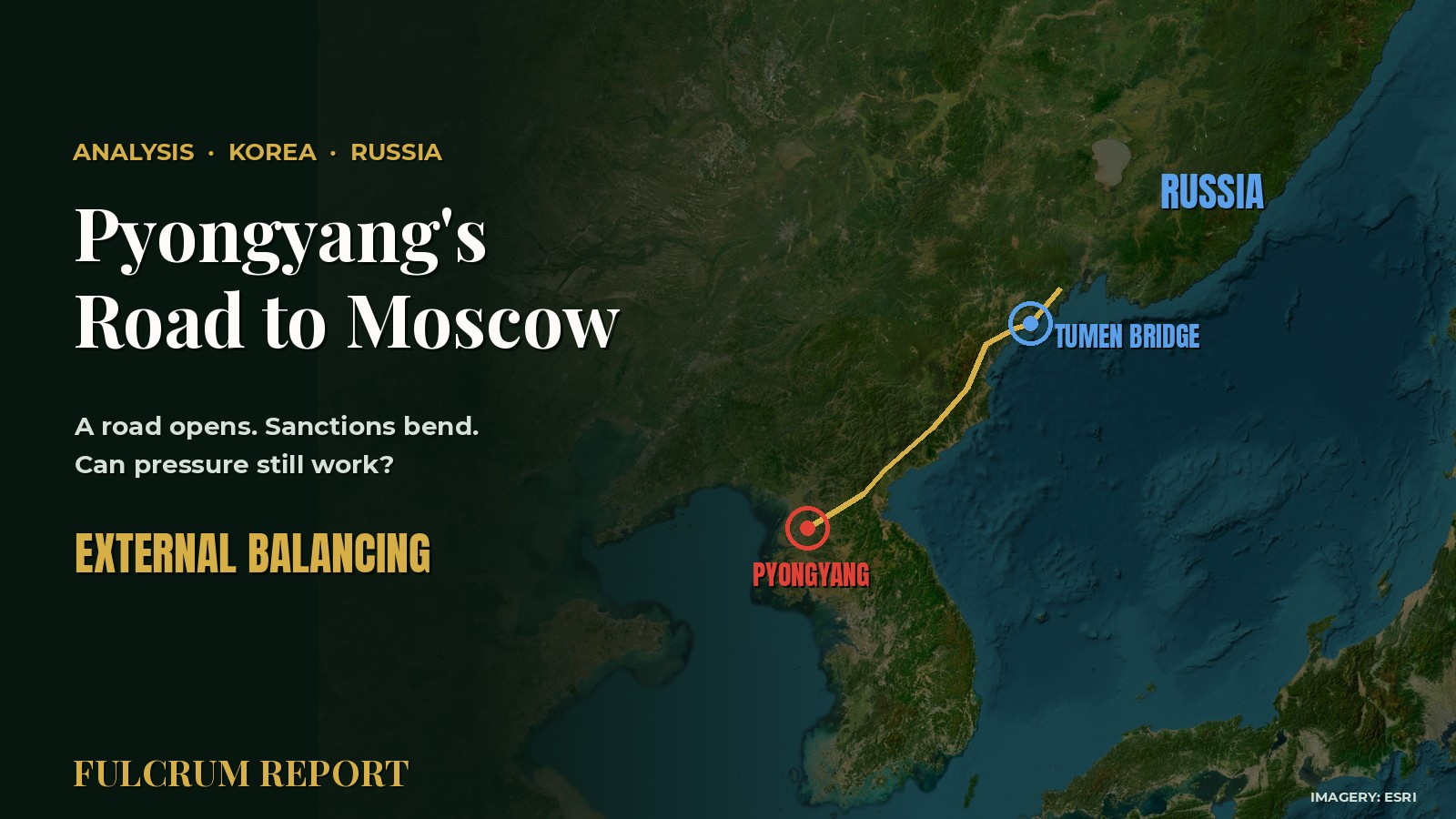
Pyongyang's Road to Moscow: Can Sanctions Still Work?
A second enrichment facility is reportedly going up at Yongbyon, and the Tumen River road bridge to Russia reportedly opened on September 8. When a major power offers a way around sanctions, how much pressure is left? An explainer on external balancing.
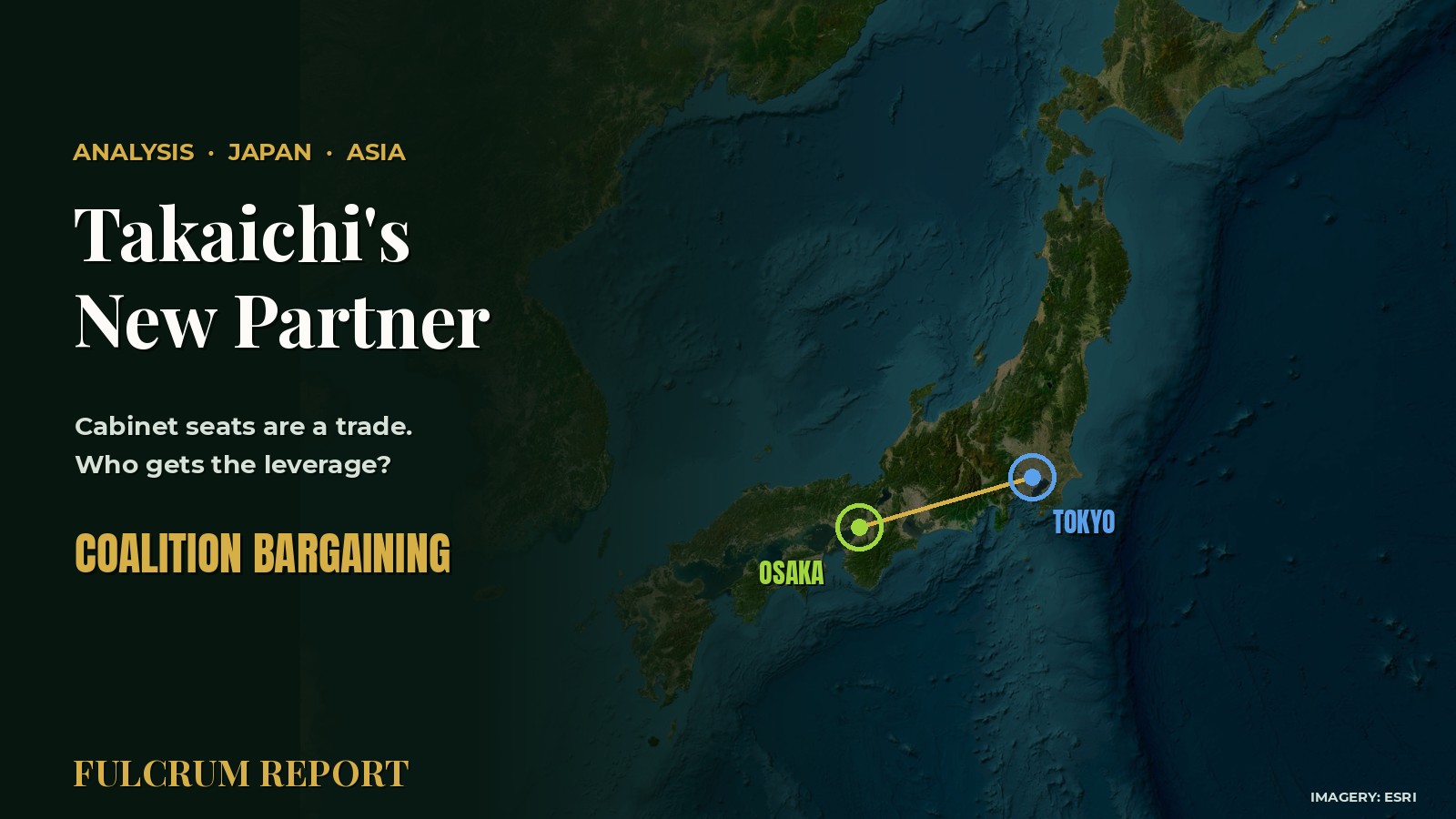
Takaichi's New Partner: Why Cabinet Seats Are a Trade
Sanae Takaichi reportedly reshuffled her cabinet on September 16 and 17, bringing in the Japan Innovation Party (Ishin) for the first time. Her camp holds two-thirds of the lower house but lacks an upper-house majority. A look at coalition bargaining and who gets the leverage.
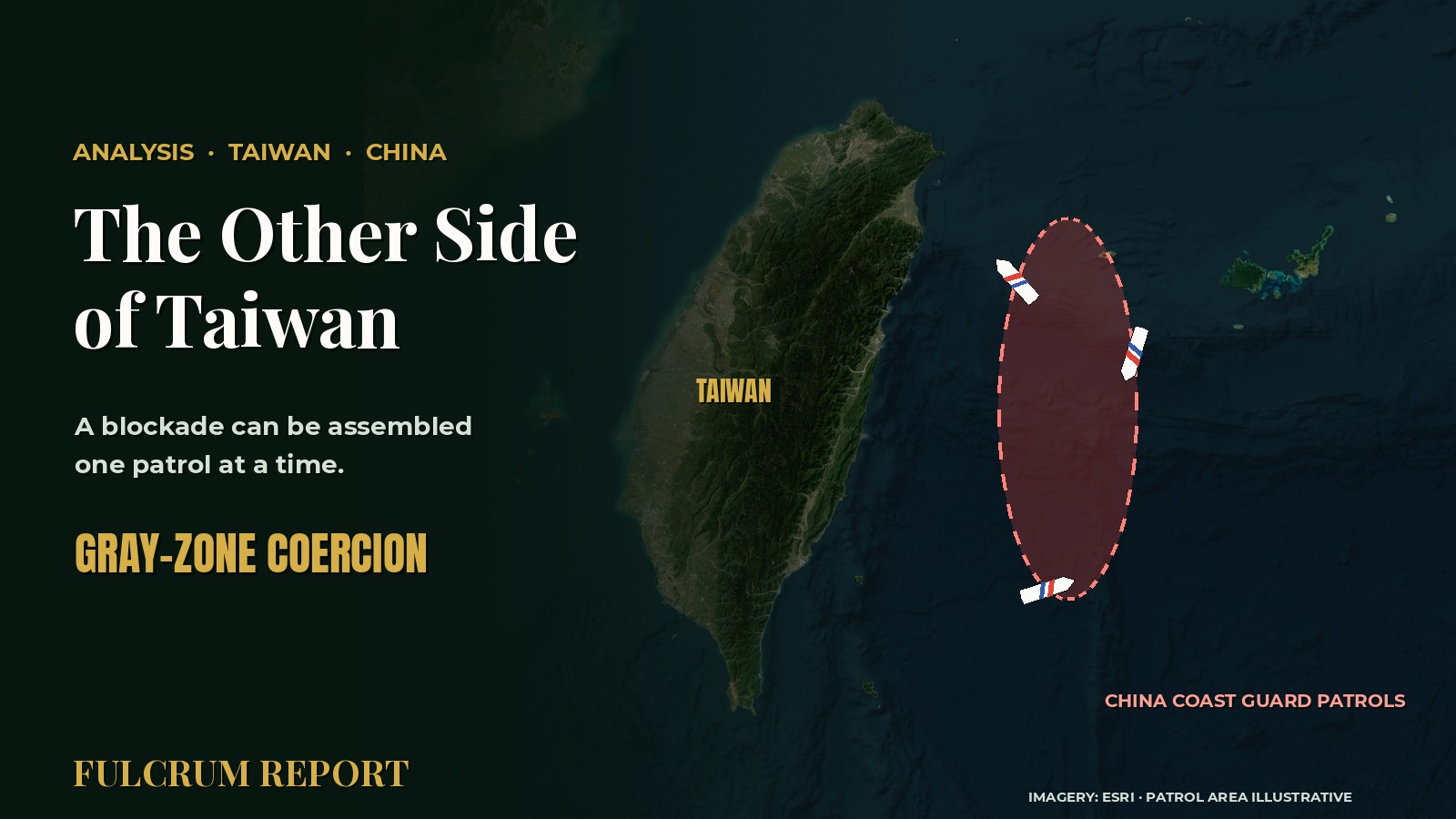
The Other Side of Taiwan: How a Blockade Gets Built Without Being Declared
China's Coast Guard has reportedly set up a regular presence east of Taiwan, framed as law enforcement, while a $14 billion U.S. arms package is pending. A look at gray-zone coercion, salami tactics and escalation control.