The Center of the World Is on a Church Floor
Inside the Holy Sepulchre, a stone bowl in the Greek Orthodox Katholikon marks what tradition calls the navel of the world.
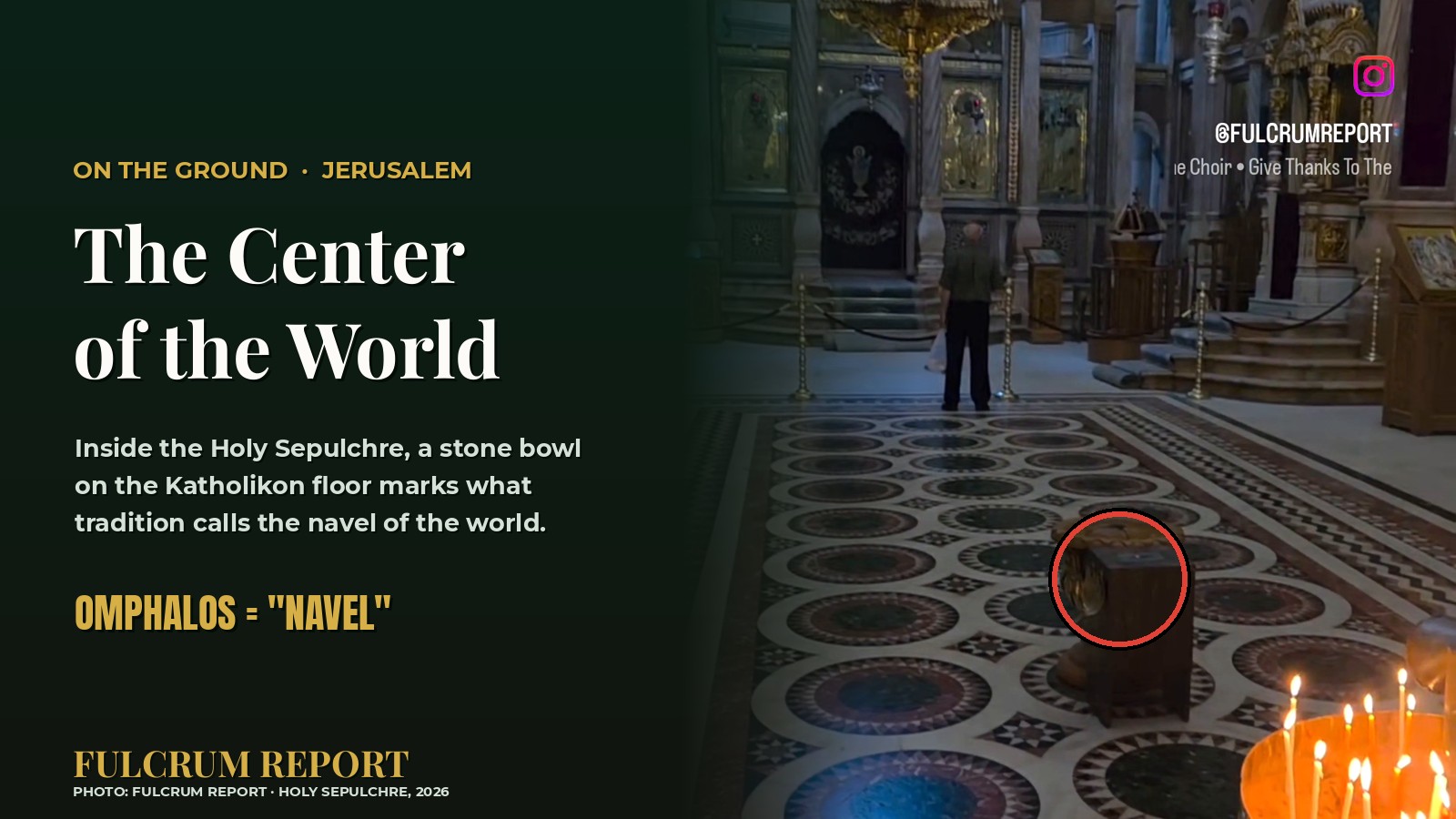
Most people who walk into the Church of the Holy Sepulchre are looking for two things: the hill of Golgotha and the Tomb. Both are a few steps from where I stood when I filmed this. But in the middle of the Greek Orthodox part of the church there's something smaller that people walk straight past, and it carries one of the biggest claims in the building.
It's a stone bowl on a short pedestal, sitting on the marble floor. Tradition calls it the Omphalos. In Greek the word means "navel." The navel of the world.
Where you're standing
The Holy Sepulchre isn't one church so much as a cluster of chapels under a single roof. The large central space facing the Tomb is the Katholikon, which belongs to the Greek Orthodox. It's the part with the gold chandeliers hanging low over the floor and the tall carved iconostasis, the wall of icons, at the far end. If you're there during a service it's packed. If you're there at a quiet hour, it's a few pilgrims, a lot of candles and a lot of echo.
The Omphalos sits out in that open floor. It doesn't have a rope around it or a big sign. You have to know to look.
Why the center of the world
The idea that Jerusalem sits at the middle of everything is very old. A line in the Book of Ezekiel (5:5) reads, "This is Jerusalem; I have set it in the midst of the nations." Christian writers picked that up and ran with it. If the most important event in their story happened here, then this was, in a spiritual sense, the center.
Medieval mapmakers drew it that way too. On the Hereford Mappa Mundi, made around 1300 and still kept at Hereford Cathedral in England, Jerusalem is placed right at the center of the world. These maps weren't trying to help anyone travel. They were telling you what mattered.
I find that useful to keep in mind. We tend to think of maps as neutral. They rarely are. Every map has a center, and somebody chose it.
The word itself
The Greek word is older than the church. In ancient Greece, the most famous omphalos was at Delphi, where a carved stone marked what the Greeks believed was the center of their world. The myth was that Zeus released two eagles from opposite ends of the earth, and where they met, that was the middle.
So when Greek-speaking Christians in Jerusalem marked their own center of the world, they reached for a word that already meant exactly that. Same idea, new place.
Look up
If you stand near the Omphalos and tilt your head back, the dome above you holds an image of Christ Pantocrator, usually translated as "Ruler of All." It's a standard image in Orthodox churches, but here the placement feels deliberate. The center of the world on the floor, and above it, the ruler of all of it.
That's what I tried to capture in the video: the floor, the chandeliers, then the slow tilt up to the dome.
A shared and sensitive place
It's worth saying that the Holy Sepulchre is shared. The Greek Orthodox, Roman Catholic and Armenian churches hold the main parts of it, and the Coptic, Ethiopian and Syriac churches have smaller places, all under a centuries-old arrangement known as the Status Quo. Who cleans which step, who lights which lamp and when, is all set by that arrangement. The Omphalos belongs to one tradition inside a building that many traditions call home.
I'm not making a claim about whether this spot is literally the center of anything. It's a tradition, and an old one. What interests me is how much meaning people have poured into one small stone bowl, and how easy it is to walk past it.
If you go, give it a minute. Stand next to it, look at the floor, then look up.
About the author
Fulcrum Report
Independent Middle East analyst holding a PhD in Political Science. Fulcrum Report offers rigorous, framework-driven coverage of politics and geopolitics across the Levant and the wider region — analysis without agenda.
Related reading
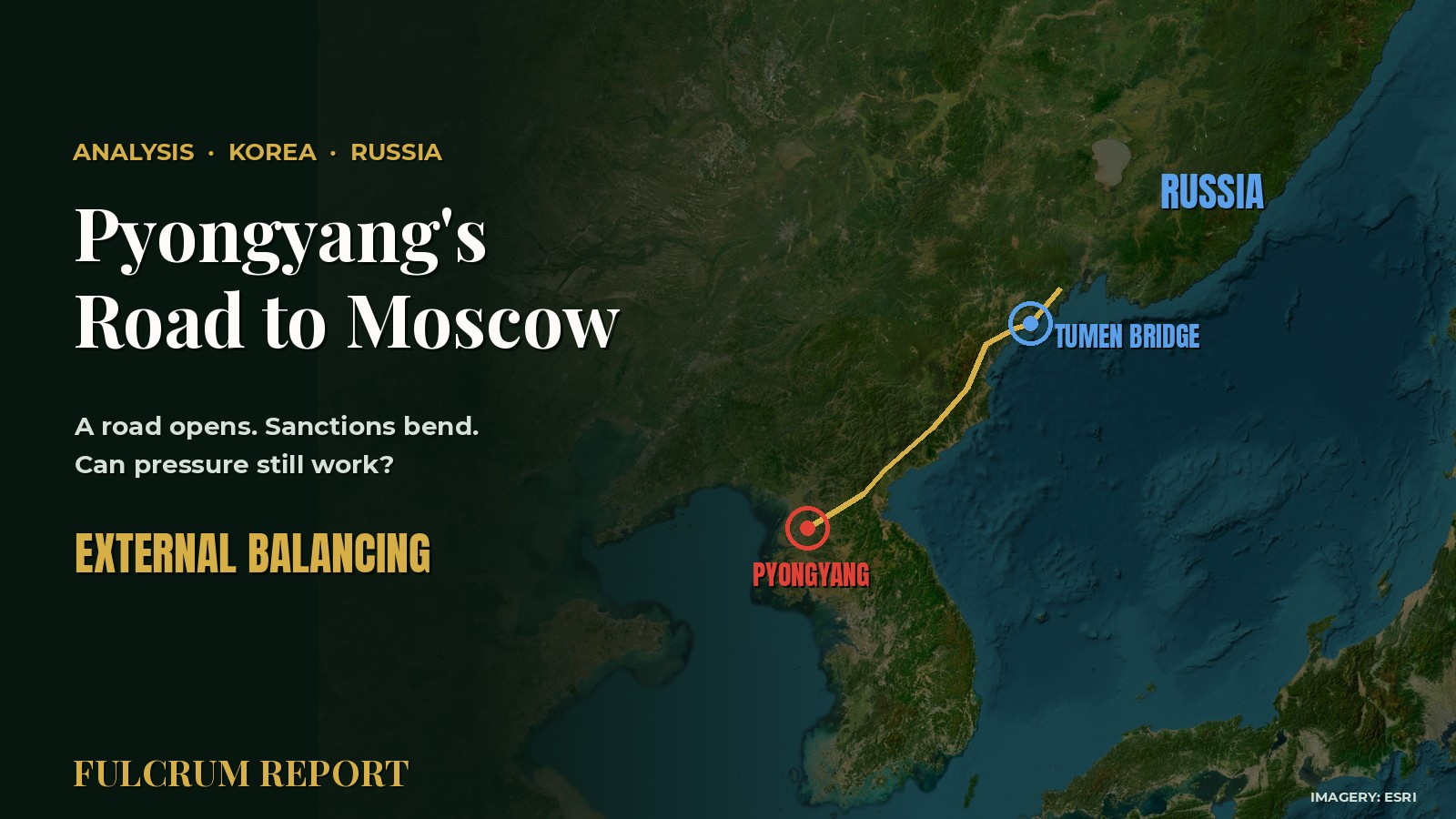
Pyongyang's Road to Moscow: Can Sanctions Still Work?
A second enrichment facility is reportedly going up at Yongbyon, and the Tumen River road bridge to Russia reportedly opened on September 8. When a major power offers a way around sanctions, how much pressure is left? An explainer on external balancing.
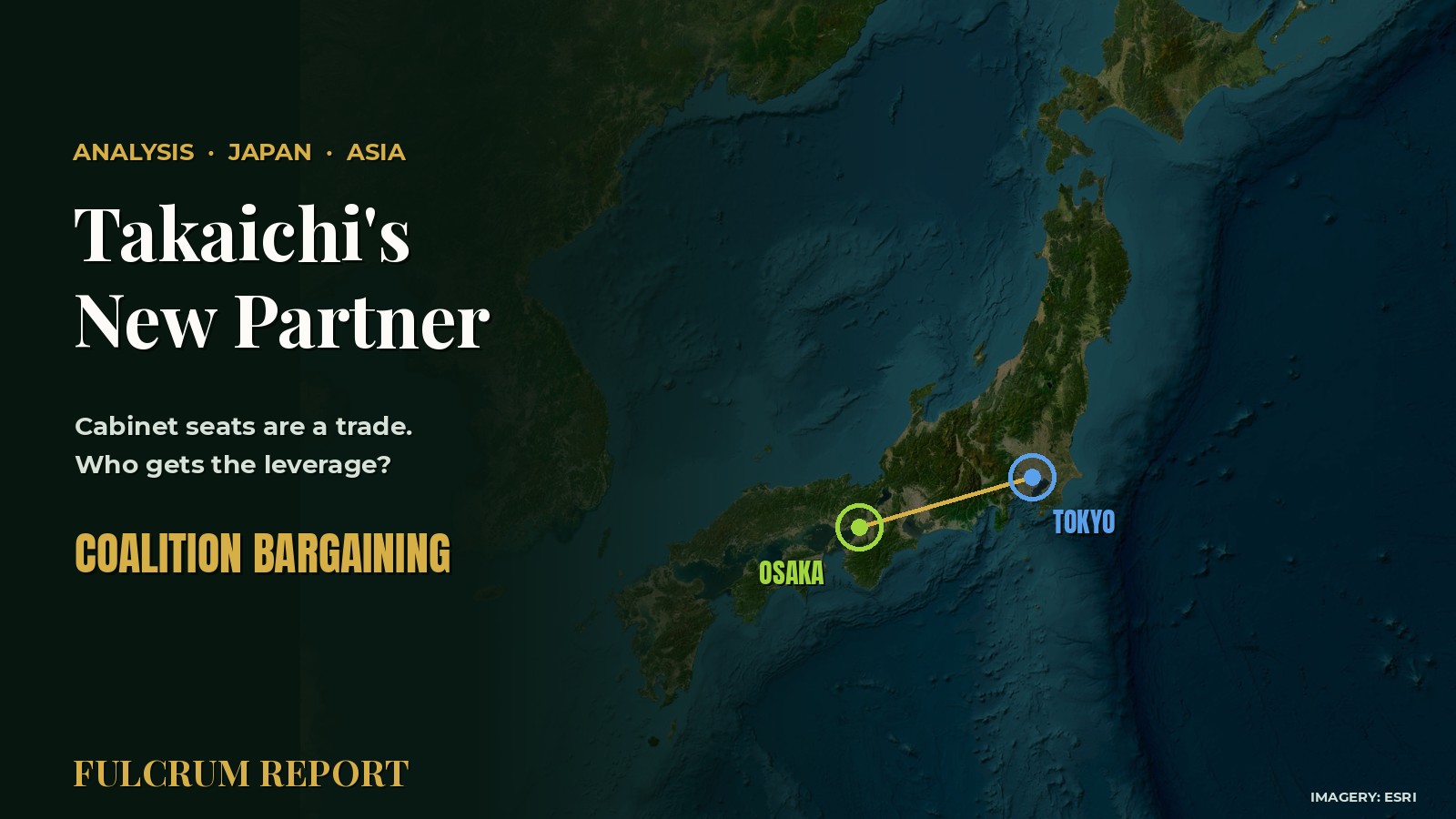
Takaichi's New Partner: Why Cabinet Seats Are a Trade
Sanae Takaichi reportedly reshuffled her cabinet on September 16 and 17, bringing in the Japan Innovation Party (Ishin) for the first time. Her camp holds two-thirds of the lower house but lacks an upper-house majority. A look at coalition bargaining and who gets the leverage.
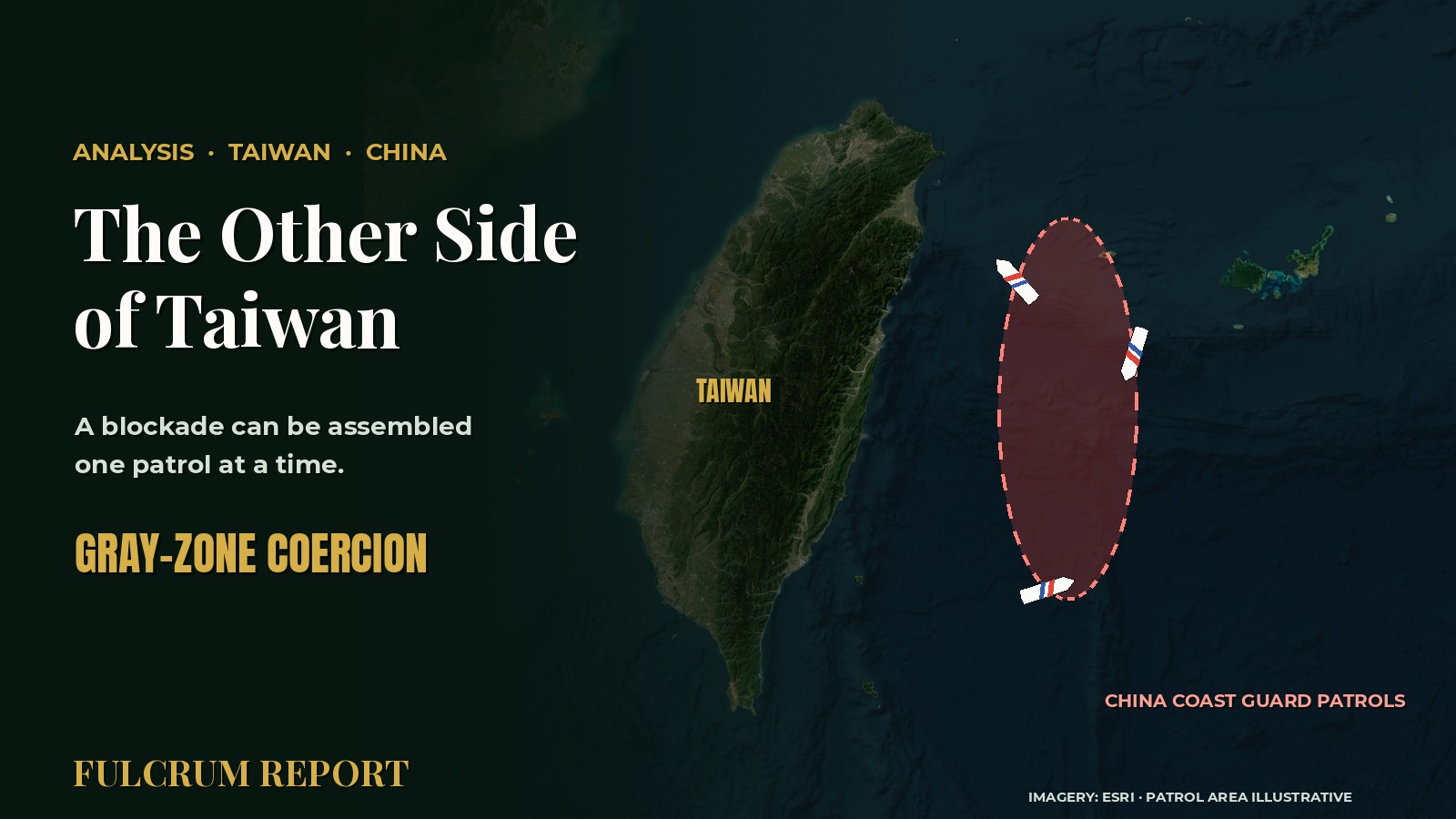
The Other Side of Taiwan: How a Blockade Gets Built Without Being Declared
China's Coast Guard has reportedly set up a regular presence east of Taiwan, framed as law enforcement, while a $14 billion U.S. arms package is pending. A look at gray-zone coercion, salami tactics and escalation control.