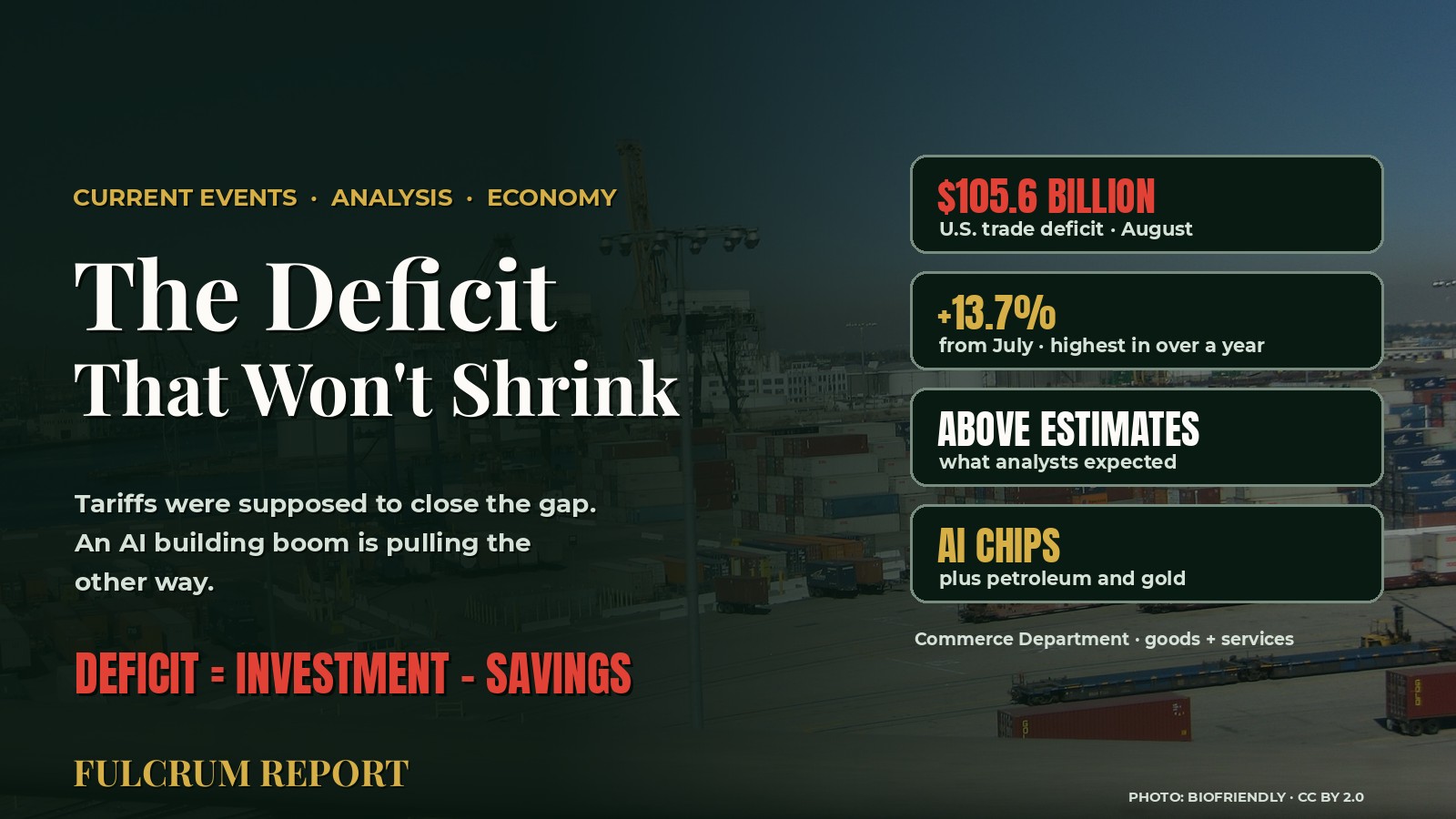
Trump's tariffs were supposed to shrink America's trade deficit. In August, it hit $105.6 billion. I had to read that number twice.
Let me start with what the number means, because "trade deficit" gets thrown around a lot and people use it to mean different things.
What the number actually is
The trade deficit is the gap between what the U.S. imports and what it exports. This figure counts goods and services together. According to new Commerce Department data, the August gap jumped 13.7 percent from July. That's the highest level in over a year, and it came in above what analysts expected.
A couple of caveats before anyone runs with this. It isn't a record. And monthly trade numbers are noisy. They swing around and often get revised later. One month doesn't make a trend, so I'm treating this as a data point, not a verdict.
Still, it's a striking data point, because of the timing.
The tariffs were meant to do the opposite
In April 2025, Trump announced what he called "Liberation Day" tariffs, a broad set of global tariffs. By his own account, the goals were to cut the trade deficit and fight what he called unfair trade. Whatever you think of that policy, the deficit is the yardstick he chose. So it's fair to ask what happened.
The short answer: so far, the deficit hasn't shrunk. I want to be careful with the wording. That isn't the same as saying the tariffs "failed." Tariffs do other things, and the story isn't over. But on the measure they were sold on, August went the wrong way.
So what's coming in?
Three things stand out in the reporting. The first is chips for AI data centers. The second is petroleum. The third is gold, in large amounts.
Gold is a bit of an odd one. Big gold imports often reflect money moving around in financial markets rather than anyone actually using the stuff, so I wouldn't read too much into that piece. The chips are the part I find most interesting.
The equation that explains it
This is where I put on my analysis hat, so take it as interpretation rather than reporting.
Economists point to a basic accounting identity: a country's trade deficit equals the gap between what it invests and what it saves. If a country invests more than it saves at home, the difference has to come from abroad, and that shows up as a trade deficit. It's not a theory you can opt out of. It's how the books balance.
That's why I keep coming back to one line: tariffs change prices, not the math. A tariff makes imports more expensive. It doesn't, by itself, change how much the country invests or how much it saves. If those two stay apart, the gap stays too.
And right now, America is investing in AI at a remarkable pace. Data centers, power, and above all chips. My reading is that the country is investing faster than it saves. That's an interpretation, not a measured statistic, but it fits the numbers. Many of those chips are made abroad, so the investment boom turns straight into imports.
Put simply, the bigger the boom, the more it imports.
Where this leaves us
Here's how I'd sum it up. Tariffs can raise the price of imports. They can't stop a country from buying what it's racing to build.
That doesn't mean the AI boom is good or bad, or that tariffs are useless. It means the deficit is being driven by something bigger than trade policy. If you want the deficit to shrink, you'd need Americans to save more or invest less. Right now the economy is doing the opposite, and on purpose.
So I'll ask you what I asked in the reel: are tariffs working? Yes or no, and tell me why. I genuinely want to hear how people are thinking about this.
If you want more breakdowns like this, follow @fulcrumreport and visit fulcrumreport.com for analysis without agenda.

About the author
Fulcrum Report
Independent Middle East analyst holding a PhD in Political Science. Fulcrum Report offers rigorous, framework-driven coverage of politics and geopolitics across the Levant and the wider region — analysis without agenda.
Related reading
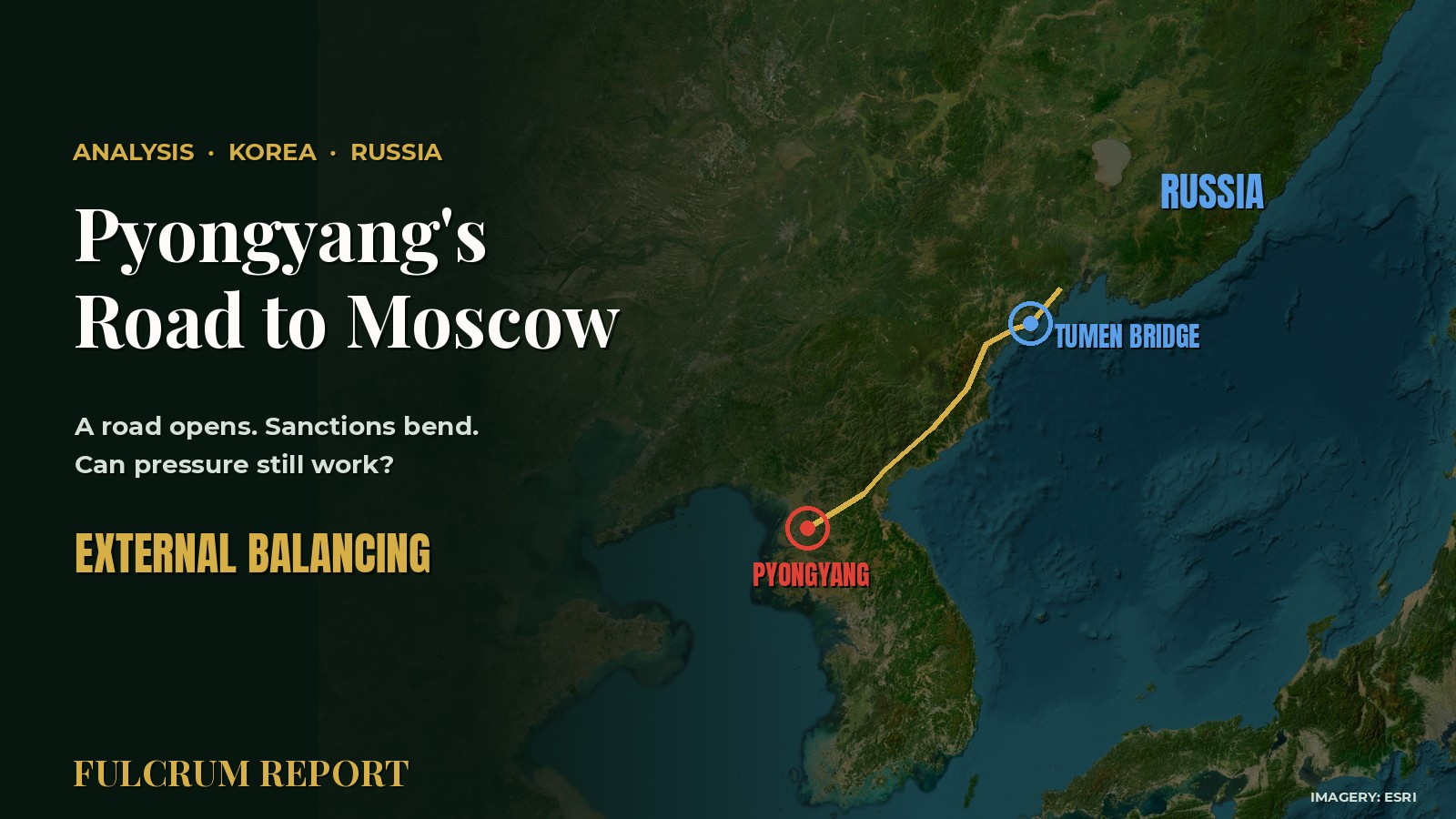
Pyongyang's Road to Moscow: Can Sanctions Still Work?
A second enrichment facility is reportedly going up at Yongbyon, and the Tumen River road bridge to Russia reportedly opened on September 8. When a major power offers a way around sanctions, how much pressure is left? An explainer on external balancing.
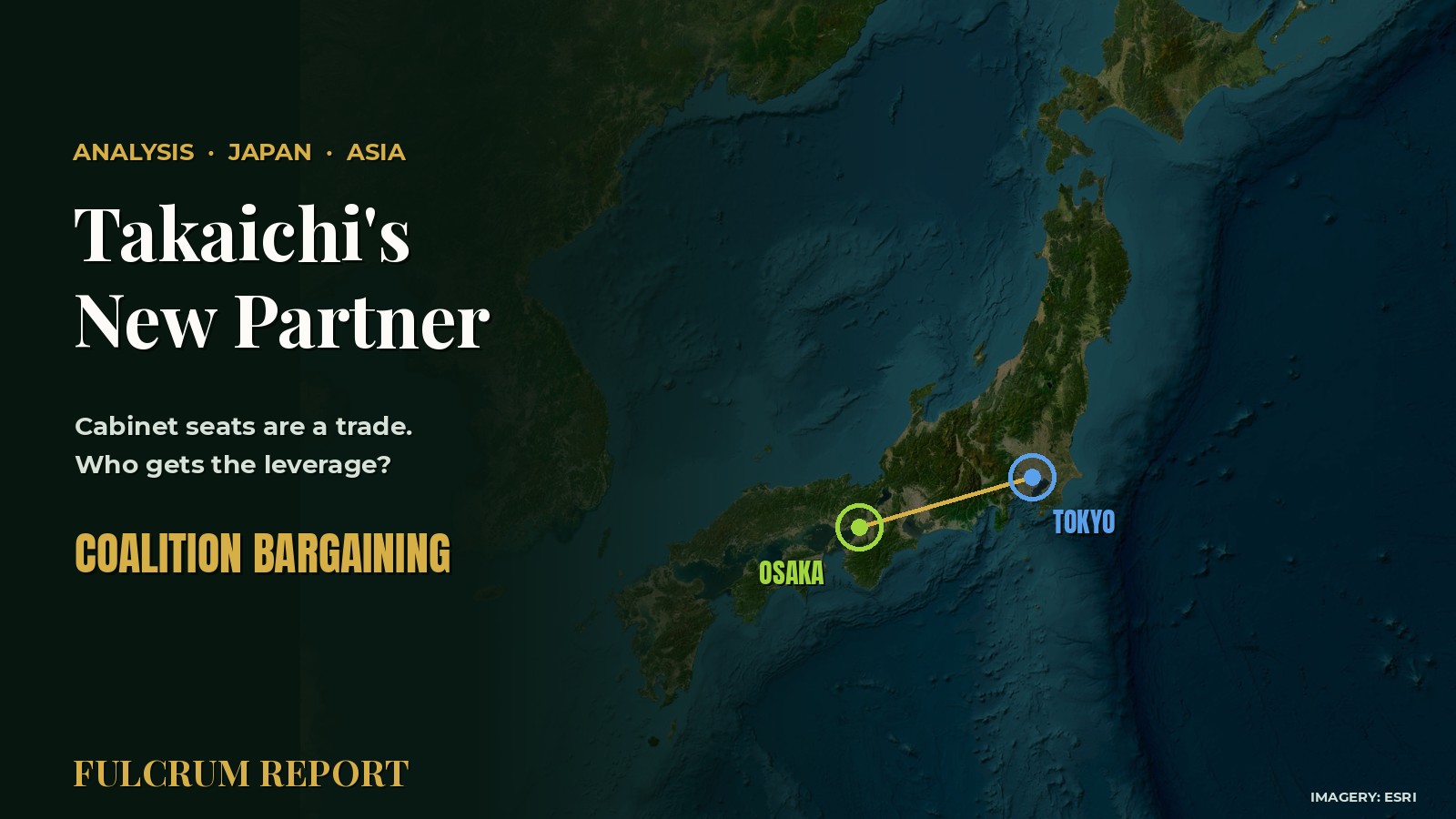
Takaichi's New Partner: Why Cabinet Seats Are a Trade
Sanae Takaichi reportedly reshuffled her cabinet on September 16 and 17, bringing in the Japan Innovation Party (Ishin) for the first time. Her camp holds two-thirds of the lower house but lacks an upper-house majority. A look at coalition bargaining and who gets the leverage.
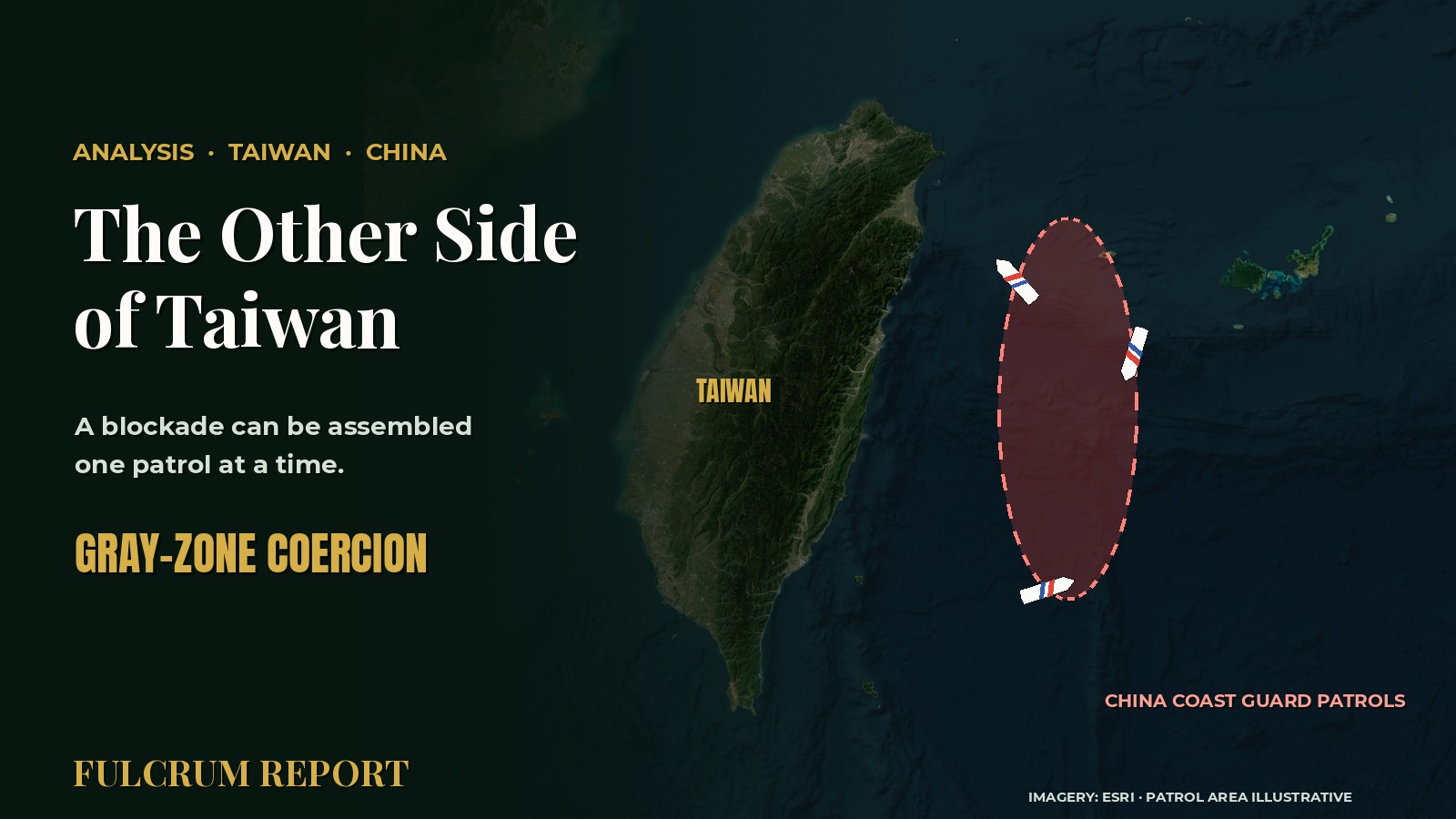
The Other Side of Taiwan: How a Blockade Gets Built Without Being Declared
China's Coast Guard has reportedly set up a regular presence east of Taiwan, framed as law enforcement, while a $14 billion U.S. arms package is pending. A look at gray-zone coercion, salami tactics and escalation control.