The Diesel Truce
The G7 and allies will release 100 million barrels of crude and diesel over four months. The bigger news is their promise not to restrict fuel trade with each other.
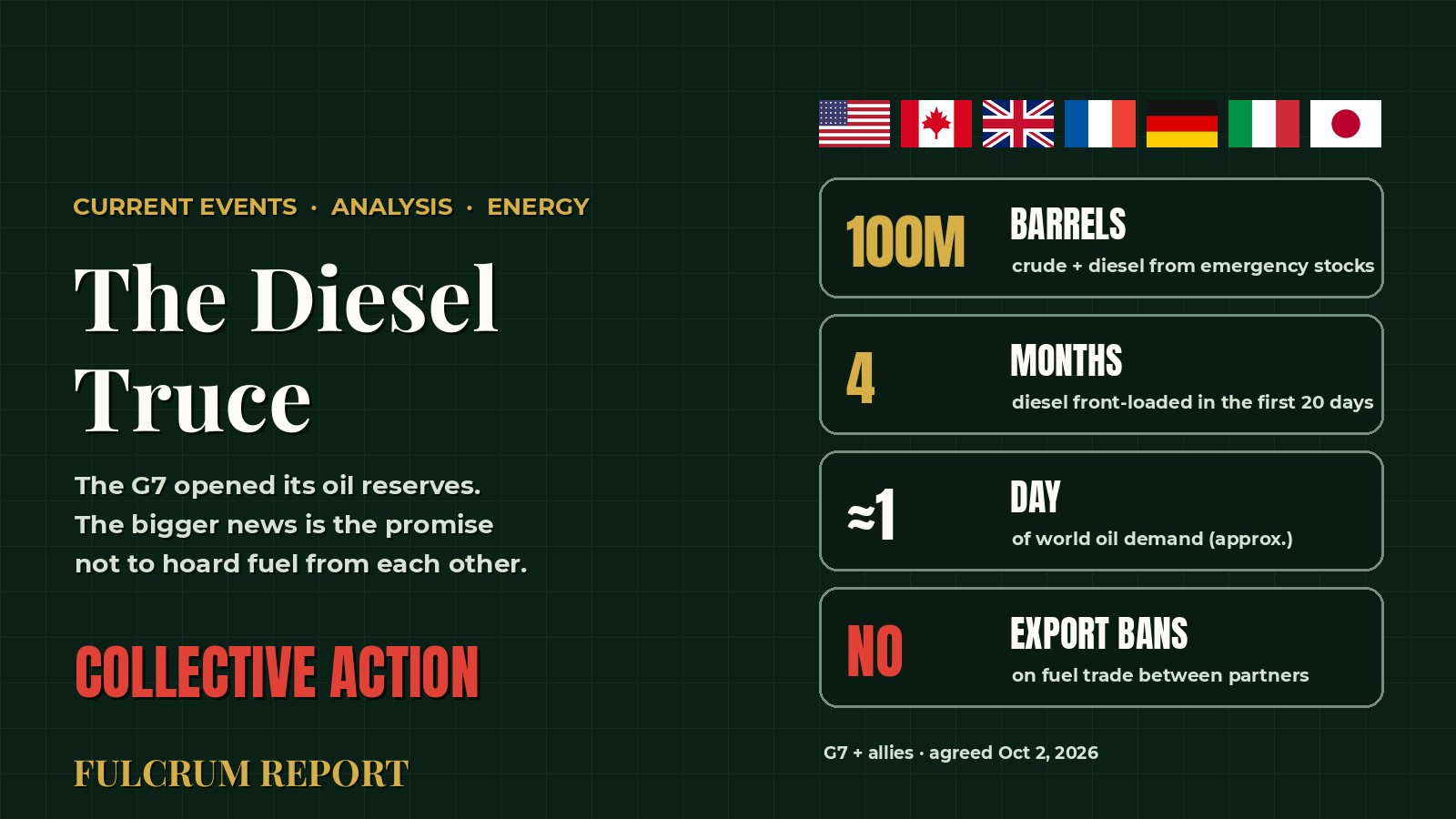
When the G7 announced on October 2 that it would open its emergency oil reserves, most of the coverage I saw led with the barrels. I understand why. Big numbers make good headlines. But the more important part of the deal was a single sentence about what these governments promised not to do to each other.
What they agreed
With the Iran war pushing energy costs up, the Group of Seven and allied countries will release 100 million barrels of crude and diesel from their strategic stocks over the next four months. Diesel comes first. The plan front-loads it into the first 20 days or so, which makes sense when you look at the pump. In Britain, diesel went above £2 a litre for the first time.
Markets reacted right away. Brent crude dipped briefly below $100 a barrel before closing around $102. US diesel futures fell more than 5% during the day and settled about 3% lower, near $4.50 a gallon. That's a start, but prices haven't really come down yet. The release is meant to bring them down, and whether it does will take weeks to see.
The sentence that mattered
Here's the background. In the days before the deal, President Trump publicly floated banning US diesel exports to hold prices down at home. He didn't order it, and he didn't formally announce it, but he said it out loud, and when a US president says that, traders and allied governments take notice.
Then came the G7 statement, delivered by French President Emmanuel Macron. In it, the countries agreed to "take no measures to restrict the exchange of energy and petroleum products between partner countries." Those are the statement's words, not Macron's own. The statement doesn't mention the United States or a diesel ban. But my read, and I'd label it as analysis, is that it appears to rule one out. By the end of the day, the export-ban idea looked like it was off the table.
A textbook collective action problem
Political scientists have studied this problem for decades, and it still surprises me how cleanly real events can fit it. In a crisis, every country is tempted to hoard. Seen from one capital, an export ban looks smart: it keeps fuel at home and protects your own drivers. But fuel moves through a global market. Take your supply off it and prices rise for everyone else, who can then do the same thing to you. If enough countries go that way, everyone ends up paying more than if nobody had.
Each choice makes sense alone, and together they leave everyone worse off. That's why a written promise among allies matters. It doesn't change anyone's incentives overnight, but it raises the cost of breaking ranks. A government that bans exports now isn't just protecting its own drivers. It's breaking a public commitment to six other major economies.
The release is small
I want to be honest about scale. World oil demand is roughly 100 million barrels a day, so the entire release equals about one day of global consumption, give or take. Spread over four months, it works out to under a million barrels a day. That's useful, especially for diesel early on, but it won't offset a major supply shock on its own.
So the barrels buy time. They don't fix anything. What turns this into more than a short-term patch is the commitment to keep trading even when it's painful at home.
What I'm watching
First, diesel prices over the next three weeks, while the front-loaded barrels arrive. If they don't ease, domestic pressure to hoard will come back. Second, whether any G7 member, or any of the allies in the deal, quietly tightens export licensing or adds informal limits instead of an outright ban. That's how commitments like this usually wear down. Third, the war itself, because no reserve release can make up for a long disruption in Gulf supply.
The bottom line
The reserves can cool prices for a few months. Keeping the allies from turning on each other matters more. If this truce holds, the next oil shock will be easier on everyone. If it breaks, the 100 million barrels won't count for much.
Do you think the deal holds?

About the author
Fulcrum Report
Independent Middle East analyst holding a PhD in Political Science. Fulcrum Report offers rigorous, framework-driven coverage of politics and geopolitics across the Levant and the wider region — analysis without agenda.
Related reading
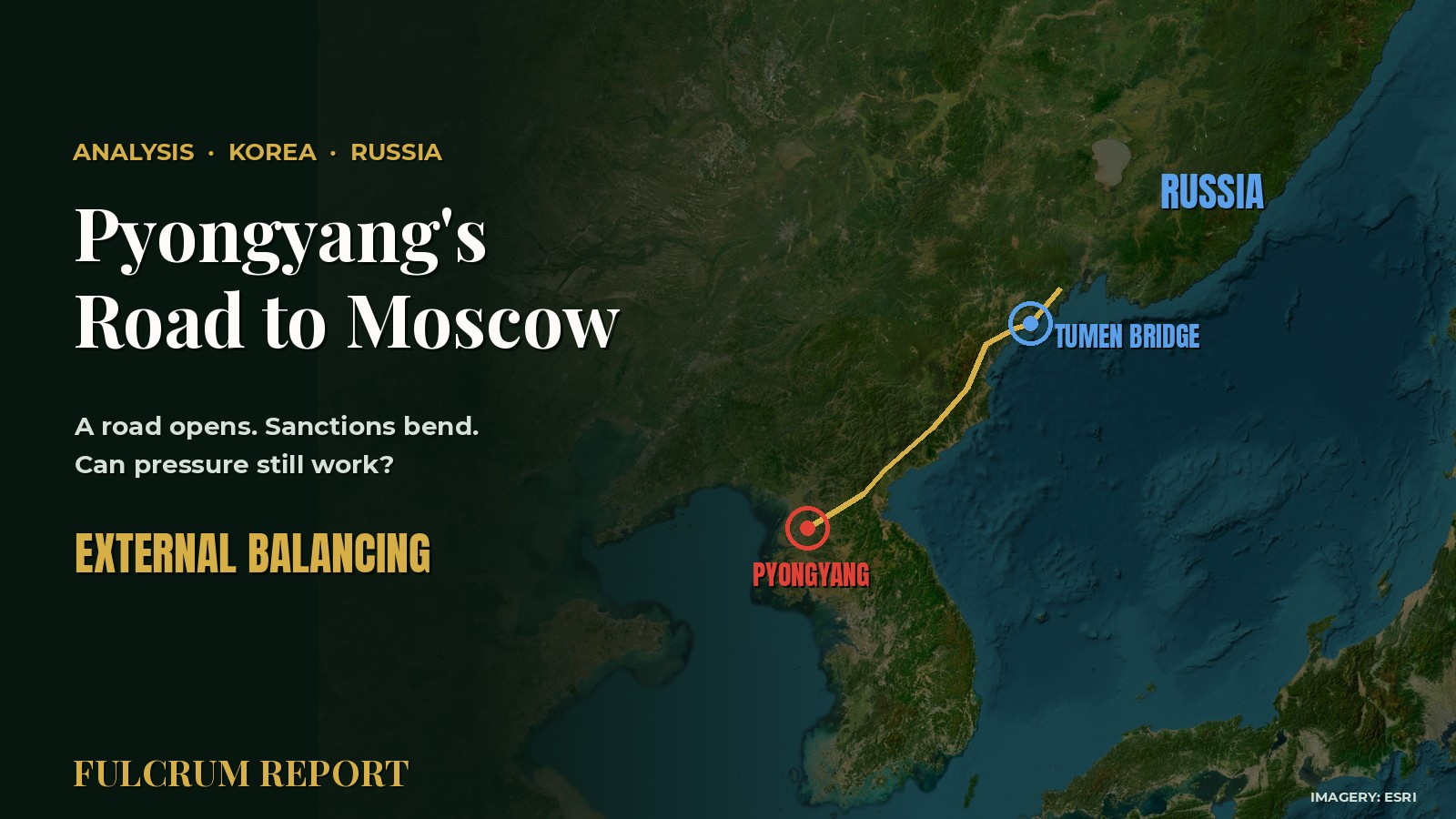
Pyongyang's Road to Moscow: Can Sanctions Still Work?
A second enrichment facility is reportedly going up at Yongbyon, and the Tumen River road bridge to Russia reportedly opened on September 8. When a major power offers a way around sanctions, how much pressure is left? An explainer on external balancing.
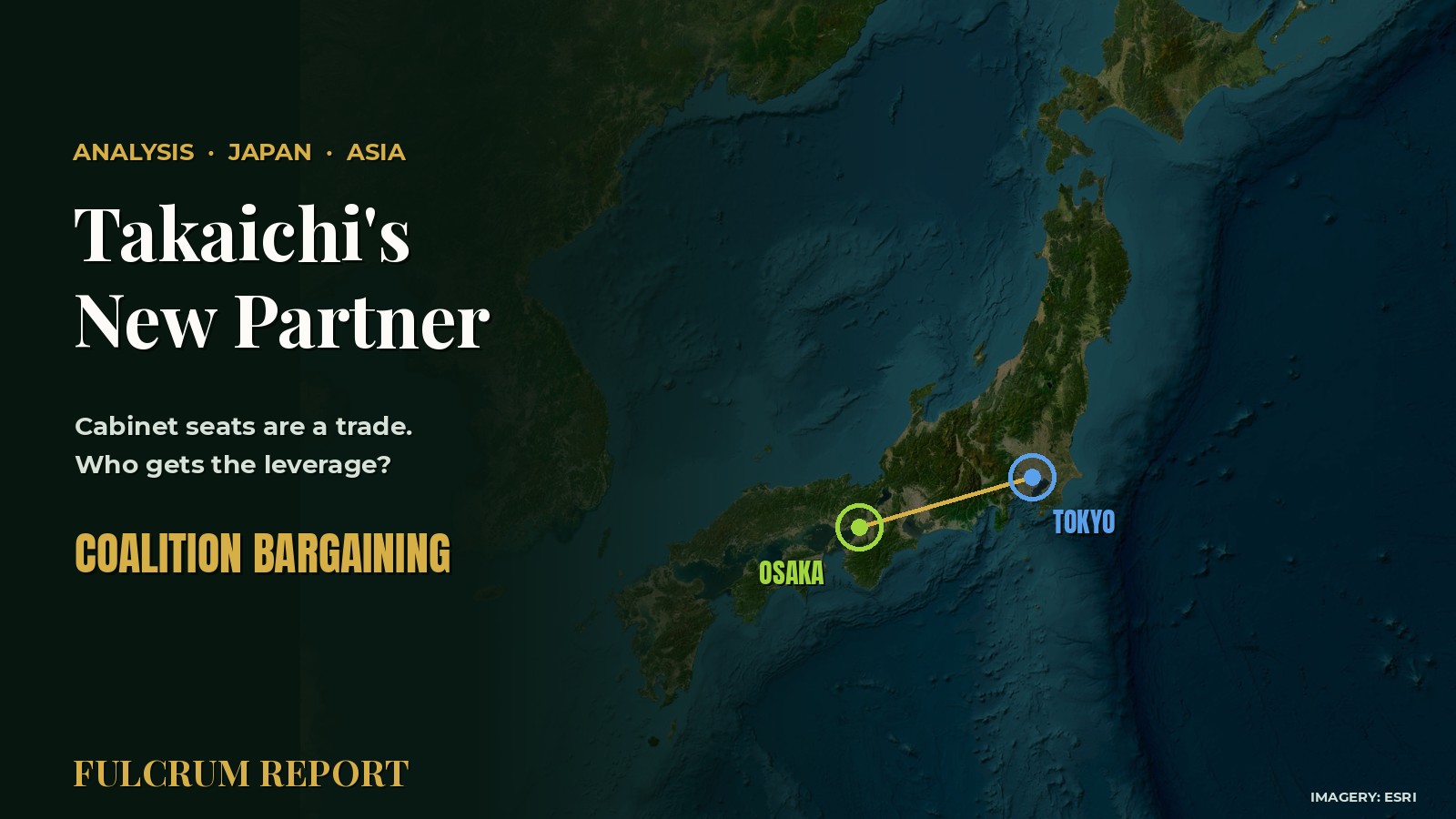
Takaichi's New Partner: Why Cabinet Seats Are a Trade
Sanae Takaichi reportedly reshuffled her cabinet on September 16 and 17, bringing in the Japan Innovation Party (Ishin) for the first time. Her camp holds two-thirds of the lower house but lacks an upper-house majority. A look at coalition bargaining and who gets the leverage.
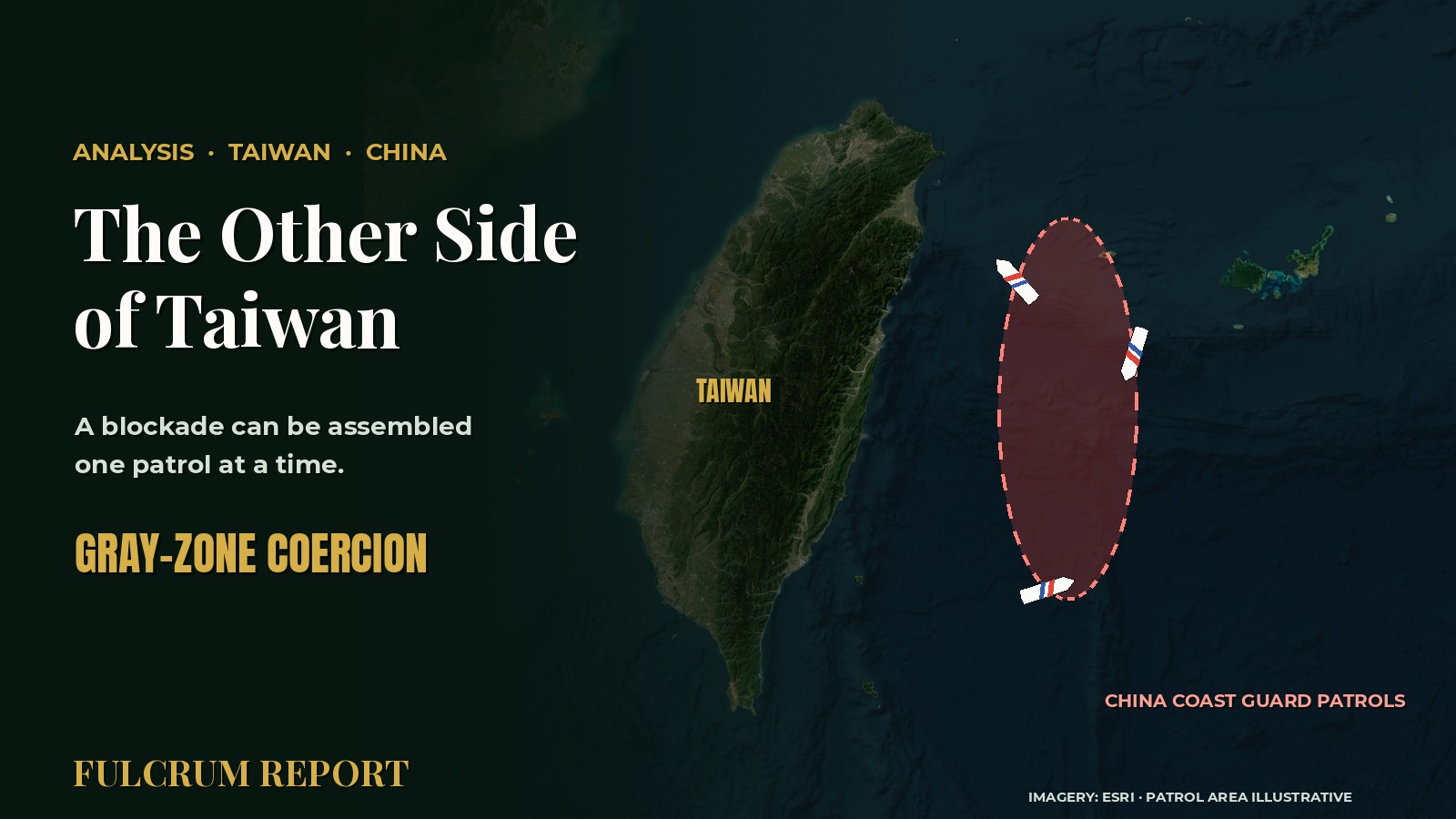
The Other Side of Taiwan: How a Blockade Gets Built Without Being Declared
China's Coast Guard has reportedly set up a regular presence east of Taiwan, framed as law enforcement, while a $14 billion U.S. arms package is pending. A look at gray-zone coercion, salami tactics and escalation control.