Drones Nobody Sent
Drones are crossing into NATO airspace, and the most dangerous question is who actually sent them. Gray zone pressure, attribution, and the threshold for retaliation.
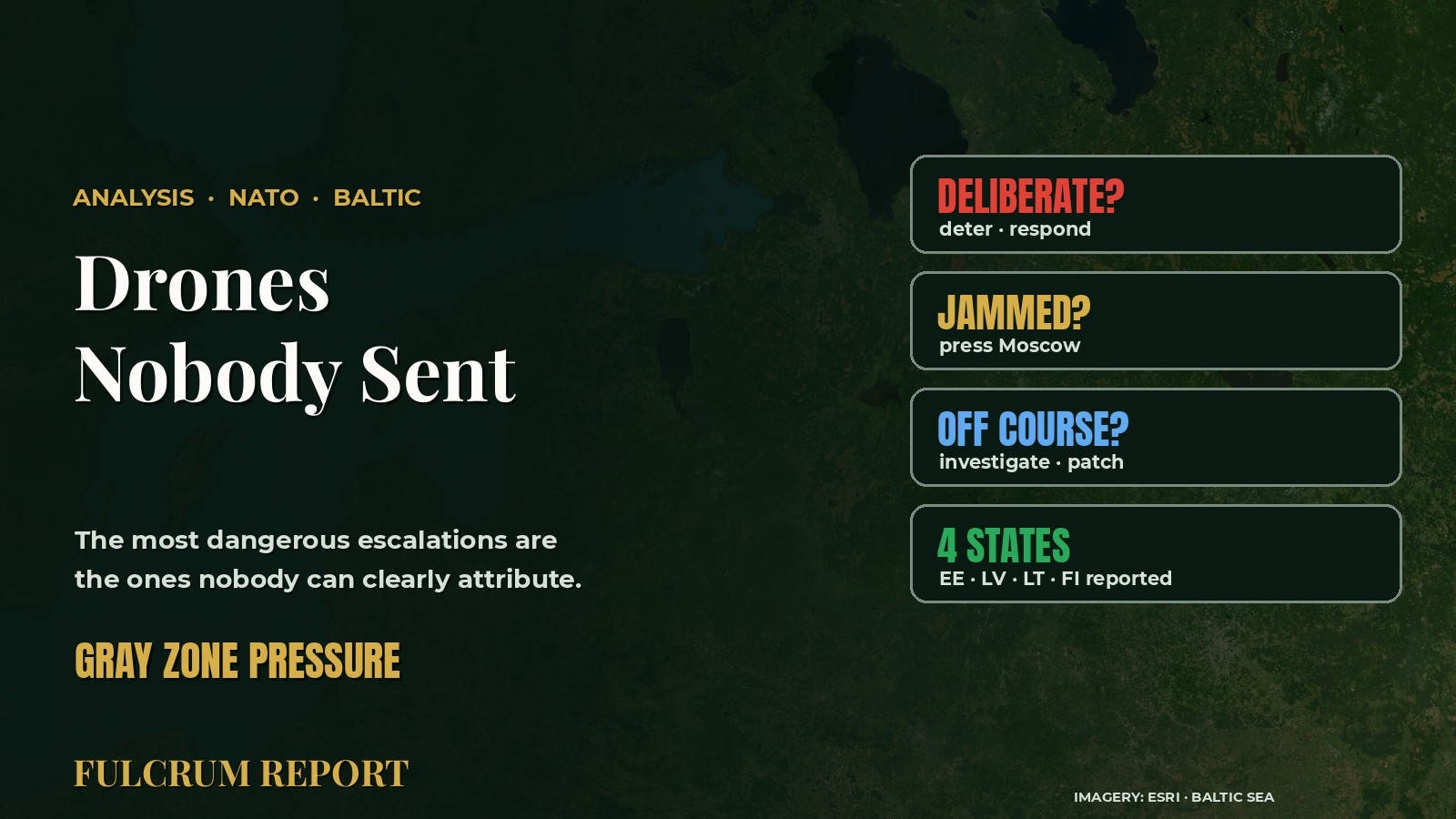
When a drone crosses into NATO airspace, the first question most people ask is whether NATO will shoot it down. I think there's a harder question that comes before it: who actually sent the thing?
Right now, that question doesn't have a clean answer. And I've come to think that's the whole point.
What's been reported
Estonia, Latvia, Lithuania and Finland have all reported drone incursions into their airspace. Most of these appear to be Ukrainian drones that were knocked off course by Russian electronic warfare. Jamming scrambles a drone's navigation, and the drone drifts somewhere it was never meant to go. That's the most common explanation so far, and it's a plausible one given how much jamming there is along the Baltic and Black Sea fronts.
But not every case fits that story. A Russian-made Geoscan drone was reportedly found in Finland. So you end up with a mix: some drones are probably strays from someone else's war, at least one is Russian, and for several of them nobody can say for sure.
I'd be careful with any single incident. Early reports change, wreckage takes time to examine, and governments don't always publish what they find. The pattern is what matters here.
Three possibilities, three different answers
Put yourself in the position of a Baltic defense minister looking at a drone that just came down in a field. There are roughly three ways to read it.
It could be deliberate, a Russian probe sent to see what happens. That calls for deterrence and a firm response.
It could have been diverted by jamming. In that case the drone is Ukrainian, but the cause is Russian electronic warfare, so the pressure probably belongs on Moscow, not Kyiv.
Or it could just be off course, a technical failure with no intent behind it. That calls for an investigation and maybe better air-defense coverage, not a confrontation.
Each of those readings points to a different policy. And if you can't tell which one you're looking at, you can't pick a policy with any confidence. That's the trap.
The gray zone
Analysts call this kind of thing gray zone pressure. Michael Mazarr's 2015 study, Mastering the Gray Zone, describes it as competition that sits deliberately between normal peacetime rivalry and open war. The tools are ambiguous on purpose: cyberattacks that are hard to trace, "little green men" without insignia, sabotage that looks like an accident.
The way I'd put it is simple. Gray zone pressure works by creating doubt faster than an alliance can create consensus.
NATO makes big decisions by agreement among more than 30 governments. That's a real strength when the threat is obvious. It's a weakness when the threat is murky, because every member can look at the same drone and see something different. Some will want a strong response. Others will want to wait for the investigation. While they argue, the moment passes.
Under the threshold
Thomas Schelling, one of the founders of modern strategy, wrote in the 1960s about what he called salami tactics. You don't take the whole thing at once. You take one thin slice at a time, each too small to justify a fight, until the slices add up.
Drone incursions fit that logic well. A single stray drone is never going to trigger Article 5. Article 5 was built for something like tanks rolling across a border, a clear armed attack. It wasn't designed for a jammed signal and a piece of wreckage in a Finnish forest.
So repeated incursions can test air defenses, map radar coverage and measure reaction times, all without clearly crossing the line that would justify retaliation. The uncertainty slows attribution, and slow attribution is what keeps everything under the threshold.
Even accidents have value
Here's the part I find most uncomfortable. Even if every one of these drones turned out to be a genuine accident, Russia would still get something out of them.
Each incursion forces NATO to spend money: scrambling fighter jets, moving air-defense systems like NASAMS, keeping crews on alert. Each response reveals something about NATO's capabilities, such as how fast jets get airborne and which radars pick up what. And each incident hands allies a new thing to argue about, in public, over what actually happened.
Cost, information and division, all from an event nobody has to admit to. You don't have to plan an accident to benefit from one.
So what should NATO do?
I don't think there's a neat answer, and I'm skeptical of anyone who offers one. Treating every stray drone as an act of war would hand Moscow exactly the escalation it might want to avoid paying for. Shrugging them off invites more slices of salami.
The more useful work is probably boring: faster joint investigations, shared radar and wreckage data, cheaper ways to shoot down cheap drones, and agreeing in advance on how the alliance will respond to each kind of incident. That last one matters most. If the response is decided before the next drone arrives, ambiguity loses some of its power.
The lesson I keep coming back to is this: the most dangerous escalations aren't the loud ones. They're the ones nobody can clearly attribute.
Further reading: Michael J. Mazarr, Mastering the Gray Zone: Understanding a Changing Era of Conflict (2015); Thomas C. Schelling, Arms and Influence (1966); Thomas Rid and Ben Buchanan, "Attributing Cyber Attacks," Journal of Strategic Studies (2015).

About the author
Fulcrum Report
Independent Middle East analyst holding a PhD in Political Science. Fulcrum Report offers rigorous, framework-driven coverage of politics and geopolitics across the Levant and the wider region — analysis without agenda.
Related reading
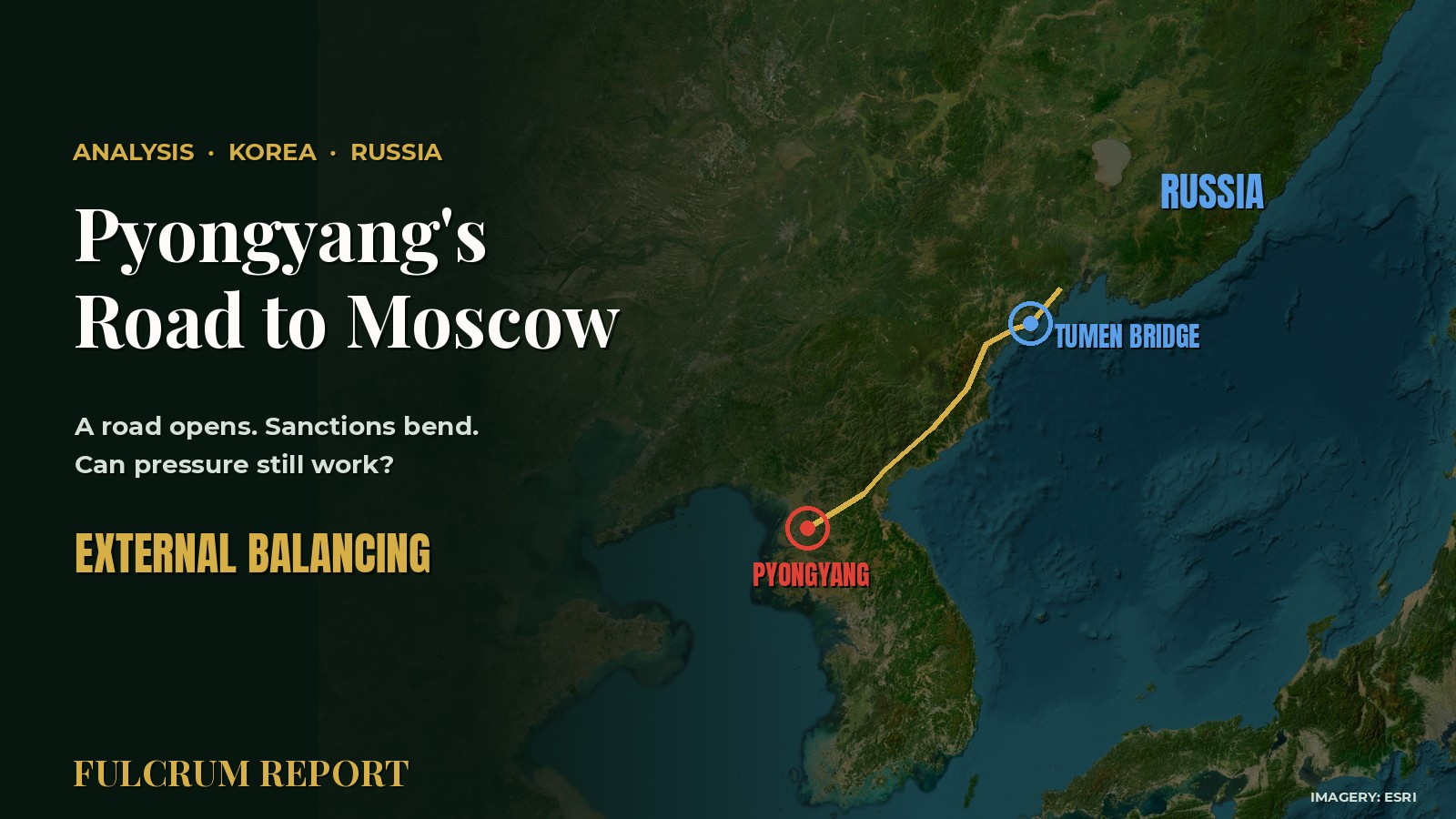
Pyongyang's Road to Moscow: Can Sanctions Still Work?
A second enrichment facility is reportedly going up at Yongbyon, and the Tumen River road bridge to Russia reportedly opened on September 8. When a major power offers a way around sanctions, how much pressure is left? An explainer on external balancing.
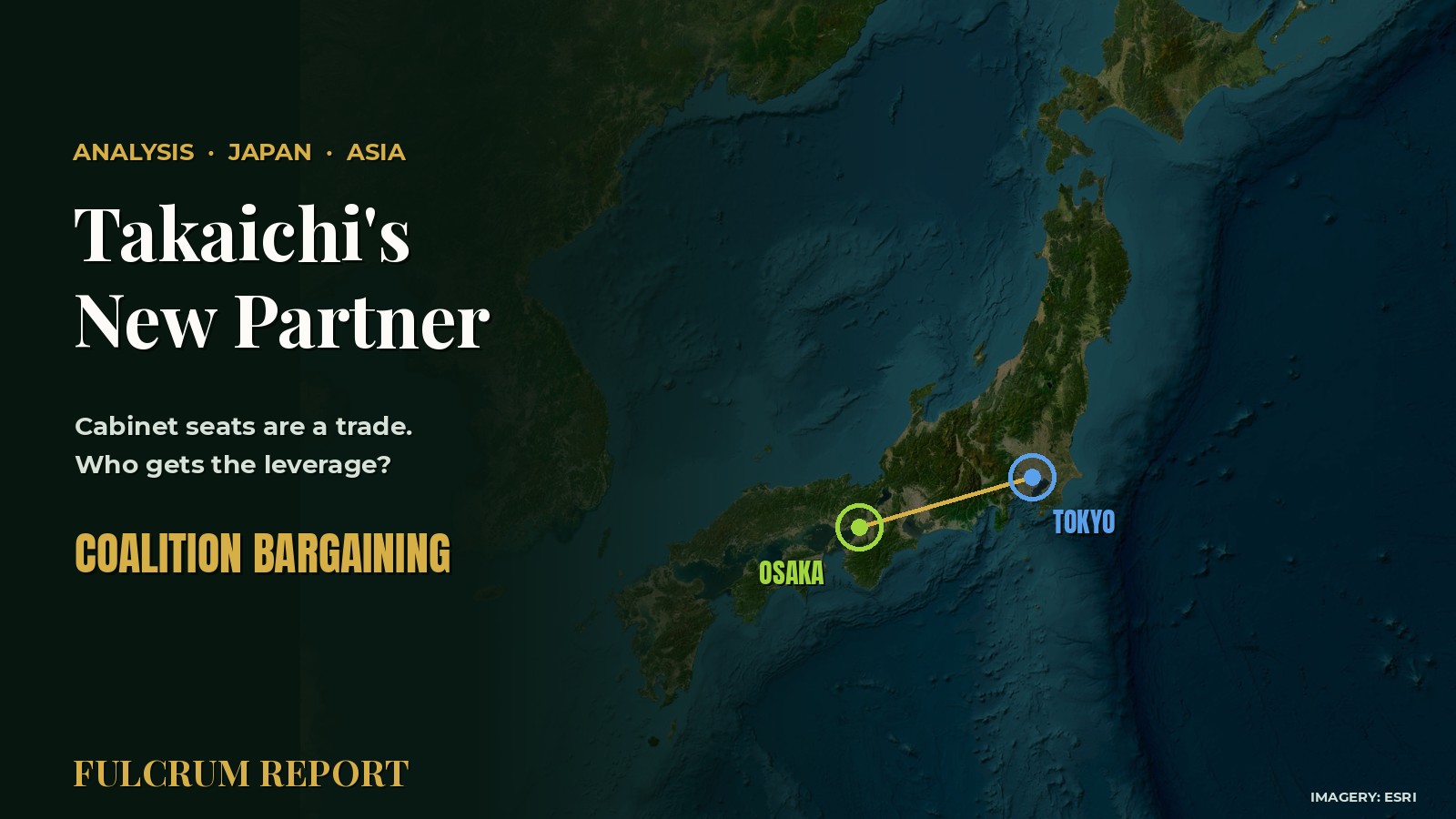
Takaichi's New Partner: Why Cabinet Seats Are a Trade
Sanae Takaichi reportedly reshuffled her cabinet on September 16 and 17, bringing in the Japan Innovation Party (Ishin) for the first time. Her camp holds two-thirds of the lower house but lacks an upper-house majority. A look at coalition bargaining and who gets the leverage.
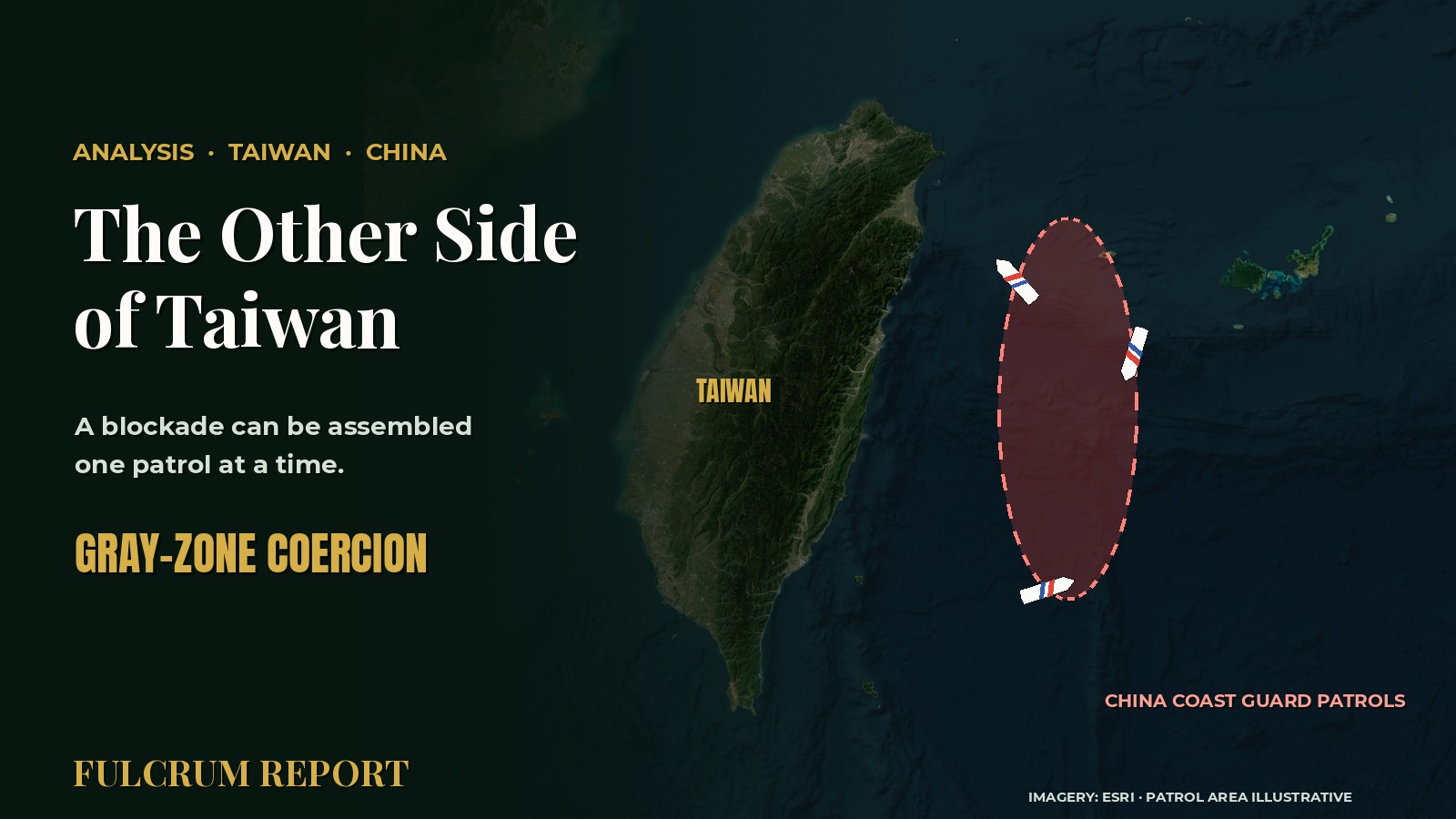
The Other Side of Taiwan: How a Blockade Gets Built Without Being Declared
China's Coast Guard has reportedly set up a regular presence east of Taiwan, framed as law enforcement, while a $14 billion U.S. arms package is pending. A look at gray-zone coercion, salami tactics and escalation control.