Egypt’s Borrowed Windfall
Suez Canal revenue is rising on the Hormuz crisis. It is a windfall rent, and Egypt controls none of what drives it.
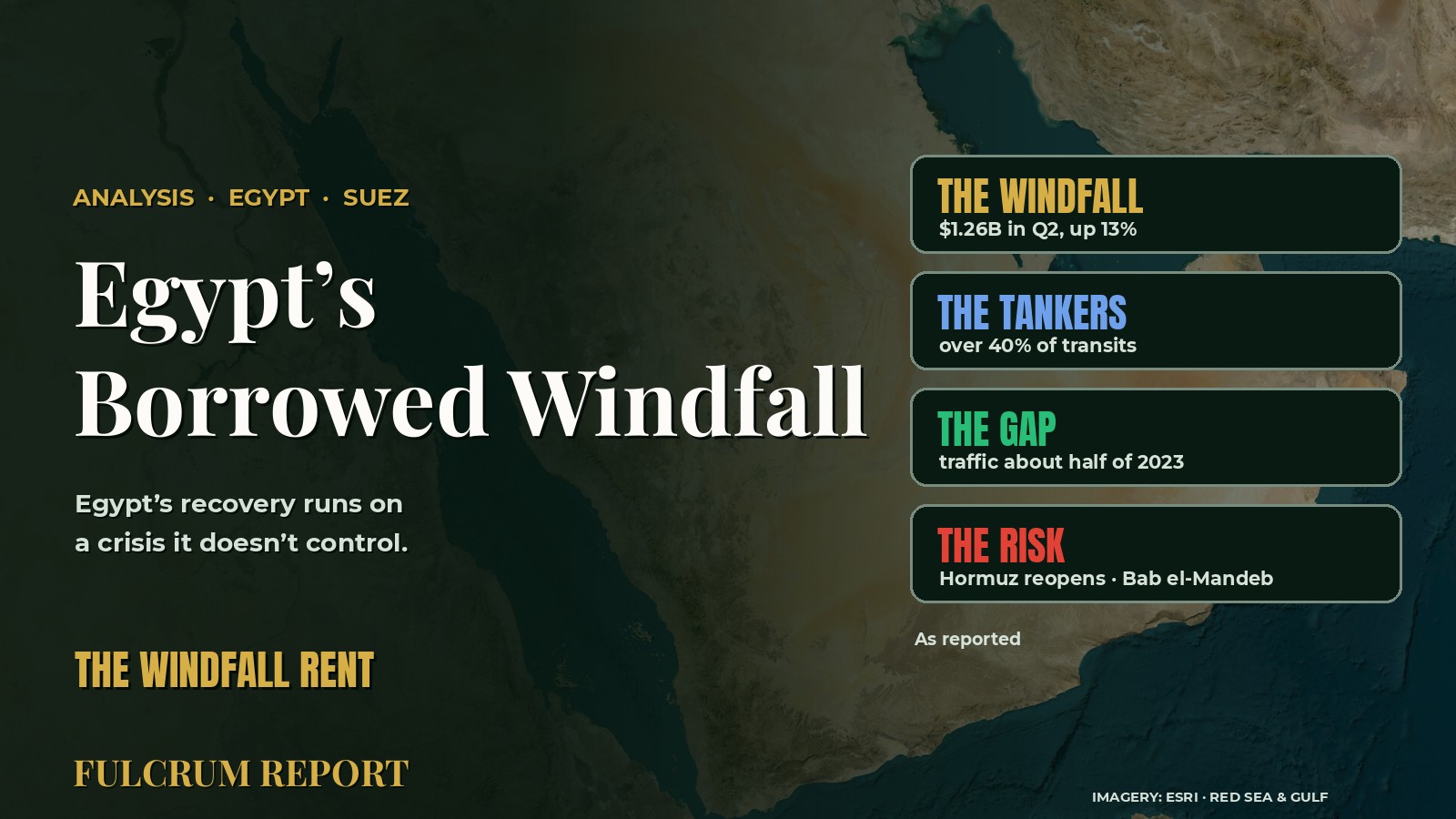
Egypt is making money from the Hormuz crisis. Not loudly, and not on purpose, but the numbers are there. And the more I looked at them, the less comfortable I felt about what they mean.
Here's the short version. Suez Canal revenue is climbing again. But it's climbing for a reason Egypt has no say over, and that reason could disappear overnight.
The numbers
Suez Canal revenue hit $1.26 billion in the second quarter, up 13%, as reported. In August alone it rose to $567 million. Tankers now make up over 40% of transits through the canal.
That sounds like a comeback. It isn't quite one. Total traffic is still about half of 2023 levels, and container shipping, which used to be the canal's bread and butter, is down around 80%, as reported.
So what's going on? Two crises are pulling in opposite directions. Since late 2023, Houthi attacks on shipping in the Red Sea have pushed a lot of container lines to sail around the Cape of Good Hope instead, as has been widely reported. That gutted the canal's income, which had been running at around $10 billion a year at its 2023 peak.
Then came the Hormuz crisis. With the Strait of Hormuz disrupted by the conflict between the United States and Iran, Gulf oil has to find other ways out. One likely route, and this is my reading rather than a confirmed breakdown of every cargo, is Saudi Arabia's East-West pipeline to Yanbu on the Red Sea, and from there north through Suez to Europe. That would explain why tankers now make up such a big share of the ships that do come through.
In other words, the canal lost one kind of traffic to one crisis and gained another kind from a different crisis.
Why that's a problem
There's an old idea in political science that fits this almost too neatly. It's called rentier state theory. The economist Hossein Mahdavy introduced the idea in 1970, writing about Iran, and Hazem Beblawi and Giacomo Luciani developed it in their 1987 book The Rentier State.
The core idea is simple. Some states earn a big share of their income from rents, money that comes from owning something valuable, like oil fields or a strategic waterway, rather than from a productive economy at home. Rents can be very useful. But they come with a catch. When the money flows in from outside, governments have less reason to diversify, to build up taxes and industry, or to make hard reforms. And when the rent shrinks, there isn't much underneath to fall back on.
Scholars have long described Egypt as a semi-rentier state, because a big part of its foreign income has come from sources like Suez fees, remittances from Egyptians working abroad, foreign aid and natural gas. The canal is the classic example. It's a geographic gift, and it pays.
What makes this moment different is that the current windfall isn't really a rent from owning the canal. It's a rent from someone else's crisis. That's what I mean by a borrowed windfall.
Two ways it could vanish
The first is the obvious one. If Hormuz reopens, Gulf oil goes back to its usual route by sea. The tanker detour disappears, and with it a big piece of the recent revenue.
The second runs the other way. If the Houthis squeeze Bab el-Mandeb harder, the narrow strait at the southern end of the Red Sea, then even the tankers start to think twice. Fewer ships reach Suez at all.
Egypt controls neither of those outcomes. It can't reopen Hormuz, and it can't stop the Houthis. Revenue that comes from someone else's crisis isn't under your control.
A caveat
I don't want to overstate this. The extra money is real, and Egypt needs it. It has heavy debts, a currency that has been under real pressure, and an IMF programme to stay on track with. Nobody in Cairo should turn down income because the theory says it's risky. And a windfall can be put to good use. The question is what it gets used for.
What I'd watch
How long the Hormuz disruption lasts, because that sets the clock on the tanker boom. Whether container lines start returning to the Red Sea, which would be the healthier kind of recovery. Any escalation around Bab el-Mandeb. And above all, what Cairo does with the extra income: whether it goes into paying down debt and building something durable, or gets folded into the budget as if it were permanent.
This is analysis, and a general pattern, not a prediction. But the way I'd put it is this: Egypt's recovery runs on a crisis it doesn't control.
So I'll ask you the same thing I asked on the reel. What should Egypt do with the windfall? Save it, spend it or invest it? Tell me in the comments, and follow @fulcrumreport for analysis without agenda.

About the author
Fulcrum Report
Independent Middle East analyst holding a PhD in Political Science. Fulcrum Report offers rigorous, framework-driven coverage of politics and geopolitics across the Levant and the wider region — analysis without agenda.
Related reading
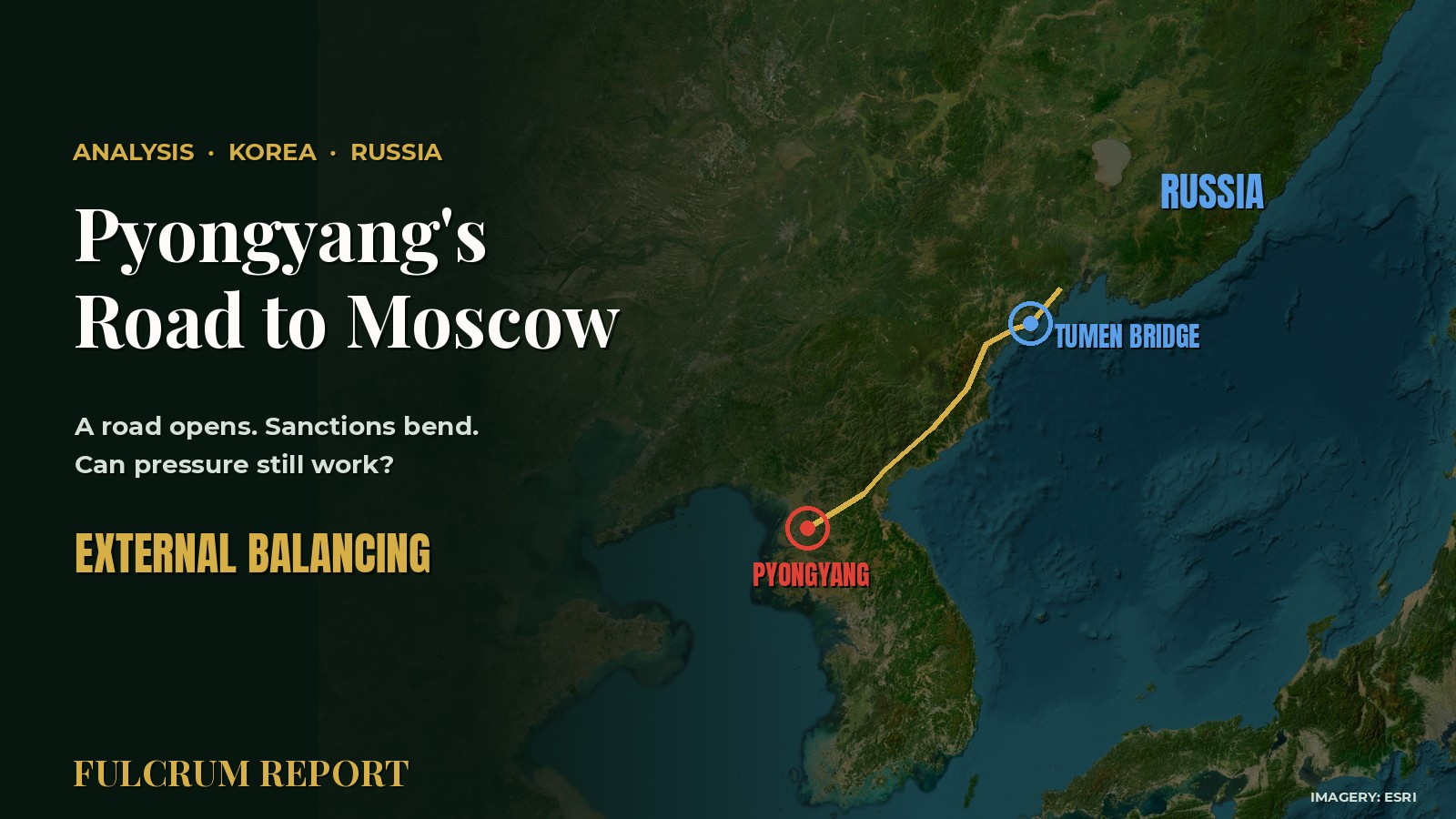
Pyongyang's Road to Moscow: Can Sanctions Still Work?
A second enrichment facility is reportedly going up at Yongbyon, and the Tumen River road bridge to Russia reportedly opened on September 8. When a major power offers a way around sanctions, how much pressure is left? An explainer on external balancing.
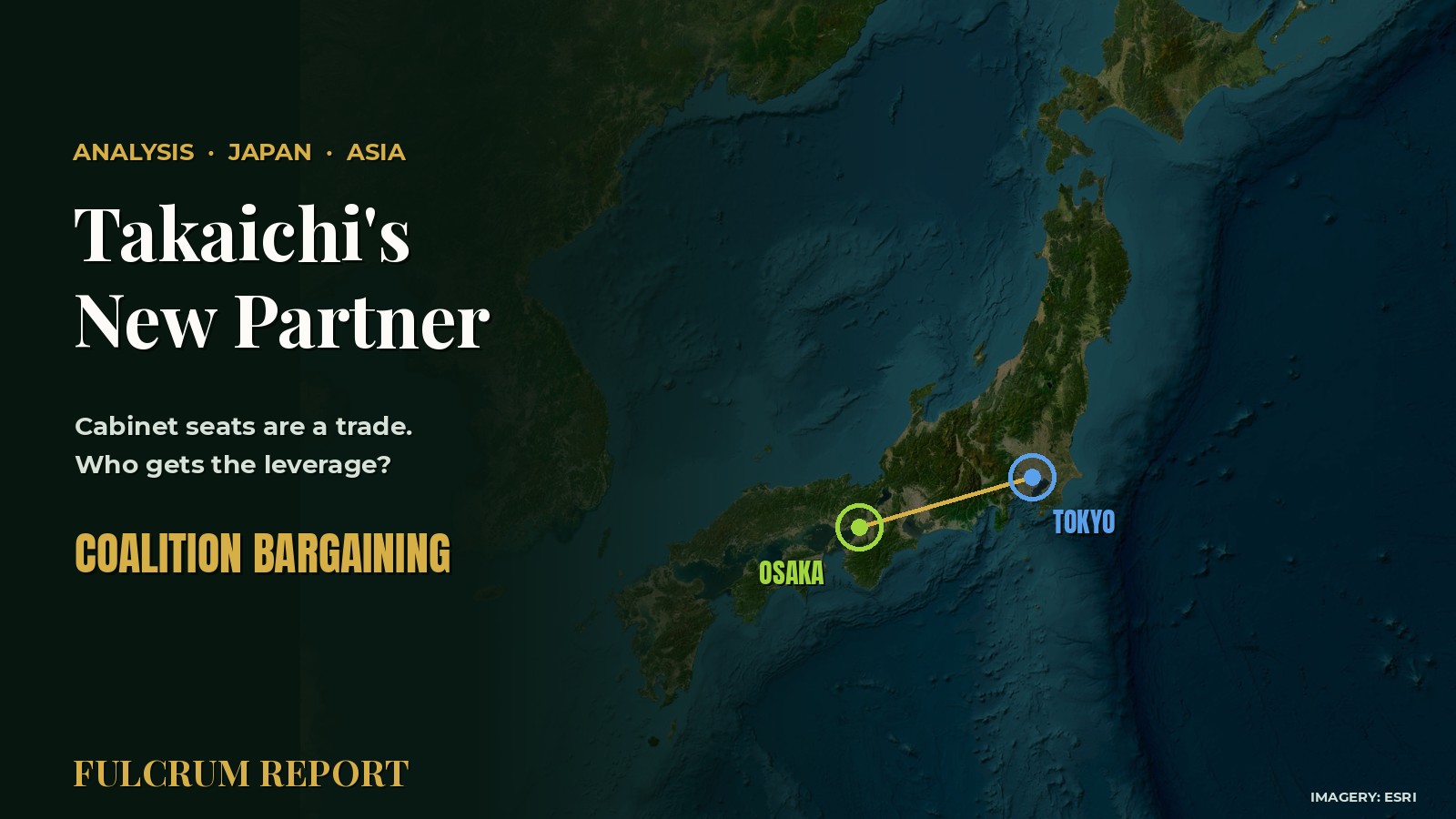
Takaichi's New Partner: Why Cabinet Seats Are a Trade
Sanae Takaichi reportedly reshuffled her cabinet on September 16 and 17, bringing in the Japan Innovation Party (Ishin) for the first time. Her camp holds two-thirds of the lower house but lacks an upper-house majority. A look at coalition bargaining and who gets the leverage.
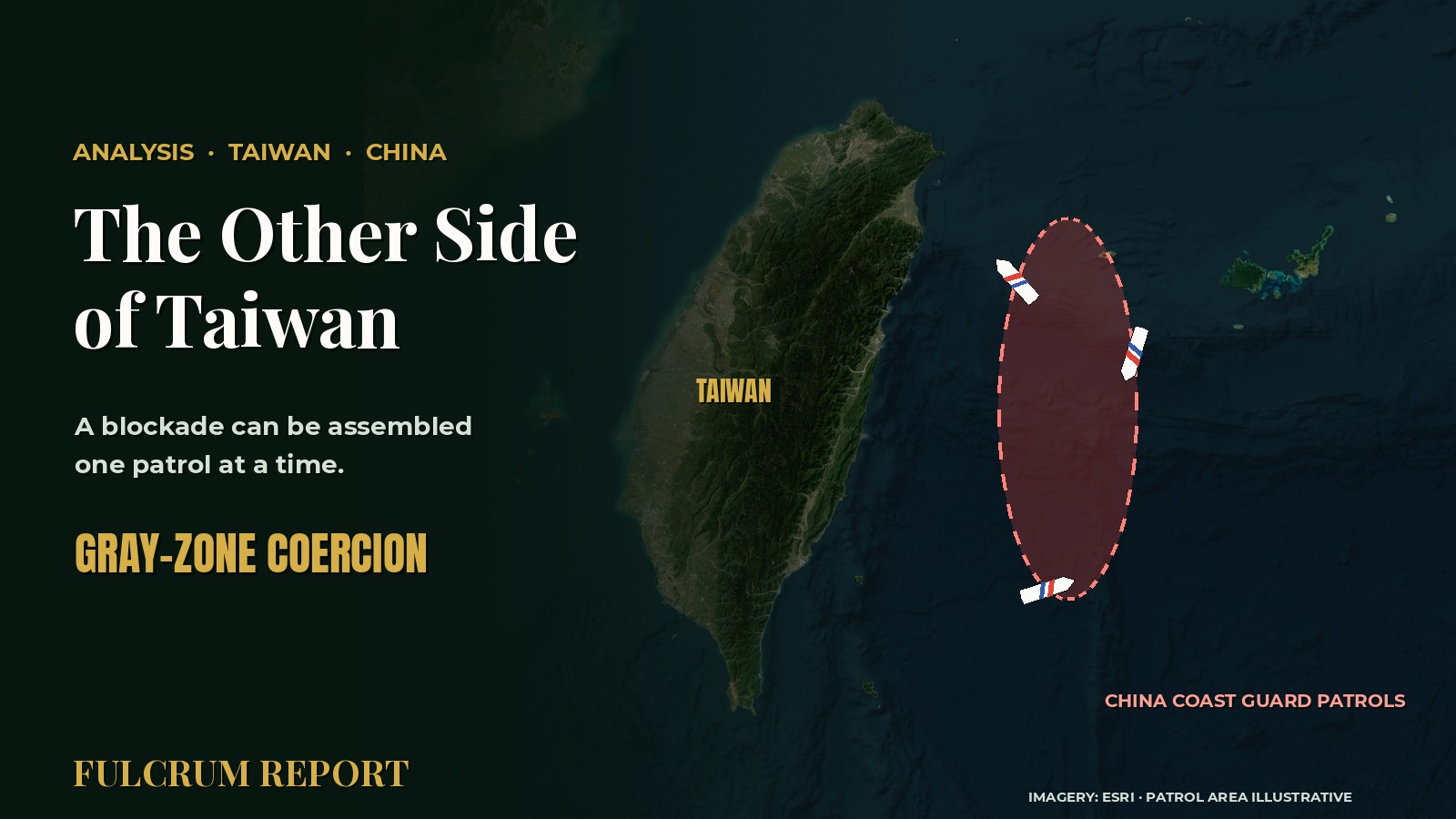
The Other Side of Taiwan: How a Blockade Gets Built Without Being Declared
China's Coast Guard has reportedly set up a regular presence east of Taiwan, framed as law enforcement, while a $14 billion U.S. arms package is pending. A look at gray-zone coercion, salami tactics and escalation control.