The Escape Route Became the Target
Saudi Arabia built the East-West pipeline to bypass Hormuz. With Hormuz shut, the pipeline, its pump stations and Yanbu are now where the pressure lands.
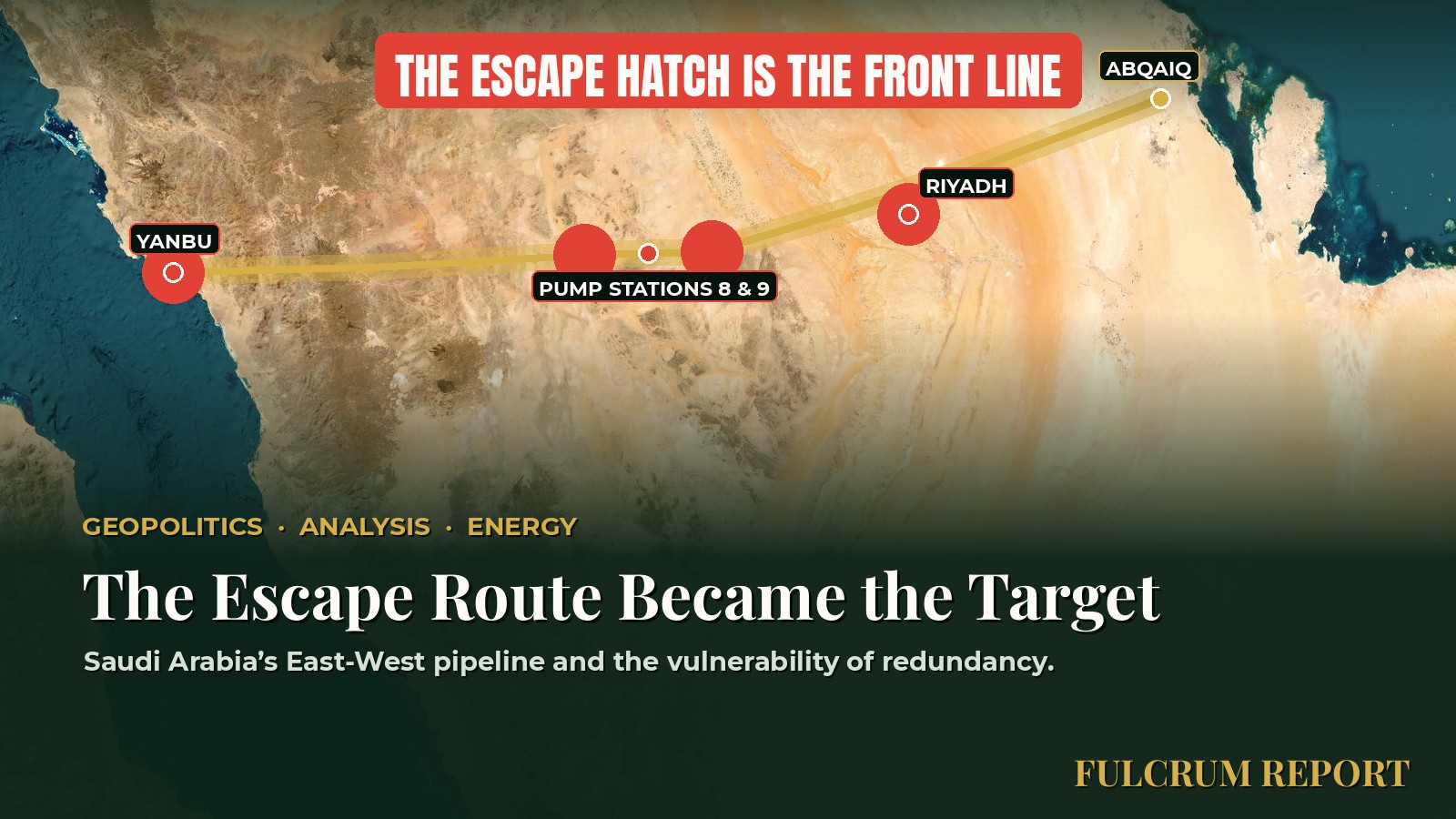
Saudi Arabia spent decades building a way out of the Strait of Hormuz. This month, that way out became the thing under fire. I keep coming back to it because it captures the Gulf’s energy problem better than almost anything else I’ve covered this year.
The pipeline that was supposed to be the answer
The East-West pipeline runs roughly 1,200 kilometers across the kingdom, from the Abqaiq processing hub near the Gulf coast to Yanbu on the Red Sea. Its whole purpose is simple: if Hormuz closes, Saudi crude can still reach the world without going anywhere near it.
With Hormuz shut, that purpose stopped being theoretical. The pipeline and the Yanbu terminal turned into the kingdom’s main export lifeline, and everyone in the region knew it, including the people who wanted to squeeze Riyadh.
What happened this month
On September 10 and 11, pump stations 8 and 9 along the line were struck. Saudi officials attributed those attacks to drones launched from Iraq, which is a detail worth holding onto, because it means the pressure is coming from more than one direction.
Then on September 19 the Houthis claimed strikes on Aramco sites, on Riyadh and on Yanbu itself. Saudi officials said they intercepted the incoming attacks, so I’d treat the Houthi claims as claims rather than confirmed damage. But the message landed either way. By September 24, Brent hit about $108 intraday, the highest since the Iran war began.
Markets didn’t need every drone to hit. They only needed to see that the backup route was now in range.
The vulnerability of redundancy
Strategists have a name for this: the vulnerability of redundancy. It sounds like a contradiction, since redundancy is supposed to make you safer. And it does, right up until your adversary adapts.
Here’s how I think about it. When you build an alternative route, you don’t remove the pressure. You just give it somewhere new to go. Iran’s leverage used to sit at Hormuz. Close Hormuz, and the leverage moves to whatever replaced it. In this case that’s a single pipeline, a handful of pump stations and one Red Sea port.
Every bypass concentrates value in a new place. Before the crisis, Yanbu was one terminal among many. Now a huge share of Saudi exports depends on it, and the pump stations feeding it suddenly matter as much as any oil field. Concentrated value is easy to target. You don’t have to close a strait anymore. You just have to hit a few points on a line.
Why one backup isn’t resilience
This is the part I think gets lost. A single backup isn’t resilience. It’s just a second point of failure that your enemy can see coming.
Real resilience looks different. It means many dispersed options: several export routes, more storage spread across more sites, multiple ports on different coasts, and supply contracts that don’t all run through the same chokepoint. No single target should be worth the effort of hitting it.
That’s far more expensive than building one big pipeline, and it’s much less satisfying to announce. But it’s the only version that doesn’t simply relocate the risk.
What I’m watching
First, whether the pump station attacks continue. If the pressure is coming from Iraq as well as Yemen, defending the line gets much harder.
Second, Yanbu. With the Red Sea’s southern gate now under Houthi pressure too, the port is exposed both to strikes and to whatever happens to shipping once tankers leave it.
Third, whether Riyadh starts talking about dispersal rather than defense. Air defense can protect a line for a while. Spreading the risk is what actually changes the math.
The bottom line
The escape hatch became the front line. That’s the Gulf’s energy problem in one sentence.
So I’ll ask what I asked in the reel. What should Riyadh do next?

About the author
Fulcrum Report
Independent Middle East analyst holding a PhD in Political Science. Fulcrum Report offers rigorous, framework-driven coverage of politics and geopolitics across the Levant and the wider region — analysis without agenda.
Related reading
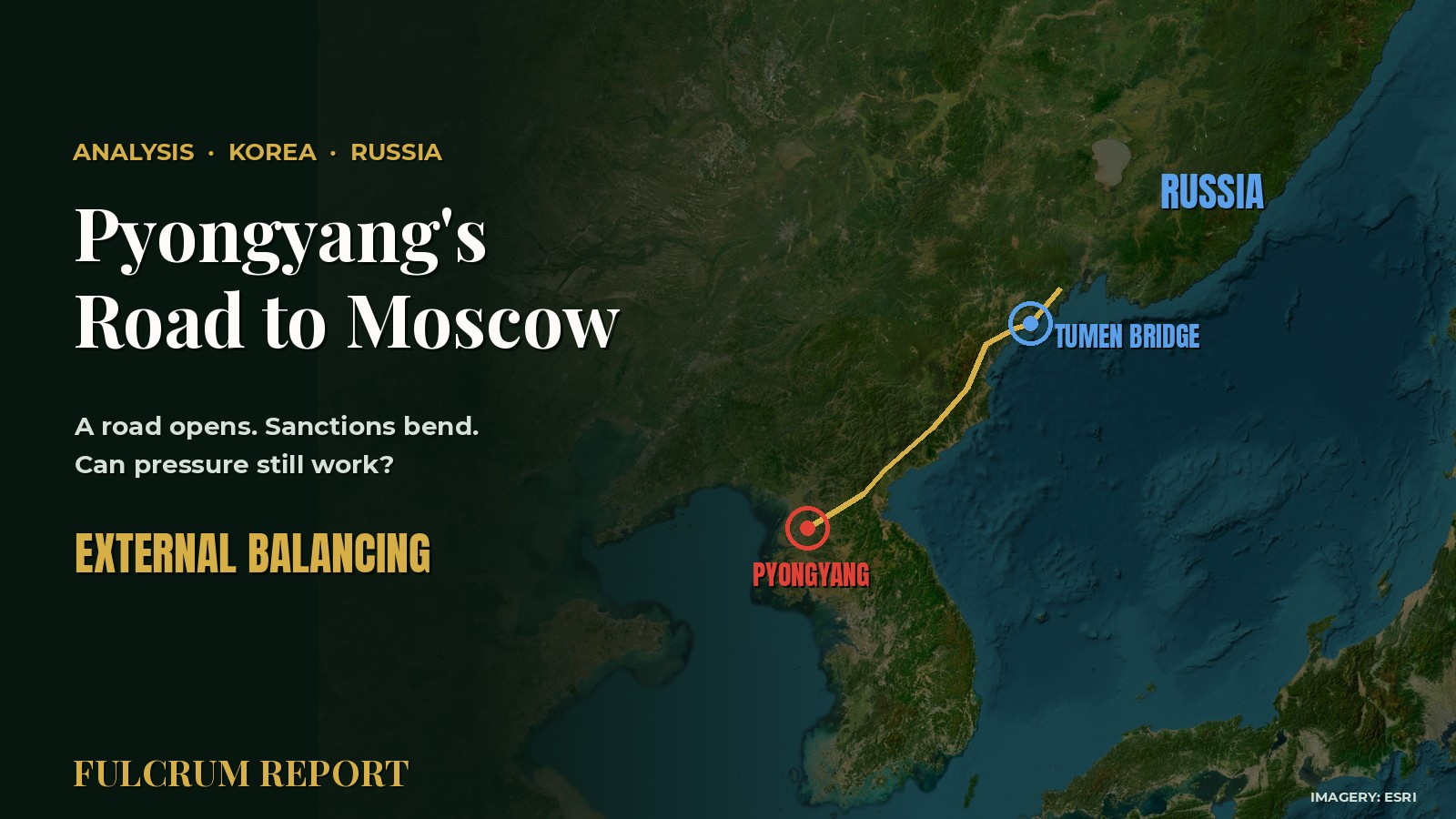
Pyongyang's Road to Moscow: Can Sanctions Still Work?
A second enrichment facility is reportedly going up at Yongbyon, and the Tumen River road bridge to Russia reportedly opened on September 8. When a major power offers a way around sanctions, how much pressure is left? An explainer on external balancing.
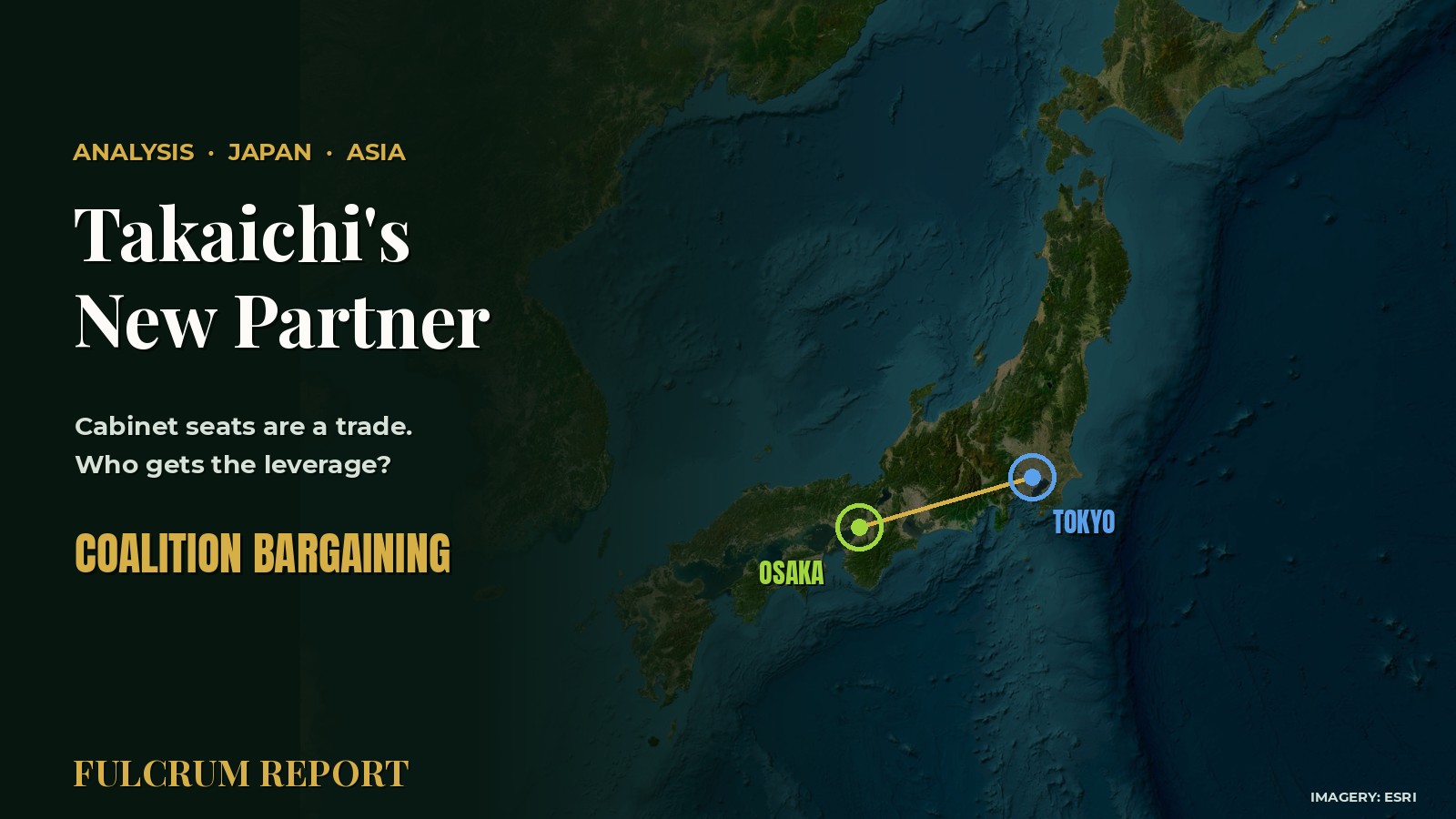
Takaichi's New Partner: Why Cabinet Seats Are a Trade
Sanae Takaichi reportedly reshuffled her cabinet on September 16 and 17, bringing in the Japan Innovation Party (Ishin) for the first time. Her camp holds two-thirds of the lower house but lacks an upper-house majority. A look at coalition bargaining and who gets the leverage.
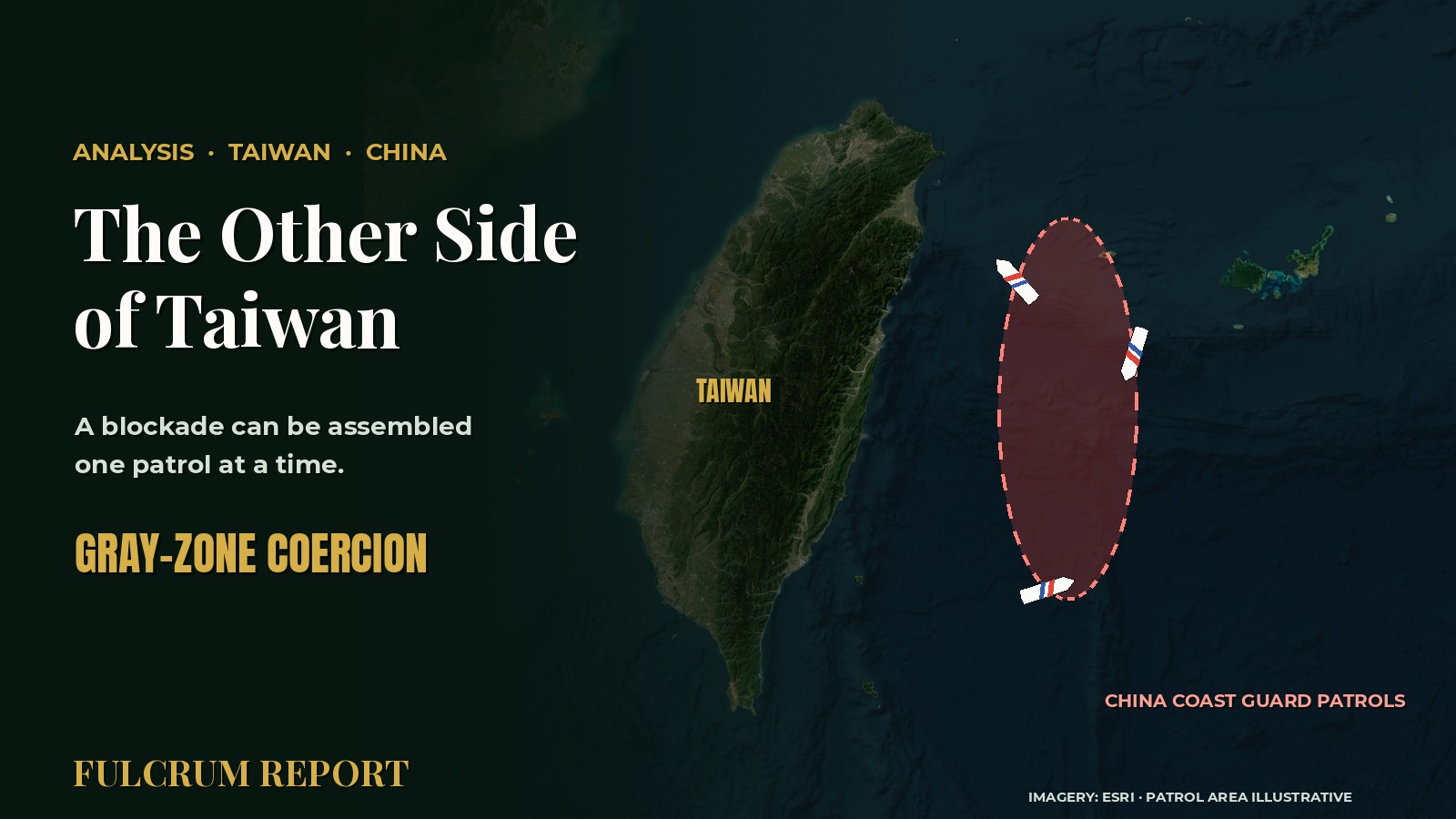
The Other Side of Taiwan: How a Blockade Gets Built Without Being Declared
China's Coast Guard has reportedly set up a regular presence east of Taiwan, framed as law enforcement, while a $14 billion U.S. arms package is pending. A look at gray-zone coercion, salami tactics and escalation control.