The 30-Second Plunge
Passengers say a flydubai co-pilot stabbed the captain and forced the jet into a dive. Terrorism, murder-suicide, or both? And why the cockpit is the hardest place to defend.
A plane full of people heading to Tel Aviv drops out of the sky for what must have felt like forever. Then it levels off, and the story that comes out of the cabin is that the man sitting next to the captain caused it. I've covered a lot of strange news, but this one stayed with me, mostly because of how little stood between those 174 people and the ground.
What we know, and what we don't
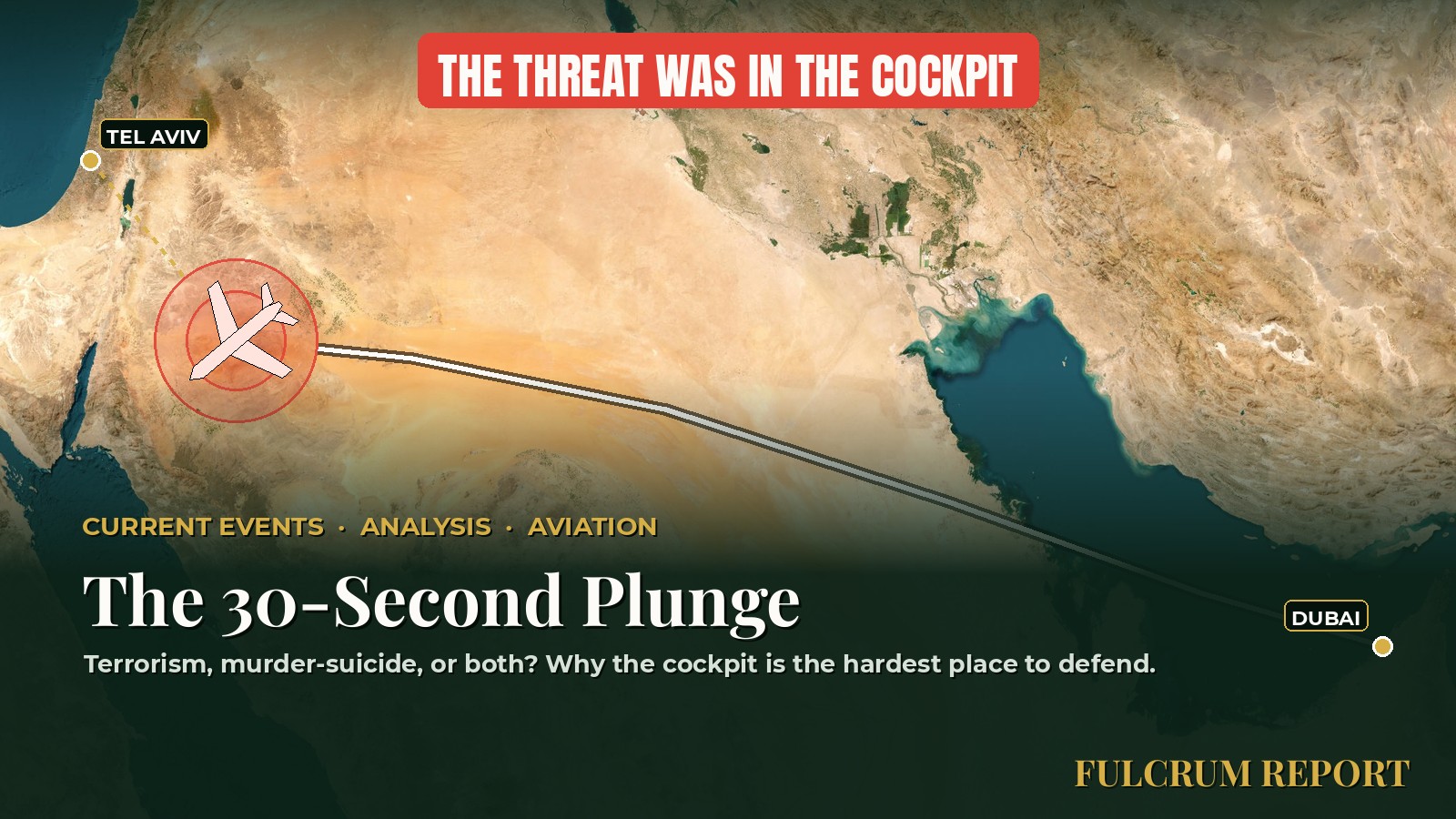
On September 30, flydubai flight FZ1073 left Dubai for Tel Aviv. About two and a half hours in, over Saudi airspace, the Boeing 737 MAX lost altitude very fast. The figure in my reel, 14,000 feet in under 30 seconds, is one of the numbers going around. Other outlets, using flight-tracking data, describe a drop of around 17,000 feet over a couple of minutes. I'd treat every number as provisional until investigators publish theirs.
The rest of the account comes from passengers. They say the co-pilot, an Omani national, stabbed the captain and pushed the jet into a dive. Off-duty pilots who happened to be on board, along with other passengers, got him out of the seat and held him down, and his hands were tied with zip ties and headphone cords. The crew set the transponder to 7500, the code for unlawful interference, and the plane landed in Tabuk. Saudi authorities arrested the co-pilot. The captain was wounded and is reported to be stable.
I'm not naming the co-pilot. Nothing has been proven in a court or by an official investigation, and the motive is still a blank.
Three ways to read it
When the facts are this thin, I find it more honest to lay out the competing explanations side by side than to pick one and run with it.
The first is terrorism. The case for it is circumstantial but real. This was an Israel-bound jet. It came with a knife attack. The dive happened close to Jordan, which is about as close to Israel's doorstep as the route gets. And it came during a period of repeated attacks on Jewish and Israeli targets abroad. Israel's prime minister has already called it an attempted jihadist terror attack. That's a political statement, though, not an investigative finding, and I'd keep the two apart.
The second is murder-suicide. This sounds like the less likely option until you look at the numbers. Pilot suicide is rare. But a Bloomberg analysis found that intentional crashes by pilots caused about 18 percent of deaths on Western-built jets between 2011 and 2020. That figure needs a caveat, and Bloomberg gave one. Commercial aviation got so safe in that decade that a handful of events dominate the totals. LAM Mozambique in 2013, MH370 in 2014 and Germanwings in 2015 account for most of it, and MH370 is still not settled. So the statistic doesn't mean pilots are dangerous. It means that once you've engineered out most mechanical and weather failures, the human in the seat becomes a much bigger share of what's left.
The third is both, and I think it gets less attention than it deserves. Radicalization and personal crisis aren't separate boxes. A person can carry an ideology for years and only act on it when something else in his life breaks. If that turns out to be the story here, both camps will claim they were right, and neither will be wrong.
Why this kind of thing can happen
This is the part I actually wanted to write about.
After 9/11, airlines bolted reinforced doors onto every cockpit. The goal was to keep attackers in the cabin out. It worked. But it also created a paradox that Germanwings made painfully clear in 2015. A door strong enough to keep a hijacker out is also strong enough to keep a captain out, if the threat is the person already sitting at the controls. The whole system assumes the danger comes from the back of the plane.
Some airlines responded by making sure two crew members are always on the flight deck. Europe brought that rule in after Germanwings and later relaxed it. Lots of carriers don't require it at all. And even when the rule is followed, it only helps if the second person can physically stop the first. In this case, according to passengers, it took several people from the cabin to do that.
Then there's the problem nobody in the industry likes to talk about. Pilots have strong reasons to hide mental health struggles. Admitting to depression or serious stress can ground you, sometimes for good, and your license is your career. So people stay quiet, and the medical checks, which happen once or twice a year, mostly catch what pilots choose to disclose. Some regulators have started building confidential peer-support programs, which is the right direction, but they're uneven across countries.
Screening for radicalization is even harder. Background checks look for criminal records and known affiliations. They're not very good at spotting a slow shift in someone's beliefs, especially when that person has been flying safely for years. Airlines mostly can't monitor what their pilots read or say off duty, and I'm not sure we'd want them to.
Put those together and you get the uncomfortable truth. Aviation security is excellent at screening passengers and bags. It's much weaker at dealing with the trusted insider, because the system needs to trust the people flying the plane.
What I'm watching
The UAE has opened an investigation, and Saudi Arabia has the co-pilot in custody, so the first real answers on motive should come from those two. flydubai has suspended its Israel flights for now, and Israel says it plans extra identity checks on crews flying into the country. I'll also be watching whether regulators in the Gulf bring back a strict two-person cockpit rule, and whether anyone talks seriously about pilot mental health instead of just security.
The bottom line
We don't know why this happened yet, and anyone telling you they do is guessing. But whichever theory holds up, the lesson is the same. The threat wasn't in the cabin. It was in the cockpit.
So tell me which one you believe. Terrorism, murder-suicide, or both?
About the author
Fulcrum Report
Independent Middle East analyst holding a PhD in Political Science. Fulcrum Report offers rigorous, framework-driven coverage of politics and geopolitics across the Levant and the wider region — analysis without agenda.
Related reading
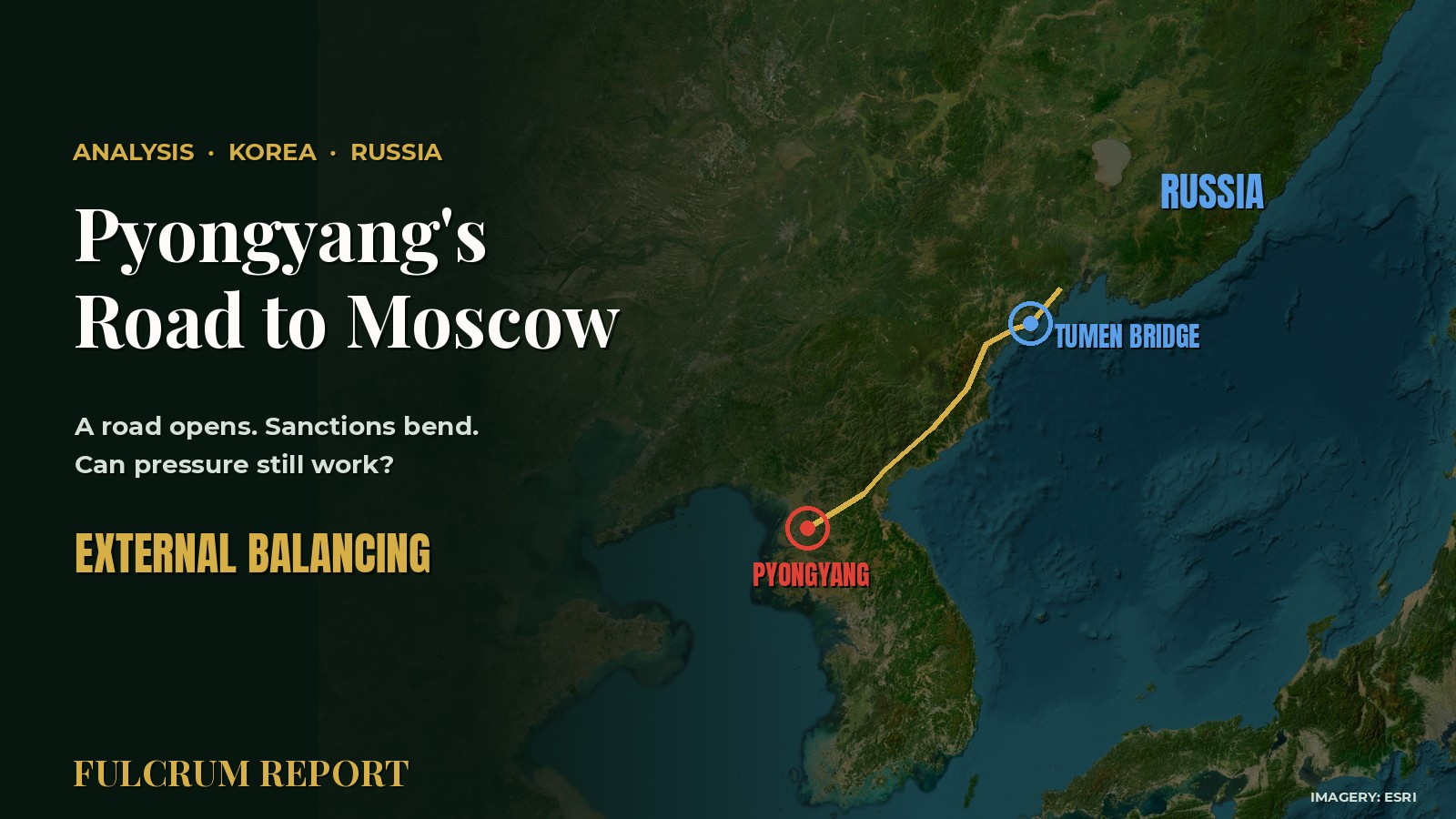
Pyongyang's Road to Moscow: Can Sanctions Still Work?
A second enrichment facility is reportedly going up at Yongbyon, and the Tumen River road bridge to Russia reportedly opened on September 8. When a major power offers a way around sanctions, how much pressure is left? An explainer on external balancing.

Takaichi's New Partner: Why Cabinet Seats Are a Trade
Sanae Takaichi reportedly reshuffled her cabinet on September 16 and 17, bringing in the Japan Innovation Party (Ishin) for the first time. Her camp holds two-thirds of the lower house but lacks an upper-house majority. A look at coalition bargaining and who gets the leverage.
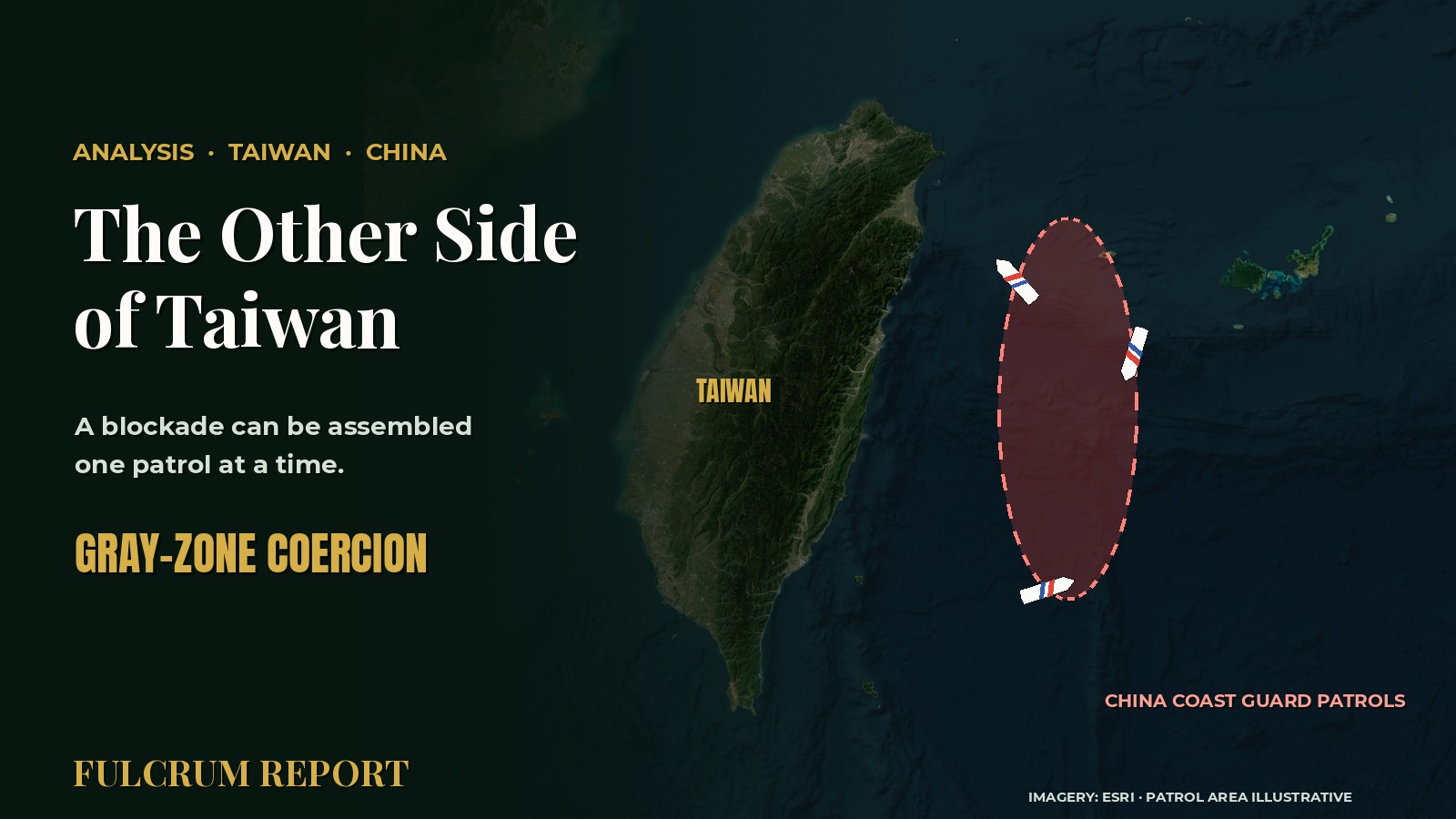
The Other Side of Taiwan: How a Blockade Gets Built Without Being Declared
China's Coast Guard has reportedly set up a regular presence east of Taiwan, framed as law enforcement, while a $14 billion U.S. arms package is pending. A look at gray-zone coercion, salami tactics and escalation control.