French Troops in Yanbu
France is sending soldiers, radar and air defenses to Saudi Arabia’s Red Sea oil port. It’s burden-sharing in real time, and for Riyadh it’s hedging.
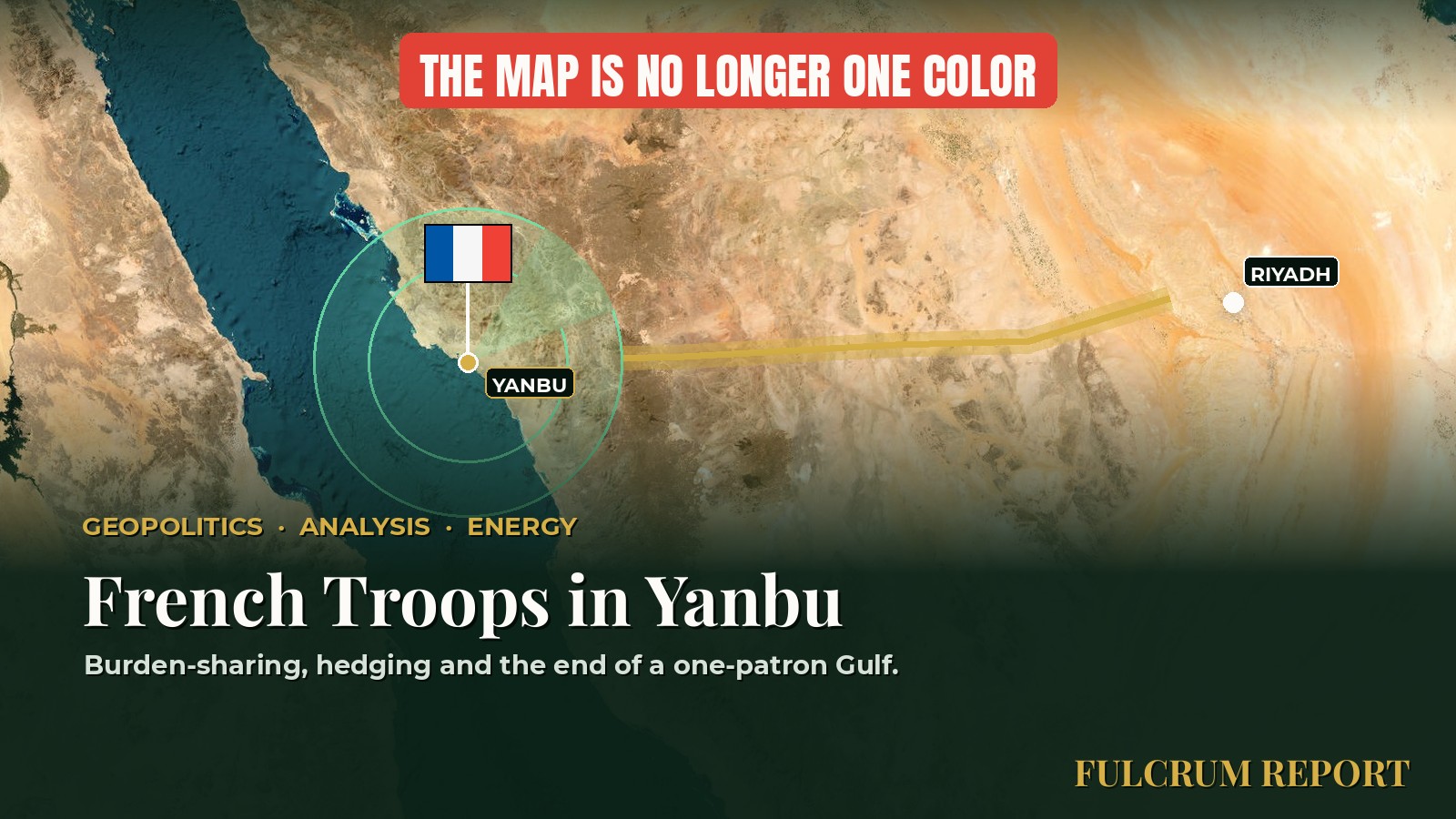
French troops are now defending a Saudi oil port. I had to read that sentence twice when the news broke, and I think it deserves a slower look than the headlines gave it.
What France actually did
On September 24, Emmanuel Macron went on French television and announced that France was sending soldiers, radar and air-defense systems to Yanbu. That's the Saudi port on the Red Sea where the East-West pipeline ends, and with Hormuz shut it has become the kingdom's main export door.
The timing wasn't subtle. The Houthis had been firing at Saudi targets, and that same day the Saudi-led coalition said it intercepted six ballistic missiles aimed at Yanbu and Taif. Macron described the mission as strictly defensive and said France is not joining the wider war. Paris didn't say how many troops are going or exactly which systems. Analysts expect something like the SAMP/T air-defense system and Thales radar, but that's informed guessing, not an official list, and I've labelled the equipment in the reel as illustrative for that reason.
Why this is bigger than it looks
European navies have escorted ships in the region before. Putting soldiers and air defenses on the ground to protect a Gulf oil terminal is something else. It's one of the most direct European military commitments to Gulf energy security in decades.
France also isn't the only one showing up. Britain sent an RAF tanker aircraft from Cyprus, and a Greek-operated Patriot battery near Yanbu reportedly intercepted a drone and a missile. None of this is coordinated. It's separate national decisions all pointing at the same port. Washington, meanwhile, has escorts working around Hormuz but hasn't announced any new air-defense deployment to Saudi Arabia.
Burden-sharing in real time
For years, burden-sharing was something American officials lectured allies about at conferences. What's happening at Yanbu is the real version, and it's arriving without a plan.
The logic is pretty simple when you look at who needs what. Europe gets a lot of its energy through the Red Sea and Suez. If Yanbu goes quiet, European prices feel it fast. So a middle power like France has its own reasons to protect that flow, and they don't depend on anyone in Washington asking. The Gulf states, for their part, have spent the last few years quietly asking whether relying on the United States alone is safe. Every gap in American attention makes that question louder.
What Riyadh gets out of it
For Riyadh, I'd call this hedging, and I mean that as a compliment. The kingdom isn't dumping the United States. It's spreading its protectors out. American power in the Gulf, French air defense at Yanbu, a Greek battery nearby, British support from Cyprus, and a mutual defense pact with Pakistan signed last year.
The point is leverage. When one patron provides all your security, that patron sets the terms. When several countries each have a stake in keeping you safe, nobody gets to hold the whole thing over your head. That's the real story here, more than any single radar.
What I'm watching
First, whether France's deployment grows or stays small. A symbolic presence and a real air-defense umbrella are very different commitments.
Second, whether the Europeans start coordinating. Right now it's France, Britain and Greece each doing their own thing. A joint mission would be a much bigger signal.
Third, how Washington reacts. Some in the US will welcome allies carrying more of the load. Others will see a crowded room where the US used to stand alone.
The bottom line
The Gulf's security map is no longer drawn in just one color. France at Yanbu is just the most visible new color on it.
So I'll ask what I asked in the reel. Did this one surprise you?

About the author
Fulcrum Report
Independent Middle East analyst holding a PhD in Political Science. Fulcrum Report offers rigorous, framework-driven coverage of politics and geopolitics across the Levant and the wider region — analysis without agenda.
Related reading
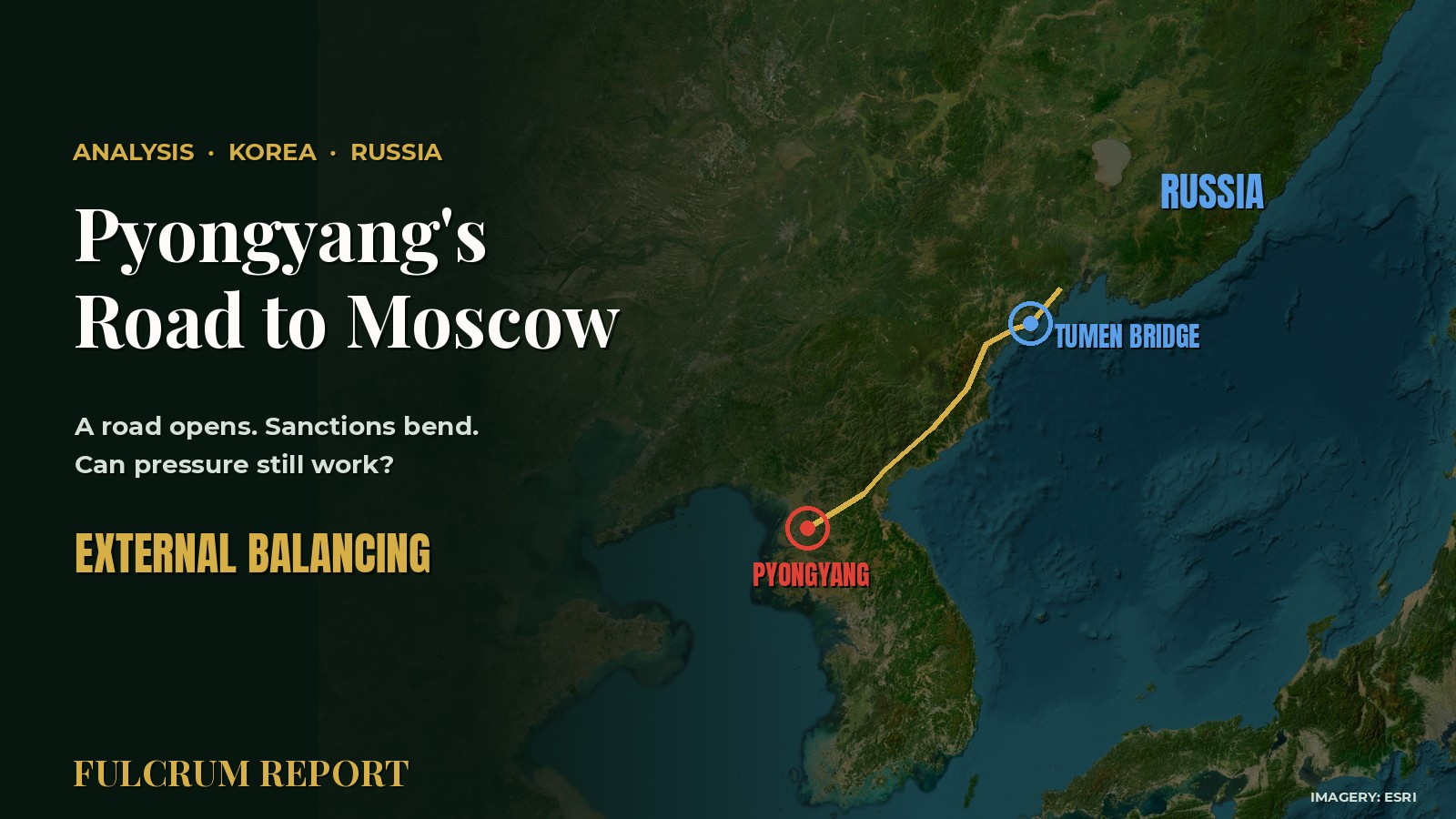
Pyongyang's Road to Moscow: Can Sanctions Still Work?
A second enrichment facility is reportedly going up at Yongbyon, and the Tumen River road bridge to Russia reportedly opened on September 8. When a major power offers a way around sanctions, how much pressure is left? An explainer on external balancing.
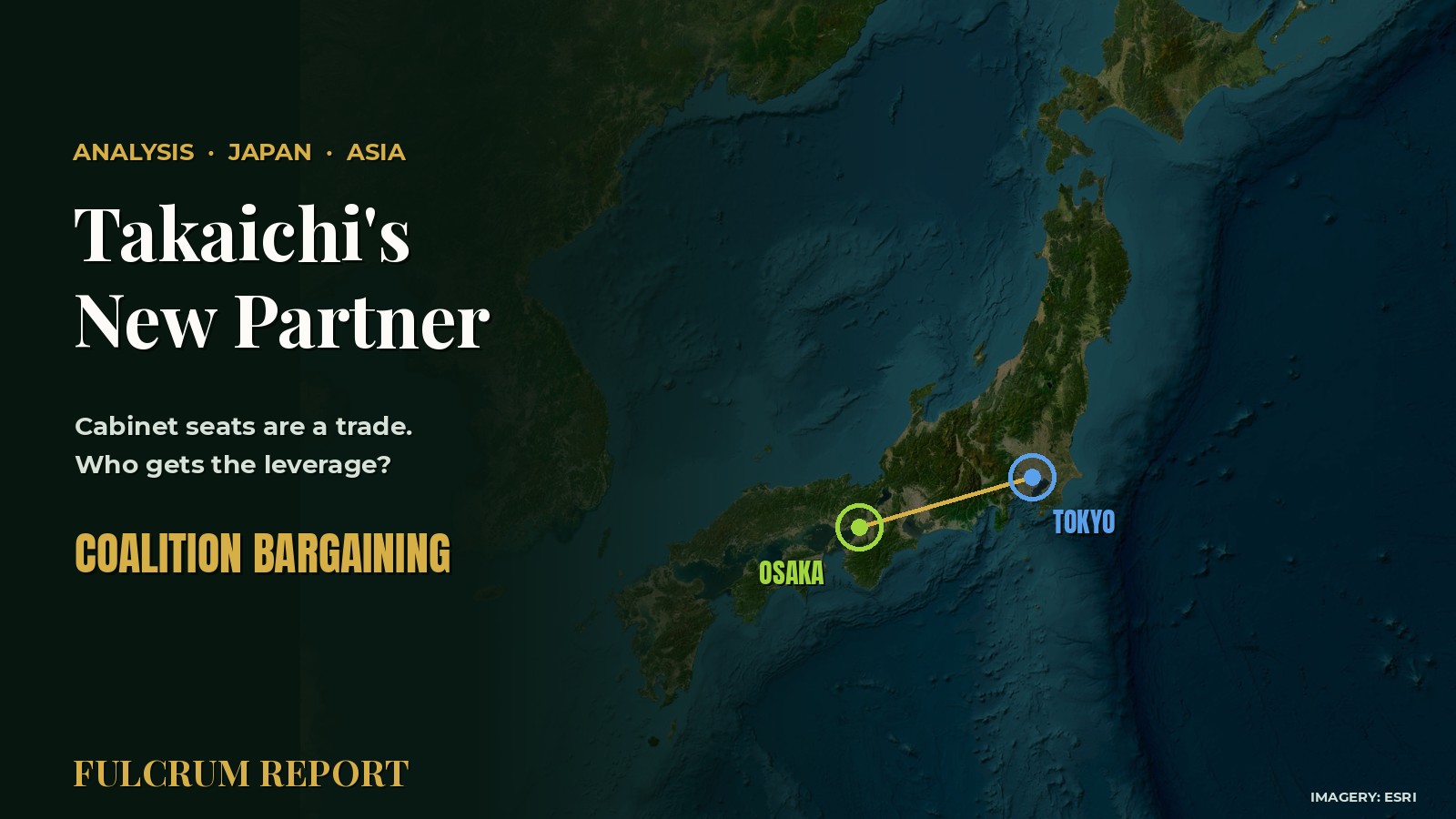
Takaichi's New Partner: Why Cabinet Seats Are a Trade
Sanae Takaichi reportedly reshuffled her cabinet on September 16 and 17, bringing in the Japan Innovation Party (Ishin) for the first time. Her camp holds two-thirds of the lower house but lacks an upper-house majority. A look at coalition bargaining and who gets the leverage.
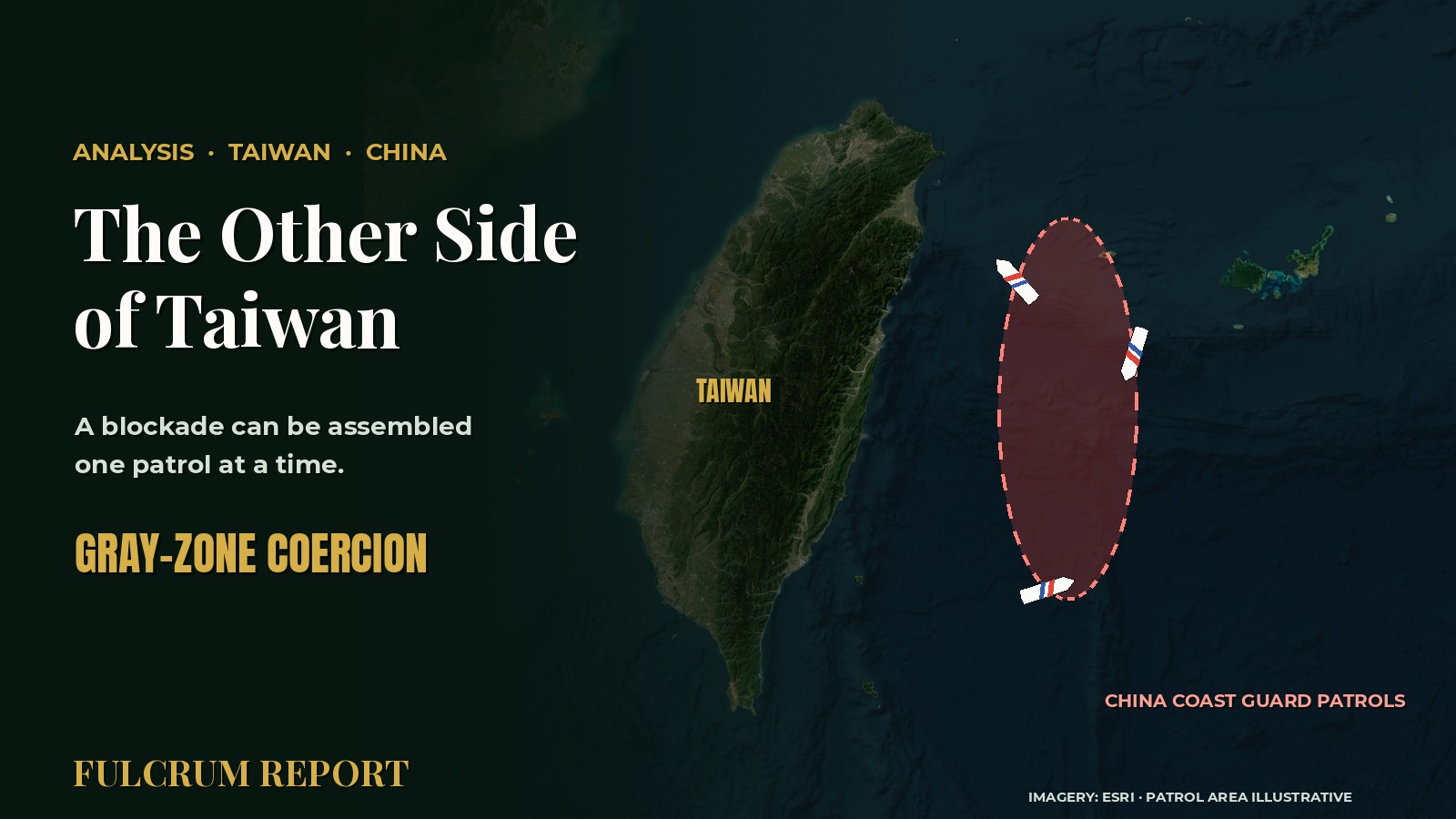
The Other Side of Taiwan: How a Blockade Gets Built Without Being Declared
China's Coast Guard has reportedly set up a regular presence east of Taiwan, framed as law enforcement, while a $14 billion U.S. arms package is pending. A look at gray-zone coercion, salami tactics and escalation control.