The Gulf Buys Insurance
America’s closest Gulf partners are adding new protectors. It isn’t a break with Washington. It’s hedging.
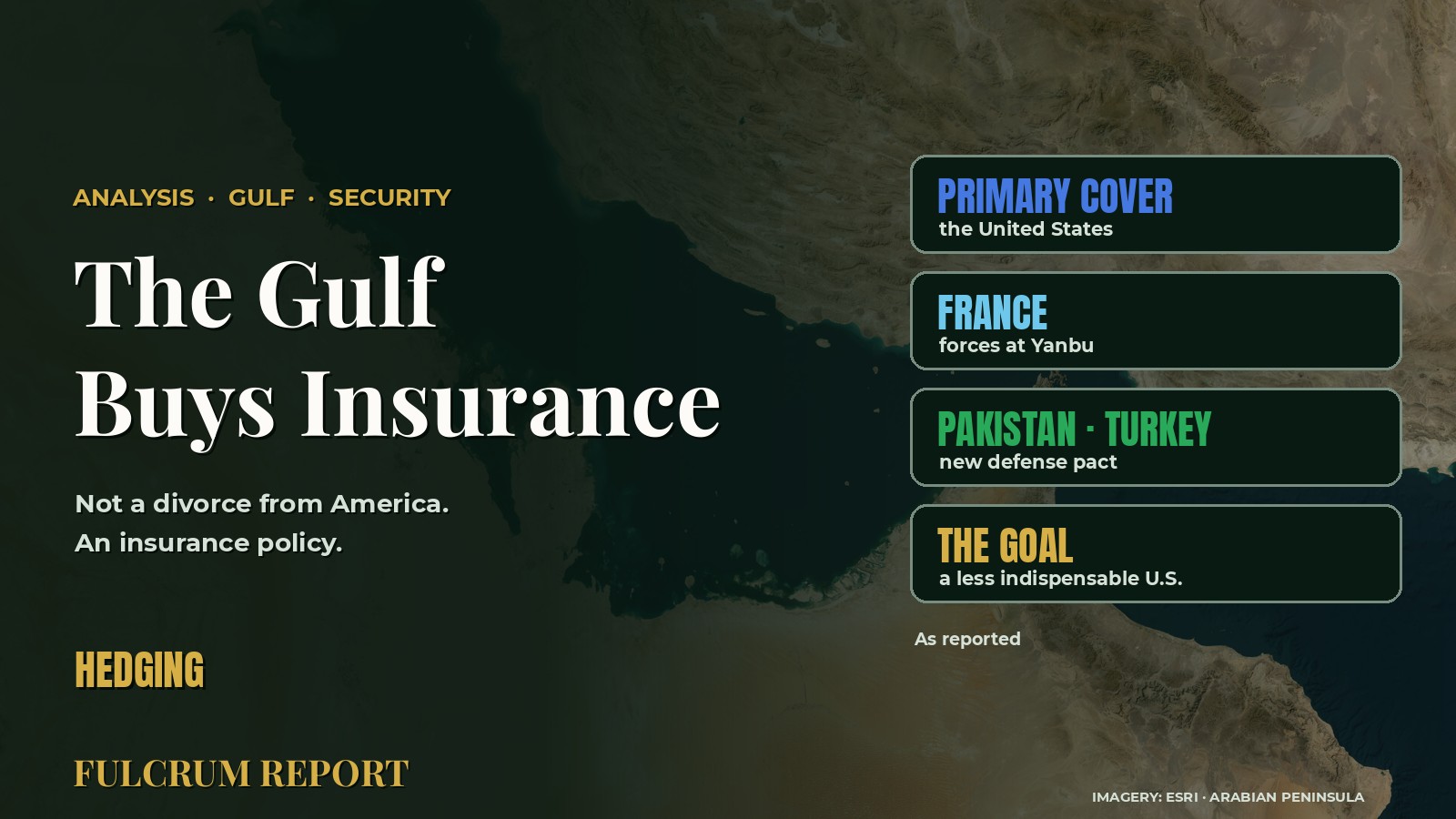
For decades the deal in the Gulf was simple. America provided the security, and the Gulf states provided the oil, the bases and the money. Nobody had to say it out loud. Lately, though, people are saying something out loud, and it's worth paying attention to.
America's closest Gulf partners are building a backup plan. And the backup is for America.
What was actually said
At the Hili Forum, officials and analysts from the UAE and Qatar made the shift explicit, as reported. The message was that Gulf security can no longer rest on Washington alone.
That's a notable thing to hear from the UAE and Qatar in particular. These aren't countries that drifted away from the United States. Both host major American military facilities. Both have spent years and a lot of money staying close to Washington. So when voices from those two capitals talk openly about not relying on America alone, it isn't a protest. It's a planning statement.
The alternatives are already taking shape
This isn't just talk at a conference. A few things have already happened, as reported.
France has deployed forces to protect Saudi Arabia's Yanbu oil hub. Yanbu sits on the Red Sea coast, and it matters a lot more right now than it used to, because it's one of the ways Saudi oil can reach the world without going through the Gulf.
Pakistan and Turkey are tied to Riyadh through a new defense pact. Pakistan has a long history of military cooperation with Saudi Arabia. Turkey is a NATO member with its own regional ambitions. Neither is a replacement for the United States, but both bring something real.
And warnings about European aviation have spread across the UAE, Qatar, Bahrain, Kuwait and Oman. When airspace warnings cover almost the whole Gulf, it stops being one country's problem. The whole region is being pushed to widen its circle of protectors.
Put those together and you get a pattern.
The idea that explains it
The word for this in international relations is hedging. The political scientist Cheng-Chwee Kuik wrote a well-known study of it in 2008, looking at how Malaysia and Singapore dealt with a rising China. His point was that smaller states often don't pick a side and commit everything to it, and they don't simply balance against a threat either. They keep their main relationship alive while quietly building alternatives, so they're not stuck if things go wrong.
That's the key part. Hedging means reducing dependence without abandoning the alliance. The Gulf isn't swapping America out. It's adding layers on top.
There's a second idea underneath it. In 1984 Glenn Snyder wrote a paper called The Security Dilemma in Alliance Politics. He argued that anyone in an alliance lives with two fears at once. One is entrapment, getting dragged into a partner's fight. The other is abandonment, being left alone when you need help most. For the Gulf, the second fear has been growing for years. Every time Washington talks about pulling back from the Middle East, or hesitates in a crisis, that fear gets a little louder.
Hedging is what you do about the fear of abandonment when you can't afford to leave.
What the Gulf gets out of it
I think there are three things, and they build on each other.
The first is a fallback. If Washington hesitates, there's someone else already on the ground. French forces near Yanbu, regional partners tied in by treaty. It isn't the same as a carrier group, but it's not nothing.
The second is leverage. When Washington does engage, the Gulf can negotiate from a better position. A partner with options gets listened to differently from a partner with none.
The third is the one I find most interesting. Every new protector lowers the cost of saying no to the old one. If the US asks for something the Gulf doesn't want to give, refusing is a lot less frightening when you're not completely dependent on the country asking.
A caveat
I don't want to oversell this. The United States is still the Gulf's main security partner by a long way, and none of these new arrangements come close to what American forces provide. France, Pakistan and Turkey have their own interests, and they won't always line up with Riyadh's or Abu Dhabi's. Hedging has costs too. Too many partners can mean mixed signals, and Washington may not love watching its friends shop around.
So this isn't a story about America losing the Gulf. That would be the wrong takeaway.
What I'd watch
Whether the French deployment at Yanbu turns into something lasting or stays a crisis measure. What the Saudi defense pact with Pakistan and Turkey actually commits each side to in practice. Whether other Gulf states follow with partners of their own. And how Washington responds, because the American reaction will shape how far this goes.
This is analysis, not a prediction. But the way I'd put it is this. The goal isn't to replace America. It's to make American protection less indispensable. The Gulf isn't leaving America. It's buying insurance.
So I'll ask you what I asked on the reel. Does hedging work? Yes or no? Tell me in the comments, and follow @fulcrumreport for analysis without agenda.
About the author
Fulcrum Report
Independent Middle East analyst holding a PhD in Political Science. Fulcrum Report offers rigorous, framework-driven coverage of politics and geopolitics across the Levant and the wider region — analysis without agenda.
Related reading
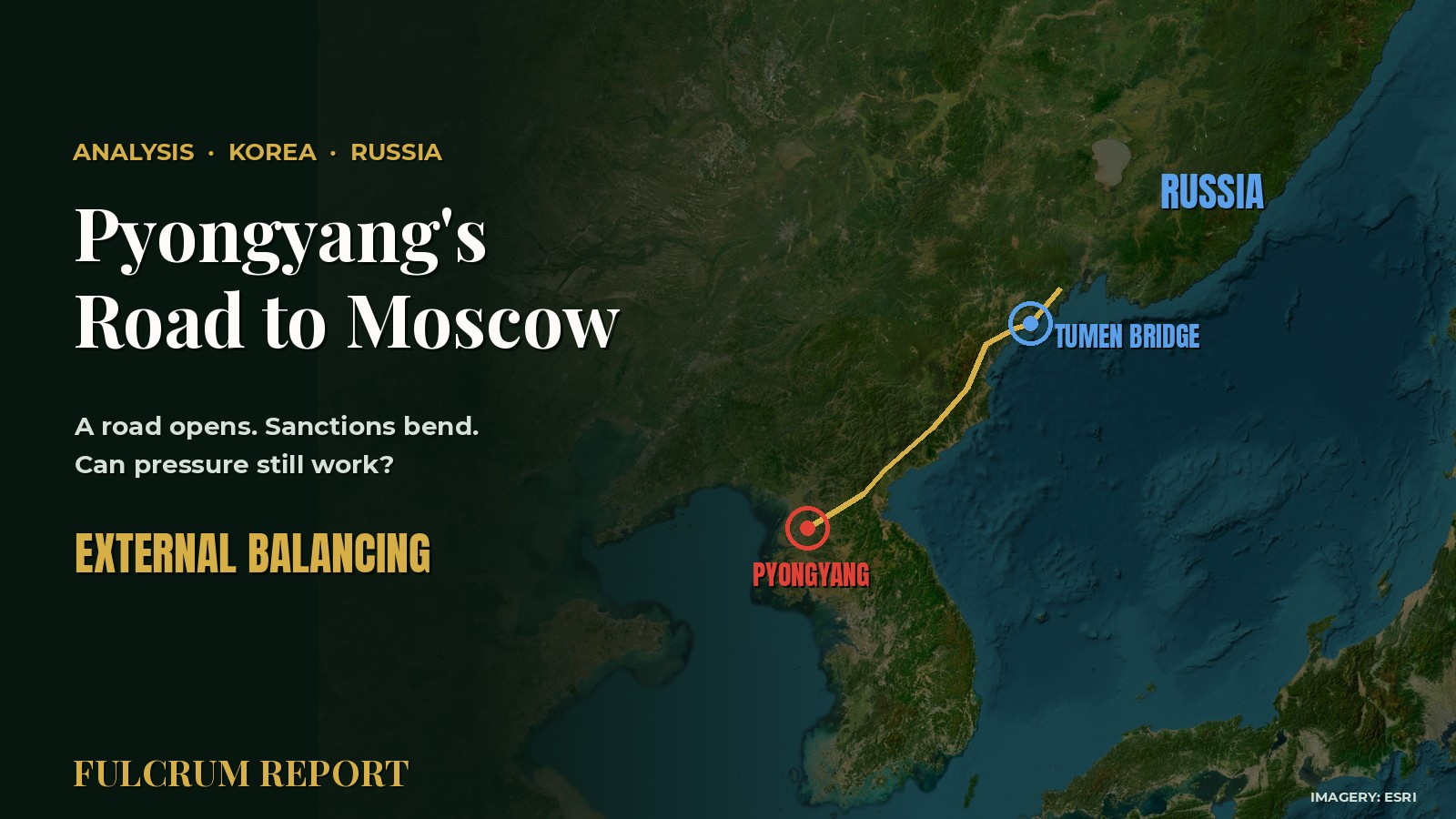
Pyongyang's Road to Moscow: Can Sanctions Still Work?
A second enrichment facility is reportedly going up at Yongbyon, and the Tumen River road bridge to Russia reportedly opened on September 8. When a major power offers a way around sanctions, how much pressure is left? An explainer on external balancing.
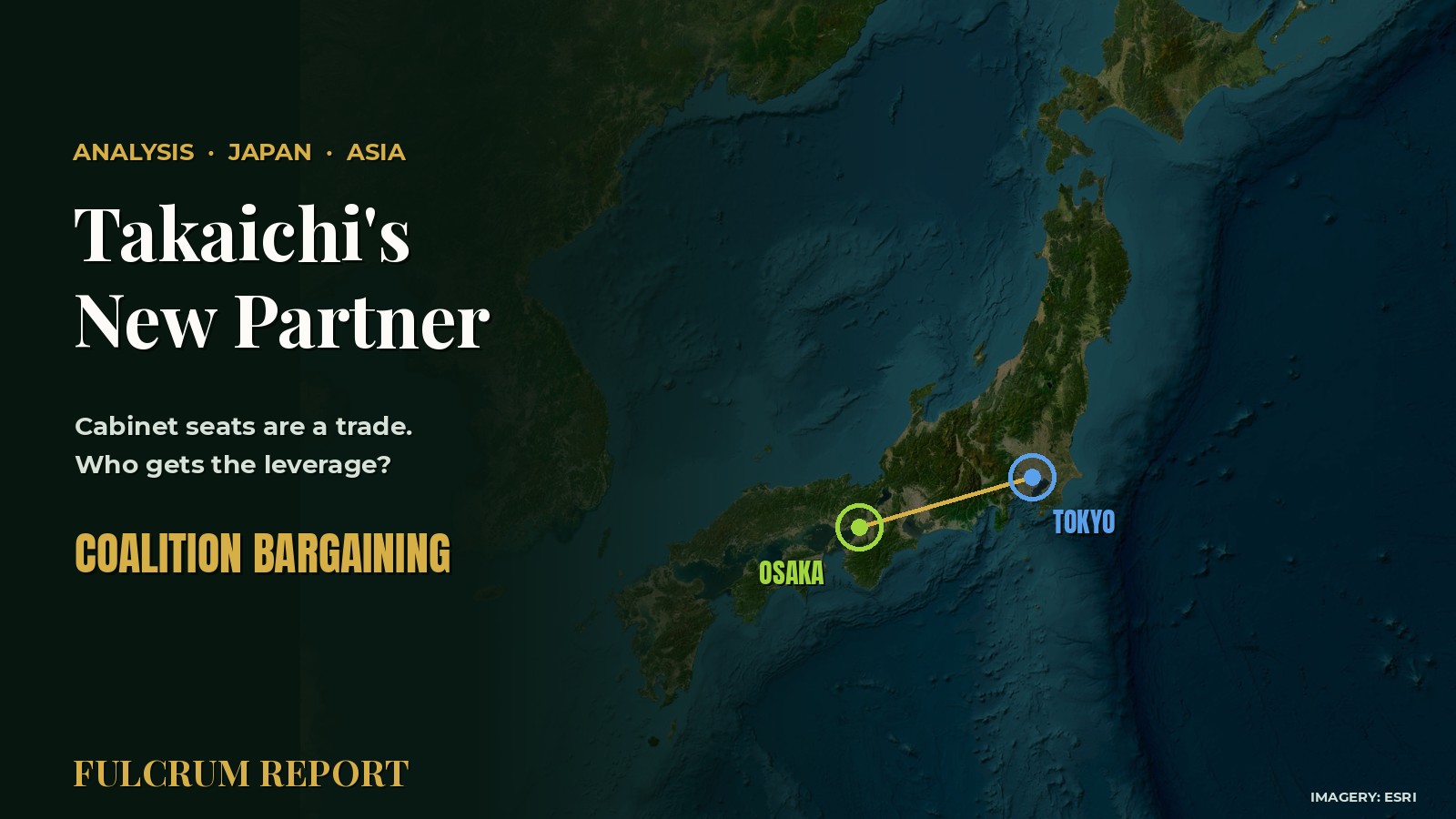
Takaichi's New Partner: Why Cabinet Seats Are a Trade
Sanae Takaichi reportedly reshuffled her cabinet on September 16 and 17, bringing in the Japan Innovation Party (Ishin) for the first time. Her camp holds two-thirds of the lower house but lacks an upper-house majority. A look at coalition bargaining and who gets the leverage.
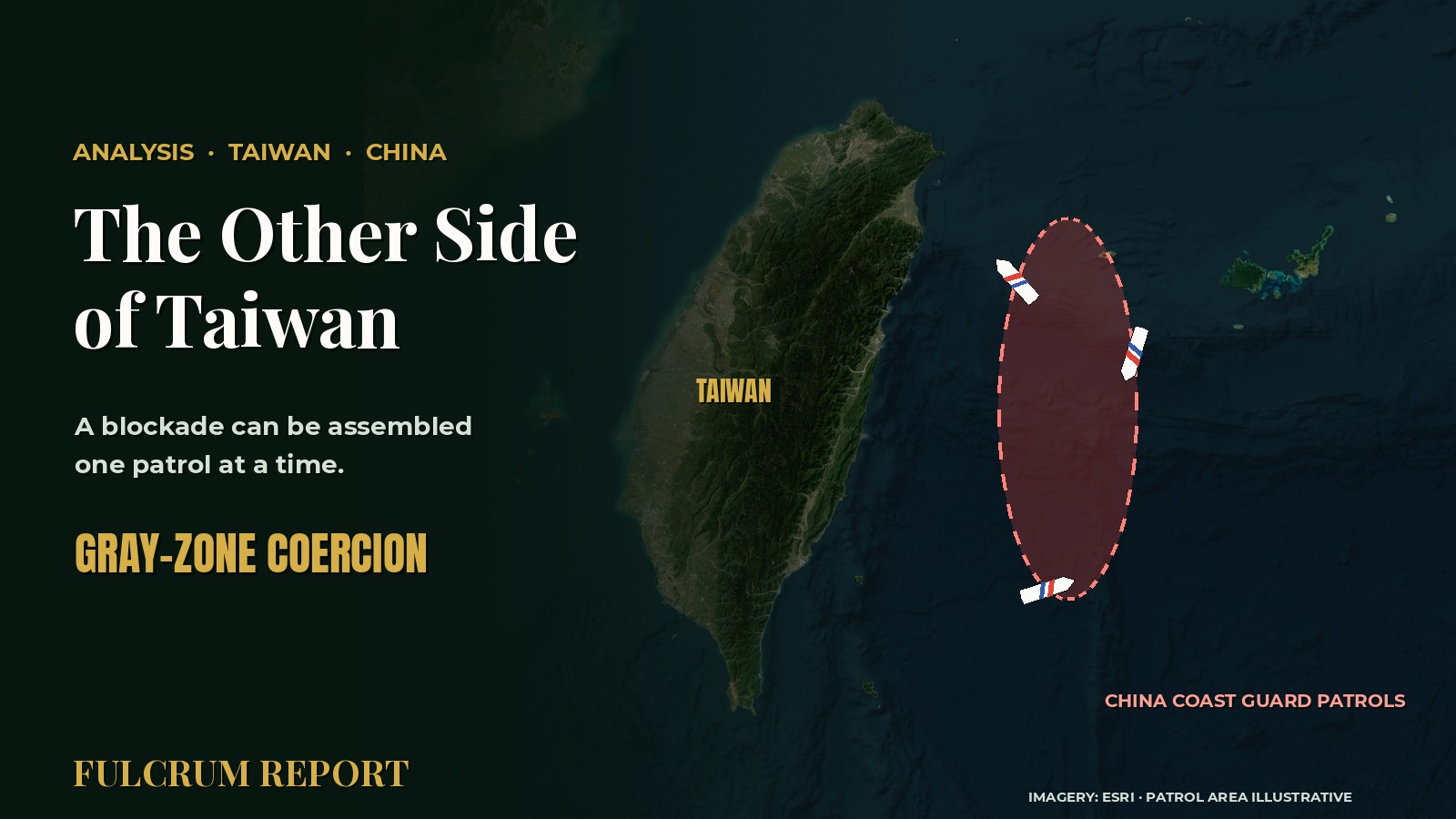
The Other Side of Taiwan: How a Blockade Gets Built Without Being Declared
China's Coast Guard has reportedly set up a regular presence east of Taiwan, framed as law enforcement, while a $14 billion U.S. arms package is pending. A look at gray-zone coercion, salami tactics and escalation control.