The Gulf's Nightmare Isn't Iran. It's Being Abandoned by America.
Why Saudi Arabia, the UAE and Qatar are hedging against Washington — and how a forty-year-old theory called the alliance security dilemma explains every move.
Ask most people what keeps the Gulf monarchies awake at night and they will say Iran. It is the obvious answer, and for two decades it was mostly the right one. But watch what Riyadh, Abu Dhabi and Doha are actually doing right now, rather than what they say at press conferences, and a different fear comes into focus. The thing that scares them is not the enemy across the water. It is the friend who might not show up.
That is the quiet story behind Saudi Arabia's recent burst of diplomacy. A new mutual-defense pact. Open channels to Tehran. Deepening commercial and security conversations with Beijing. Taken one at a time, each move looks like ordinary statecraft. Taken together, they look like a country building a backup plan because it no longer trusts Washington to protect it without also dragging it into a war it never chose.
## Two fears, one small ally
There is a name for what the Gulf states are living through, and it is worth knowing because it explains almost everything else. Back in 1984, a political scientist named Glenn Snyder wrote an article for the journal World Politics called "The Security Dilemma in Alliance Politics." Snyder spent his career on this stuff. He taught at SUNY Buffalo and then at the University of North Carolina at Chapel Hill until his death in 2013, and he had a gift for naming the traps that allies fall into without meaning to.
His insight was simple and a little uncomfortable. A smaller partner inside an alliance is squeezed between two opposite fears at the same time. The first is entrapment: getting pulled into the great power's fights, made to bleed for a quarrel that was never yours. The second is abandonment: reaching for the protection you were promised and finding no one there. The cruel part is that trying to escape one fear pushes you straight toward the other. Cling too tightly to your patron and you risk entrapment. Hedge and diversify to avoid entrapment and your patron may decide you are not worth defending, which is abandonment. Snyder called it a dilemma for a reason. There is no clean exit.
Read the Gulf's behavior through that lens and it stops looking erratic. It looks like a textbook case.
## Why the fear is rational
This is not abstract anxiety. Saudi Arabia, the United Arab Emirates and Qatar are, in the end, export economies whose lifeblood moves by sea. Their oil and gas leave through the Gulf and the Red Sea, and both of those waterways are now, by any honest description, conflict zones. Reporting over the past year describes Saudi-linked tankers being struck and a live Houthi blockade squeezing traffic. When your entire economic model depends on ships getting through two shooting galleries, you do not have the luxury of trusting a single guarantor.
And the Gulf has already tasted abandonment once. In 2019, when a spectacular attack hit Saudi Arabia's Abqaiq oil facility and briefly knocked out a chunk of the kingdom's production, the response from Washington was words, not retaliation. For a country that had spent decades and hundreds of billions of dollars buying American weapons partly to insure against exactly that scenario, the silence was the lesson. Protection, it turned out, was conditional.
So now the entrapment fear has arrived to keep the abandonment fear company. With the United States and Iran openly at war, a Gulf state hosting American bases is no longer just sheltering under an umbrella. It is sitting on a target, exposed to retaliation for decisions made in Washington rather than in Riyadh. Both of Snyder's fears are live at once. That is the nightmare, and Iran is only half of it.
## Hedging is not betrayal
Here is where I think a lot of Western commentary gets it wrong. When Gulf capitals talk to Tehran, sign pacts that do not run through Washington, or let Chinese money and technology deeper into their economies, the reflex is to read it as drift, ingratitude, maybe even disloyalty. That reading misses what is actually going on.
What looks like disloyalty is closer to insurance. A state facing both abandonment and entrapment does the only sensible thing available to it: it stops betting everything on one protector. It keeps the American bases, because the security relationship is still valuable. It signs a new defense pact, because a second guarantee is better than one. It keeps a line open to Iran, because a neighbor you can talk to is less likely to sink your tankers. None of these moves is a declaration of independence from the United States. Each one is a way of buying options, of making sure that if one door slams there is another to reach for.
Diversification, in other words, is not the opposite of alliance. It is what a rational ally does when the alliance itself has become a source of risk.
## What this says about American power
Step back and the larger picture is sobering for Washington. The United States built its position in the Gulf on a straightforward promise: stick with us and you will be safe. That promise is fraying, not because a rival matched American firepower, but because American reliability has come into question. When the price of being protected is being dragged into someone else's war, and when protection may not even arrive when you call, the deal starts to look bad even to your closest partners.
The most striking line I keep coming back to is this: in the current war, being America's ally has become about as dangerous as being its enemy. Enemies get struck. Allies get exposed to the blowback and left wondering whether the cavalry is coming. When those two conditions start to feel similar, the whole logic of the alliance is in trouble.
None of this means the Gulf is abandoning the West or throwing in with China and Iran. It means these states have read their situation clearly and are behaving accordingly, spreading their bets, keeping their options open, refusing to be trapped or left behind. Glenn Snyder mapped this terrain forty years ago from a university office in North Carolina. The Gulf is now walking across it in real time, and the rest of us would do well to watch where they step.
About the author
Fulcrum Report
Independent Middle East analyst holding a PhD in Political Science. Fulcrum Report offers rigorous, framework-driven coverage of politics and geopolitics across the Levant and the wider region — analysis without agenda.
Related reading
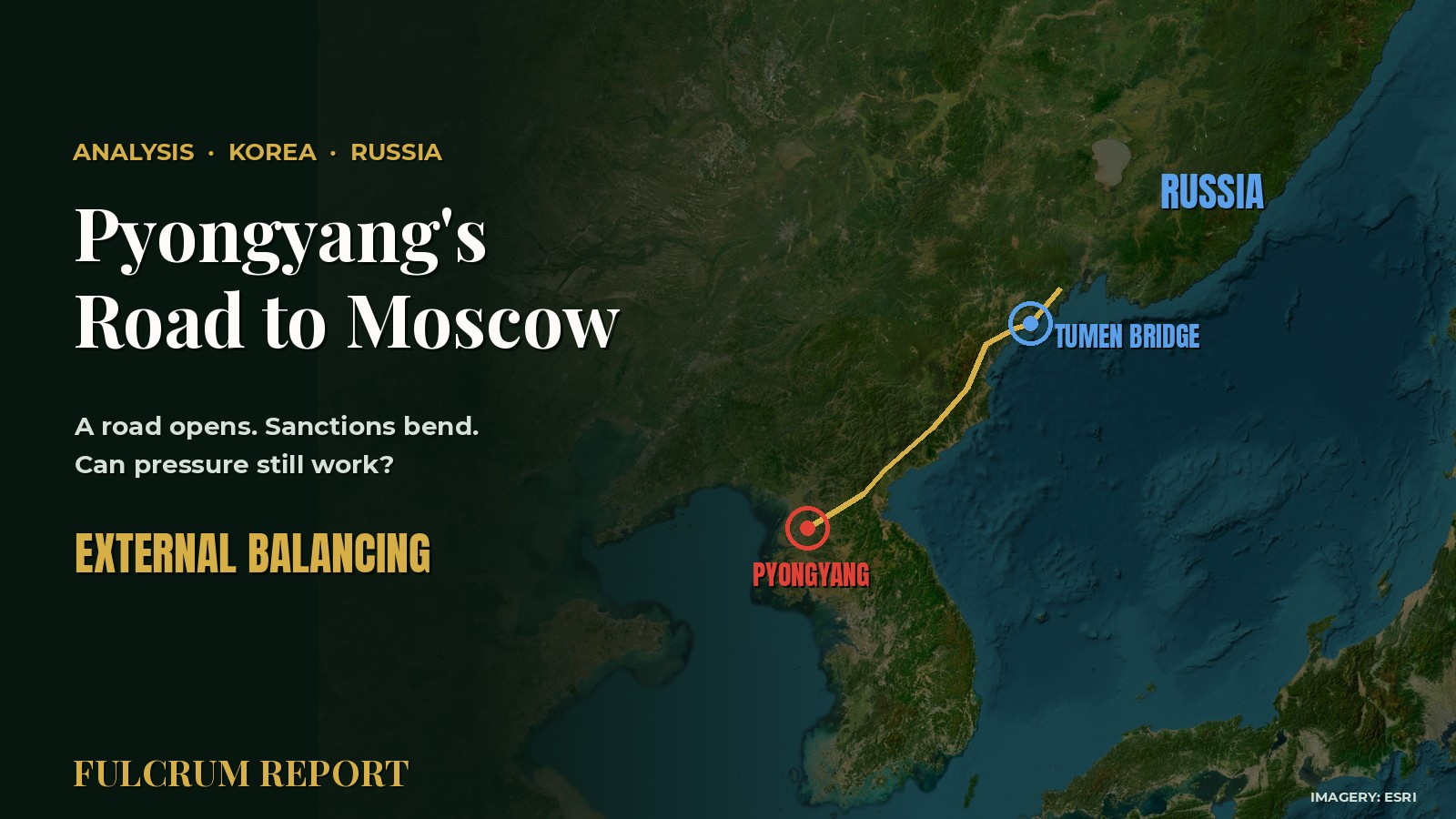
Pyongyang's Road to Moscow: Can Sanctions Still Work?
A second enrichment facility is reportedly going up at Yongbyon, and the Tumen River road bridge to Russia reportedly opened on September 8. When a major power offers a way around sanctions, how much pressure is left? An explainer on external balancing.
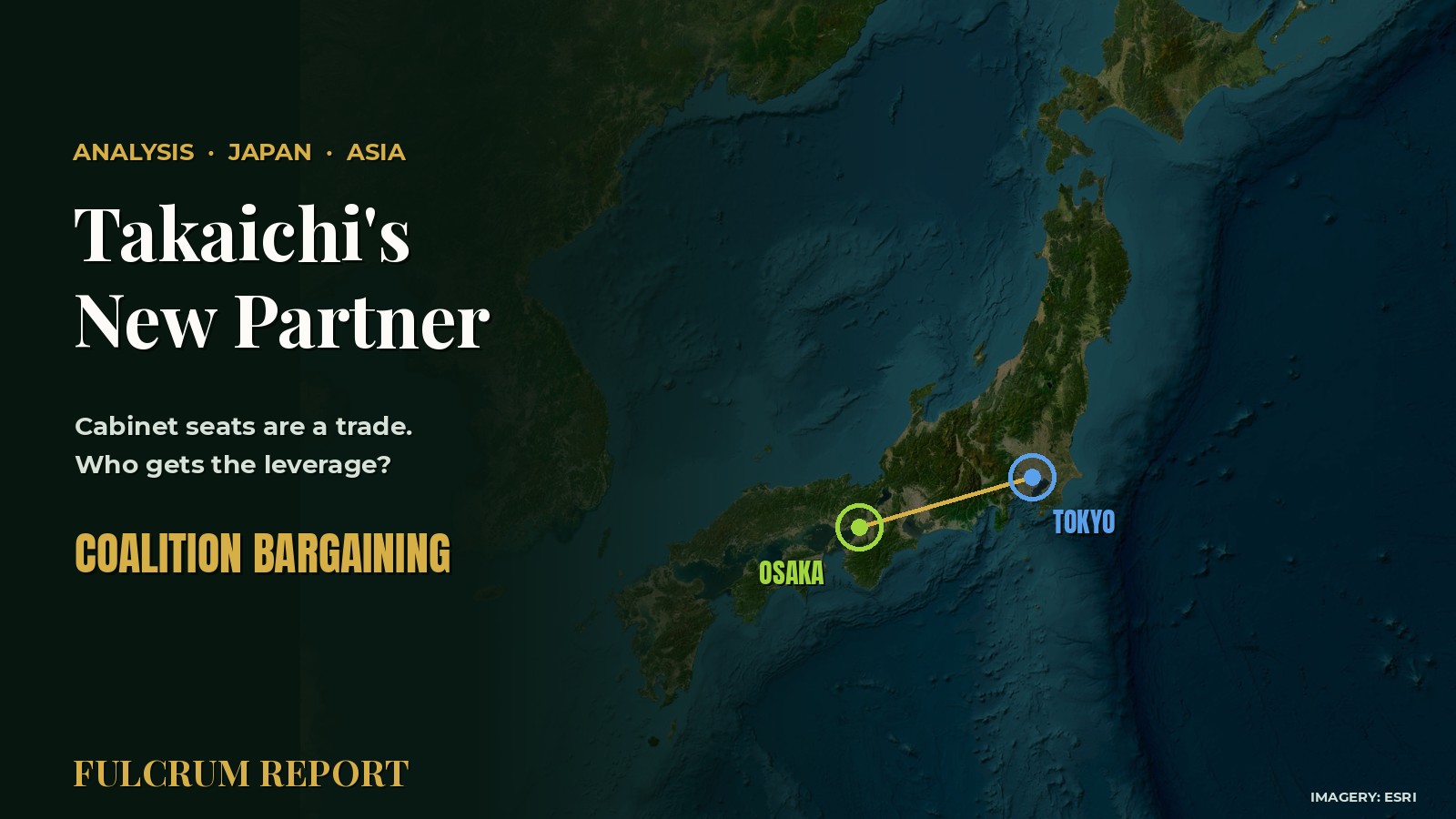
Takaichi's New Partner: Why Cabinet Seats Are a Trade
Sanae Takaichi reportedly reshuffled her cabinet on September 16 and 17, bringing in the Japan Innovation Party (Ishin) for the first time. Her camp holds two-thirds of the lower house but lacks an upper-house majority. A look at coalition bargaining and who gets the leverage.
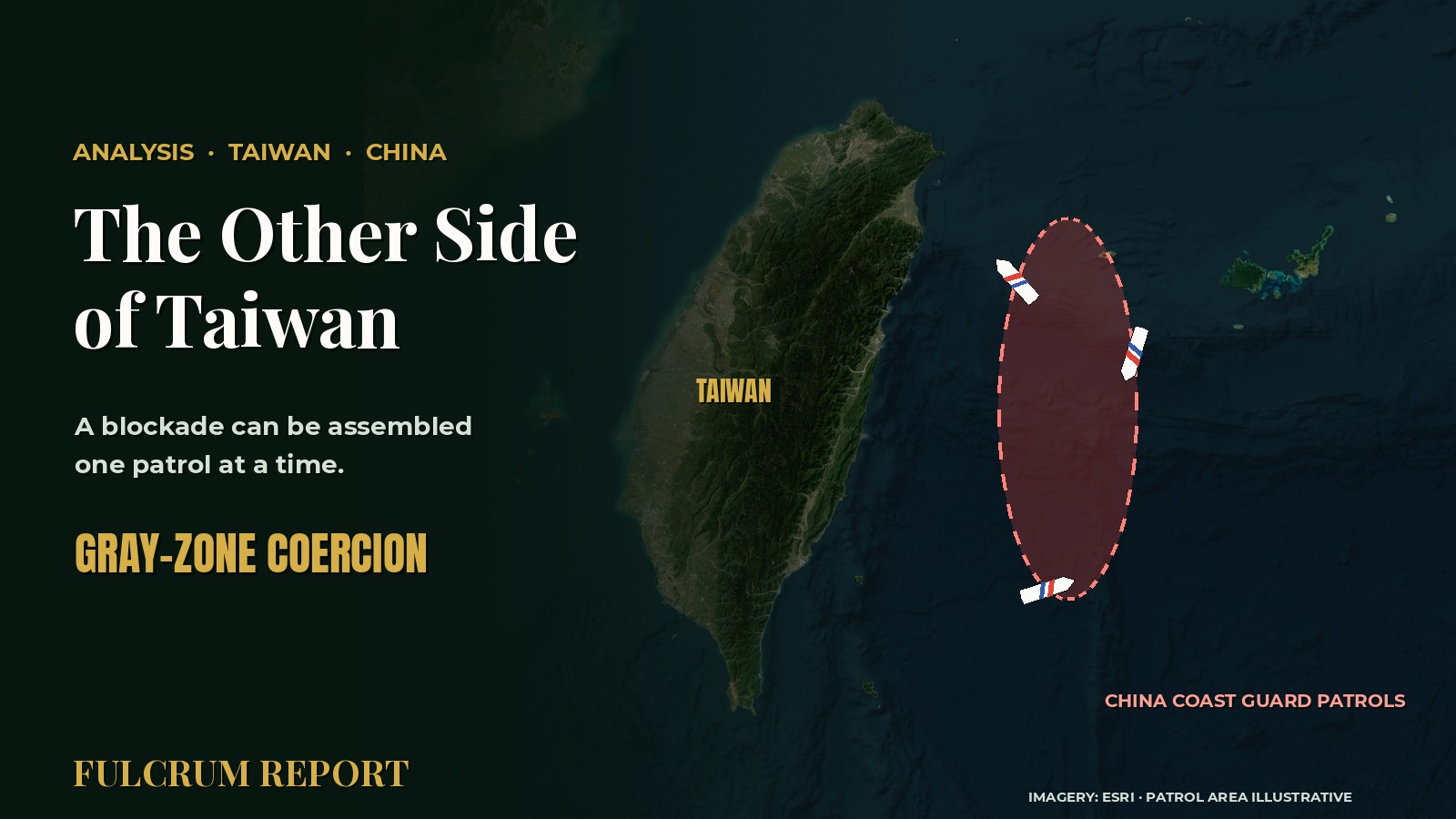
The Other Side of Taiwan: How a Blockade Gets Built Without Being Declared
China's Coast Guard has reportedly set up a regular presence east of Taiwan, framed as law enforcement, while a $14 billion U.S. arms package is pending. A look at gray-zone coercion, salami tactics and escalation control.