Have a Little Bit of Decency: Why Manila Fights in the Spotlight
The Philippine defense secretary read a Chinese diplomat’s note out loud. A look at naming and shaming, and how a smaller state turns gray-zone pressure into a public cost.
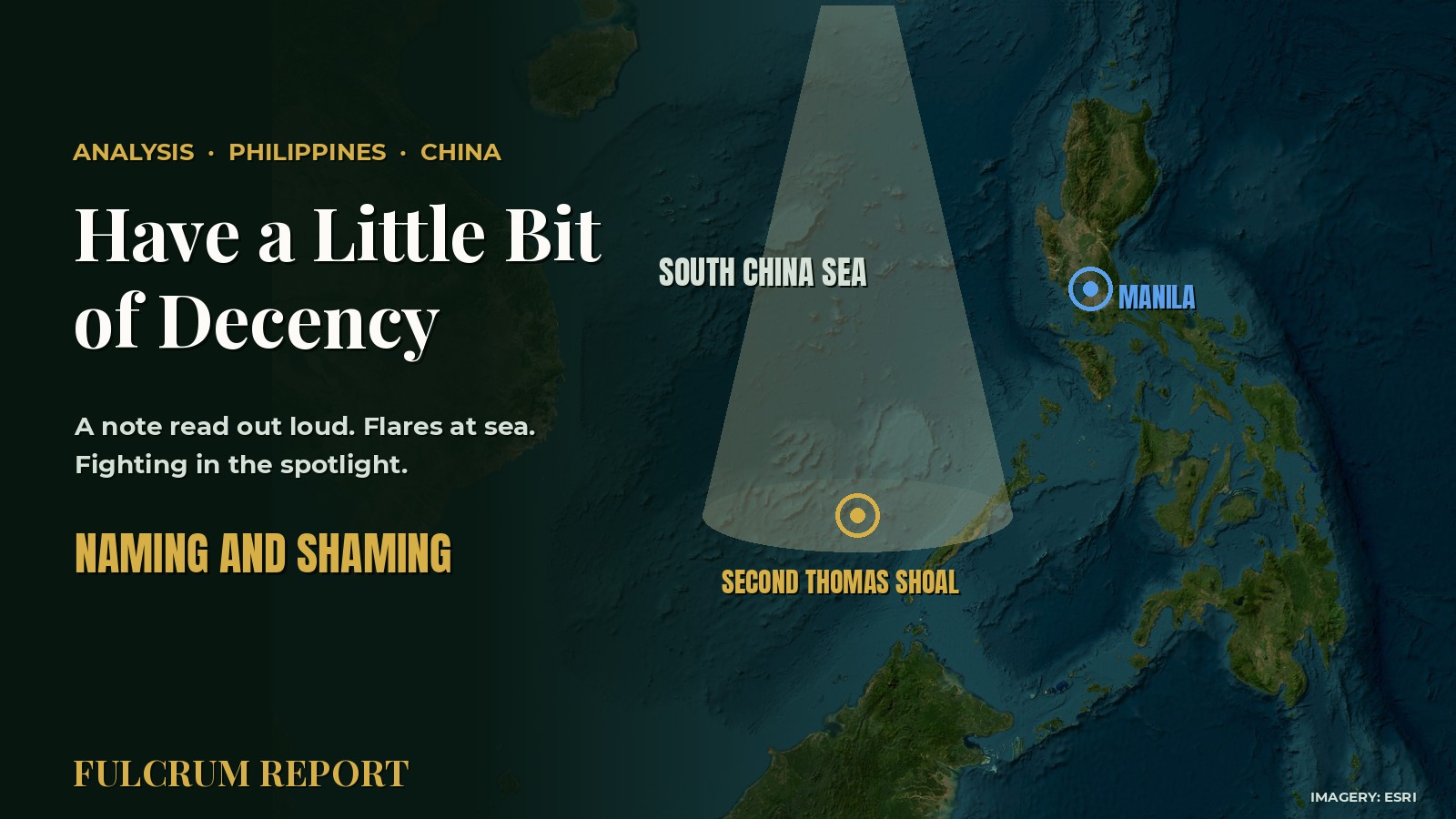
A defense minister read a diplomat's note out loud, on stage, in front of a room full of his peers. Then he said, "Have a little bit of decency." I keep coming back to that moment because it shows how a smaller country can push back against a much bigger one without firing anything.
The question I want to work through is simple. What can you do when you can't win at sea?
What's been reported
I'm treating these as reported events, not things I've confirmed myself. At the Seoul Defense Dialogue on September 8, Philippine Defense Secretary Gilberto Teodoro reportedly read out a note that a Chinese attaché had passed to him, and answered it in public instead of in private. On September 24, during a resupply mission to Second Thomas Shoal, flares were reportedly fired at a Philippine aircraft. Second Thomas Shoal is the reef where the Philippines keeps a handful of marines on the BRP Sierra Madre, an old navy ship it grounded there on purpose in 1999. Meanwhile, talks on a Code of Conduct for the South China Sea are still going.
That last point deserves a beat. ASEAN and China signed a Declaration on the Conduct of Parties back in 2002, and they've been negotiating a binding code ever since. More than two decades later, there's still no finished text. The talks continue. So does the pressure on the water.
The imbalance nobody disputes
Let's be honest about the starting point. The Philippines cannot match China's navy. It isn't close. China has the largest navy in the world by number of ships, plus a coast guard and a maritime militia that do most of the day-to-day work around disputed reefs. The Philippine Navy is small and still modernizing.
The Philippines did win a legal case. In 2016, an arbitral tribunal under the UN Convention on the Law of the Sea ruled that China's sweeping "nine-dash line" claim had no legal basis. China rejected the ruling and has ignored it since. A legal win on paper didn't change who has more ships.
The idea in the reel
The concept I used is naming and shaming, or transparency as strategy. It sounds like a slogan, but scholars have studied it seriously.
Margaret Keck and Kathryn Sikkink wrote about it in Activists Beyond Borders in 1998. They called it the "mobilization of shame": you expose what a government is doing, and you make other people care. A year later, Thomas Risse, Stephen Ropp and Sikkink described a "spiral model" in which repeated public exposure slowly raises the cost of bad behavior, until denial gets harder to keep up. Their work was mostly about human rights, but the logic carries over.
Gray-zone tactics, the kind Michael Mazarr described in 2015, depend on staying below the line. Water cannons, blocking maneuvers, lasers, flares. Each one is too small to justify a war, and each one works best when nobody's watching. Naming and shaming attacks that exact weakness. It takes something quiet and makes it visible.
What Manila is actually doing
This isn't new for the Philippines, and it isn't improvised. Since 2023, the Philippine Coast Guard has run what it calls a transparency initiative, led publicly by Commodore Jay Tarriela. It brings journalists on patrols and quickly releases video of incidents at sea. The laser incident in February 2023 and the water cannon footage that followed reached audiences far beyond Manila.
Teodoro reading that note fits the same pattern. A private message from a diplomat is meant to stay private. Read aloud at a regional defense forum, it turns into a public test of how China wants to be seen.
Why partners matter here
The real audience isn't only Beijing. It's everyone else. When pressure is visible, it's easier for the United States, Japan, Australia and European governments to justify joint patrols, statements and support. It also gives Southeast Asian neighbors, who often prefer to stay quiet, less room to pretend nothing is happening. Visibility gives allies a clear reason to back Manila.
What I'm not claiming
I don't want to oversell this. Visibility does not close the naval gap. Shaming has a mixed record, and powerful states can absorb a lot of bad press, especially if the domestic audience never sees it. China also tells its own story about these incidents, and plenty of people believe it. There's a risk too: publicizing every incident can harden positions and make quiet de-escalation harder.
So I wouldn't say naming and shaming stops China. I'd say it raises the price, gives Manila another source of leverage, and keeps partners engaged. For a smaller state, that's not nothing.
Where this leaves us
The line I ended the reel on is the one I believe: when you can't win at sea, you fight in the spotlight. It won't settle who controls Second Thomas Shoal. But it changes how the contest is judged, and by whom.
I asked in the reel whether naming and shaming actually works. I lean toward "partly, and slowly," but I'd really like to hear your take.
Further reading: Margaret E. Keck and Kathryn Sikkink, Activists Beyond Borders (1998); Thomas Risse, Stephen C. Ropp and Kathryn Sikkink, eds., The Power of Human Rights (1999); Michael J. Mazarr, Mastering the Gray Zone (2015); the 2016 arbitral award in The South China Sea Arbitration (Philippines v. China); the 2002 ASEAN–China Declaration on the Conduct of Parties in the South China Sea.

About the author
Fulcrum Report
Independent Middle East analyst holding a PhD in Political Science. Fulcrum Report offers rigorous, framework-driven coverage of politics and geopolitics across the Levant and the wider region — analysis without agenda.
Related reading
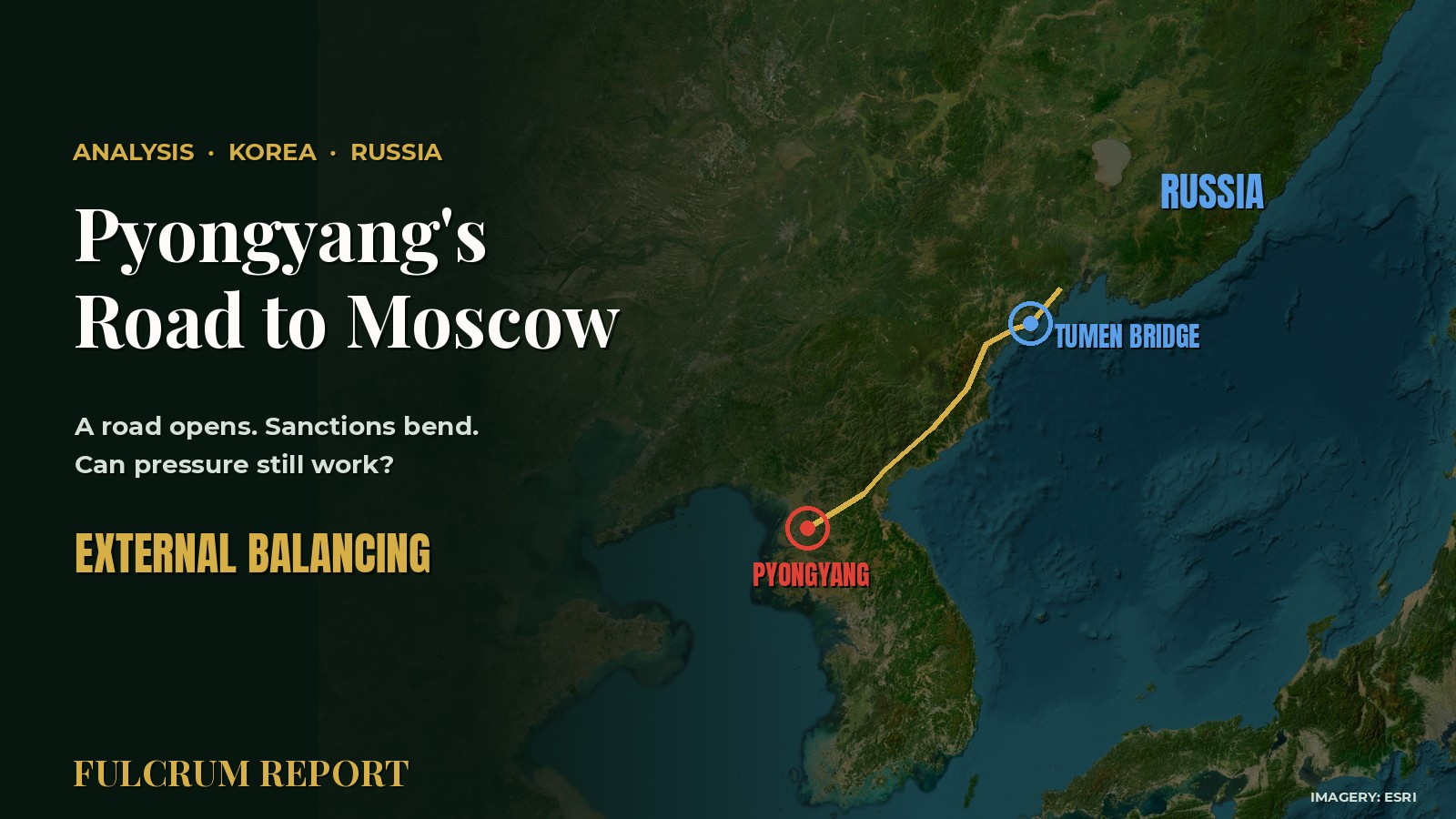
Pyongyang's Road to Moscow: Can Sanctions Still Work?
A second enrichment facility is reportedly going up at Yongbyon, and the Tumen River road bridge to Russia reportedly opened on September 8. When a major power offers a way around sanctions, how much pressure is left? An explainer on external balancing.
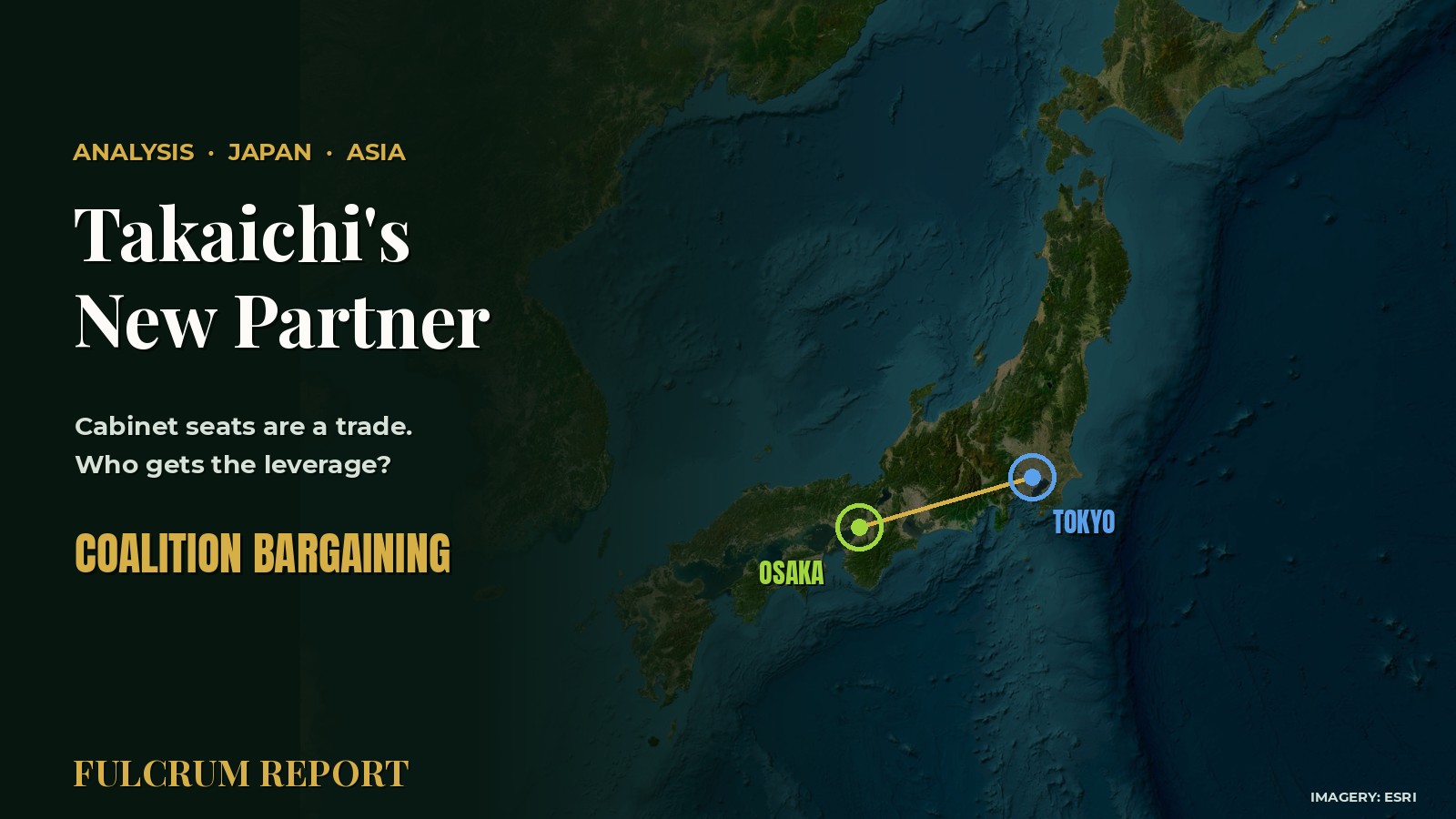
Takaichi's New Partner: Why Cabinet Seats Are a Trade
Sanae Takaichi reportedly reshuffled her cabinet on September 16 and 17, bringing in the Japan Innovation Party (Ishin) for the first time. Her camp holds two-thirds of the lower house but lacks an upper-house majority. A look at coalition bargaining and who gets the leverage.
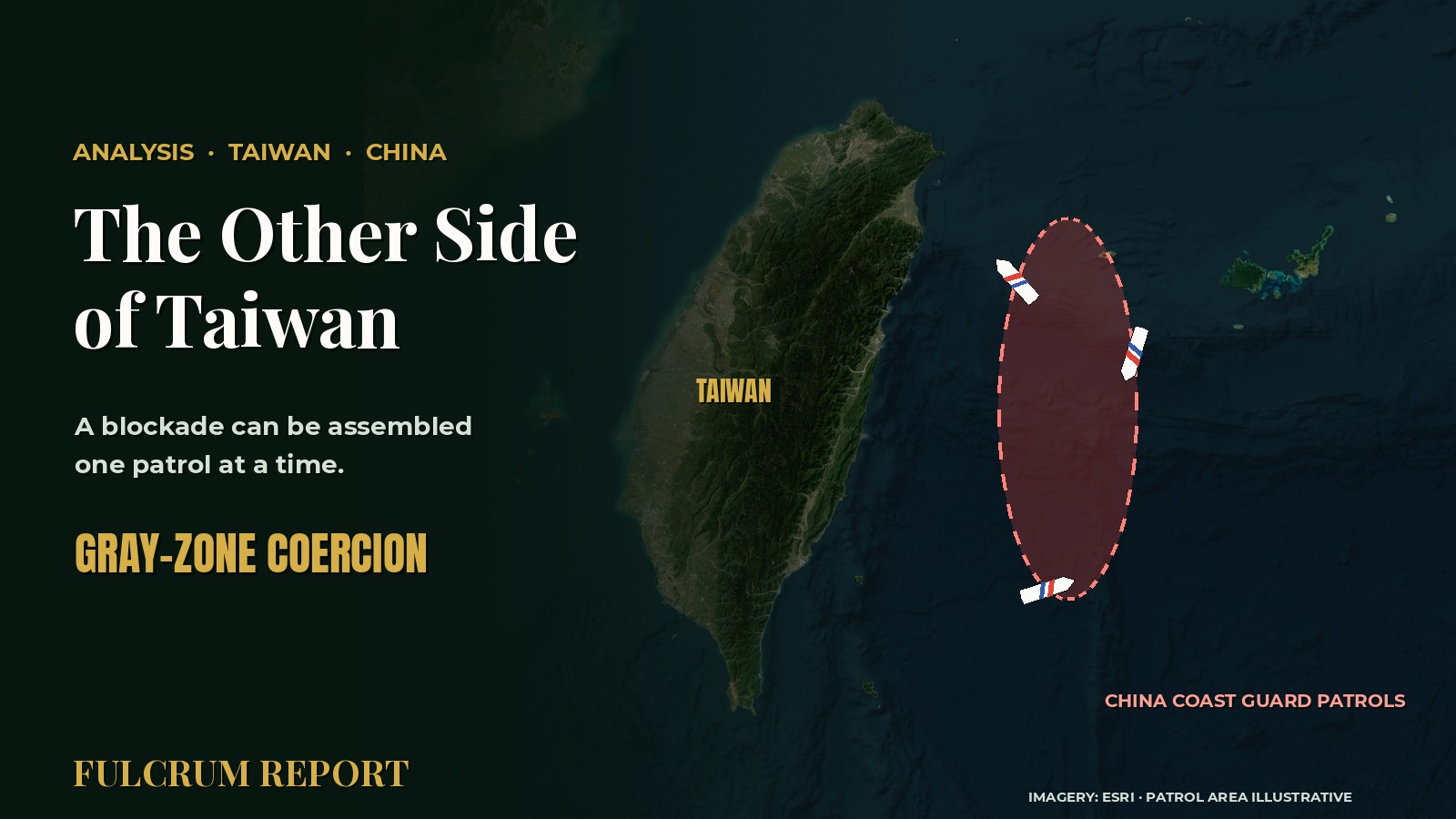
The Other Side of Taiwan: How a Blockade Gets Built Without Being Declared
China's Coast Guard has reportedly set up a regular presence east of Taiwan, framed as law enforcement, while a $14 billion U.S. arms package is pending. A look at gray-zone coercion, salami tactics and escalation control.