The Houthis Take the Gate: How Holding Coastline Turns Disruption into Leverage
With Mokha and islands near the Bab el-Mandeb in Houthi hands and Hormuz already shut, both of the Middle East’s oil chokepoints are under pressure at once.
For most of the past two years, the Houthi threat to Red Sea shipping has been something you could picture as a missile in flight. A drone launched from somewhere inland, a tanker hit, insurance premiums spiking, ships turning around toward the Cape of Good Hope. It was disruptive and expensive, but it came in bursts.
That changed in September. The Houthis now hold the coastline that overlooks the Red Sea’s southern gate, and I think that shift matters more than any single strike they have carried out.
What actually happened on the map
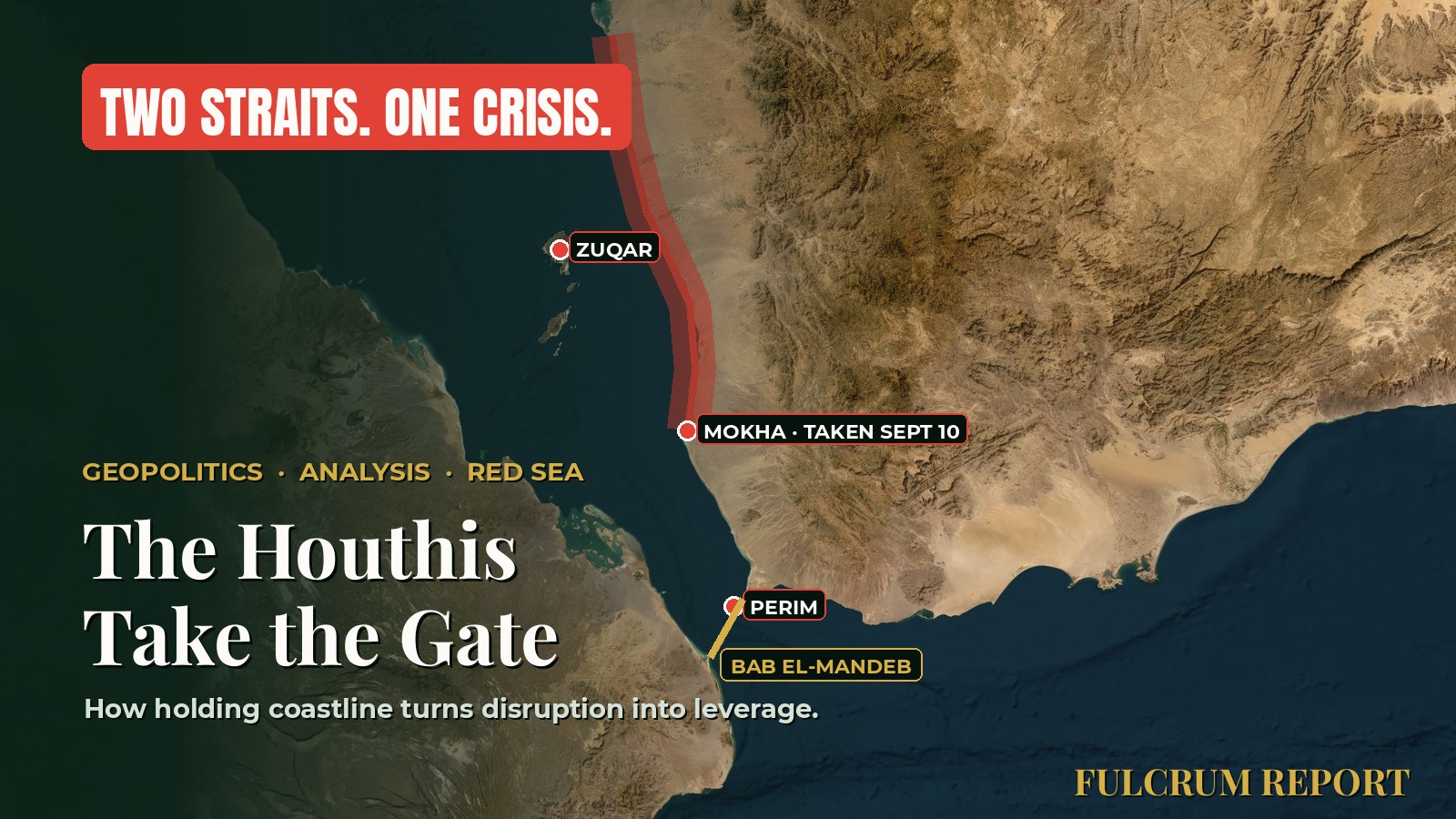
On September 10, Houthi forces took Mokha, the old coffee port on Yemen’s Red Sea coast, after an offensive that came at it from three directions. Tareq Saleh’s National Resistance forces, who had held that stretch of coast for years, pulled back south toward Dhubab. By the next day the Houthis also held islands near the Bab el-Mandeb: Zuqar, the largest of the Hanish group, and Perim, which sits right in the middle of the strait itself.
The geography is what makes this serious. Mokha is about 75 kilometers from the Bab el-Mandeb. The strait is only about 29 kilometers across at its narrowest. Perim splits it into two channels, and the main shipping lane runs past it. Whoever holds Perim and the coast above it is looking straight down at every ship that goes in or out of the Red Sea.
The fighting has been heavy. Reports put the toll at more than 500 killed and over 1,500 wounded between August 9 and September 10. There are also reports and intercepted communications pointing to Iranian direction, with the IRGC commander Abdolreza Shahlaei named as a key figure. I’d treat that as reported rather than proven, but it fits a pattern we have seen for years.
Two chokepoints at once
It’s the timing that turns a Yemeni story into a global one. Hormuz is already shut. Iran closed it, and the tankers that normally carry Gulf oil out through it are sitting idle or looking for other options. Now the Red Sea’s southern gate is under pressure at the same moment.
That has never happened before. The Middle East has two great oil chokepoints, and for the first time both are compromised together.
Why holding ground changes everything
The core idea here is simple. Territory turns destruction into durable leverage.
A group that can only launch missiles is a raiding force. It can cause damage and make headlines, but it has to keep attacking to stay relevant, and every launch exposes it. Pressure comes in spikes and then fades.
A group that holds the coast is in a different position. From fixed coastline, the Houthis can keep radar running around the clock over the shipping lanes. They can spread launch sites along the shore so there is no single target worth hitting. They can send small boats directly into the lanes from the beach, with no long approach and very little warning.
That does two things at once. It lowers the cost of coercion for the Houthis, because they no longer need a dramatic strike to make a point. The threat is simply there, all the time. And it raises the cost of removing them, because getting them off that coast would mean a ground campaign along a hostile shoreline and across islands, not a few air strikes on launchers.
Put those together and every commercial transit turns into a bargaining chip. Each ship that passes is something they can threaten, delay or let through.
From raider to gatekeeper
This is the part I think most coverage misses. The Houthis are no longer just threatening the gate. They are building the infrastructure to control it: radar, dispersed launchers, boat bases and island outposts.
Control of a gate brings political recognition. Anyone who wants shipping to move freely through the Bab el-Mandeb, whether that’s Washington, Riyadh, Muscat, the UN or Tehran, now has to deal with the people sitting on it. Gatekeepers get a seat at the table in a way raiders never do.
That is the real prize. The Houthis have spent years fighting for recognition as a legitimate authority in Yemen. Holding the coast gets them closer to it than any missile campaign could.
The backup route problem
Here’s why this should worry people well beyond the region. When Hormuz closed, the obvious workaround for Saudi oil was the East-West pipeline across the kingdom to Yanbu on the Red Sea. From there, tankers could head north toward Suez or south through the Bab el-Mandeb.
The southern exit is now under Houthi guns. The northern route through Suez depends on the same Red Sea being safe to sail. The backup plan for a Hormuz closure ran through the very strait that is now compromised.
Two straits, one crisis. Global shipping just lost its backup route.
What I’m watching
First, whether the National Resistance and its backers can retake any of that coast, especially around Dhubab and Perim. If the line holds where it is now, this is the new normal.
Second, how shipping companies and insurers respond. Rerouting around the Cape of Good Hope is slower and costlier, but it is the only fully safe option left for many operators.
Third, who starts talking to the Houthis. The first sign that control of the gate has bought recognition will be a quiet channel from a government that previously refused to deal with them.
The bottom line
Missiles made the Houthis a problem. The coastline makes them a player. That is a much harder thing to undo.
So I’ll ask you what I asked in the reel. Which chokepoint worries you more, Hormuz or the Bab el-Mandeb?

About the author
Fulcrum Report
Independent Middle East analyst holding a PhD in Political Science. Fulcrum Report offers rigorous, framework-driven coverage of politics and geopolitics across the Levant and the wider region — analysis without agenda.
Related reading
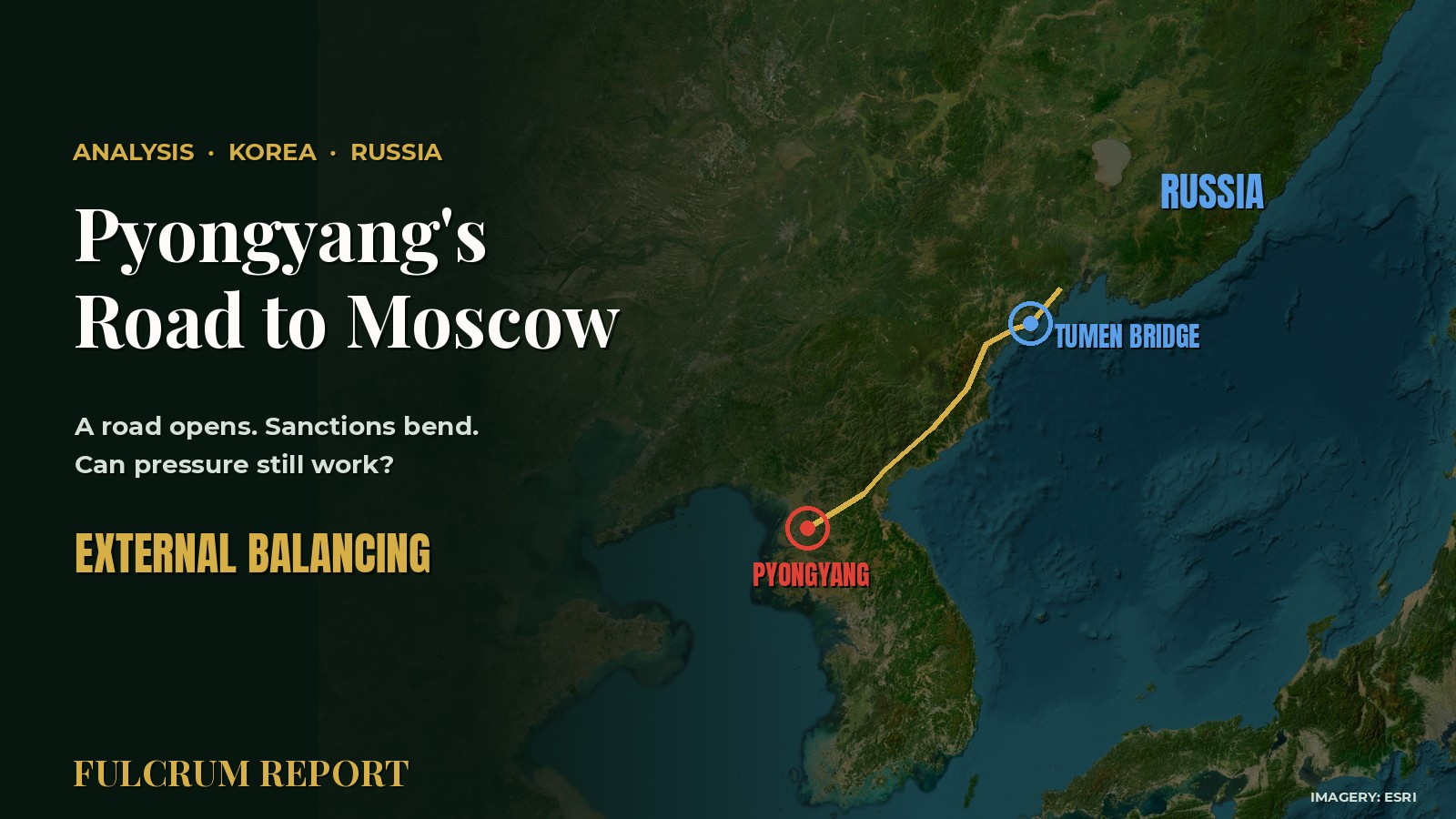
Pyongyang's Road to Moscow: Can Sanctions Still Work?
A second enrichment facility is reportedly going up at Yongbyon, and the Tumen River road bridge to Russia reportedly opened on September 8. When a major power offers a way around sanctions, how much pressure is left? An explainer on external balancing.
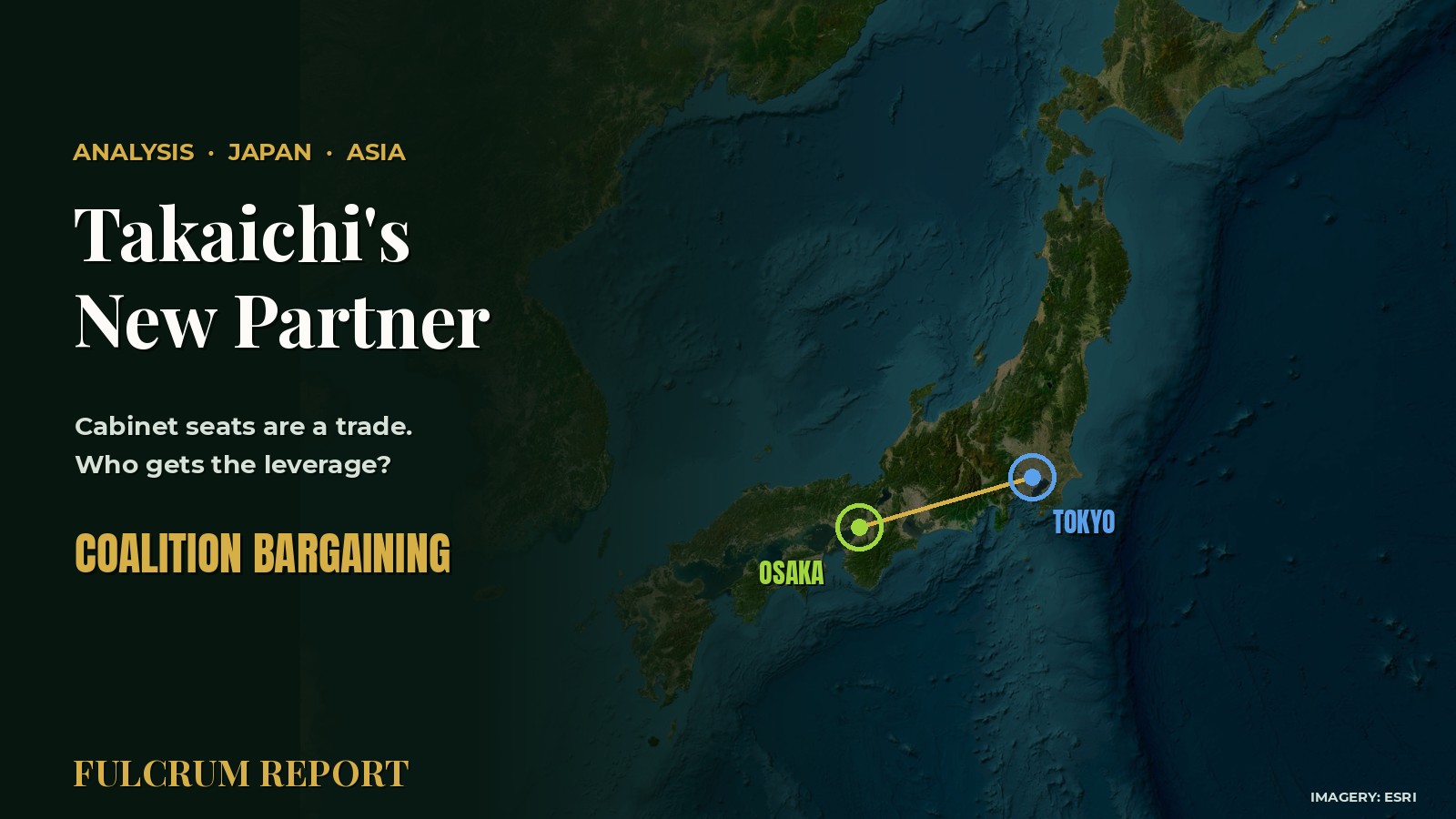
Takaichi's New Partner: Why Cabinet Seats Are a Trade
Sanae Takaichi reportedly reshuffled her cabinet on September 16 and 17, bringing in the Japan Innovation Party (Ishin) for the first time. Her camp holds two-thirds of the lower house but lacks an upper-house majority. A look at coalition bargaining and who gets the leverage.
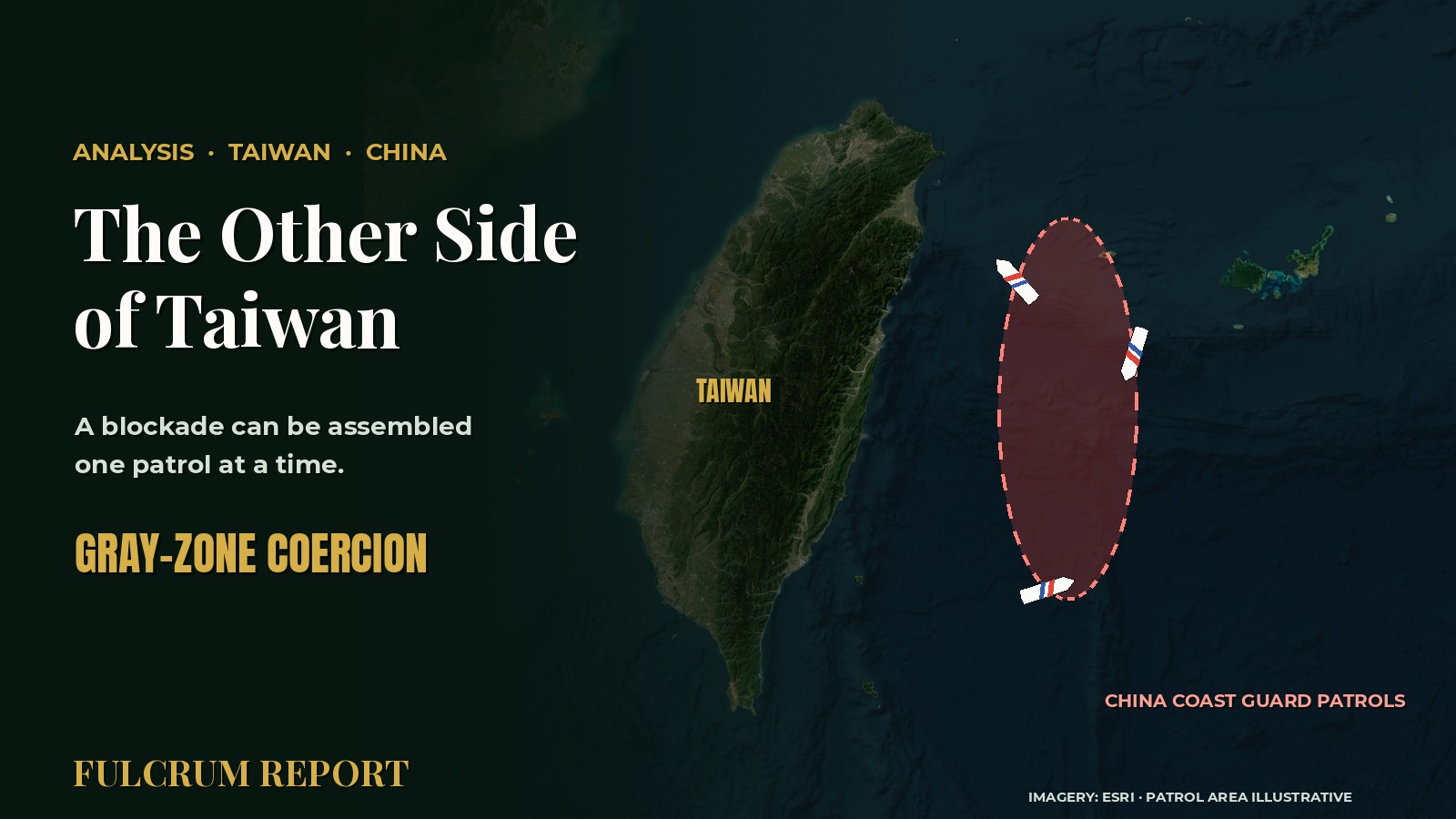
The Other Side of Taiwan: How a Blockade Gets Built Without Being Declared
China's Coast Guard has reportedly set up a regular presence east of Taiwan, framed as law enforcement, while a $14 billion U.S. arms package is pending. A look at gray-zone coercion, salami tactics and escalation control.