Iran Never Had a Remote Control
Believing Tehran could switch its proxies on and off wrecked a decade of forecasts. Principal-agent theory — and one idea called agency slack — explains what the puppet story always missed.
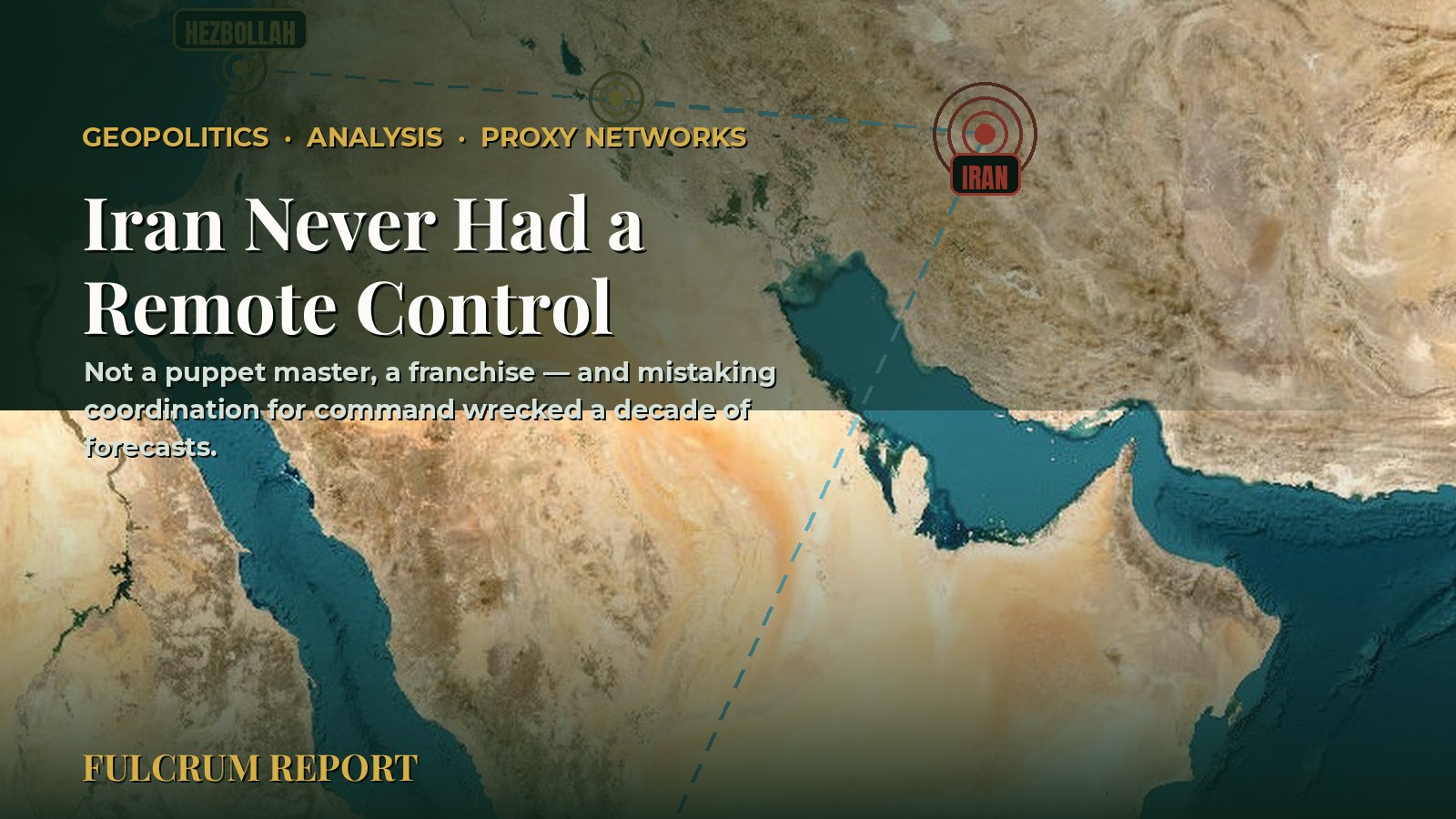
For the better part of a decade, the Middle East got explained to Western audiences with a single, seductive image. Iran sat in Tehran with a remote control in its hand, and every militia from Beirut to Sanaa was a device wired to it. Press a button and Hezbollah fires. Press another and the Houthis launch. The map was a console, and Iran's finger was on every switch.
It was a wonderful story. It fit in a headline, it made a tangled region legible in one sentence, and it flattered the people who told it, because if you knew who held the remote you knew everything worth knowing. There was only one problem with it. It was wrong, and the war we are living through in 2026 is proving how wrong, in real time and in public.
## The myth did more than mislead
I want to be precise about the damage, because a bad metaphor is not a harmless one. The remote-control picture did not just distort how people saw the region. It produced a decade of failed predictions. Analysts who believed Iran could switch its partners on and off forecast a region that never actually showed up.
They expected the "axis of resistance" to move as one body — Hezbollah in Lebanon, the Houthis in Yemen, the Shia militias in Iraq, the government in Damascus, all swinging together on Tehran's cue. So when events broke that pattern, the forecasts broke with them. The story kept promising a puppet show and the region kept delivering something messier.
## What 2026 actually looks like
Line the pieces up against the map as it stands now, and the puppet theory falls apart on contact.
Hezbollah, long treated as Iran's crown jewel and its deterrent against Israel, is a weakened force — hollowed out by the decapitation strikes of late 2024 and never restored to what it was. Assad's government in Syria, the supposedly reliable land bridge that let Iran move weapons to the Mediterranean, is simply gone; the regime collapsed in December 2024 and took the bridge with it. And the Houthis, far from waiting for a signal from Tehran, are blockading Saudi Arabia on their own terms, pursuing their own war on their own timeline.
If Iran truly held a remote control, none of that reads the way it does. A puppeteer does not lose two of his best puppets and watch a third freelance a blockade. What you are looking at is not a network being switched on and off from one room. It is a set of actors making their own decisions.
## The framework that actually fits: principal and agent
There is a better tool for this, and it is not exotic. Political scientists have used it for years to describe relationships exactly like this one. It is called principal-agent theory.
In that framing, Iran is the principal. It supplies the things a principal supplies: weapons, money, training, and a shared enemy to point everyone toward. Its partners are the agents. And here is the move the remote-control story never makes — the agents have their own interests. They existed before Iran's patronage, they have their own constituencies to answer to, their own rivals, their own survival to worry about. Hezbollah answers to a Lebanese Shia community. The Houthis answer to a war and a country of their own. Iraqi militias answer to Iraqi politics. Tehran's money does not erase any of that.
## The concept that explains everything: agency slack
The gap between what the principal wants and what the agent actually does has a name too. It is called agency slack, and it is the single most useful idea for reading this region.
Agency slack is the room an agent has to take the support and still not obey every order. Iran can fund you, arm you, and train you, and you can pocket all of it and then act on your own calculation when the moment comes — launch when it suits your interests, hold back when it doesn't, cut a deal Tehran never sanctioned. The support buys influence. It does not buy control. Those are different currencies, and the whole decade of bad forecasting came from spending one as if it were the other.
## Less a puppet, more a franchise
Here is the image I would put in place of the remote control. The axis of resistance is less like a puppet show and more like a franchise.
Think about how a franchise actually works. There is a shared brand, a shared identity, a common enemy and a common story that everyone signs onto. But the individual outlets are run locally. The franchisee takes the branding and the supply chain, and then makes the day-to-day decisions on the ground — because they know their own market and, ultimately, they are the ones who live or die by the outcome. The brand is shared. The decisions are local. That is the axis, far more accurately than any set of strings.
## Why the forecasts kept failing
Once you hold the franchise picture in your head, the decade of blown predictions stops being mysterious. The core mistake was always the same: analysts kept reading coordination as command.
When these groups moved in loosely similar directions, observers saw a single hand issuing orders — command. What was really happening was coordination, allies moving the same way because their interests happened to line up at that moment, not because a switch was flipped. The two look identical from a distance and mean opposite things up close. Coordination can dissolve the instant interests diverge. Command cannot. Confuse the first for the second and you will predict unity where there is only temporary alignment, and you will be blindsided every time a partner does the rational thing and goes its own way.
## The map has no single master
The Middle East has never had one puppet master, and the search for one has done real analytical harm. It reduced a region full of actors with their own histories and their own agency to a cartoon with one villain and a set of marionettes. Reality is both more complicated and, honestly, more interesting: a web of relationships held together by shared enemies and shared logistics, and pulled apart, again and again, by the stubborn fact that everyone in it is looking out for themselves.
That is the version worth carrying into the next crisis. Not the console and the finger on the switch, but the franchise — shared brand, local decisions, and a principal who can influence far more than he can ever command. Skip the cartoon version. The map that replaces it is the one that actually predicts what happens next.

About the author
Fulcrum Report
Independent Middle East analyst holding a PhD in Political Science. Fulcrum Report offers rigorous, framework-driven coverage of politics and geopolitics across the Levant and the wider region — analysis without agenda.
Related reading
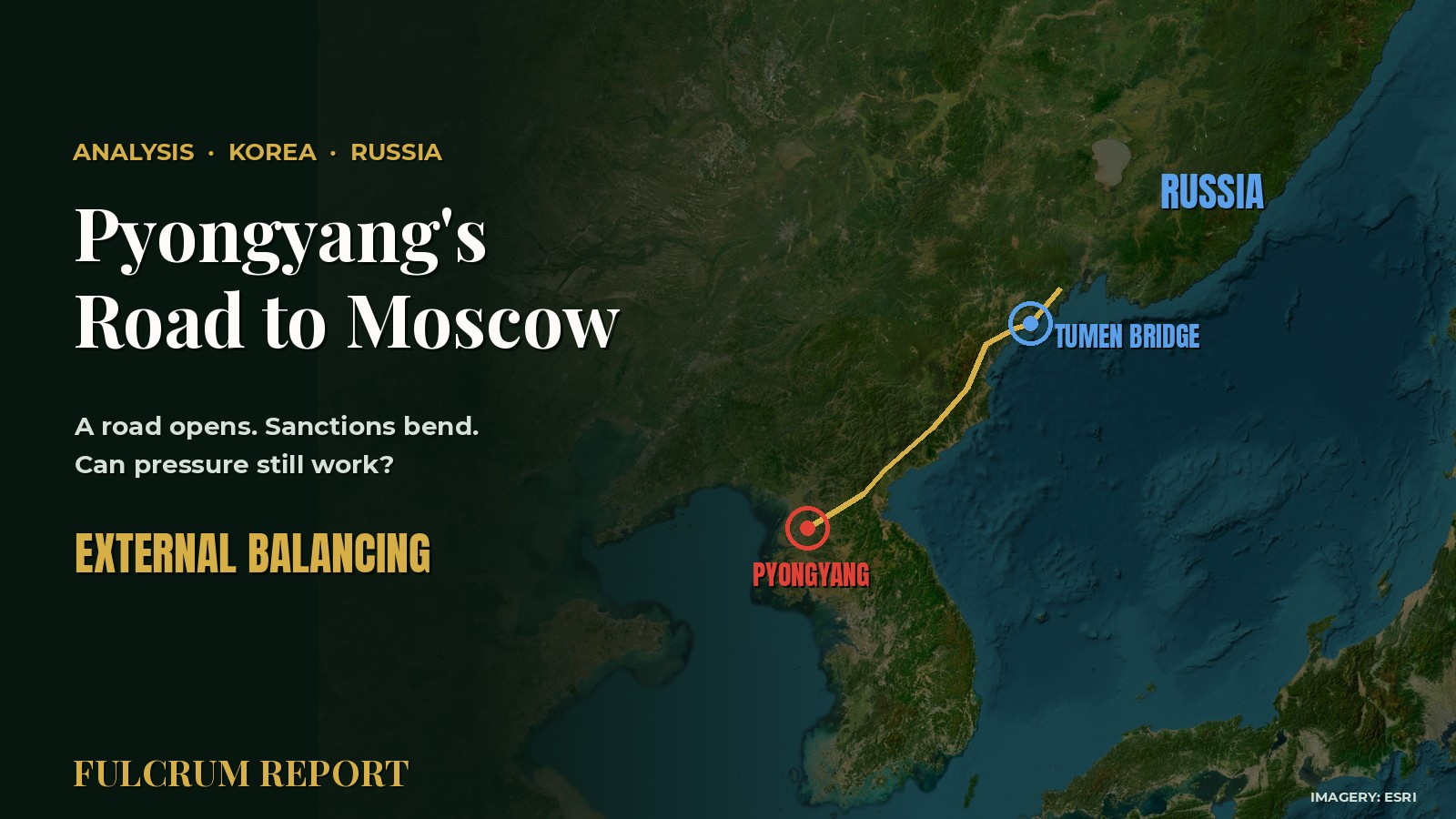
Pyongyang's Road to Moscow: Can Sanctions Still Work?
A second enrichment facility is reportedly going up at Yongbyon, and the Tumen River road bridge to Russia reportedly opened on September 8. When a major power offers a way around sanctions, how much pressure is left? An explainer on external balancing.
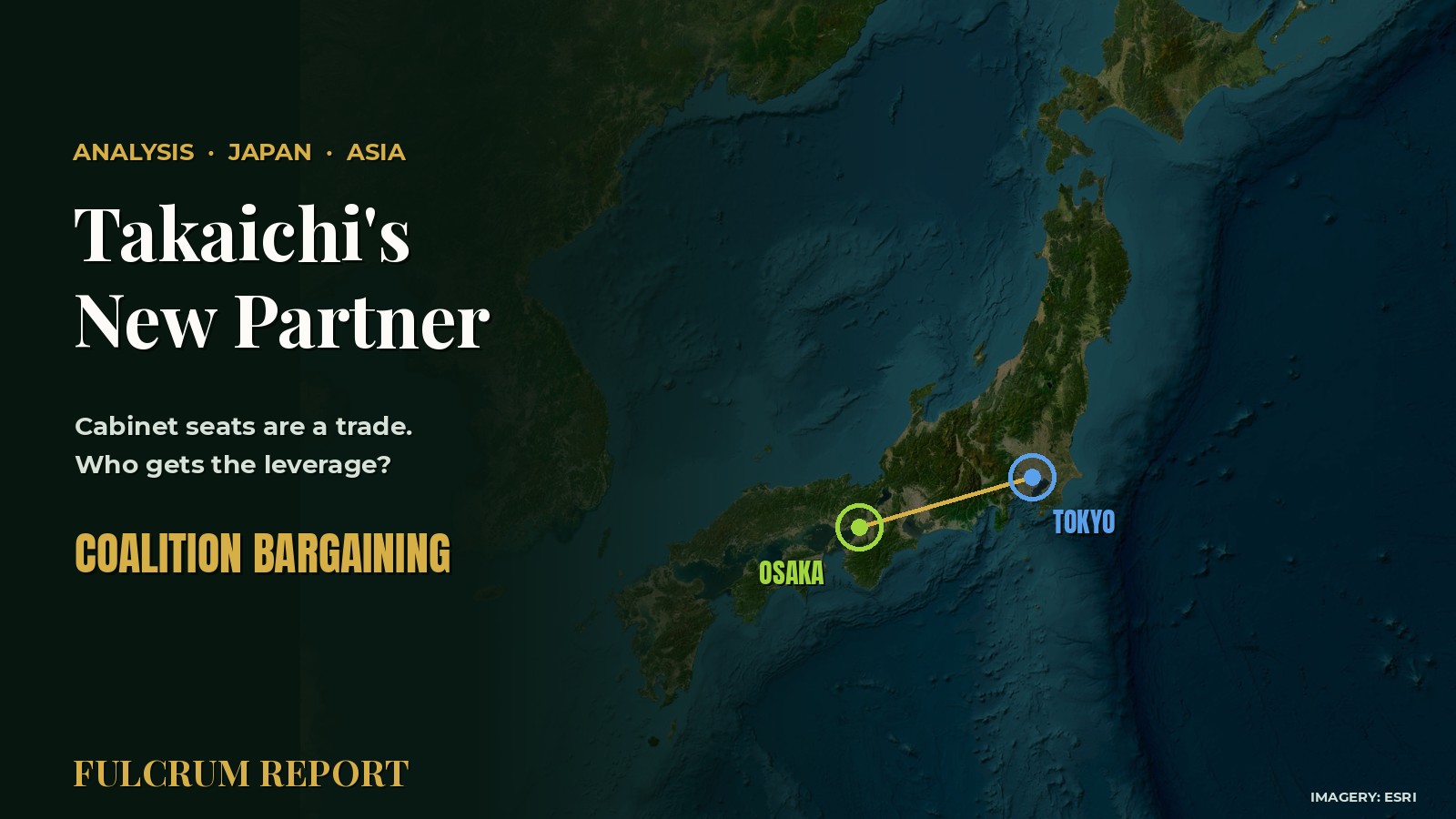
Takaichi's New Partner: Why Cabinet Seats Are a Trade
Sanae Takaichi reportedly reshuffled her cabinet on September 16 and 17, bringing in the Japan Innovation Party (Ishin) for the first time. Her camp holds two-thirds of the lower house but lacks an upper-house majority. A look at coalition bargaining and who gets the leverage.
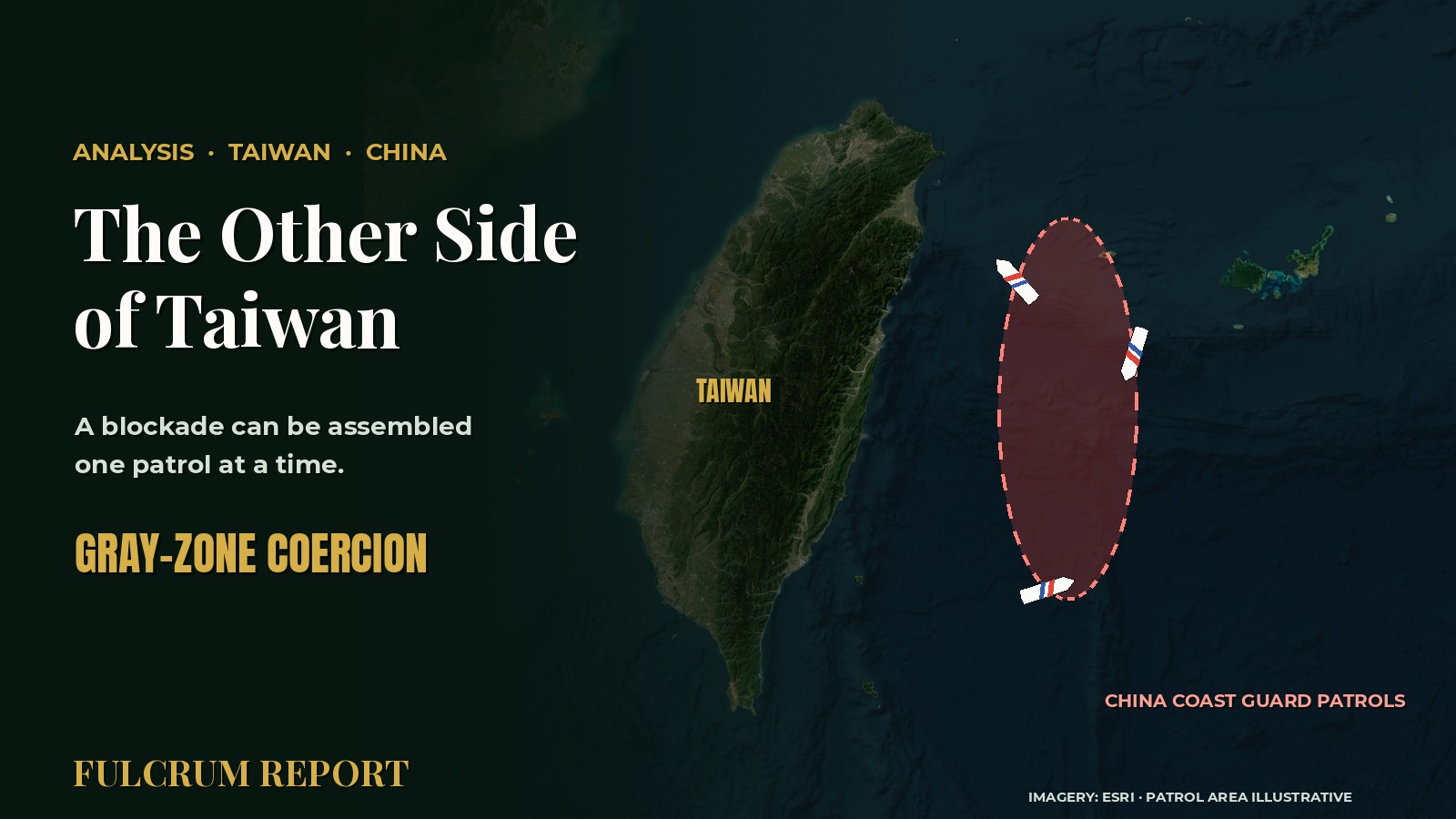
The Other Side of Taiwan: How a Blockade Gets Built Without Being Declared
China's Coast Guard has reportedly set up a regular presence east of Taiwan, framed as law enforcement, while a $14 billion U.S. arms package is pending. A look at gray-zone coercion, salami tactics and escalation control.