Iraq Grounds Iran’s Airlines
Baghdad barred Iranian carriers under the threat of U.S. secondary sanctions. The dollar left it little choice.
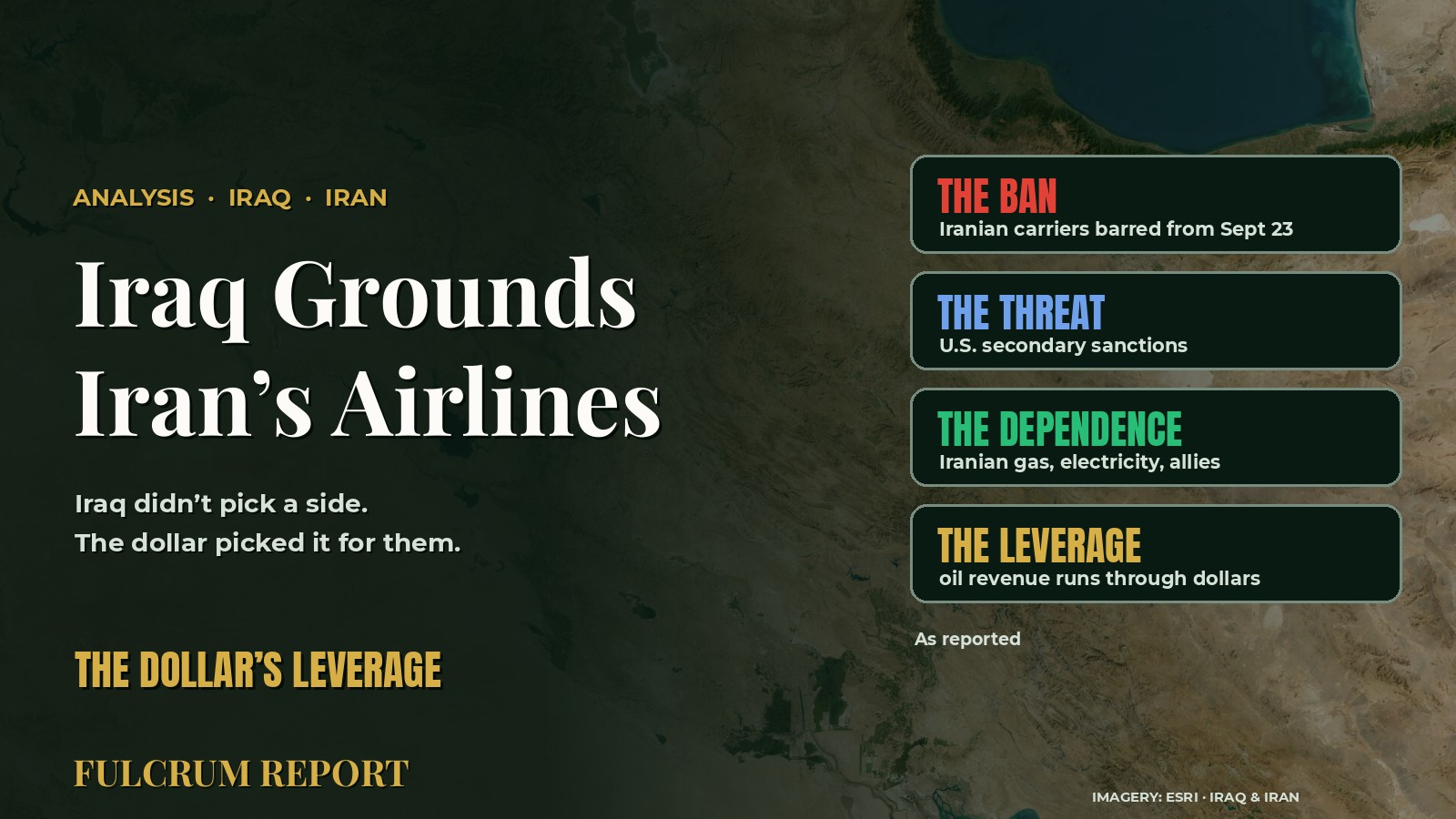
Iraq has grounded Iran's airlines. When I first read that, I read it twice. Iraq, of all countries.
This is a government that leans on Iran for gas and electricity, and whose ruling coalition includes some of Tehran's closest political allies in the region. If you'd asked me a year ago which neighbour would be the last to shut its airspace to Iranian carriers, Iraq would have been near the top of my list.
So why did it happen? I don't think the answer is that Baghdad suddenly chose Washington over Tehran. I think the dollar left it no real choice.
What happened
On September 8, the U.S. Treasury designated 27 Iranian airlines and aviation entities, as reported. Then on September 21, Treasury Secretary Scott Bessent said the goal was to shut Iranian airlines down by September 23. He also warned airports and the companies that service planes, the people who sell the fuel, handle the tickets and run the ground operations, that they could face secondary sanctions if they kept working with them.
Iraq moved fast. Reuters reported on September 22 that Iraq would suspend Iranian flights from midnight on the 23rd, and that included the airports in Erbil and Sulaimaniyah in the Kurdistan Region, not just Baghdad.
Iraq wasn't alone. Oman, Azerbaijan and Georgia also restricted Iranian flights, as reported. All of this comes roughly seven months into the conflict between the United States and Iran, so the pressure on Tehran's neighbours had been building for a while.
There's one wrinkle worth knowing about. In early October, Al Jazeera reported that a U.S. exemption would let Najaf receive up to 40 Iranian flights a day, mostly for pilgrims visiting the shrine cities, with Mahan Air excluded. Mahan has been under U.S. sanctions since 2011. Iraq's foreign minister, Fuad Hussein, framed it as balancing the partnership with Washington against the needs of pilgrims. I read that as Baghdad salvaging what it could inside the rules, rather than as a reversal.
Why secondary sanctions bite
Regular sanctions stop your own companies from doing business with a target. Secondary sanctions go a step further. They tell everyone else: you can keep dealing with Iran, or you can keep dealing with us, but not both.
That's a threat that only works if "us" is something you can't afford to lose. For Iraq, it is. Iraq's oil revenue, which pays for most of the state, has been held in an account at the Federal Reserve Bank of New York since 2003, as has been widely reported. Its banks need access to dollars to function. Lose that, and you aren't talking about a diplomatic headache. You're talking about salaries, imports and the currency.
So when the choice was framed as Iranian flights or access to dollars, I don't think it was a close call. Dollars win.
The idea behind it
Political scientists have a name for this. Robert Keohane and Joseph Nye called it asymmetric interdependence in Power and Interdependence back in 1977. The basic insight is simple: two countries can depend on each other, but rarely equally. Whoever is less dependent, or controls the thing the other one can't replace, holds the leverage.
Henry Farrell and Abraham Newman pushed this further in 2019 with what they called weaponized interdependence. Their argument is that the networks the global economy runs on, banking systems, payment channels, the dollar itself, have hubs, and whoever controls the hub can use it as a weapon.
That's what I think we're seeing here. Iraq does depend on Iran. Iranian gas and electricity matter, especially in summer, and Iran's political allies matter in Baghdad. But Iran's network can be worked around, painfully. The dollar network can't. When the two collide, the more essential network wins.
A caveat
I want to be careful not to make this sound like Iraq has flipped. It hasn't. The flight ban is narrow, the Najaf exemption shows how much Baghdad wants to keep a door open, and nothing here changes the deeper ties between the two countries. It's also worth saying that leverage like this has costs for the side using it. Push countries too hard, often enough, and some of them start looking for ways out of the dollar system. That's a long-term story, though, and it isn't one Iraq can act on any time soon.
What I'd watch
Whether the Najaf exemption grows or shrinks. Whether the ban extends from airlines to other Iranian businesses operating in Iraq. Whether Baghdad gets anything in return from Washington, like more room on its energy purchases from Iran. And whether other governments in the region quietly follow Iraq's lead.
This is analysis, and a general pattern, not a prediction. But the lesson I'd take from it is this: Iraq didn't pick a side. The dollar picked it for them.
So I'll ask you the same thing I asked on the reel. Did this surprise you? Yes or no. Tell me in the comments, and follow @fulcrumreport for analysis without agenda.

About the author
Fulcrum Report
Independent Middle East analyst holding a PhD in Political Science. Fulcrum Report offers rigorous, framework-driven coverage of politics and geopolitics across the Levant and the wider region — analysis without agenda.
Related reading
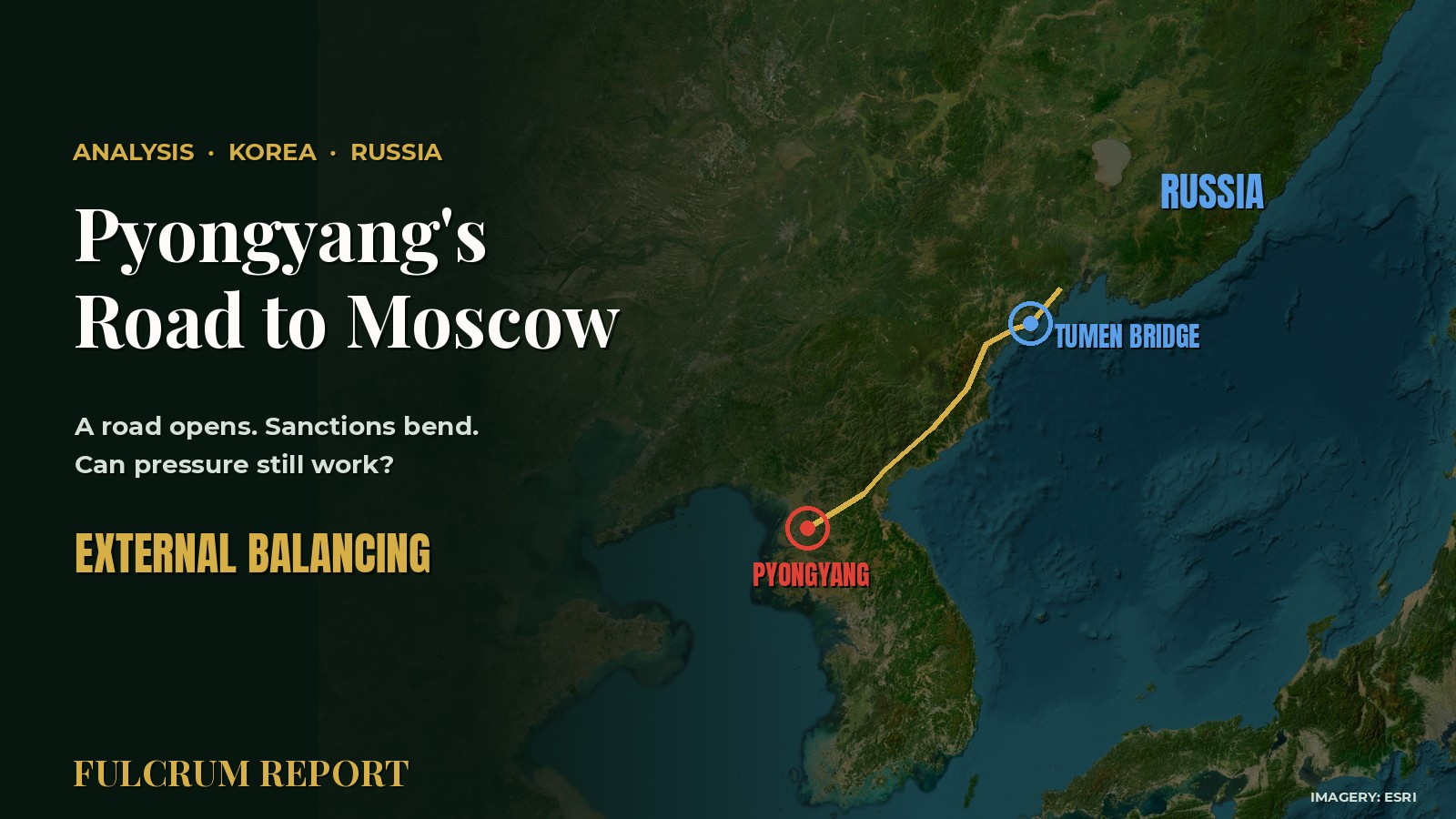
Pyongyang's Road to Moscow: Can Sanctions Still Work?
A second enrichment facility is reportedly going up at Yongbyon, and the Tumen River road bridge to Russia reportedly opened on September 8. When a major power offers a way around sanctions, how much pressure is left? An explainer on external balancing.
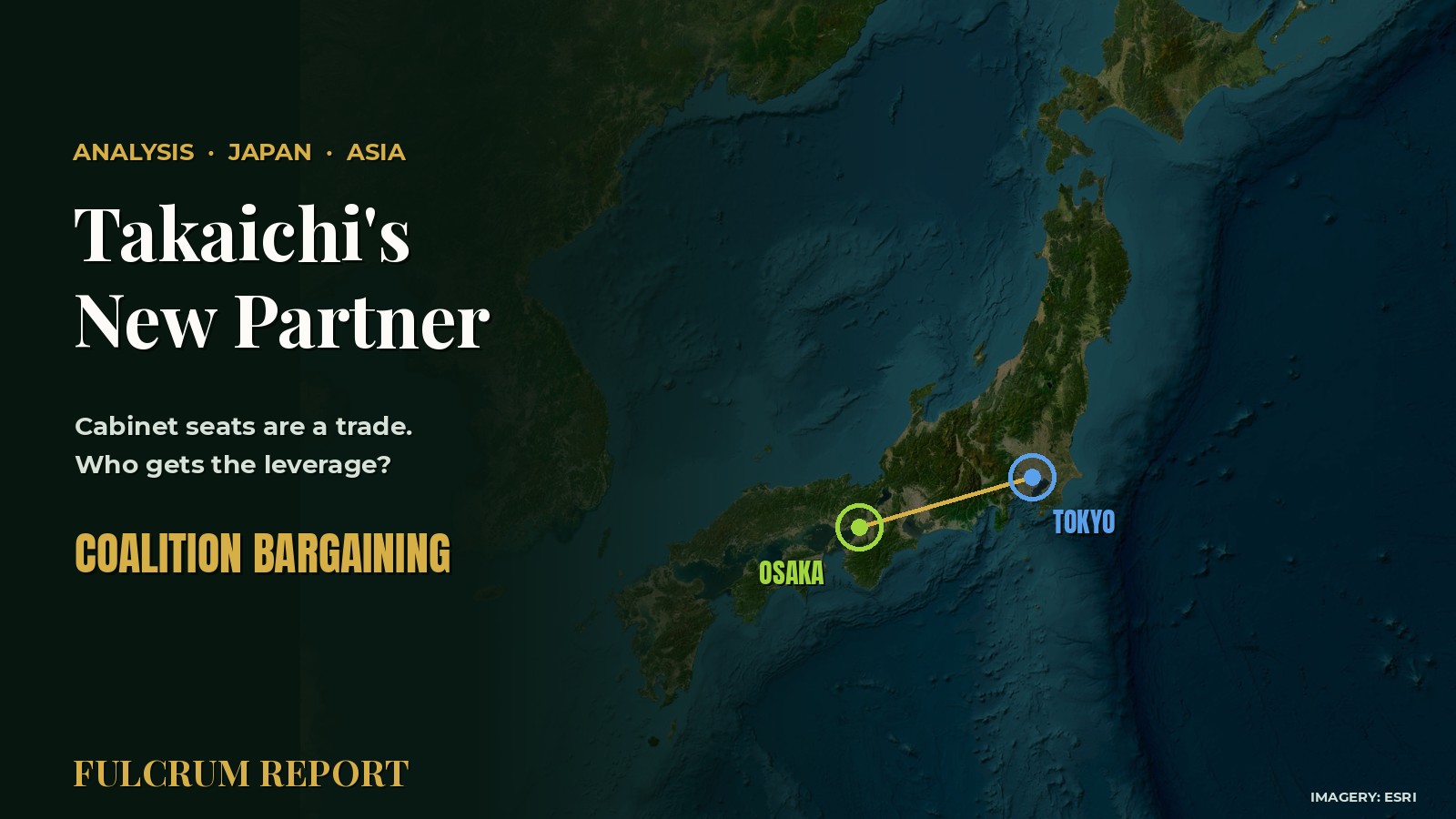
Takaichi's New Partner: Why Cabinet Seats Are a Trade
Sanae Takaichi reportedly reshuffled her cabinet on September 16 and 17, bringing in the Japan Innovation Party (Ishin) for the first time. Her camp holds two-thirds of the lower house but lacks an upper-house majority. A look at coalition bargaining and who gets the leverage.
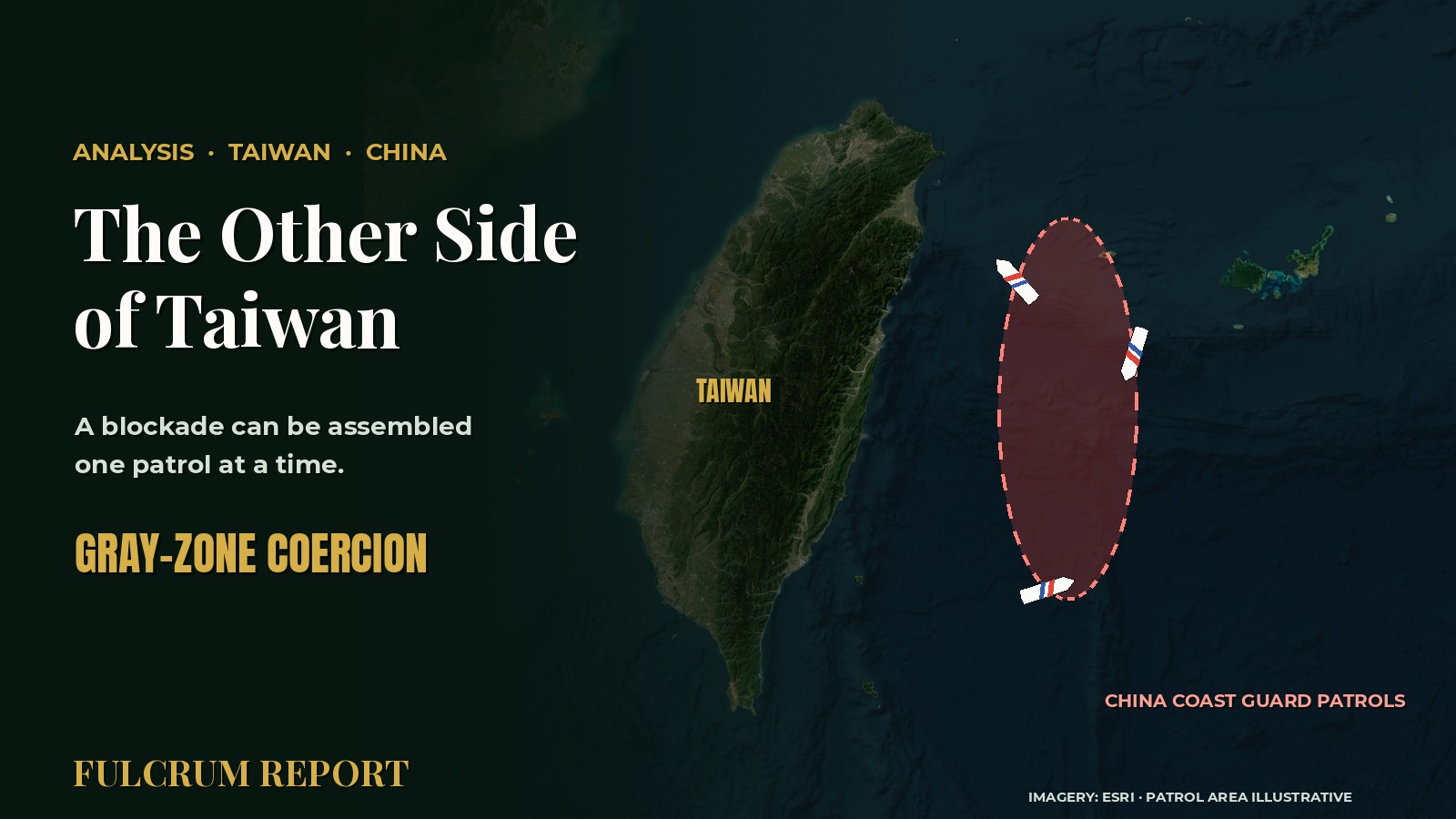
The Other Side of Taiwan: How a Blockade Gets Built Without Being Declared
China's Coast Guard has reportedly set up a regular presence east of Taiwan, framed as law enforcement, while a $14 billion U.S. arms package is pending. A look at gray-zone coercion, salami tactics and escalation control.