An Islamic NATO?
Saudi Arabia, Pakistan and Turkey signed an “attack on one is an attack on all” pact in Mecca. Houthi strikes may force its first test, and expose the oldest trade-off in alliance politics.
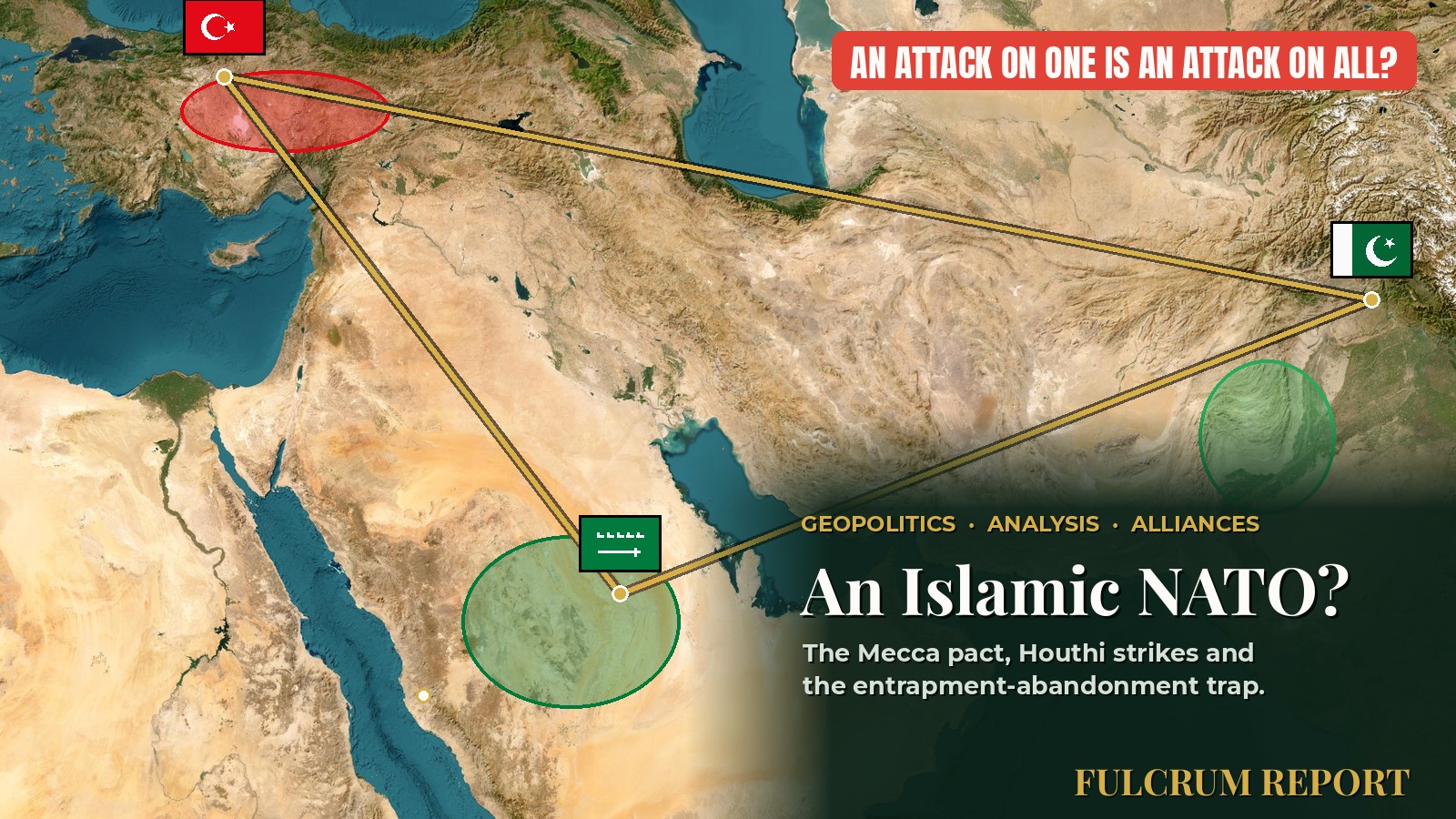
"An attack on one is an attack on all." Most people hear that line and think of NATO. This time it belongs to Saudi Arabia, Pakistan and Turkey, and it's about to get its first real test.
What was signed
On August 7, Crown Prince Mohammed bin Salman, Pakistani Prime Minister Shehbaz Sharif and Turkish President Recep Tayyip Erdoğan met in Mecca and signed what they called the Mecca Joint Defence Agreement. It builds on the mutual defence deal Riyadh and Islamabad signed in September 2025, and its core promise is modelled on NATO's Article 5.
A few things are worth keeping in mind before anyone starts calling it an "Islamic NATO." The full text hasn't been published. There's no integrated command, no shared headquarters, no standing force. Parts of it may still need approval from the parliaments in Islamabad and Ankara. Military chiefs met in Riyadh on September 25 to talk about how to actually make it work, which tells you that, for now, it's mostly a promise on paper. Iranian officials have been happy to call it exactly that.
Why it suddenly matters
The Houthis have been firing at Saudi oil. Some recent strikes were claimed by the Houthis, and Riyadh says it intercepted many of them, but the pressure on Saudi energy infrastructure is real. So the question in Riyadh is no longer theoretical: do we invoke the pact?
Pakistan has already raised the temperature. Speaking at the UN General Assembly on September 25, Shehbaz Sharif called any threat to Mecca and Medina "a red line that must never be crossed," after an alleged drone attempt on Mecca. The Houthis called that accusation a lie and deny targeting the holy cities. Either way, Pakistan has now put its credibility on the line in public.
The trade-off nobody escapes
This is where I find alliance theory genuinely useful. Political scientist Glenn Snyder described what he called the alliance security dilemma, and it boils down to two fears that pull against each other.
The first is entrapment: being dragged into a partner's war that you never wanted to fight. The second is abandonment: being left alone when you're the one under attack. Every alliance lives somewhere between the two. Lean in closer to reassure your partner and you raise the risk of getting trapped. Hold back to stay out of trouble and your partner starts to wonder whether you'll ever show up.
The Mecca pact puts both fears on the table at once.
What Riyadh gets, and what Islamabad and Ankara risk
From where Riyadh sits, the pact is reassuring. Pakistan is a nuclear-armed state with one of the largest armies in the world. Turkey is a NATO member with a serious defence industry and combat-tested drones. On paper, that's a heavy pair of friends to have when missiles are coming in from Yemen.
But look at it from Islamabad and Ankara. Invoking the pact over Houthi strikes could pull both of them into a Yemeni war that neither has any appetite for. Pakistan has its own tense borders with India and Afghanistan to watch. Turkey has Syria, the Kurdish question and its NATO obligations. So far, neither has answered the Houthi attacks militarily, and Riyadh still turns to Washington for air defence. Erdoğan told Newsweek that support could mean intelligence, logistics or ammunition, scaled to the threat, which is a careful way of saying "not necessarily troops."
That's entrapment fear in plain sight. And Riyadh, watching its partners hedge, feels the abandonment side of it.
Why this one is unusual
Most of the time this tension stays buried in closed meetings and diplomatic language. Here it's out in the open: a fresh treaty, a live threat, a public red line, and two partners visibly trying to keep their options open. You rarely get to watch the entrapment-abandonment trade-off play out this clearly.
What I'm watching
First, whether Riyadh formally invokes the pact, or just keeps it in reserve as a signal.
Second, what Pakistan does if there's another incident near Mecca or Medina. A red line declared at the UN is hard to walk back.
Third, whether the September 25 talks in Riyadh produce anything concrete, like a joint command structure or a standing air-defence role. That would be the moment this stops being a paper agreement.
And fourth, whether other countries join. Egypt has been mentioned as a possible member, and every new signatory adds weight and adds another partner who might not want to be dragged in.
The bottom line
The pact's real test was never the signing ceremony in Mecca. It's whether anyone honors it when it counts.
So here's my question for you: would they show up?

About the author
Fulcrum Report
Independent Middle East analyst holding a PhD in Political Science. Fulcrum Report offers rigorous, framework-driven coverage of politics and geopolitics across the Levant and the wider region — analysis without agenda.
Related reading
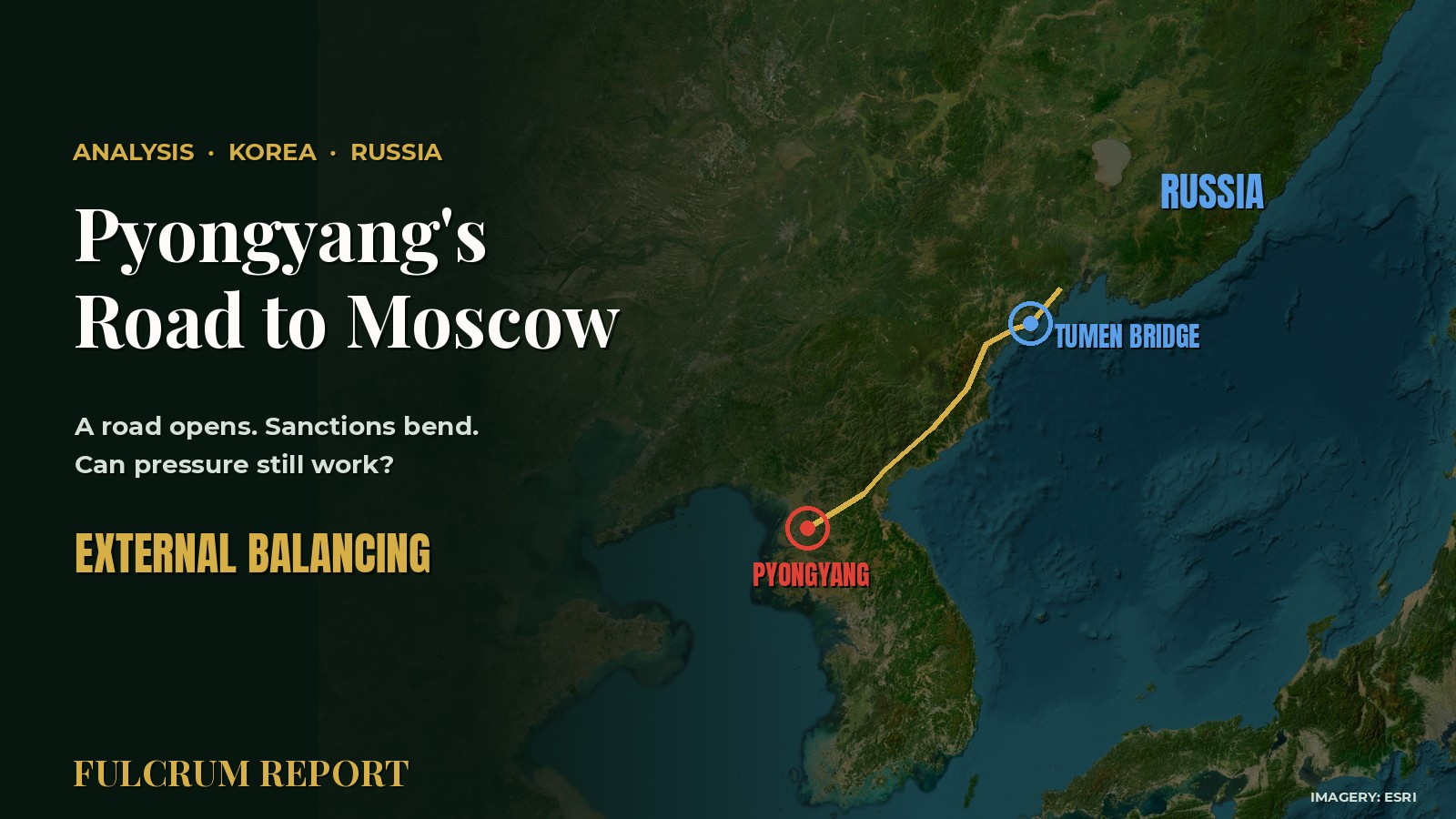
Pyongyang's Road to Moscow: Can Sanctions Still Work?
A second enrichment facility is reportedly going up at Yongbyon, and the Tumen River road bridge to Russia reportedly opened on September 8. When a major power offers a way around sanctions, how much pressure is left? An explainer on external balancing.
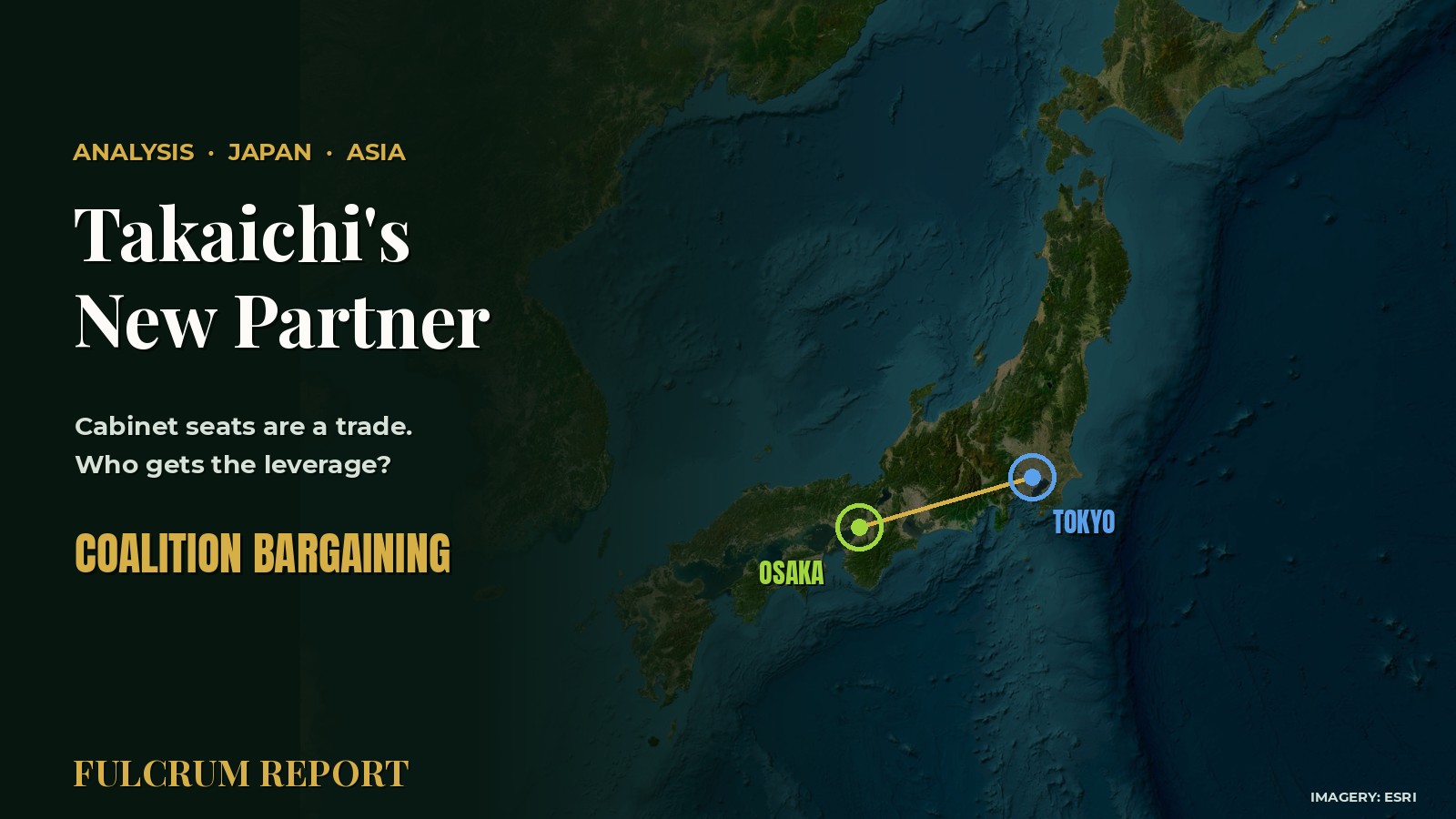
Takaichi's New Partner: Why Cabinet Seats Are a Trade
Sanae Takaichi reportedly reshuffled her cabinet on September 16 and 17, bringing in the Japan Innovation Party (Ishin) for the first time. Her camp holds two-thirds of the lower house but lacks an upper-house majority. A look at coalition bargaining and who gets the leverage.
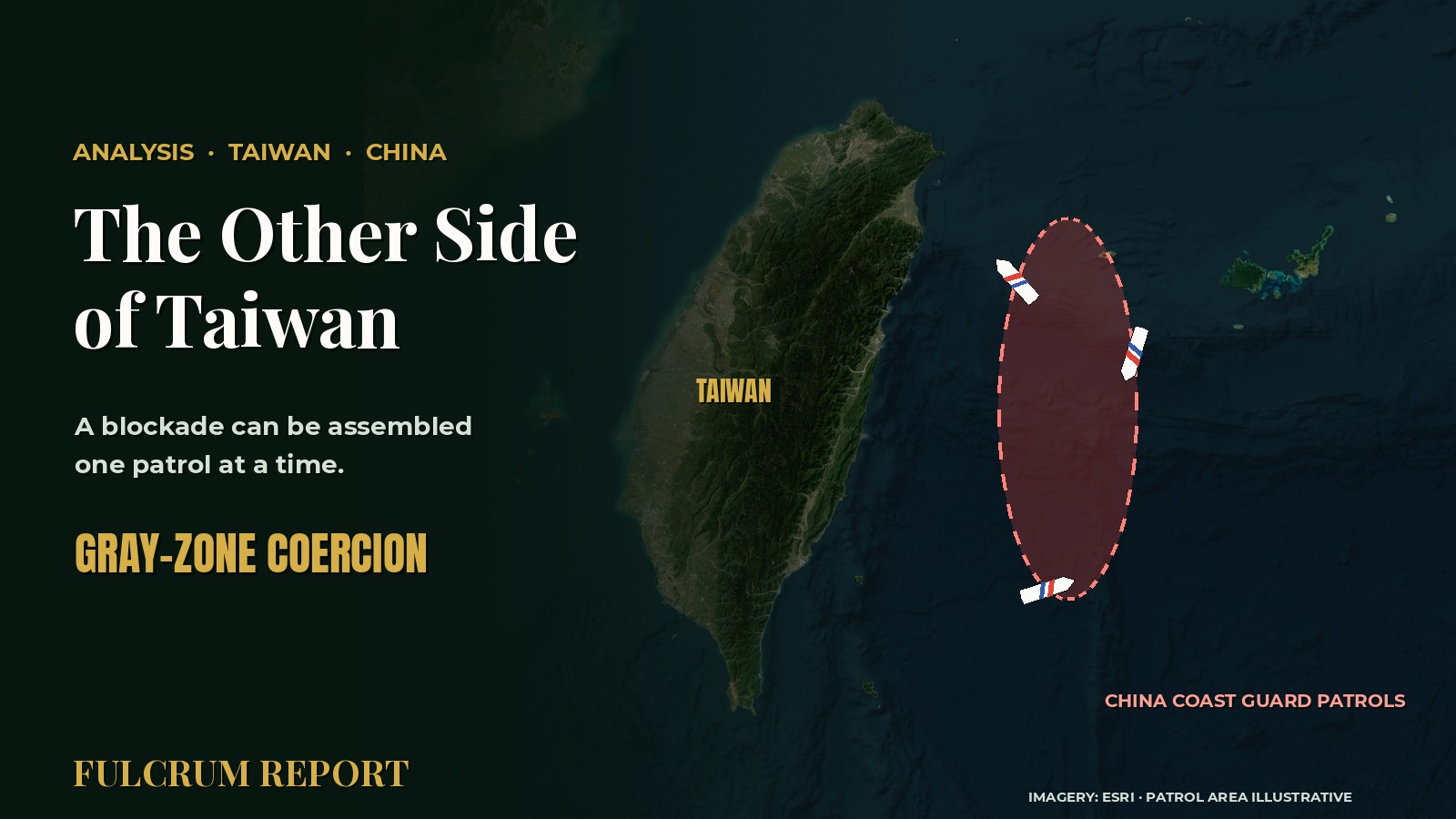
The Other Side of Taiwan: How a Blockade Gets Built Without Being Declared
China's Coast Guard has reportedly set up a regular presence east of Taiwan, framed as law enforcement, while a $14 billion U.S. arms package is pending. A look at gray-zone coercion, salami tactics and escalation control.