The Map War
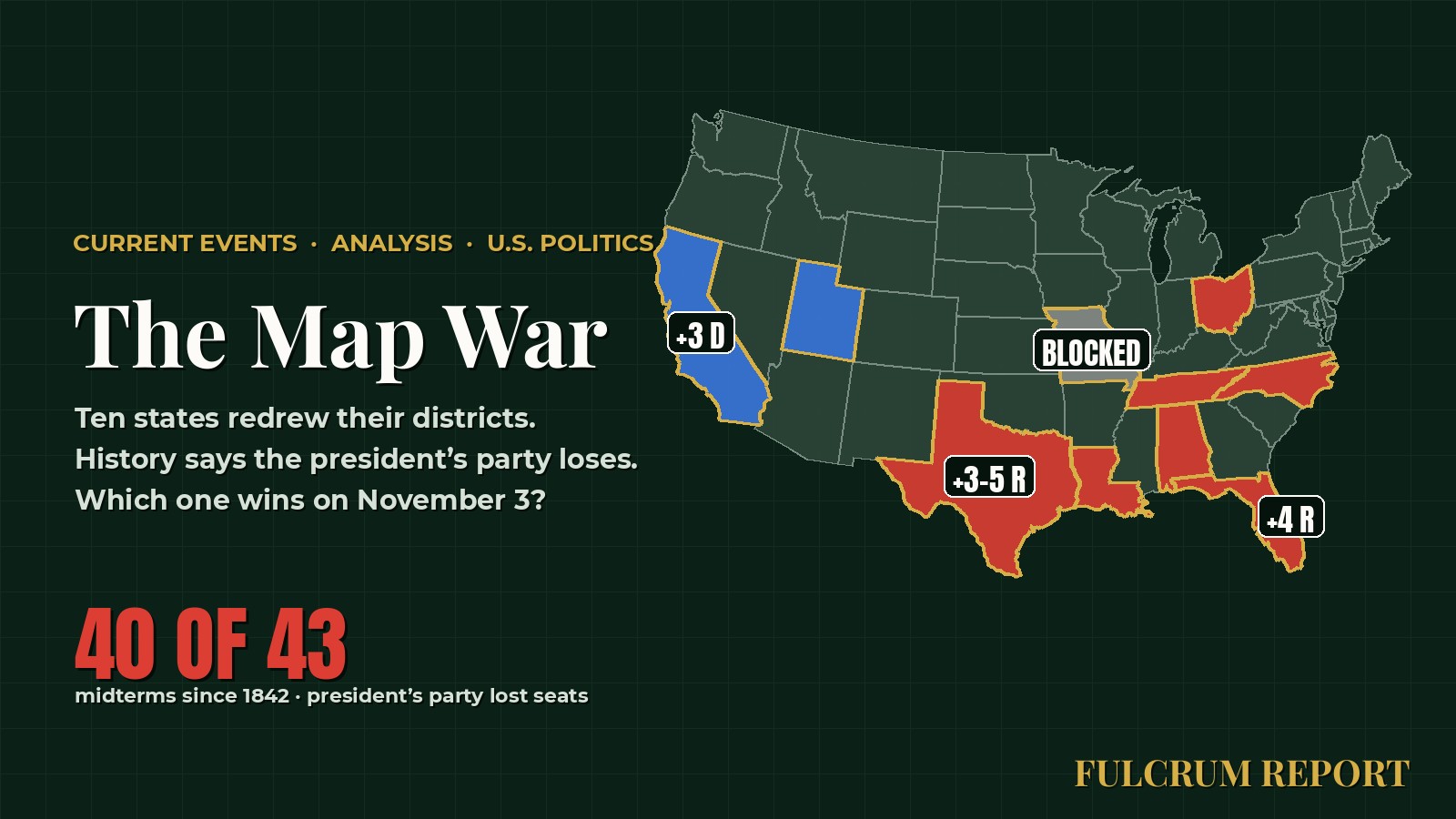
The Supreme Court blocked a Republican gain in Missouri, but ten states have redrawn their maps since 2025. The reason: the president’s party has lost House seats in 40 of 43 midterms since 1842.
Five weeks before the midterms, the Supreme Court told Missouri it couldn't use its new congressional map. On its own, that's a story about one state and one seat. But I don't think it makes sense on its own. It's one skirmish in the strangest redistricting fight I can remember, and the reason it's happening goes back almost two centuries.
What happened in Missouri
In 2025, Missouri's Republican legislature redrew the state's districts in the middle of the decade, with encouragement from the White House. The new lines went after the Kansas City seat held by Democrat Emanuel Cleaver, and they would have turned Missouri's six-to-two split into seven-to-one.
Opponents gathered enough signatures to force a referendum. Under Missouri law, that should have frozen the new map until voters weighed in this November. The state used it for the August primary anyway, and the courts spent the rest of the summer fighting over it. The Missouri Supreme Court said the 2022 map was still the law. A federal appeals court ordered the 2025 map. On September 25, the U.S. Supreme Court settled it in an unsigned order with no noted dissents: the 2022 map stays for November. Ballots had already been printed and mailed to overseas voters, and the justices didn't want chaos.
I want to be precise about one thing, because I've seen it described loosely. Republicans didn't lose a seat here. They were blocked from gaining one. The 2022 map still leans six Republican seats to two Democratic ones.
One front in a map war
Redistricting usually happens once a decade, after the census. This time, ten states have redrawn their congressional maps in 2025 and 2026: Alabama, California, Florida, Louisiana, Missouri, North Carolina, Ohio, Tennessee, Texas and Utah.
Three of them matter most. Texas started it, redrawing to add somewhere between three and five likely Republican seats. California answered with a ballot measure that gives Democrats roughly three more. Florida then added about four for Republicans. Florida's map is being challenged in state court, but it will be used this year. All of these numbers are projections, not results. A "likely" seat can still be lost in a bad year.
Two court rulings made all this possible. In 2019, in Rucho v. Common Cause, the Supreme Court said federal courts can't police partisan gerrymandering, which left the fight to state courts and state constitutions. Then a 2026 ruling on the Voting Rights Act let some states take apart majority-minority districts, and Alabama, Louisiana, Tennessee and Utah did.
Why now? History
This is the part I find most interesting. Since 1842, the president's party has lost House seats in 40 of 43 midterm elections. The only exceptions are 1934, 1998 and 2002, and each came with unusual circumstances: the New Deal, the backlash to Clinton's impeachment, and the year after 9/11.
Political scientists have a few explanations. Voters who are angry turn out more than voters who are satisfied. Some people vote to put a check on whoever holds the White House. And a president's coattails disappear when he isn't on the ballot. Whatever the cause, the pattern is about as reliable as anything in American politics.
So if you're a party holding the White House and a narrow House majority, you know the odds are against you. You can't change the historical pattern, but you can change the lines. Even after Missouri, the redraws may net Republicans around eight seats overall. That's an estimate, and it depends on turnout and candidates. But it works as a buffer against the midterm curse. Whether that buffer is big enough is the real question for November.
The White House is waiting abroad, too
The same calendar seems to be shaping foreign policy. The tariff truce with China now runs past election day, so there's no trade fight with Beijing to rattle markets or farm states before people vote. And Trump rejected Iran's offer of a seven-day ceasefire with a temporary reopening of the Strait of Hormuz.
To be clear, nobody in the administration has said big decisions are on hold until after the vote. That's my reading. But taken together, it looks like an administration trying not to make any major moves until the votes are counted.
What I'm watching
I'll be watching the Texas and California seats that were drawn to flip, because they're the cleanest test of whether redistricting can beat a bad national mood. I'll be watching the Florida court case, which could change the map for 2028 even if it doesn't change this one. And I'll be watching Missouri's referendum on the 2025 map, which is on the same ballot.
The bottom line
On November 3, voters choose the House. In a lot of states, though, the maps were chosen first. History says the president's party loses seats. The maps are an attempt to make sure it doesn't lose too many.
Which do you think wins this time, the maps or history?

About the author
Fulcrum Report
Independent Middle East analyst holding a PhD in Political Science. Fulcrum Report offers rigorous, framework-driven coverage of politics and geopolitics across the Levant and the wider region — analysis without agenda.
Related reading
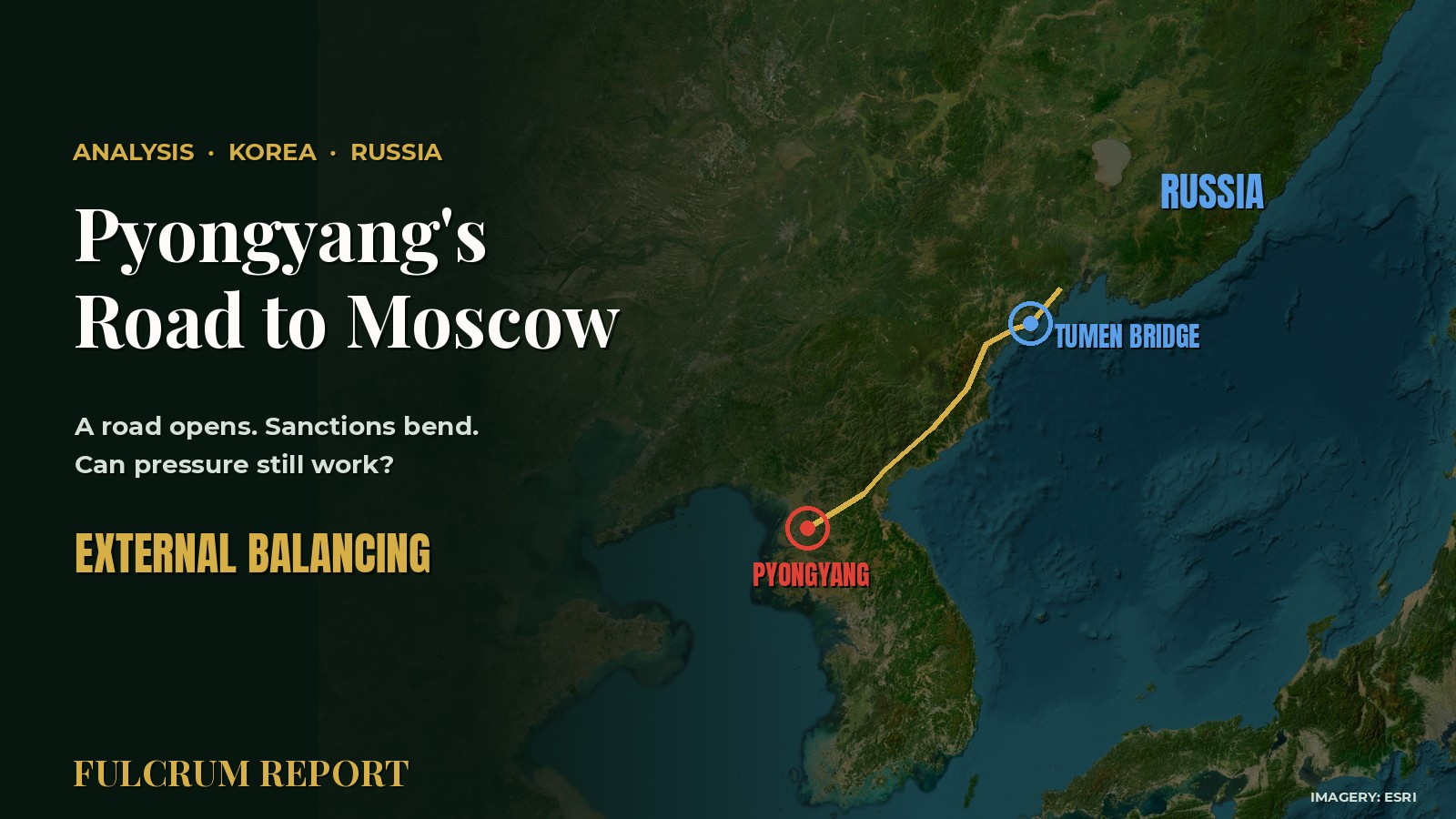
Pyongyang's Road to Moscow: Can Sanctions Still Work?
A second enrichment facility is reportedly going up at Yongbyon, and the Tumen River road bridge to Russia reportedly opened on September 8. When a major power offers a way around sanctions, how much pressure is left? An explainer on external balancing.
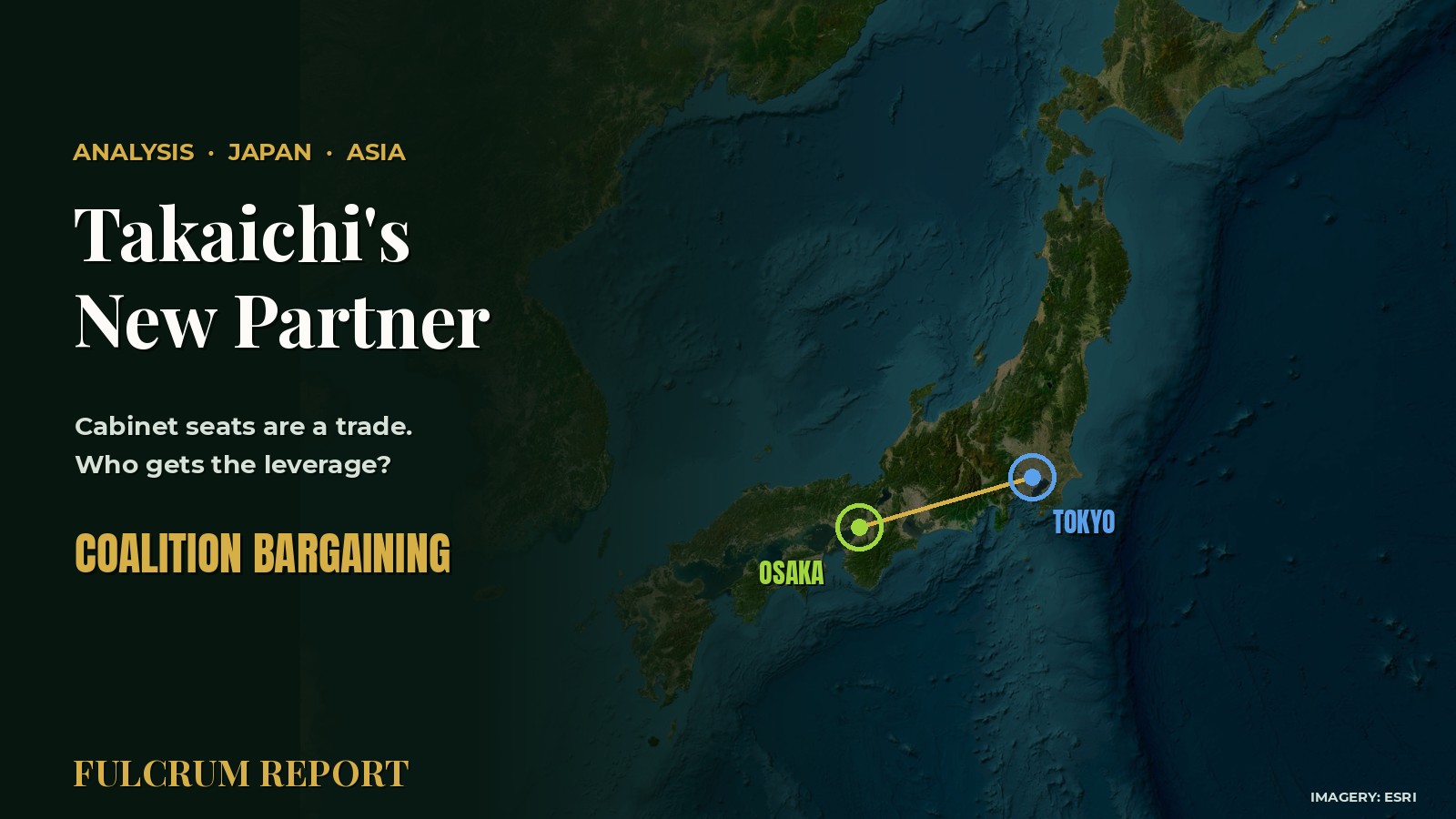
Takaichi's New Partner: Why Cabinet Seats Are a Trade
Sanae Takaichi reportedly reshuffled her cabinet on September 16 and 17, bringing in the Japan Innovation Party (Ishin) for the first time. Her camp holds two-thirds of the lower house but lacks an upper-house majority. A look at coalition bargaining and who gets the leverage.
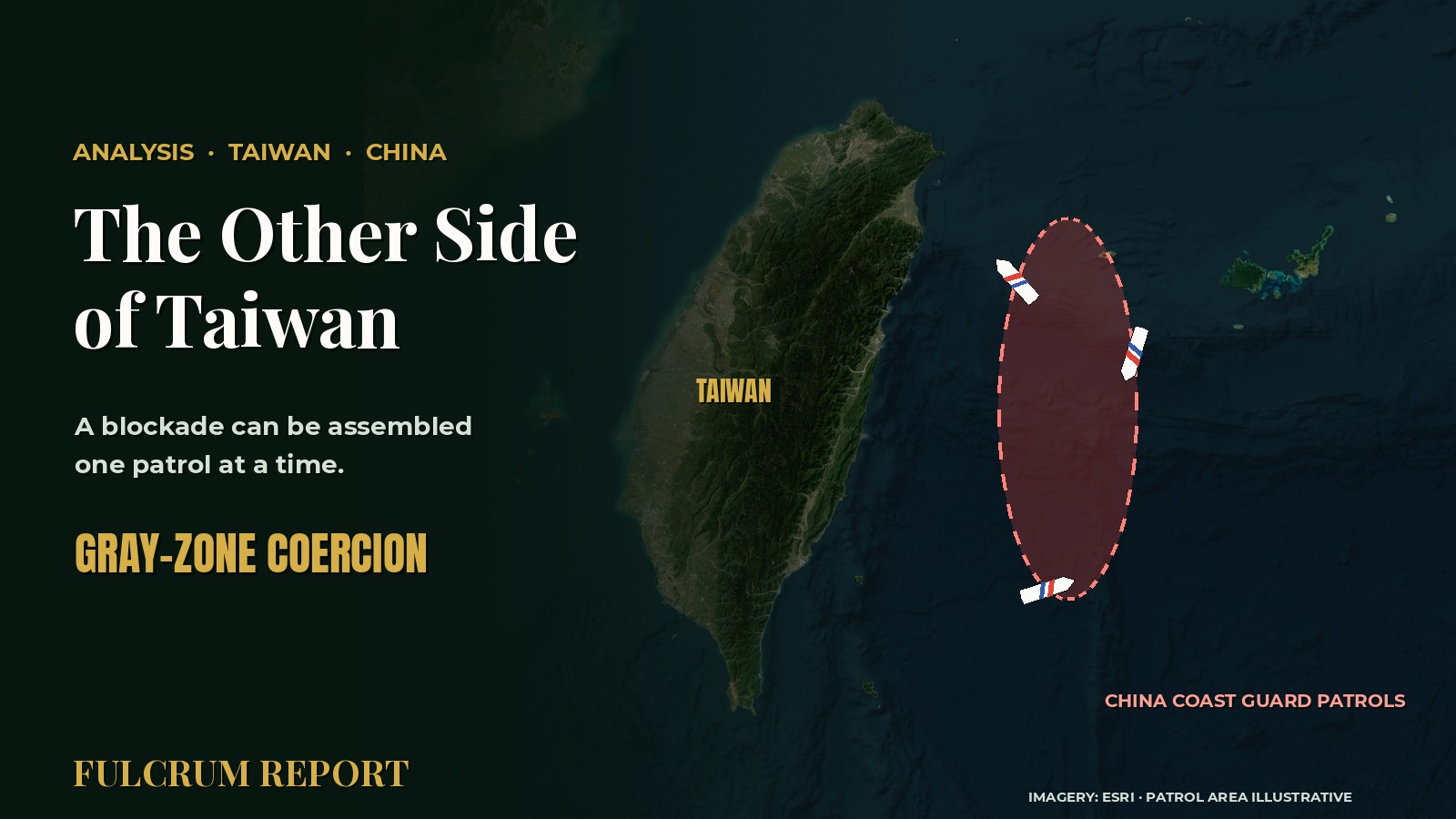
The Other Side of Taiwan: How a Blockade Gets Built Without Being Declared
China's Coast Guard has reportedly set up a regular presence east of Taiwan, framed as law enforcement, while a $14 billion U.S. arms package is pending. A look at gray-zone coercion, salami tactics and escalation control.