The Midterm Clock: How the U.S. Election Calendar Shapes the Iran War
The most important date in the Iran war may not be in the Middle East at all. It’s November 3, and every capital in the region knows it.
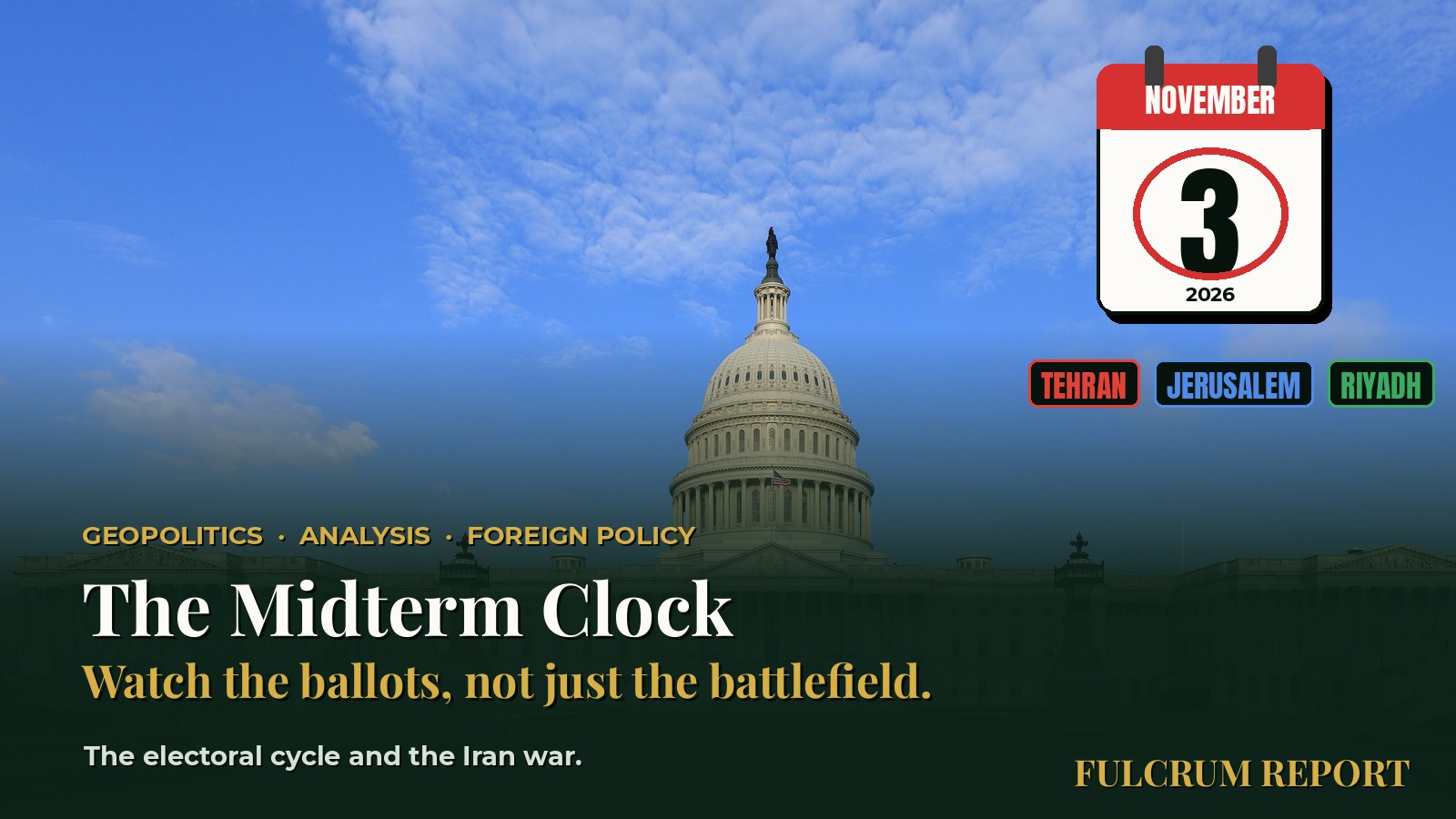
If you asked most people to name the most important date in the Iran war, they'd probably pick something from the Middle East. February 28, when the fighting started. Maybe a date tied to Hormuz, or to one of the big strikes. I'd give you a different answer. The date I'm watching most closely is November 3, and it has nothing to do with the region at all. It's the day Americans vote in the midterm elections.
That might sound like an overstatement. I don't think it is.
What the president actually said
On September 9, before leaving for a Republican gathering in Dallas, President Trump told reporters the war with Iran would end "immediately" after the midterms. He said Tehran was desperate to influence the election and was hoping for what he called a "weak group of people" to win. He also admitted oil prices might take "a little bit longer" to come down, and said his administration wasn't actively trying to restart formal talks.
There's a second track running alongside that one. According to reporting, the White House is also weighing renewed strikes once the vote is over. So the same date points two ways at once: toward a quick ending, or toward another round of escalation. What both paths share is the timing. Nothing decisive before November 3.
Meanwhile, the mediators keep working. Qatar and Pakistan, along with Oman, have carried messages between the two sides for months. In August, Qatar's foreign ministry spokesman described the drafts being exchanged as being at "very progressive stages." At the UN last week, Iran's foreign minister was in the same room as Steve Witkoff and Jared Kushner, with Qatari, Pakistani and Egyptian mediators present, although Tehran insists these weren't direct talks. The channels are open. The question is whether anyone is ready to use them yet.
And every capital in the region, from Jerusalem to Riyadh to Tehran, has the American calendar in view.
The framework: the electoral cycle in foreign policy
Political scientists have studied this pattern for a long time. We call it the electoral cycle in foreign policy. The basic finding is intuitive once you hear it: leaders behave differently when voters are about to decide their fate.
In the months before an election, two kinds of moves become especially costly. The first is risky escalation. If you start something dramatic and it goes badly, you pay for it at the ballot box before you have time to recover. The second is the unpopular concession. A deal that looks like weakness, whatever its merits, hands your opponents a ready-made attack line right when it can do the most damage. So leaders tend to hold steady. They postpone the hard calls until the votes are counted.
None of this means foreign policy freezes entirely. Crises still happen, and sometimes leaders do the opposite and look for a rally-around-the-flag moment. But on balance, the incentives in the final stretch point toward caution and delay. That's what the research keeps finding, and it's what we're seeing now.
The waiting game
Here's the part that I think gets overlooked. The electoral cycle doesn't only shape what American leaders do. It shapes what everyone else does, too.
Put yourself in Tehran's position. Why would you make your best offer in October if the terms might look completely different in mid-November? If you think the political landscape in Washington could shift, it makes sense to hold back and see who you'll actually be dealing with. The same logic applies in reverse. There's little reason for Washington to accept a serious compromise weeks before an election when the political cost is at its peak.
The result is a waiting game. Adversaries hold off on serious proposals because they expect the bargaining environment to change after election day. The mediators can keep the drafts moving, but they can't make anyone sign. Everyone is reading the same calendar and drawing the same conclusion: wait.
Three capitals, one bet
What strikes me most is how many governments are effectively betting on the outcome of an American vote.
Tehran seems to be betting that a different balance of power in Congress could constrain the administration or change its options. That's the bet the president was pointing to when he talked about Iran wanting a weaker group of people. Jerusalem is watching to see whether its strongest backer will have more freedom to act, or less, after November. Riyadh, which has its own economy and security tied up in the price of oil and the fate of Gulf shipping, wants to know which version of American policy it will have to plan around.
None of these governments gets a vote. All of them are acting as if the result matters as much as anything happening on the ground. In a sense, they're right.
What I'd keep an eye on
First, the tone of the mediators after November 3. If the drafts that Qatar called progressive suddenly start moving faster, that's a strong sign that both sides were waiting on the calendar rather than stuck on substance.
Second, the military signals in the days right after the vote. The reports about renewed strikes and the promise of an immediate ending can't both come true. The first week of November will tell us which one was the real plan and which one was campaign-season messaging.
Third, oil. Markets have been pricing in a long war. If they start pricing in an early settlement before the results are even certified, that tells you where the smart money thinks this is heading.
The bigger point
We usually think of wars as decided by armies, geography and supply lines. Those things matter enormously. But in a conflict where one of the main players is a democracy, domestic politics is part of the battlefield too. Timing becomes a strategic resource, and election day becomes a turning point that no general planned.
So my advice is simple. Watch the ballots, not just the battlefield. The next phase of this war may well be decided at American polling places.
Should elections shape war policy at all? I'd genuinely like to hear where you come down on that.

About the author
Fulcrum Report
Independent Middle East analyst holding a PhD in Political Science. Fulcrum Report offers rigorous, framework-driven coverage of politics and geopolitics across the Levant and the wider region — analysis without agenda.
Related reading
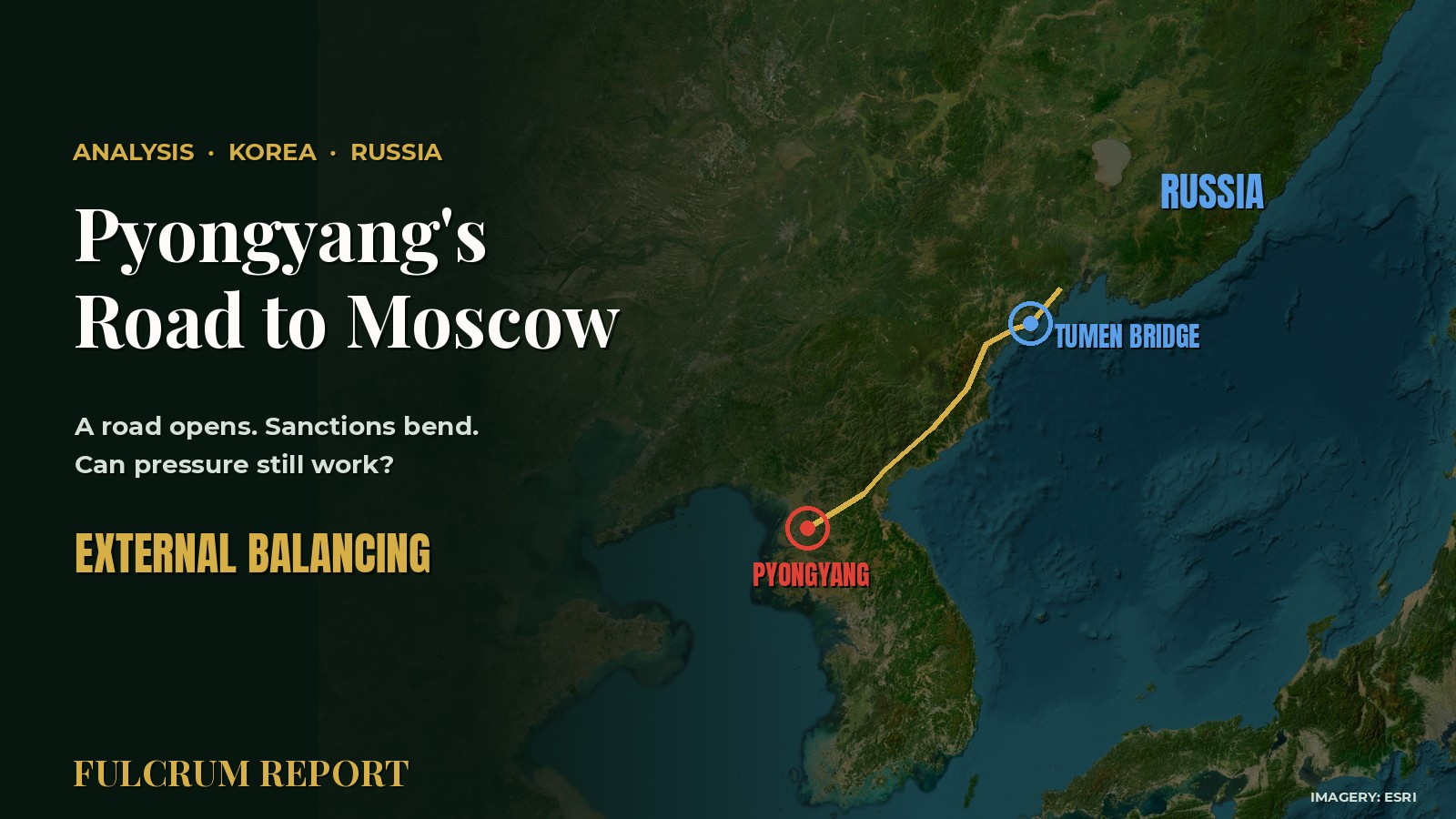
Pyongyang's Road to Moscow: Can Sanctions Still Work?
A second enrichment facility is reportedly going up at Yongbyon, and the Tumen River road bridge to Russia reportedly opened on September 8. When a major power offers a way around sanctions, how much pressure is left? An explainer on external balancing.
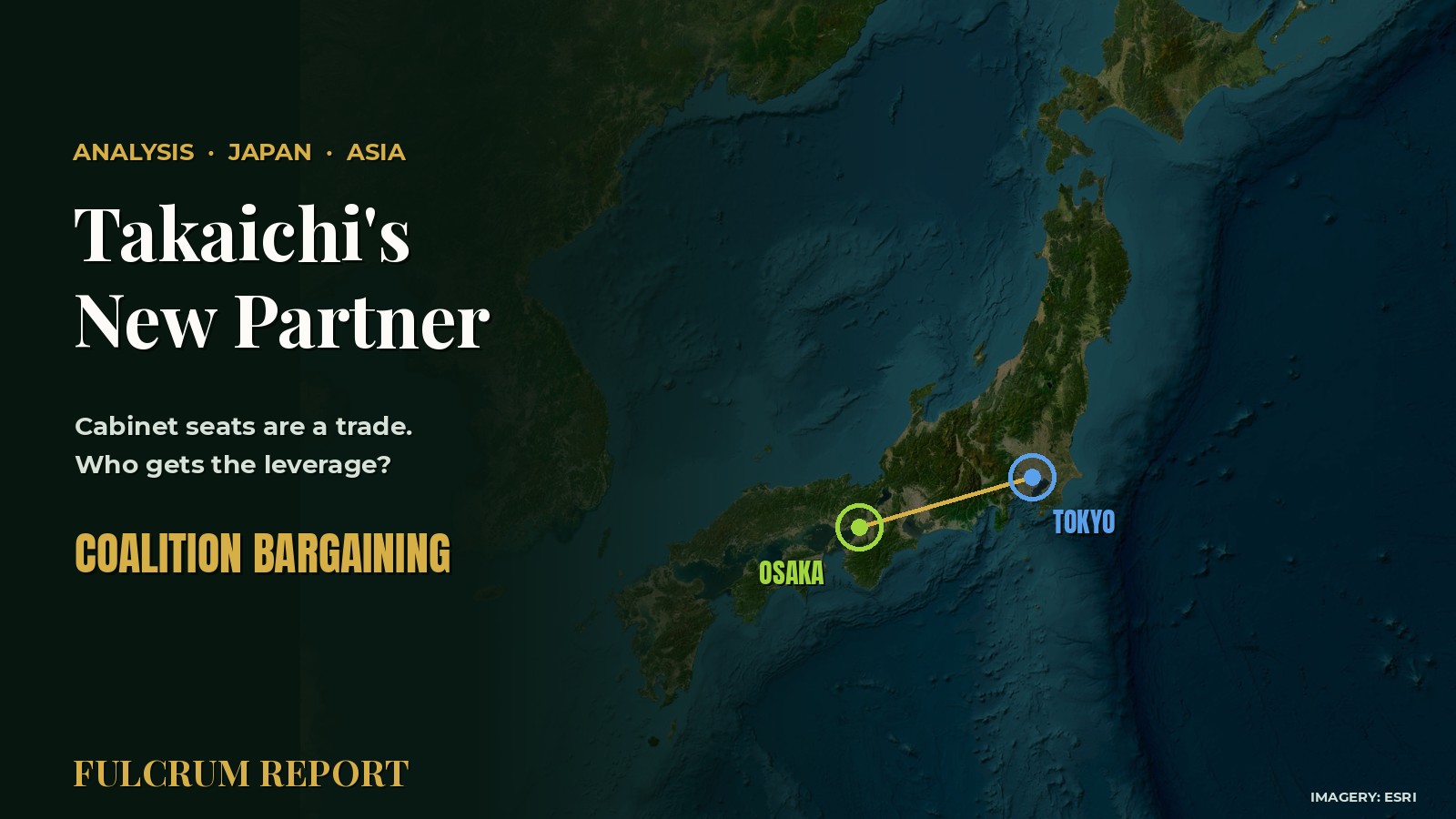
Takaichi's New Partner: Why Cabinet Seats Are a Trade
Sanae Takaichi reportedly reshuffled her cabinet on September 16 and 17, bringing in the Japan Innovation Party (Ishin) for the first time. Her camp holds two-thirds of the lower house but lacks an upper-house majority. A look at coalition bargaining and who gets the leverage.
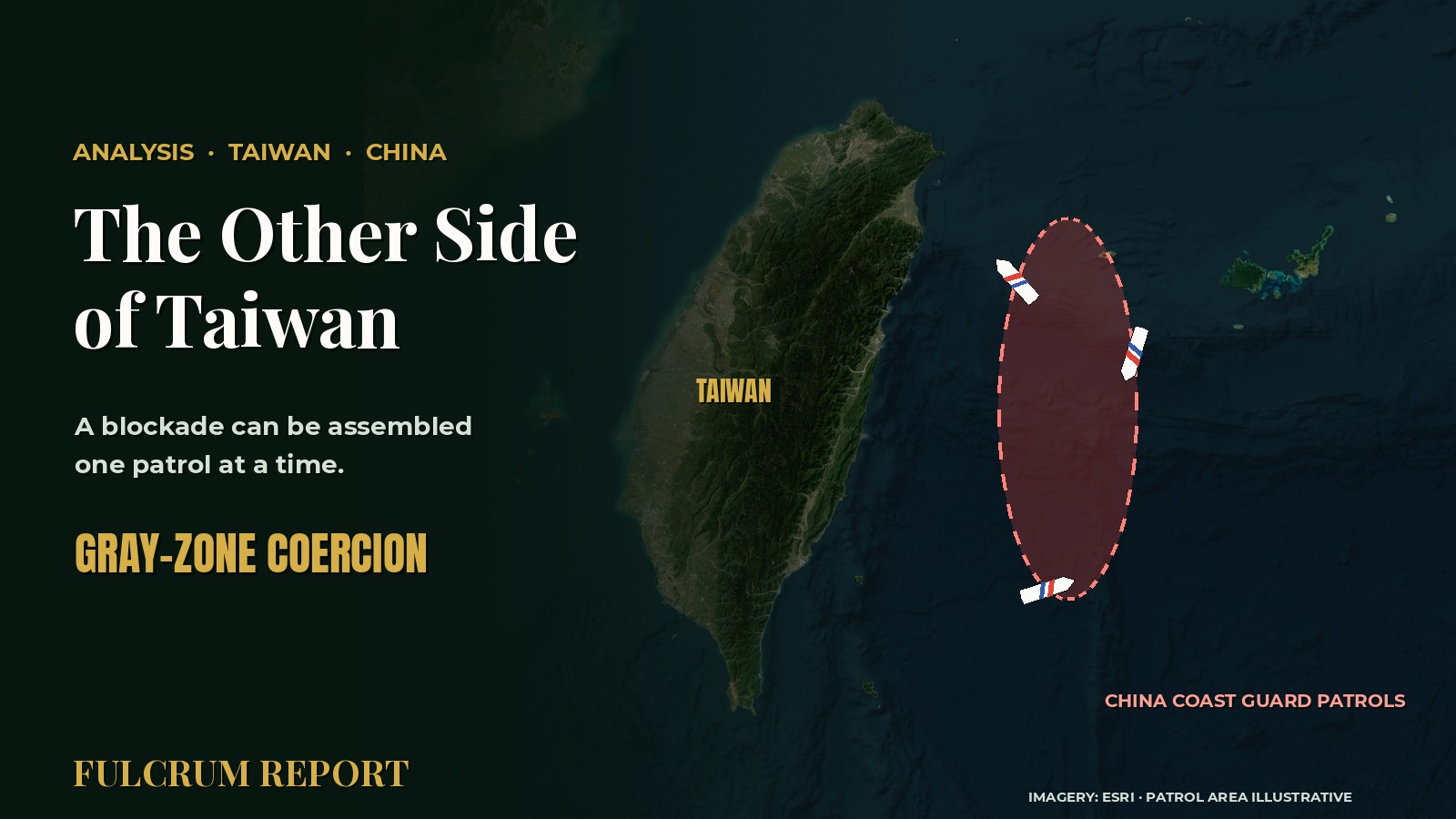
The Other Side of Taiwan: How a Blockade Gets Built Without Being Declared
China's Coast Guard has reportedly set up a regular presence east of Taiwan, framed as law enforcement, while a $14 billion U.S. arms package is pending. A look at gray-zone coercion, salami tactics and escalation control.