Missiles Up, Investment Up
Houthi strikes hit Saudi Arabia, yet investment licenses rose 252%. Investors don’t price risk in a vacuum. They price it against the neighbors.
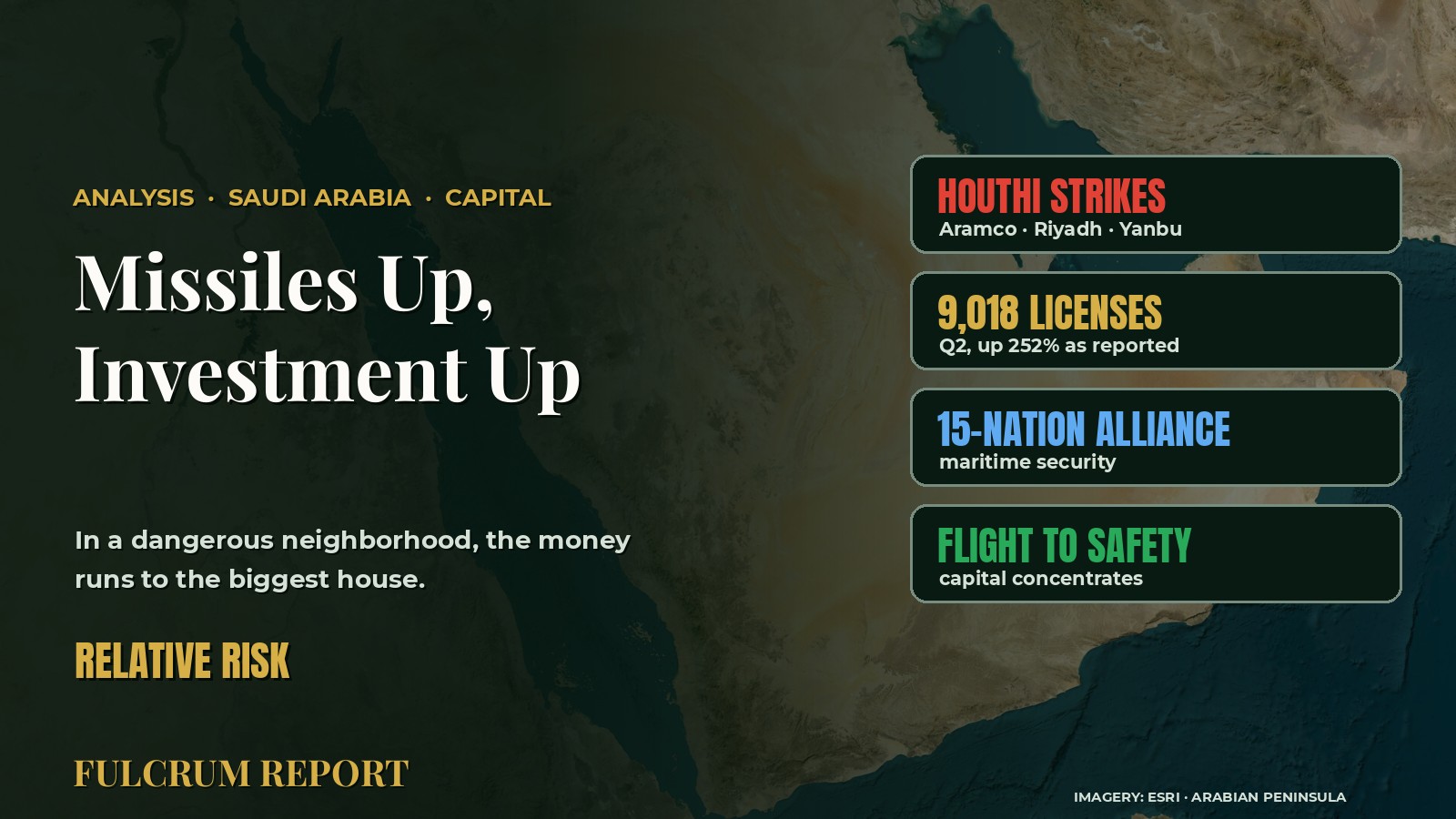
Here's a pair of numbers that shouldn't sit next to each other. Houthi missiles and drones have been aimed at Aramco facilities, at Riyadh and at Yanbu on the Red Sea coast. And in the second quarter, Saudi Arabia issued 9,018 investment licenses, up 252% on the year before, as reported.
My first reaction was that one of those numbers had to be wrong. Money is supposed to run away from missiles. The longer I sat with it, the more I thought both numbers were telling the same story.
What actually happened
The strikes are real, and they weren't symbolic. Hitting oil infrastructure and a capital city is meant to make a point about vulnerability. At roughly the same time, a 15-nation maritime security alliance was announced to protect shipping in the waters around the Arabian Peninsula, as reported.
So in a single season you get attacks, a jump in investor paperwork and a new coalition of navies. Those three things fit together better than they first appear.
A few honest caveats first
I want to be careful with the 252%. A license is not money in the ground. It's permission to set up and operate, and plenty of licensed companies end up as a small office and a registration number. Licenses tell you about intent, not about capital actually deployed.
There's also a base effect. If the comparison quarter was weak, a big percentage jump is easier to get. And part of the rise reflects policy: Riyadh has pushed hard to get foreign firms to put their regional headquarters in the kingdom if they want government contracts. Some of these licenses are companies responding to that pressure, not to a sudden burst of confidence.
Even with all of that, the direction is hard to ignore. Thousands of firms looked at a country under fire and decided to sign up anyway.
Risk is always compared to something
The idea I keep coming back to is simple. Investors don't price risk in absolute terms. They price relative risk. The question isn't "is Saudi Arabia safe?" It's "compared to what?"
If you want exposure to the Gulf and the wider Middle East, your options are limited. Look around the neighborhood: wars, collapsed currencies, contested governments, shipping lanes under threat. Next to that, a state with very large foreign reserves, the biggest economy in the Arab world and a long list of powerful partners looks less like a risk and more like a shelter.
Economists have a name for the pattern when it happens in markets: flight to safety. When things get scary, money doesn't leave the system so much as move within it, toward whatever looks most able to absorb a shock. US Treasuries play that role globally. Inside this region, I'd argue Saudi Arabia is playing a version of it.
Risk you can price, and risk you can't
There's an old distinction from Frank Knight, writing in 1921, that helps here. Risk is uncertainty you can put a number on. True uncertainty is the kind you can't. Investors can live with the first. They hate the second.
Occasional missile strikes on a well-defended state are, in a grim way, risk. They have happened before, they get intercepted or repaired, and the damage has so far been limited and temporary. You can insure against that and build it into a model. What you can't model is a state that might not be there in five years, or a market that might close overnight. Many of Saudi Arabia's neighbors carry that second kind of uncertainty. Riyadh mostly doesn't.
The biggest house
Three things make a country the biggest house on the street. The first is reserves, the cushion that lets a state repair damage, defend its currency and keep paying contracts while under pressure. The second is market size: a large, young population and huge state spending under Vision 2030 mean there is real demand to sell into. The third is protectors. The new maritime alliance matters less for the ships it adds than for the signal it sends, that a lot of governments have a stake in this country staying stable.
Put those together and the strikes look different. They show the danger is real, but they also show the country can take hits without breaking. That's what an investor actually wants to know.
Where this argument breaks
I don't want to oversell this. The logic holds only while attacks stay occasional and contained. If strikes became systematic, regular, hitting production and making insurance on shipping unaffordable, the calculation would change. Relative safety only works while the gap between you and your neighbors stays wide. A sustained campaign could close that gap fast.
It's also worth remembering that money that runs to safety can run away from it just as quickly. Flows that arrive for defensive reasons aren't loyal.
For now, though, the numbers point one way. In a dangerous neighborhood, the money runs to the biggest house.
Further reading: Frank H. Knight, Risk, Uncertainty and Profit (1921).

About the author
Fulcrum Report
Independent Middle East analyst holding a PhD in Political Science. Fulcrum Report offers rigorous, framework-driven coverage of politics and geopolitics across the Levant and the wider region — analysis without agenda.
Related reading
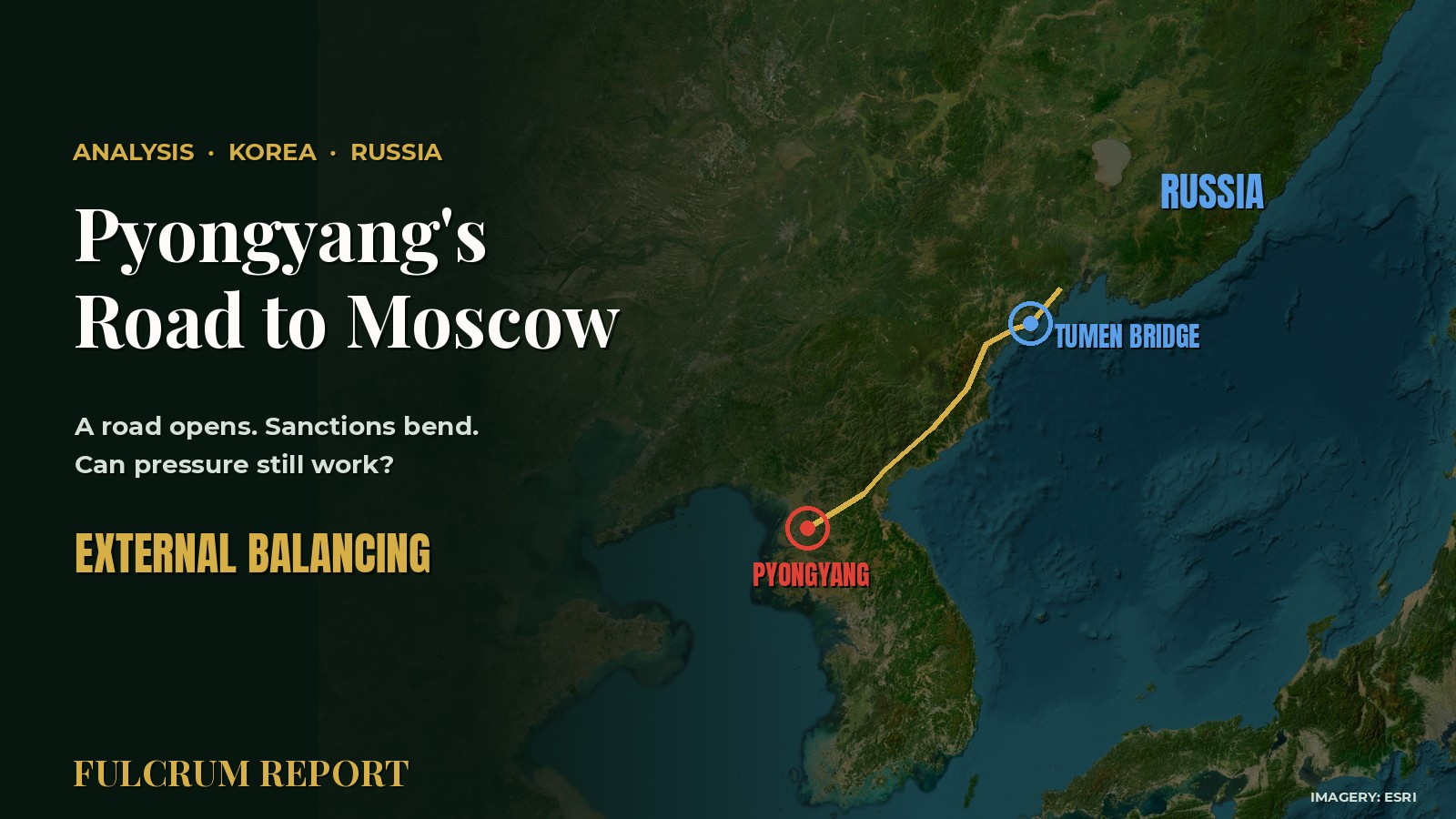
Pyongyang's Road to Moscow: Can Sanctions Still Work?
A second enrichment facility is reportedly going up at Yongbyon, and the Tumen River road bridge to Russia reportedly opened on September 8. When a major power offers a way around sanctions, how much pressure is left? An explainer on external balancing.
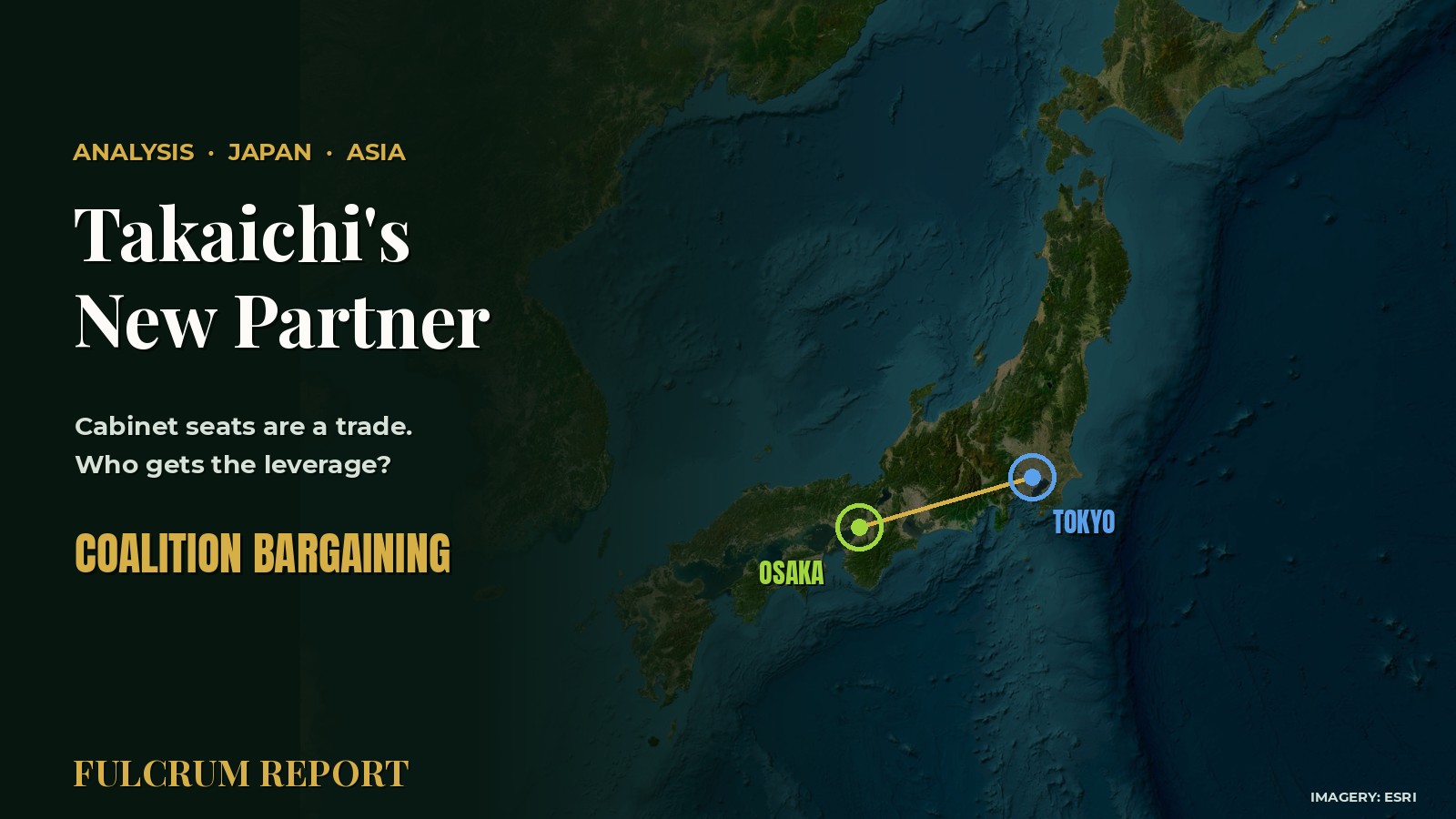
Takaichi's New Partner: Why Cabinet Seats Are a Trade
Sanae Takaichi reportedly reshuffled her cabinet on September 16 and 17, bringing in the Japan Innovation Party (Ishin) for the first time. Her camp holds two-thirds of the lower house but lacks an upper-house majority. A look at coalition bargaining and who gets the leverage.
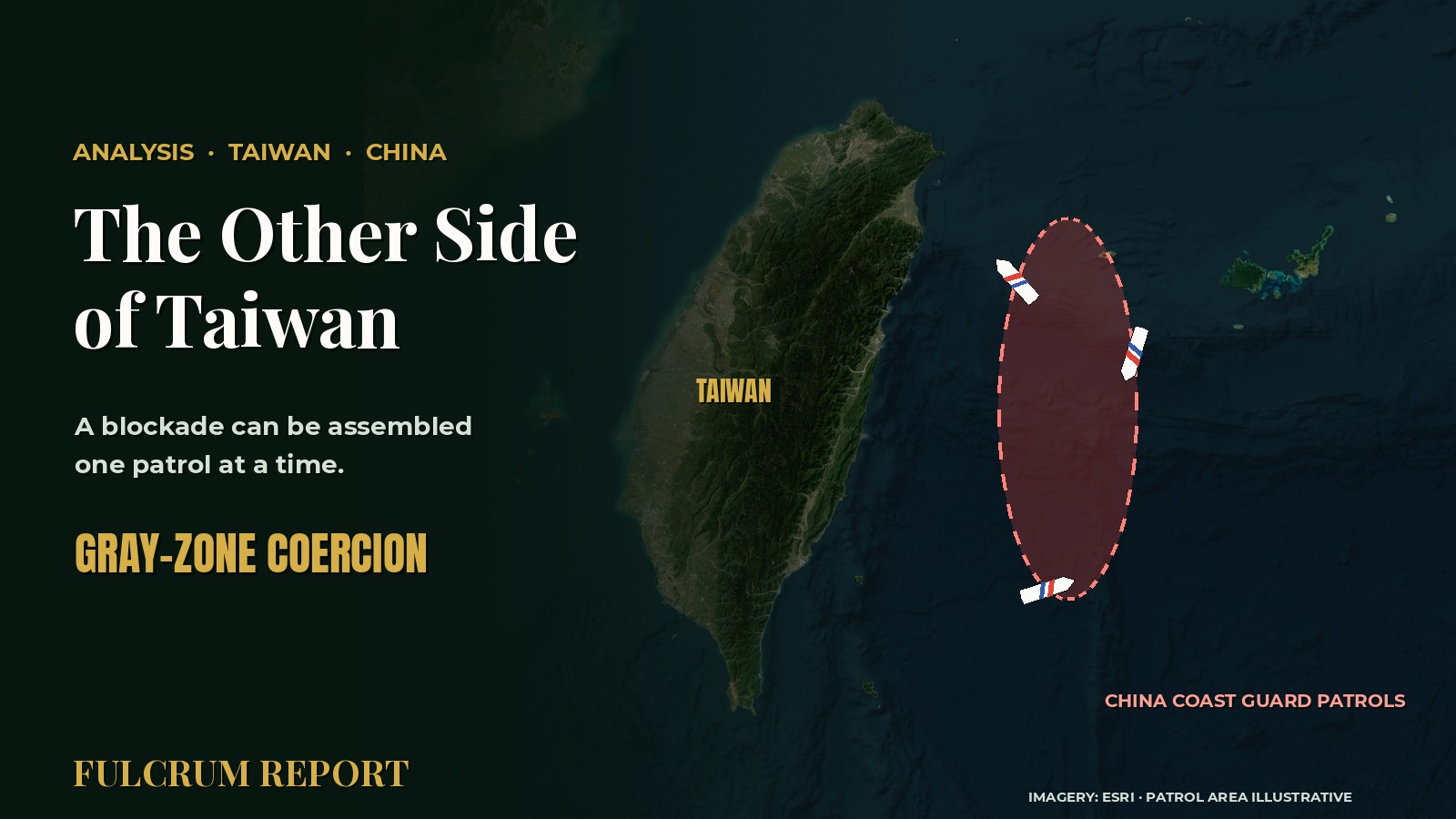
The Other Side of Taiwan: How a Blockade Gets Built Without Being Declared
China's Coast Guard has reportedly set up a regular presence east of Taiwan, framed as law enforcement, while a $14 billion U.S. arms package is pending. A look at gray-zone coercion, salami tactics and escalation control.