Mojtaba’s Real Enemy: Selectorate Theory and Iran’s Wartime Economy
Inflation above 80 percent, food prices doubling and fuel running short. The question isn’t whether Iranians are suffering. It’s whether the Guards still get paid.
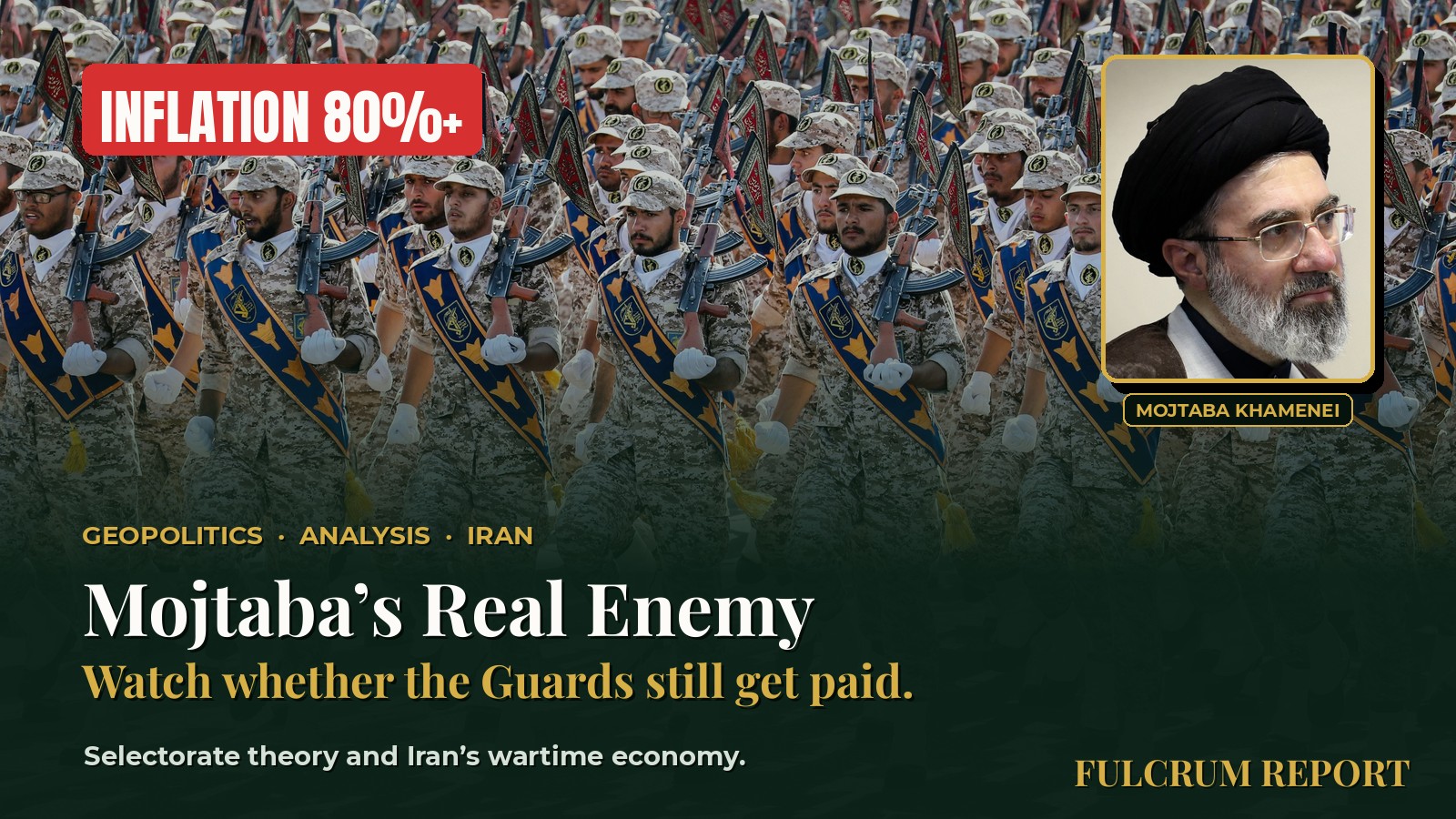
Iran’s new Supreme Leader is facing an enemy he can’t shoot down. It isn’t Israel, and it isn’t the U.S. Navy. It’s inflation, which by most estimates is now running above eighty percent.
I want to spend some time on this, because I think a lot of the commentary about Iran right now is looking at the wrong thing. People see the price spikes, the fuel queues and the collapsing rial, and they conclude the regime must be close to breaking. It might be. But the framework I find most useful for thinking about this says the pain of ordinary Iranians, on its own, isn’t what decides that.
How Mojtaba got here
Ali Khamenei was killed in an airstrike on February 28, the first day of the war. Within days, the Assembly of Experts chose his son, Mojtaba, to replace him, and the announcement came on March 9. By most accounts the choice wasn’t really the Assembly’s to make. Senior commanders of the Islamic Revolutionary Guard Corps pressed hard for Mojtaba, and he took office with their heavy backing.
That detail matters more than anything else in this story. Mojtaba has never had his father’s religious standing or his decades of political capital. What he has is the Guards. His appointments since then point the same way. In August he named a new slate of senior commanders, including Ahmad Vahidi as head of the IRGC. Those were choices about loyalty and cohesion, not about reaching out to the public.
Six months of pressure
Now look at the economy he inherited. Inflation is above eighty percent, and the official point-to-point figure for July was close to eighty-eight. The rial trades at around 2.2 million to the dollar, where a year ago it was about one million. Food staples have roughly doubled in price, and some have done far worse. Cooking oil is up several hundred percent from a year earlier.
Trade is reportedly down somewhere between twenty-five and thirty-five percent, with the American naval blockade squeezing what gets in and out. Fuel is the part that worries me most. Iran now burns more gasoline than it refines, roughly 145 million liters a day against about 122 million produced, and reports suggest the country has only around two months of gasoline left. In early September the government doubled the price for anything above the monthly ration, which tells you how tight things have become.
By any normal standard, this is a crisis. So why hasn’t the regime cracked?
The framework: selectorate theory
The best answer I know comes from selectorate theory, developed by Bruce Bueno de Mesquita and his colleagues. The idea is simple, and a bit cold.
Every leader answers to three groups nested inside one another. The outer circle is everyone who lives in the country. Inside that is the selectorate, the people who have some formal or informal say in who rules. And at the center is the winning coalition, the much smaller group whose support the leader truly can’t survive without.
The theory says leaders stay in power by keeping that inner circle rewarded. In a democracy the winning coalition is huge, so leaders have to deliver broad public goods like growth, services and security to stay in office. In a narrow autocracy the coalition is small, so it’s cheaper and more effective to pay the insiders directly with contracts, privileges and budgets, and let everyone else absorb the costs.
Why the Guards matter more than the bread lines
Apply that to Tehran. Mojtaba’s winning coalition isn’t the Iranian public. It’s the IRGC, together with the clerical and security networks tied to it. The Guards aren’t just an army. They control a large share of the economy through construction firms, ports, energy interests and smuggling routes, and a sanctions economy tends to make those networks more valuable, not less.
As long as the Guards keep getting resources, the regime can absorb an enormous amount of popular pain. That sounds harsh, and it is. But it fits the historical record. Regimes rarely fall because people are hungry. They fall when the people holding the guns decide the leader can no longer look after them.
That’s why I don’t read the bread lines as a countdown clock. They tell us about suffering, and that suffering is real. They tell us much less about regime survival.
Where the danger really lies
The danger for Mojtaba comes when scarcity starts reaching the coalition itself. When there isn’t enough money, fuel or hard currency to keep the Guards’ networks whole, the bargain that holds the system together starts to fail. Commanders begin to hedge. Factions compete over a shrinking pie. Some start to wonder whether a different leader would serve them better.
A blockade that grinds down state revenue, a fuel shortage that hits military logistics, and a currency that eats away at salaries paid in rials all push in that direction. None of them has to break the coalition by itself. Together they raise the cost of keeping it loyal.
What I’d watch
First, IRGC pay and budgets. Any sign of delayed salaries, cuts to Guard-linked firms, or quarrels over who gets fuel and foreign currency would matter far more than another round of price increases.
Second, personnel moves. Sudden reshuffles, arrests of senior commanders or unexplained retirements are often the first visible sign that a coalition is under strain.
Third, who’s shielded. If the regime keeps protecting the Guards’ share while everyone else takes the hit, the core bargain is still holding. If that protection starts to slip, pay attention.
The bottom line
Selectorate theory doesn’t say public suffering doesn’t matter. It says suffering alone rarely decides who rules. So don’t just watch the bread lines. Watch whether the Guards still get paid.
I’m curious whether this changes how you read what’s happening in Iran. What do you think would have to happen for the IRGC to turn?

About the author
Fulcrum Report
Independent Middle East analyst holding a PhD in Political Science. Fulcrum Report offers rigorous, framework-driven coverage of politics and geopolitics across the Levant and the wider region — analysis without agenda.
Related reading
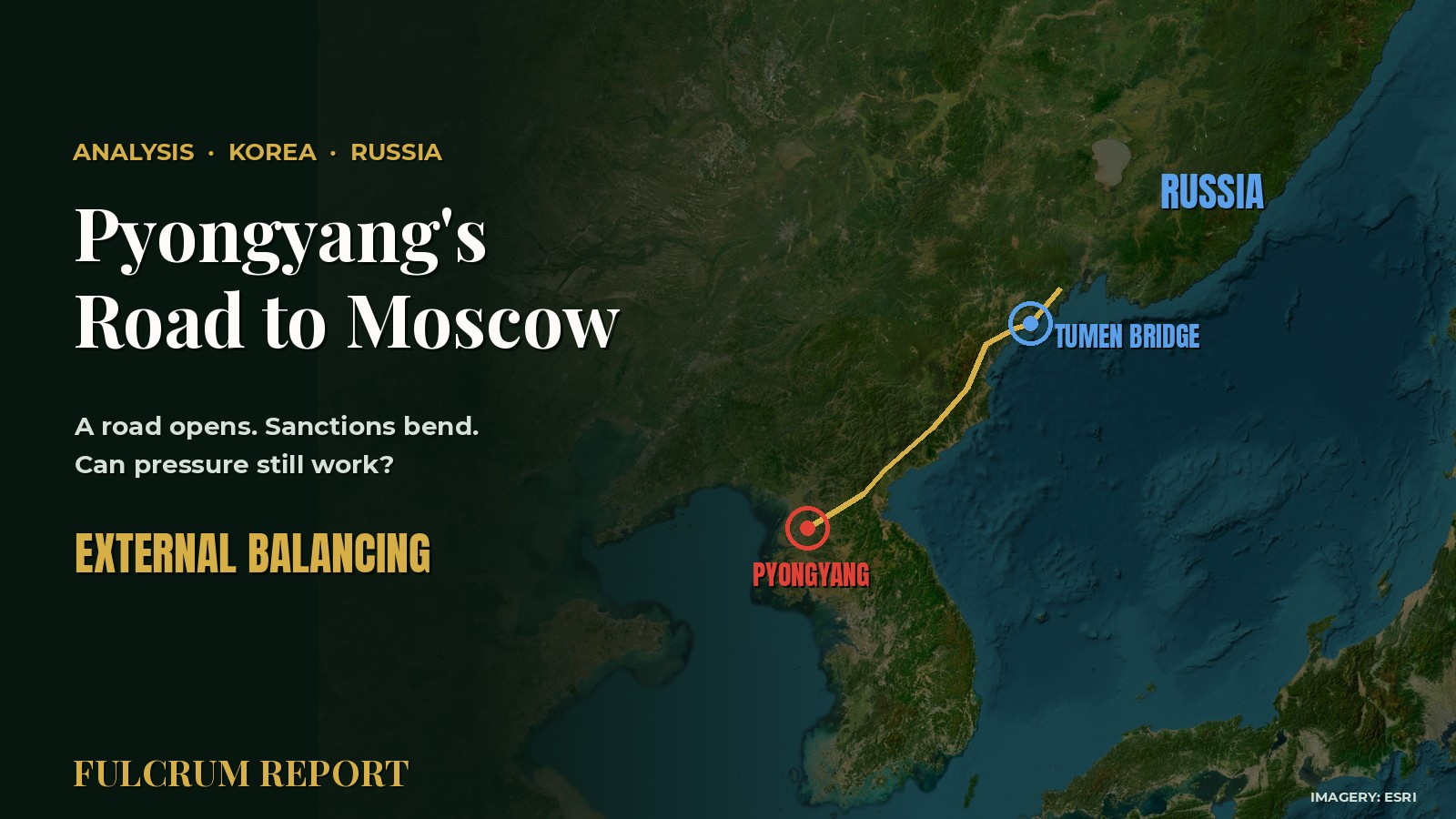
Pyongyang's Road to Moscow: Can Sanctions Still Work?
A second enrichment facility is reportedly going up at Yongbyon, and the Tumen River road bridge to Russia reportedly opened on September 8. When a major power offers a way around sanctions, how much pressure is left? An explainer on external balancing.
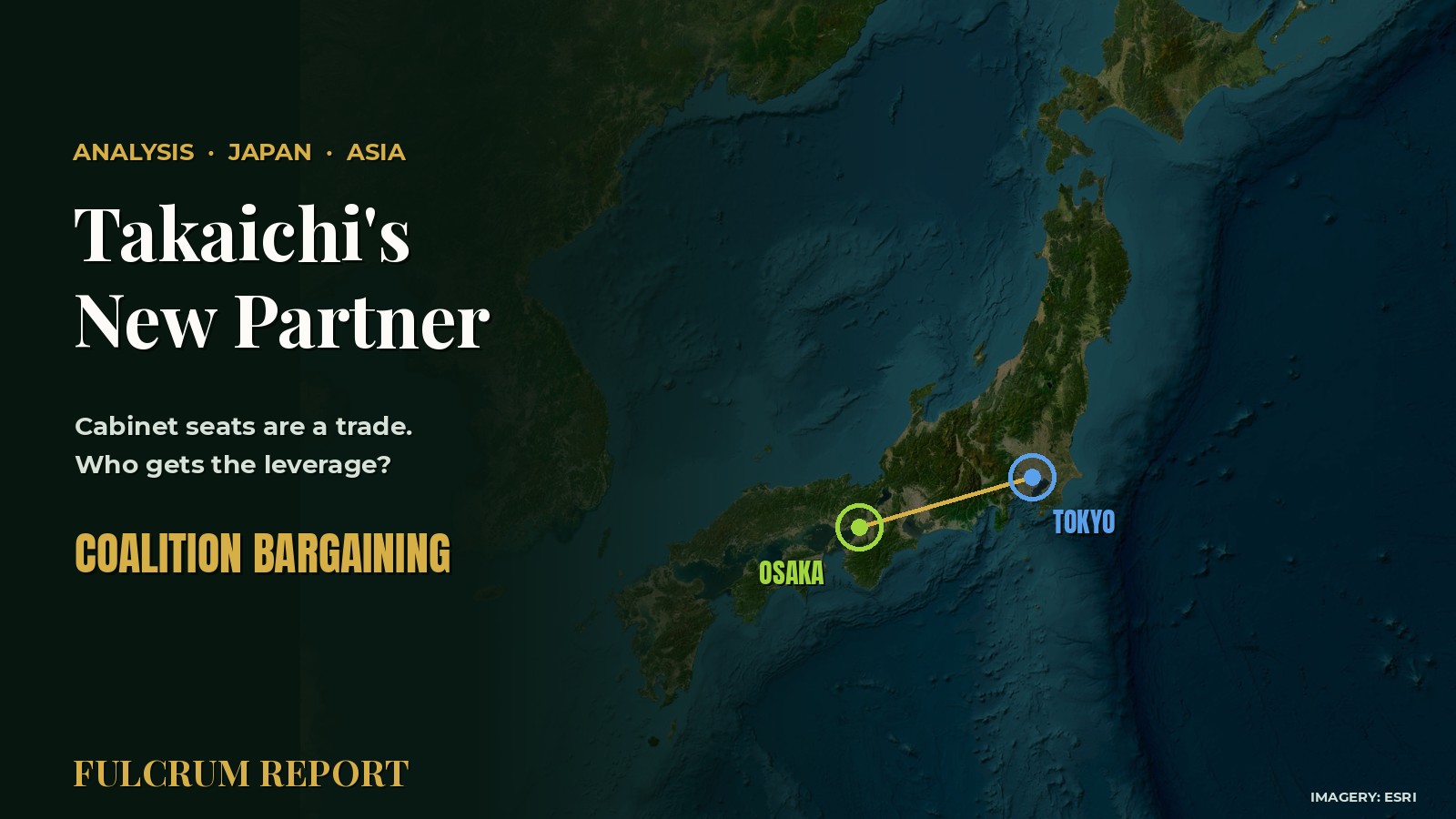
Takaichi's New Partner: Why Cabinet Seats Are a Trade
Sanae Takaichi reportedly reshuffled her cabinet on September 16 and 17, bringing in the Japan Innovation Party (Ishin) for the first time. Her camp holds two-thirds of the lower house but lacks an upper-house majority. A look at coalition bargaining and who gets the leverage.
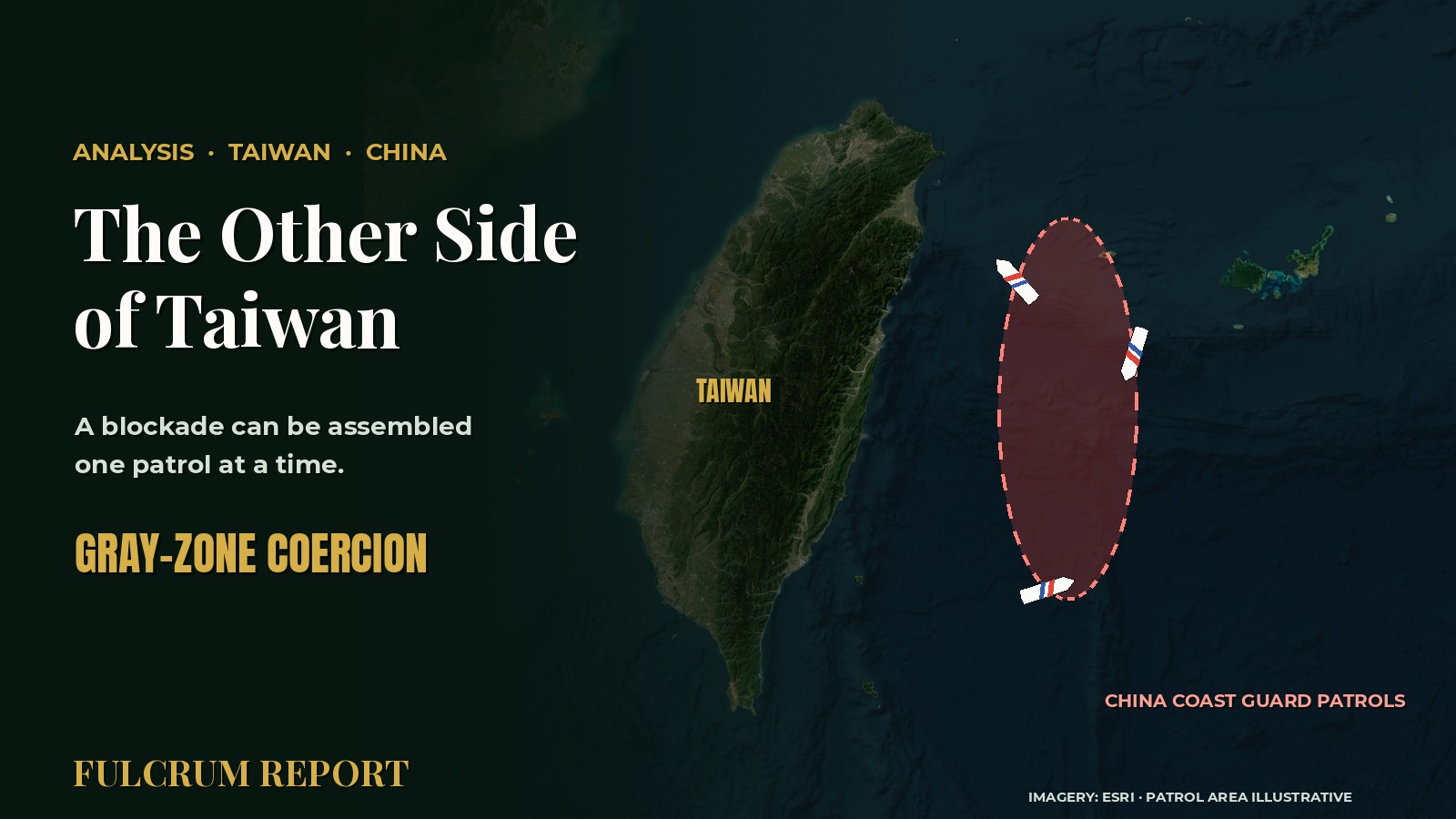
The Other Side of Taiwan: How a Blockade Gets Built Without Being Declared
China's Coast Guard has reportedly set up a regular presence east of Taiwan, framed as law enforcement, while a $14 billion U.S. arms package is pending. A look at gray-zone coercion, salami tactics and escalation control.