Three Religions, One Building, No Easy Peace
On Mount Zion, a Jewish tomb sits under a Christian supper room in a building that spent four centuries as a mosque. Sacred geography is really a ledger of power.
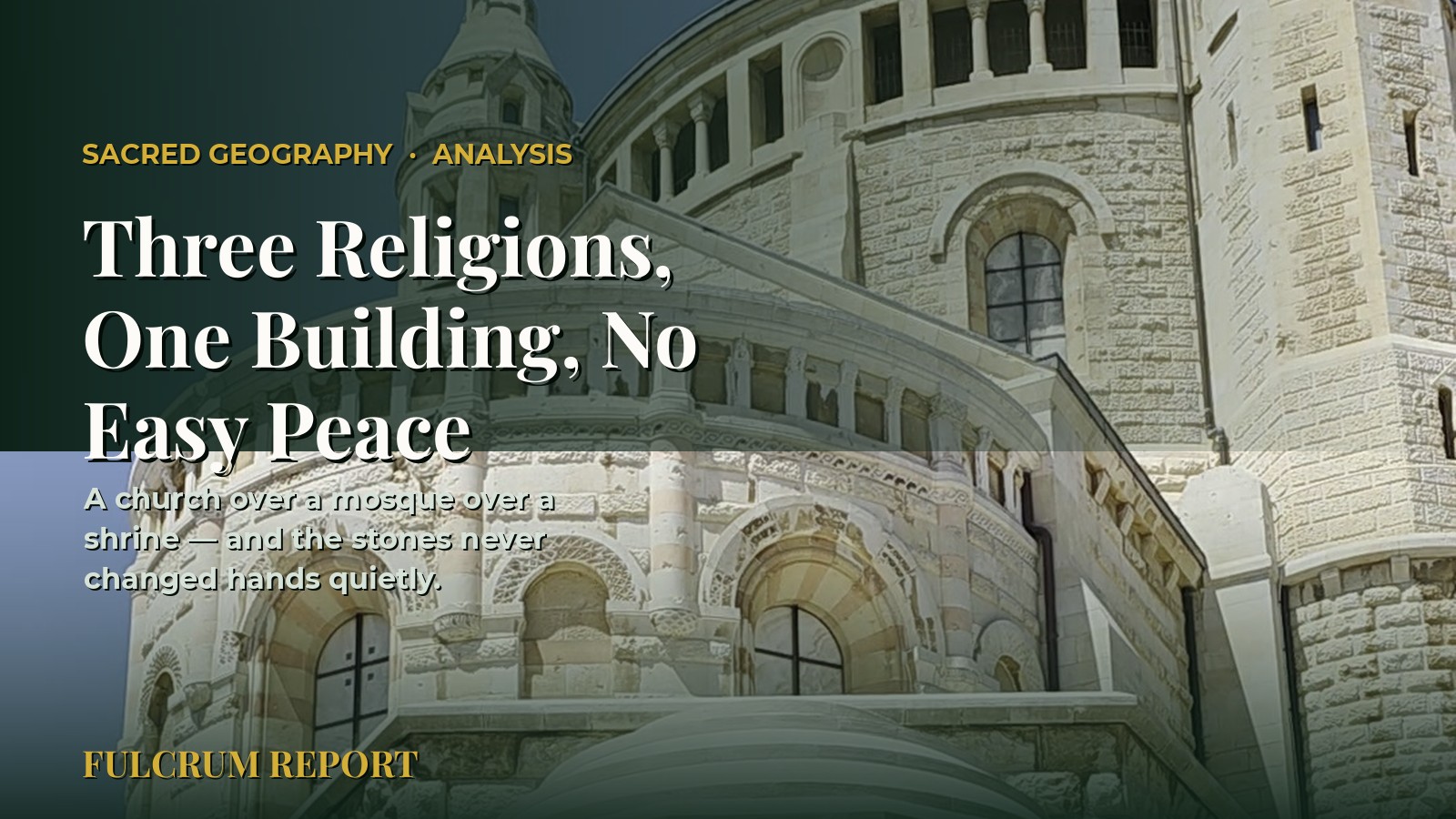
There is a hill just outside the walls of the Old City of Jerusalem where, if you know what you are looking at, you can watch three religions and one modern state pressing down on the same few square meters of stone. Most visitors walk through it in an afternoon and leave thinking they have seen some churches and a tomb. What they have actually walked through is one of the most concentrated arguments about sovereignty on earth.
This is Mount Zion. And the reason I keep coming back to it is that it collapses something I spend most of my time explaining in the abstract — how faith, history and power get layered onto territory — into a single building you can stand inside.
## One staircase, two religions
Start with the building that does the most work. It is a squat, Crusader-era structure, and it is holy twice over, on two different floors.
On the ground floor is what tradition calls the Tomb of King David. The stone cenotaph there has drawn Jewish pilgrims for centuries, since at least the medieval period, when travelers like Benjamin of Tudela recorded the association. I want to be precise, because precision matters here: almost no serious archaeologist thinks David is actually buried there. The likeliest site of the historical king's grave is down the slope in the City of David, on the southeastern ridge. But the tomb on Mount Zion has become real through veneration rather than through archaeology, and in Jerusalem veneration is its own kind of fact on the ground.
Now climb the stairs. Directly above the tomb is the Cenacle — the room Christians have honored since roughly the fourth century as the site of the Last Supper and of Pentecost. So in one building you have a Jewish holy site on the bottom and a Christian holy site on the top, separated by a single flight of steps. That alone would make the place remarkable. It is not even the whole story.
## The layer most people miss
For about four hundred years, that same building was a mosque.
Under Ottoman rule the site became Maqam al-Nabi Daoud — the Shrine of the Prophet David, who is a revered figure in Islam as well. A mihrab was installed. The keys were held, for generations, by a single Muslim family, the Dajani Daoudi. Christian and Jewish access was restricted or cut off entirely. If you had visited Mount Zion for most of the Ottoman centuries, you would have described it, without hesitation, as a Muslim holy place.
That is the part that tends to fall out of the story when it gets told, and it is exactly the part a geopolitical reading needs. Because the sequence — Byzantine church, then Crusader church, then Ottoman mosque, then, after 1948, a synagogue — is not a story about coexistence. It is a story about succession. Each faith did not join the others on the hill. Each, in its turn, replaced them.
## The abbey next door
The footage that runs through this piece is not actually the tomb building. It is its neighbor, the Dormition Abbey — the one with the conical tower, the golden rotunda, the deep-blue apse and the mosaic floor inscribed with the names of prophets and evangelists.
The abbey has its own instructive backstory. The land was bought in 1898 by Kaiser Wilhelm II from the Ottoman sultan Abdul Hamid II — a very large sum in gold marks — and handed to a German Catholic association, which brought in Benedictine monks. The church was dedicated in 1910. It commemorates the tradition of the "dormition," the falling-asleep, of Mary. Even this building, barely a century old, is a monument to great-power politics: a German emperor buying a foothold in Jerusalem from a fading empire, precisely because everyone understood that a presence on that hill was worth having.
I keep the two buildings distinct on purpose. The reel treats them as one hilltop montage, which is fair as a visual — they sit within meters of each other — but the tomb-and-Cenacle building and the Dormition Abbey are not the same structure, and the history only makes sense if you keep them apart.
## Why a building becomes a map of power
Here is where sacred geography turns into hard politics.
Mount Zion sits in West Jerusalem. That places it under Israeli control from 1948 onward — not 1967. This is a distinction people routinely miss. The Old City and its famous contested holy sites, the ones that dominate the headlines, stayed under Jordanian control until the 1967 war. Mount Zion did not. For nineteen years, when the armistice line cut Jerusalem in two and Jews could not reach the Western Wall, Mount Zion was the closest accessible high point to the Old City, and it took on outsized emotional weight as a place to look across at what had been lost.
With Israeli control after 1948 came a familiar pattern. Muslim prayer at the shrine was ended. The lower level, the tomb, was reoriented as a Jewish site, and administrative authority over parts of the complex passed to religious institutions. The mosque layer, four centuries deep, was effectively closed.
And the friction has not stopped. Over the last decade and more, the Christian communities on Mount Zion have absorbed a series of so-called "price tag" attacks — vandalism, arson attempts, slashed tires, graffiti reading things no institution should have to scrub off a wall — carried out by a fringe of Israeli extremists and consistently condemned by Israeli authorities and by the churches alike. The abbey has been a repeated target. That a site this sacred to this many people still gets attacked tells you the contest over it is not historical. It is present tense.
## The point
When I say sacred geography is never just sacred, this is what I mean. A tomb, a mosque, a supper room, a synagogue, a German abbey — layered on one hill, each one built by a community that held power long enough to leave its mark, then lost it. The building is not a symbol of shared faith. It is a ledger of who was in charge, and when.
That is why I watch places like this so closely. The loud disputes over Jerusalem play out at the famous sites in the Old City. But the logic of the whole conflict — that holding the ground means holding the story, and that whoever controls the stones gets to decide whose prayer is heard there — is nowhere clearer than on a quiet hill most tourists pass through without realizing what they have seen.
About the author
Fulcrum Report
Independent Middle East analyst holding a PhD in Political Science. Fulcrum Report offers rigorous, framework-driven coverage of politics and geopolitics across the Levant and the wider region — analysis without agenda.
Related reading
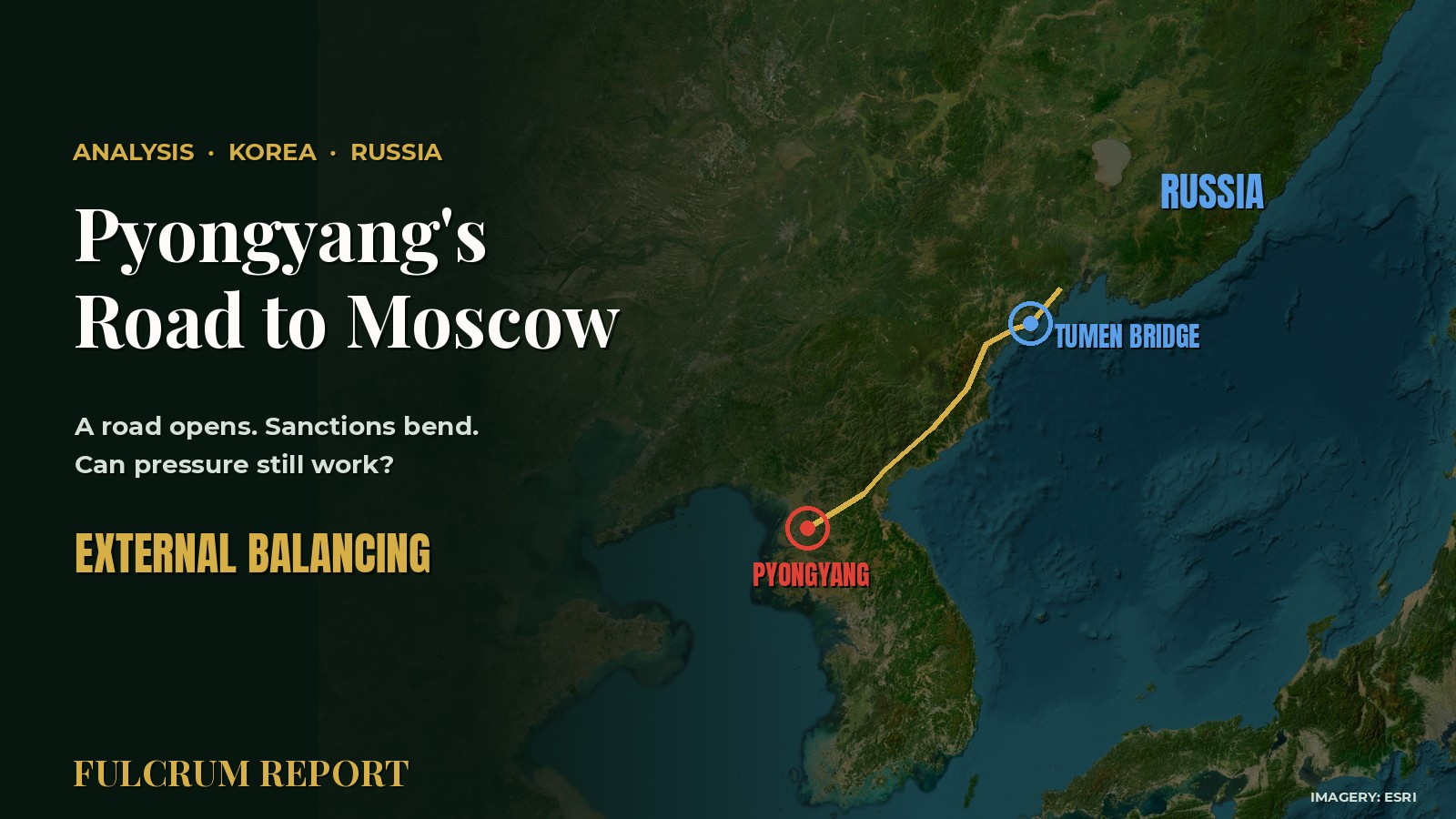
Pyongyang's Road to Moscow: Can Sanctions Still Work?
A second enrichment facility is reportedly going up at Yongbyon, and the Tumen River road bridge to Russia reportedly opened on September 8. When a major power offers a way around sanctions, how much pressure is left? An explainer on external balancing.

Takaichi's New Partner: Why Cabinet Seats Are a Trade
Sanae Takaichi reportedly reshuffled her cabinet on September 16 and 17, bringing in the Japan Innovation Party (Ishin) for the first time. Her camp holds two-thirds of the lower house but lacks an upper-house majority. A look at coalition bargaining and who gets the leverage.
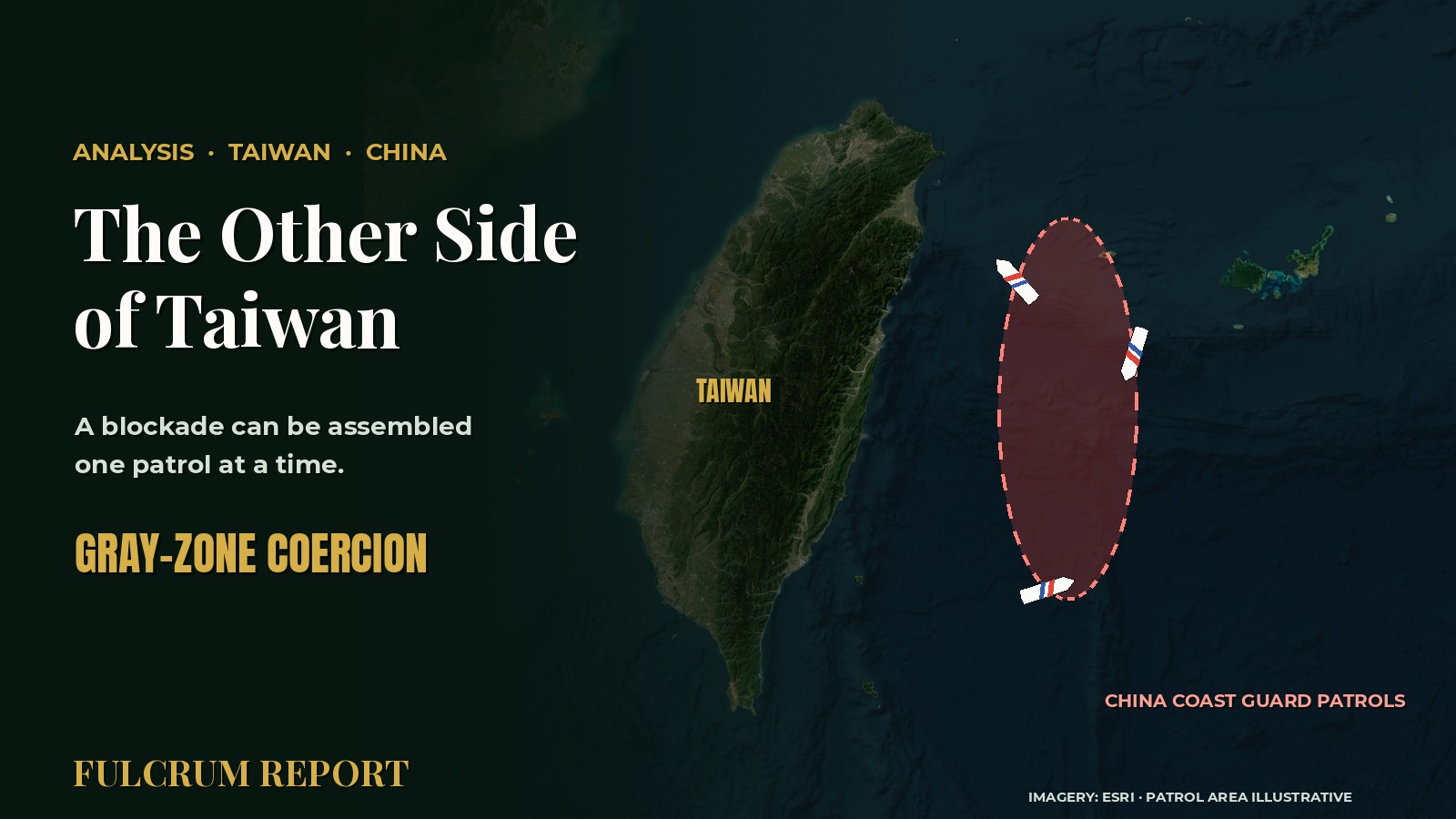
The Other Side of Taiwan: How a Blockade Gets Built Without Being Declared
China's Coast Guard has reportedly set up a regular presence east of Taiwan, framed as law enforcement, while a $14 billion U.S. arms package is pending. A look at gray-zone coercion, salami tactics and escalation control.