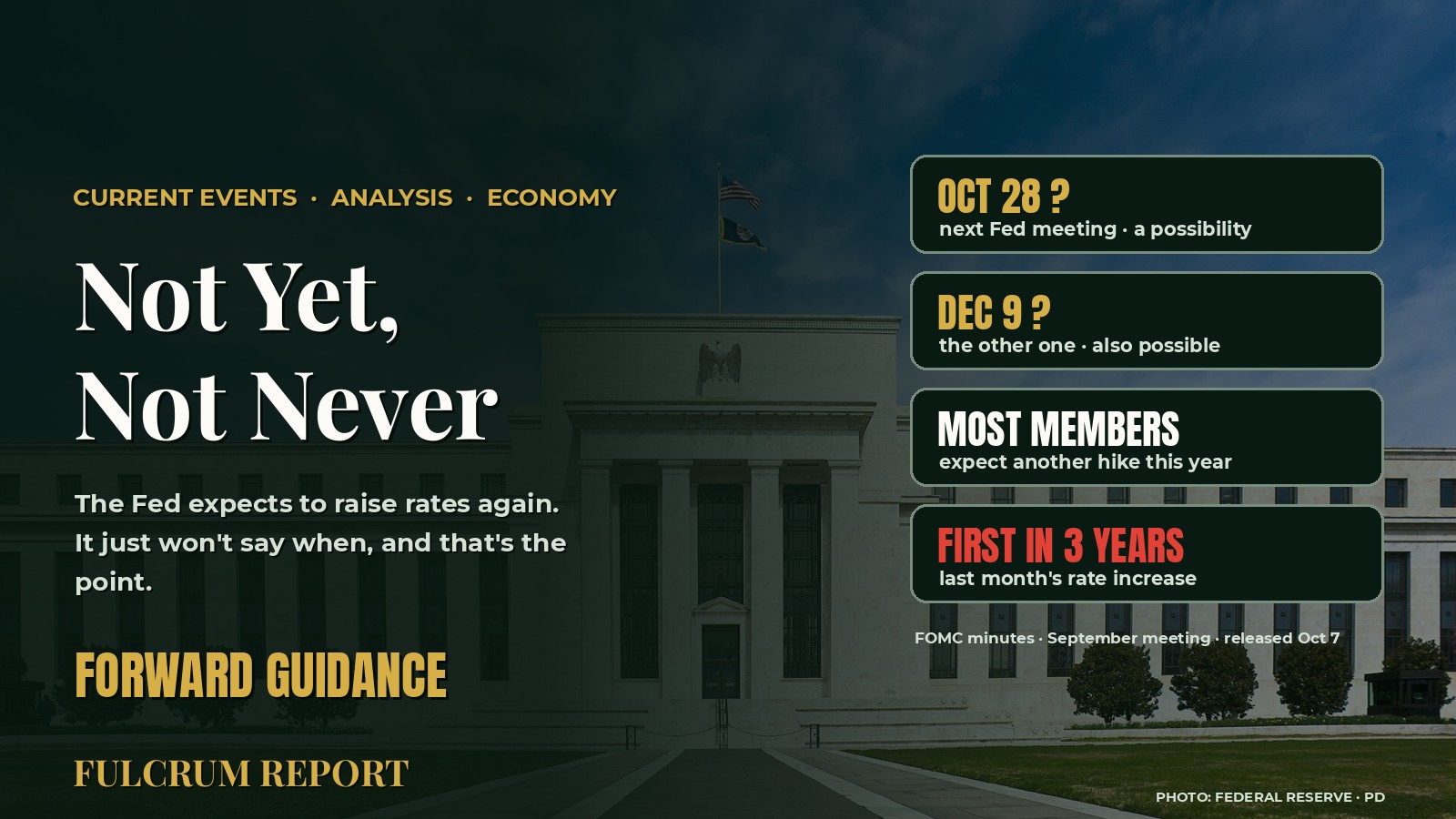
The Fed just told us it expects to raise interest rates again. It just won't say when. At first that sounded like dodging to me. The more I sat with it, the more it looked like the whole strategy.
What the minutes actually say
On October 7, the Fed released the minutes from its September meeting. Minutes are the written record of what the rate-setting committee discussed, and they come out a few weeks after each meeting.
This set shows that most members of the committee expect to raise rates again this year to bring inflation down. I'm going to be careful with the wording here, because it matters. That's an expectation, not a decision. The minutes don't say the Fed "will" hike. And I'm not going to put a number on how many members, because the minutes don't give a vote count.
They also don't point to a specific meeting. The next one is October 28. There's another on December 9. From my reading, members weren't necessarily predicting a hike in October, but that isn't the same as ruling October out. Both dates are live. Nothing has been decided.
Here's the line I keep rereading, word for word from the minutes:
"decisions at future meetings would depend on incoming information and its implications for the outlook and the balance of risks."
In plain English: we'll decide when we see more data.
Why this lands differently right now
Some context. Last month the Fed raised rates for the first time in three years. So this isn't a central bank that hikes casually. After a long pause, it moved, and now it's telling us it probably isn't finished.
The idea behind the vagueness
This next part is analysis, so take it as my interpretation of how this generally works, not a measured effect of these particular minutes.
Economists call this forward guidance. The basic idea is that a central bank's words can move markets before its actions do. When the Fed signals that a hike is likely, lenders and investors don't wait for the actual announcement. Borrowing costs on things like mortgages, car loans and business credit can start drifting up right away. The signal ends up doing some of the work in advance.
That's the upside of saying something. The upside of not saying too much is flexibility. By not committing to a date, the Fed keeps room to change course if inflation cools faster than expected, or if the economy starts to slow. If it had promised an October hike and the data turned, it would have to either follow through on a bad call or break its word. Neither is great for credibility.
So it's a balancing act. Say enough to be believed, but not so much that you're boxed in.
What I'm taking from it
I think we tend to picture the Fed as an institution that sets one number, the interest rate. That's true, but it's only half the job. The other half is setting expectations about where that number is going. Sometimes the most useful thing the Fed can say is "not yet," while making it clear it doesn't mean "never."
I'm not going to guess which meeting it'll be. Nobody outside that room knows, and probably nobody inside it does yet either. But I'm curious what you think. October or December? Leave your call in the comments. It's a question for readers, not a forecast.
If you want more breakdowns like this, follow @fulcrumreport and visit fulcrumreport.com for analysis without agenda.

About the author
Fulcrum Report
Independent Middle East analyst holding a PhD in Political Science. Fulcrum Report offers rigorous, framework-driven coverage of politics and geopolitics across the Levant and the wider region — analysis without agenda.
Related reading
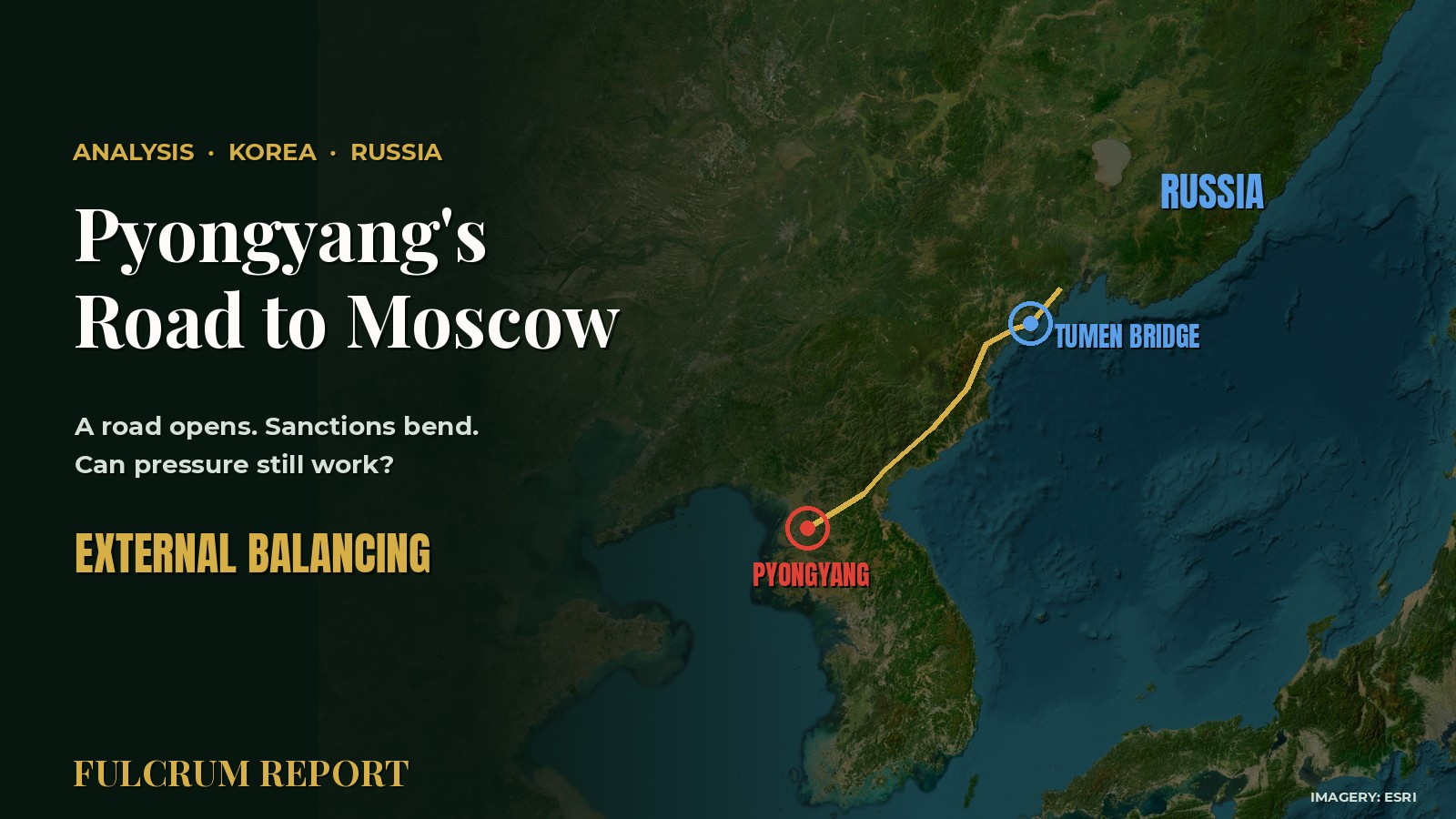
Pyongyang's Road to Moscow: Can Sanctions Still Work?
A second enrichment facility is reportedly going up at Yongbyon, and the Tumen River road bridge to Russia reportedly opened on September 8. When a major power offers a way around sanctions, how much pressure is left? An explainer on external balancing.
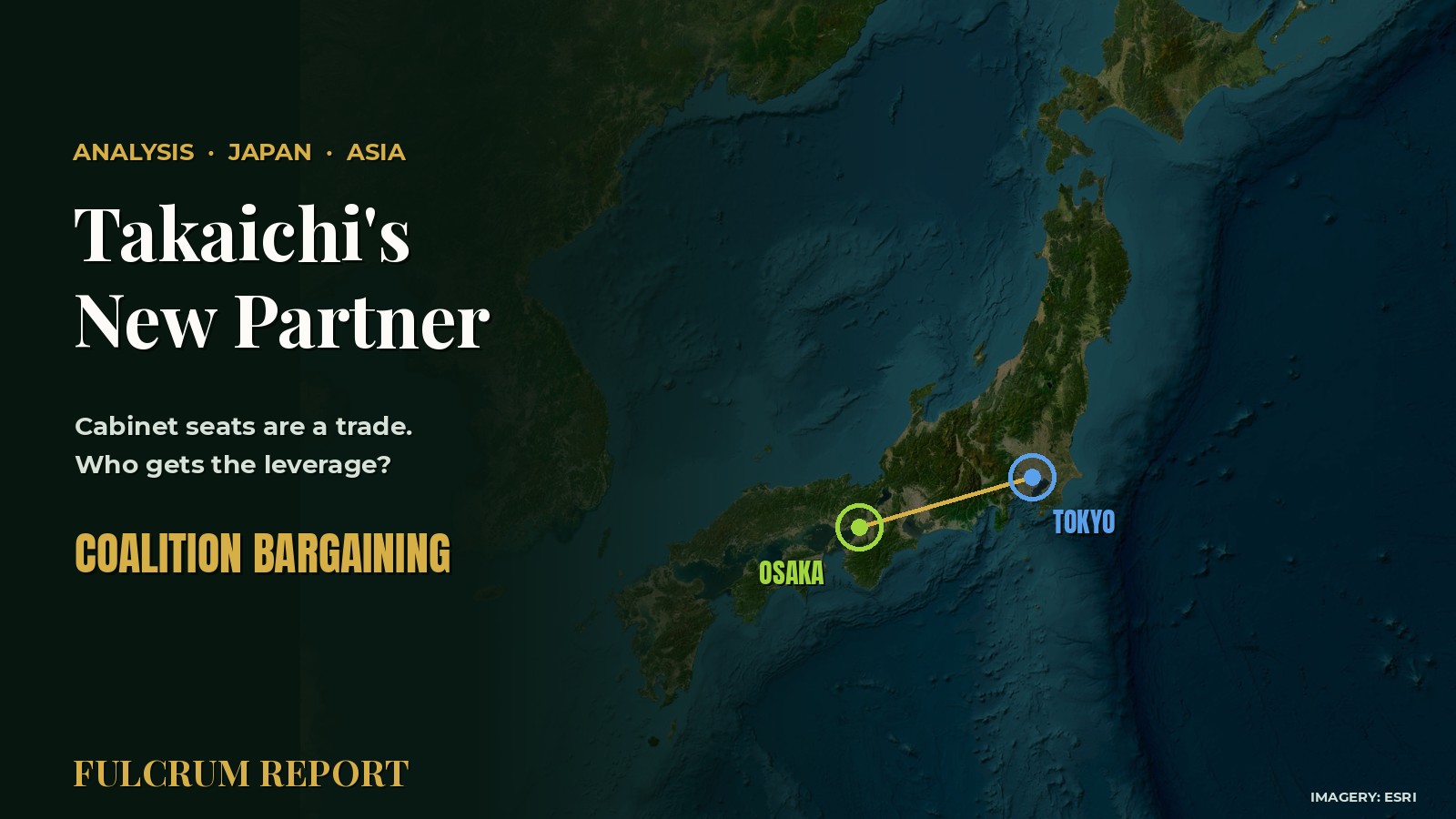
Takaichi's New Partner: Why Cabinet Seats Are a Trade
Sanae Takaichi reportedly reshuffled her cabinet on September 16 and 17, bringing in the Japan Innovation Party (Ishin) for the first time. Her camp holds two-thirds of the lower house but lacks an upper-house majority. A look at coalition bargaining and who gets the leverage.
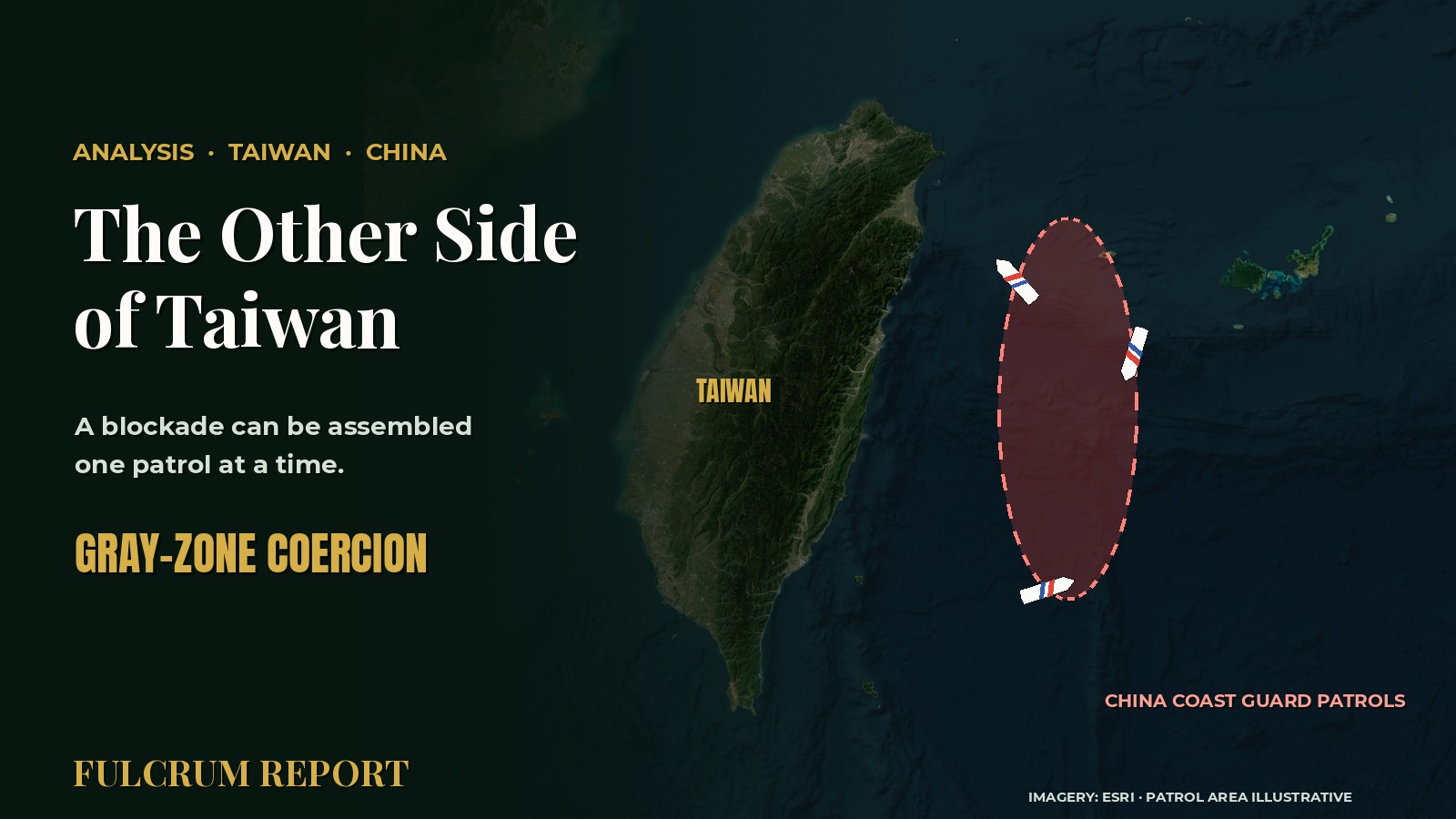
The Other Side of Taiwan: How a Blockade Gets Built Without Being Declared
China's Coast Guard has reportedly set up a regular presence east of Taiwan, framed as law enforcement, while a $14 billion U.S. arms package is pending. A look at gray-zone coercion, salami tactics and escalation control.