One Step on the Temple Mount
A Sukkot visit to the Al-Aqsa compound drew an instant response from Jordan. Why custodianship of the holy sites matters so much to the Hashemite monarchy.
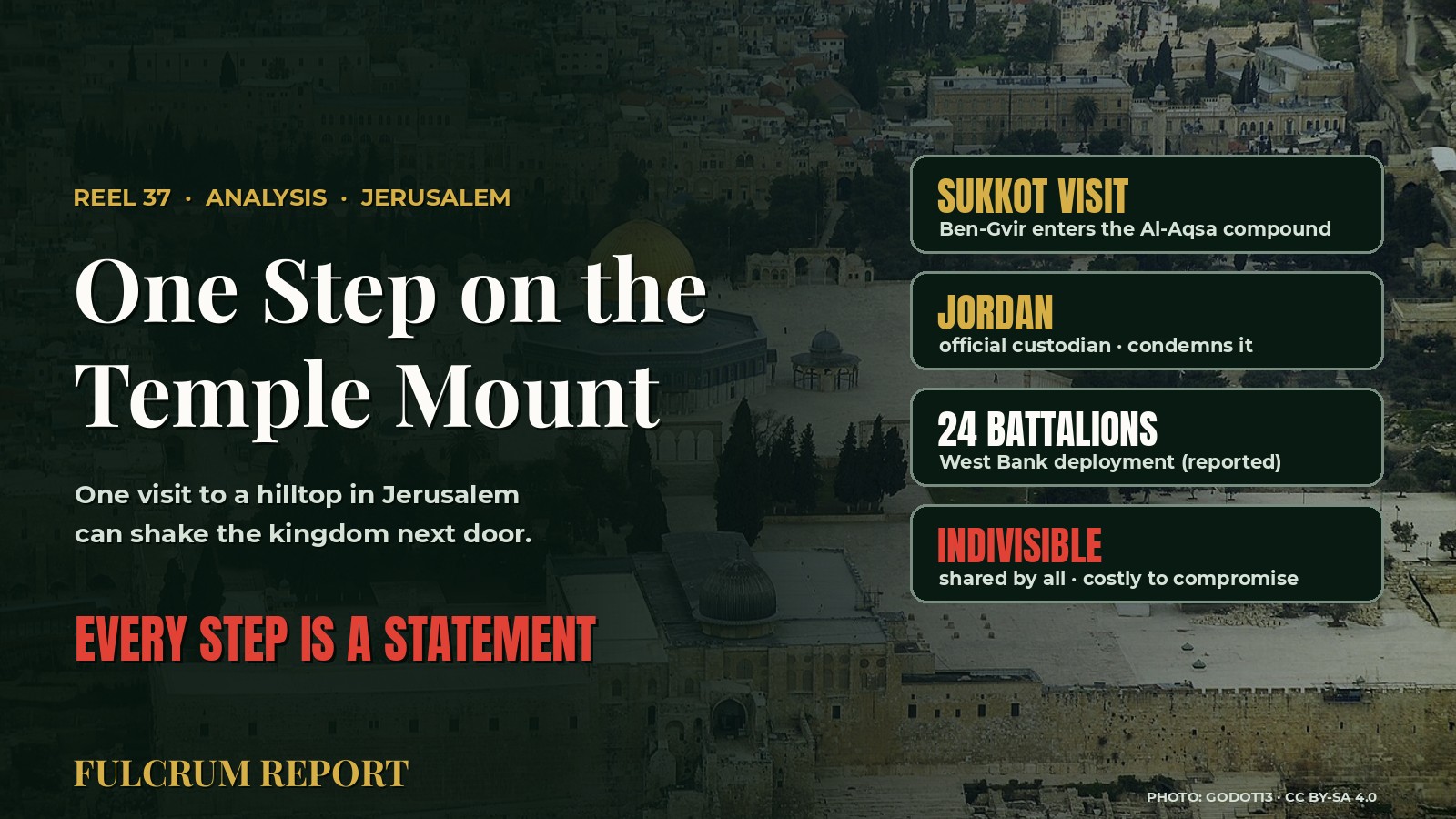
One visit to a hilltop in Jerusalem can shake the kingdom next door. That sounds like an exaggeration until you watch how fast it happens.
During Sukkot, Israeli National Security Minister Itamar Ben-Gvir went up to the Al-Aqsa compound, which Jews call the Temple Mount, and, according to reports, declared ownership of the site. I'm being careful with that wording because it is a paraphrase of what was reported, not an exact quote. Jordan, the site's official custodian, condemned the visit almost immediately.
Around the same time, the Israeli military said it had deployed 24 battalions across the West Bank and put movement restrictions in place for the holiday period. Two separate stories on paper. On the ground, people read them together.
Why a single visit matters
Under the long-standing arrangement known as the status quo, non-Muslims can visit the compound but are not supposed to pray there. Every time a senior Israeli official goes up, the question becomes whether that arrangement is still holding. That is why a walk across a stone plaza turns into a diplomatic event. This is symbolic politics, but the stakes are strategic.
Why Jordan can't stay quiet
The Hashemite family's role as custodian of Jerusalem's Muslim and Christian holy sites goes back to 1924. Israel recognized Jordan's special role in their 1994 peace treaty, and a 2013 agreement between Jordan and the Palestinian leadership reaffirmed it. For the monarchy, this is not a side issue. It is one of the pillars of its legitimacy at home.
So when the status quo looks challenged, Amman has to respond, and it has to respond publicly. Silence would be read by Jordanians as weakness. The awkward part is that Jordan also works closely with Israel on security, and loud condemnations put strain on that relationship. Jordan ends up paying a cost either way. It just chooses which cost it can live with.
The idea of an indivisible place
The political scientist Ron Hassner, in his book War on Sacred Grounds, describes some holy sites as indivisible. They are shared by everyone and claimed in full by each side, which makes splitting them, or even trading small concessions, extremely costly. The compound is the third-holiest site in Islam and the holiest site in Judaism. You can see why ordinary bargaining struggles there.
This isn't a prediction that the next visit leads to a crisis. It's a description of a pattern: at Al-Aqsa, every step is read as a political statement, and the neighbors feel forced to answer.
I'll leave you with the question from the reel: can sacred space ever really be shared? I'd genuinely like to hear your answer, and I'd ask that we keep the conversation respectful, because this place matters deeply to a lot of people.
If you want more breakdowns like this, follow @fulcrumreport and visit fulcrumreport.com for analysis without agenda.
About the author
Fulcrum Report
Independent Middle East analyst holding a PhD in Political Science. Fulcrum Report offers rigorous, framework-driven coverage of politics and geopolitics across the Levant and the wider region — analysis without agenda.
Related reading
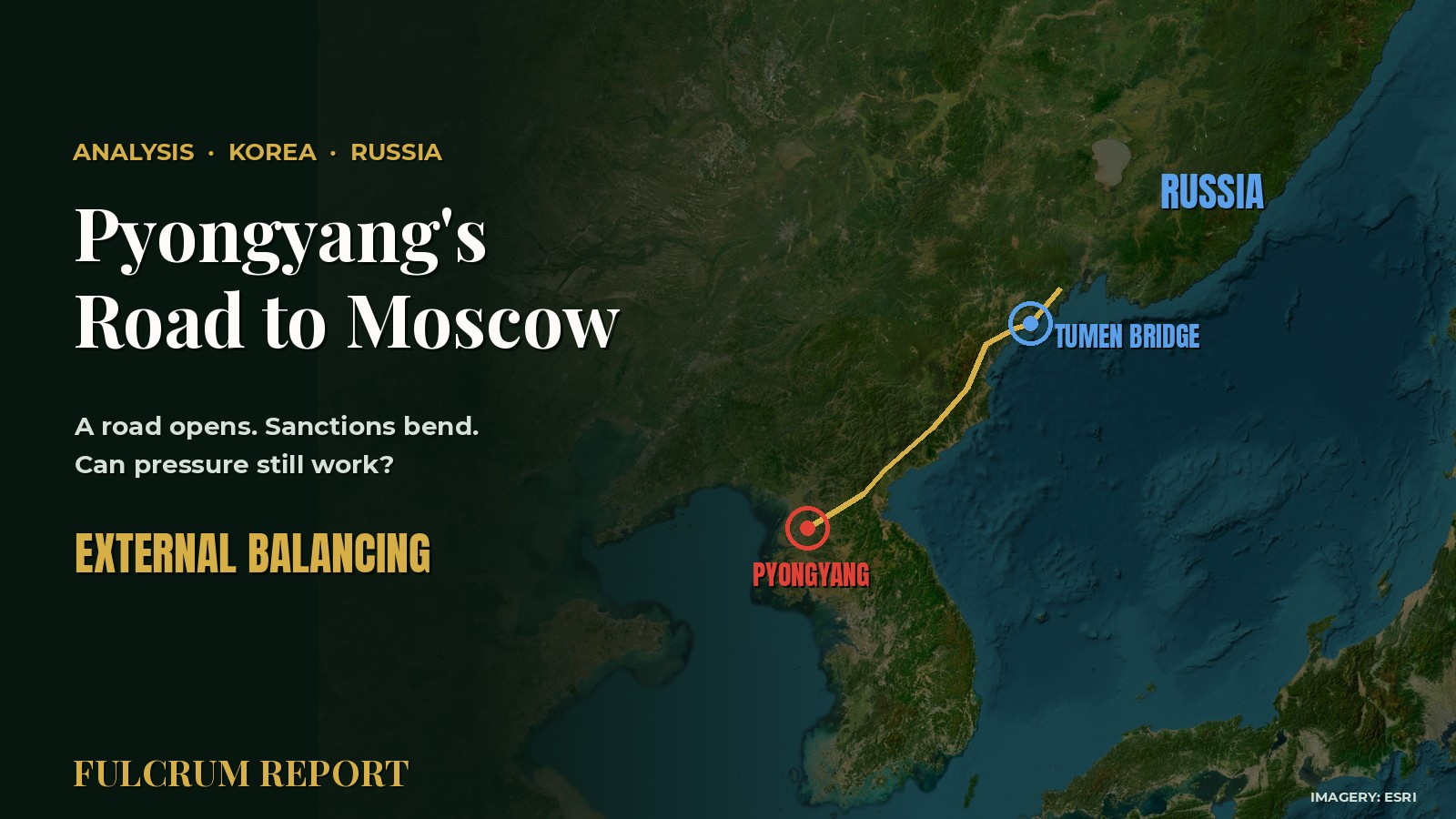
Pyongyang's Road to Moscow: Can Sanctions Still Work?
A second enrichment facility is reportedly going up at Yongbyon, and the Tumen River road bridge to Russia reportedly opened on September 8. When a major power offers a way around sanctions, how much pressure is left? An explainer on external balancing.
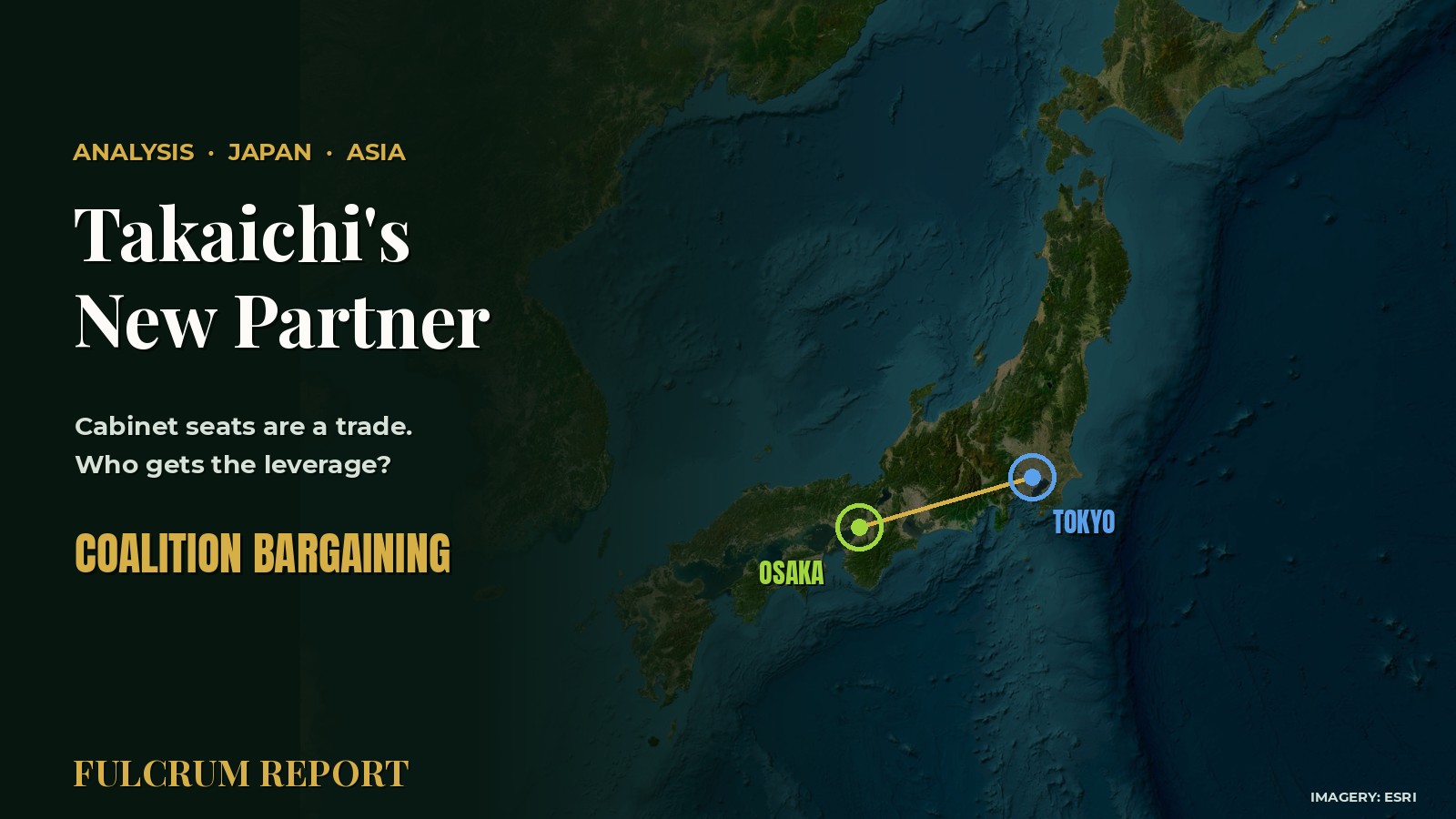
Takaichi's New Partner: Why Cabinet Seats Are a Trade
Sanae Takaichi reportedly reshuffled her cabinet on September 16 and 17, bringing in the Japan Innovation Party (Ishin) for the first time. Her camp holds two-thirds of the lower house but lacks an upper-house majority. A look at coalition bargaining and who gets the leverage.
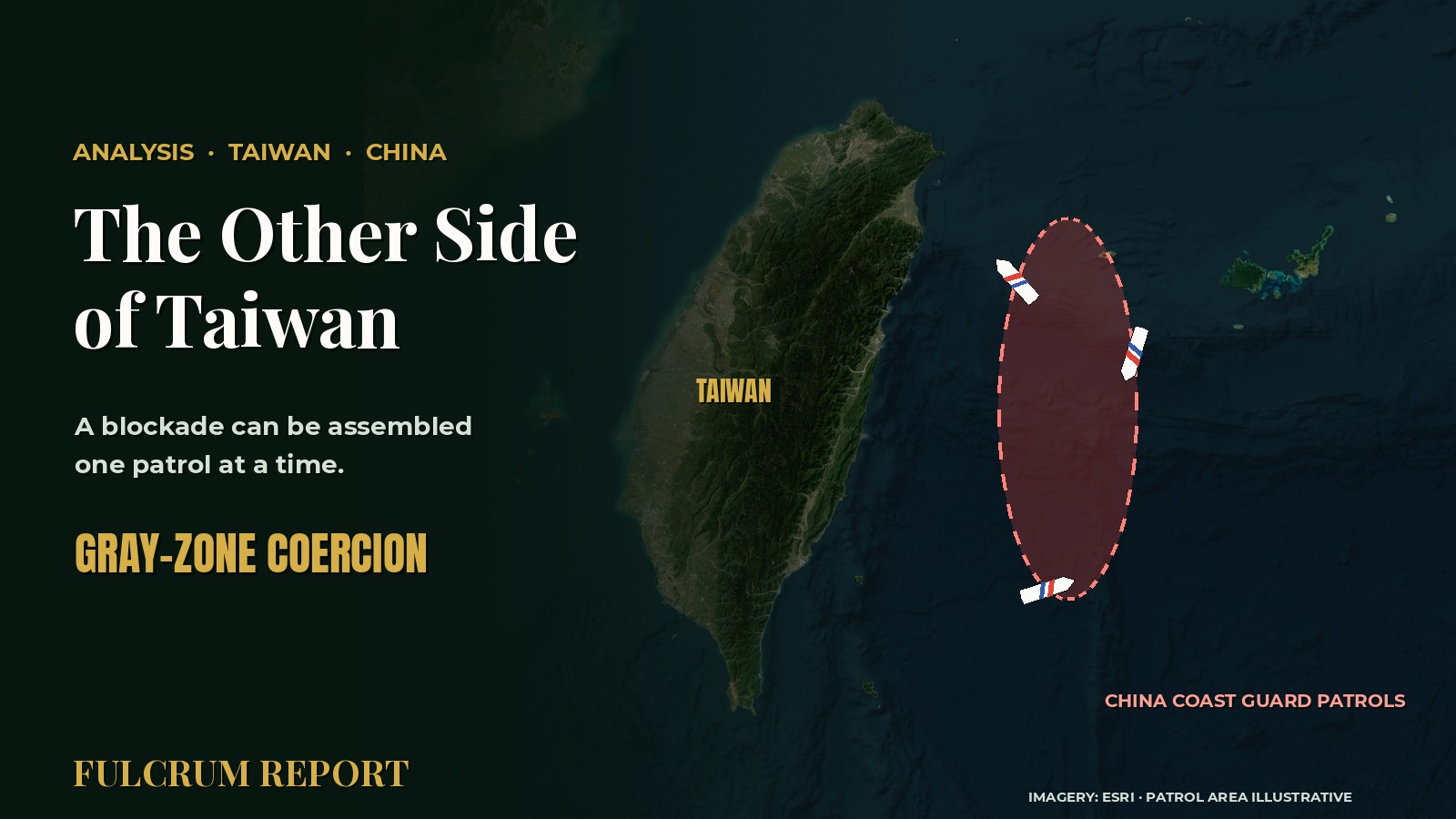
The Other Side of Taiwan: How a Blockade Gets Built Without Being Declared
China's Coast Guard has reportedly set up a regular presence east of Taiwan, framed as law enforcement, while a $14 billion U.S. arms package is pending. A look at gray-zone coercion, salami tactics and escalation control.