Open vs. Closed
Reflection AI and Mistral are releasing AI anyone can download. The AI race used to be America versus China. Now it is also open versus closed.
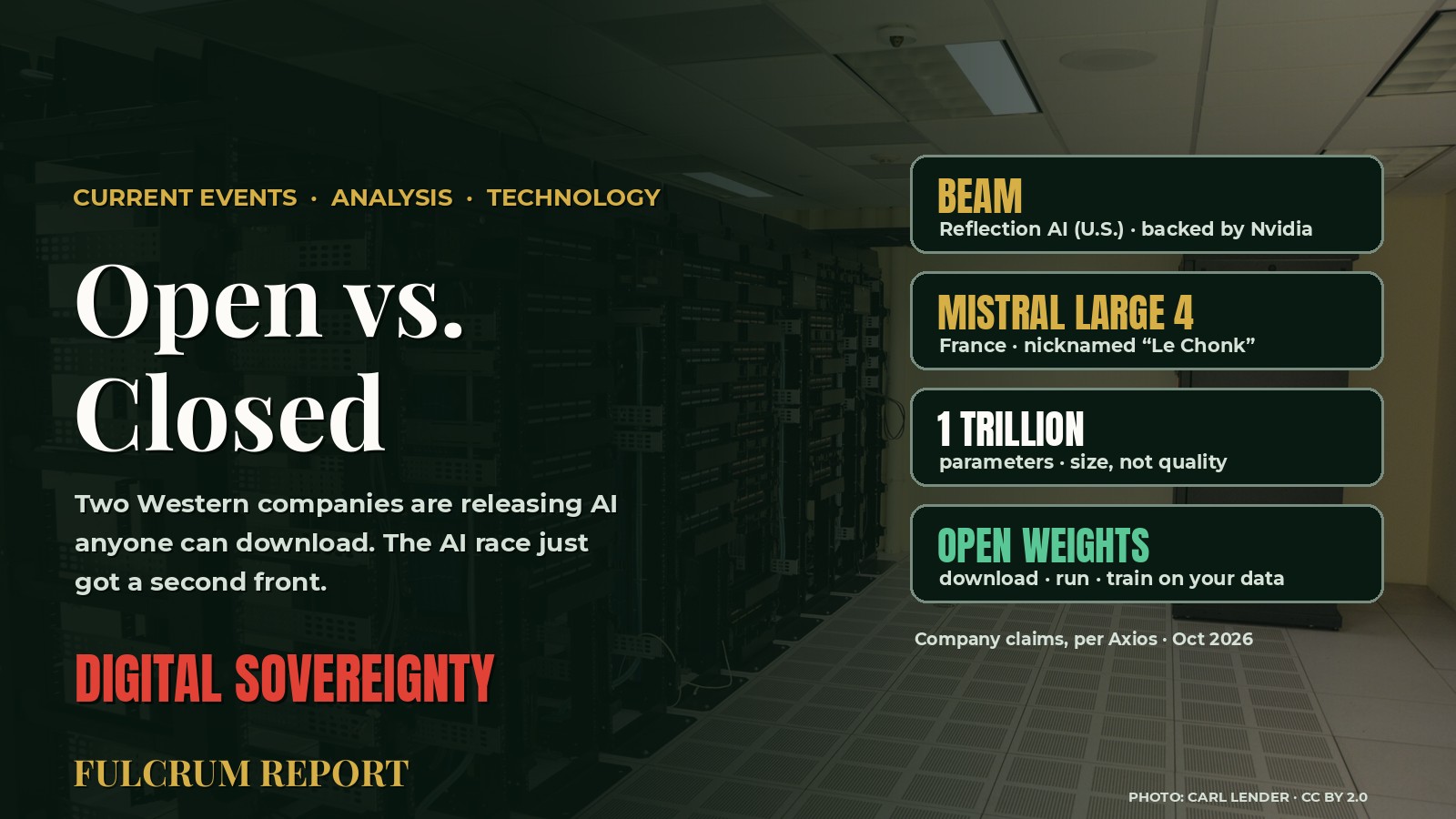
Two Western companies are releasing AI that anyone can download. They say it matches China's best models, and it could take on Silicon Valley's giants. When I first read that, I had two thoughts. The first was that this is a bigger deal than the headline makes it sound. The second, honestly, was "open weight? Is this about boxing?"
It isn't. But stick with me, because the term matters.
What an open-weight model actually is
Every AI model is basically a giant file of numbers, called weights, that encode what it learned during training. With a closed model, like the ones from OpenAI, Anthropic or Google, you never see that file. You type into a box, your request goes to the company's servers, and an answer comes back. You rent the brain.
With an open-weight model, the company hands you the file. You can download it, run it on your own systems, and train it further on your own data. They're also usually cheaper to run, because you aren't paying someone else's markup every time you ask a question. The rough comparison I keep coming back to is renting an apartment versus owning a house. Owning is more work, but nobody can change the locks on you.
This isn't a new idea. China's labs, especially DeepSeek, Alibaba's Qwen and Moonshot's Kimi, have been releasing strong open models for a while. What's new is two Western companies saying they can play that game at the top level.
The two newcomers
The first is Reflection AI, a U.S. company financially backed by Nvidia. It's launching Beam, its first model, built for coding and AI agents (software that carries out tasks on its own instead of just chatting). Full technical details are supposed to come later this month.
The second is France's Mistral, which is debuting Mistral Large 4. Its nickname is "Le Chonk," because it has one trillion parameters. Yes, really. In the industry, a model that size is what we'd technically describe as chonky (industry term). If the name sounds familiar, there's also a round little pig Pokémon called Lechonk, and I refuse to believe that's a coincidence.
Two caveats worth keeping. First, the claims that these models match China's best are the companies' own, and nobody has independently benchmarked them yet. Second, parameters measure size, not quality. A trillion parameters tells you it's big. It doesn't tell you it's good. Le Chonk is also only a developer preview right now, with a wider release planned for Oct. 27 after more testing, according to Axios.
Why governments care: digital sovereignty
Here's where it gets interesting. Political scientists have a name for what's going on: digital sovereignty. The idea is simple. Governments want critical technology they actually control, the same way they want control over their energy supply or their ports.
That has left Western buyers in an awkward spot. Western businesses and governments have mostly avoided China's open models over security concerns. Meanwhile, closed American models are mostly used through the provider's cloud, which means your data and your workflows sit on someone else's servers. That's a simplification, but it's the core problem. If you're a European ministry or a bank, neither option feels great.
A Western open model fills that gap. You get something you can run in-house, under your own rules, without depending on a Chinese lab or a single American provider. That's my reading, not a promise from either company, but it explains why this matters beyond the tech crowd.
It's also new competition for OpenAI, Anthropic and Google, and the timing is notable. OpenAI and Anthropic are both reportedly preparing to go public. No dates have been set, but an IPO story gets harder to tell when someone is giving away a rival product for free.
The catch
I don't want to oversell this, because there's a real downside. If anyone can tweak these models, so can attackers. Closed models come with guardrails the company controls. Once the weights are out in the world, a determined person can try to strip those guardrails out. That's a serious concern, and the people raising it aren't being paranoid.
Mistral sees it the other way. Pierre Stock, Mistral's VP of Science, told Axios that openness helps defenders and lets researchers audit the technology. In other words, more eyes on the code means problems get found faster, the same argument that's long been made for open-source software.
I think both sides have a point, and I don't think this one gets settled by a slogan. Openness spreads capability to defenders and attackers alike. Closedness concentrates control, which is safer in some ways and riskier in others. It's a trade-off, not a clear win.
Where this leaves us
For the last few years, the AI race has been told as America versus China. That story isn't wrong, but it's incomplete now. There's a second front: open versus closed. And unlike the first one, it cuts right through the middle of the West.
So I'll put the question to you, the same one I ask in the reel: open or closed? Would you rather own the model or rent it? Tell me where you land.
If you want more breakdowns like this, follow @fulcrumreport and visit fulcrumreport.com for analysis without agenda.

About the author
Fulcrum Report
Independent Middle East analyst holding a PhD in Political Science. Fulcrum Report offers rigorous, framework-driven coverage of politics and geopolitics across the Levant and the wider region — analysis without agenda.
Related reading
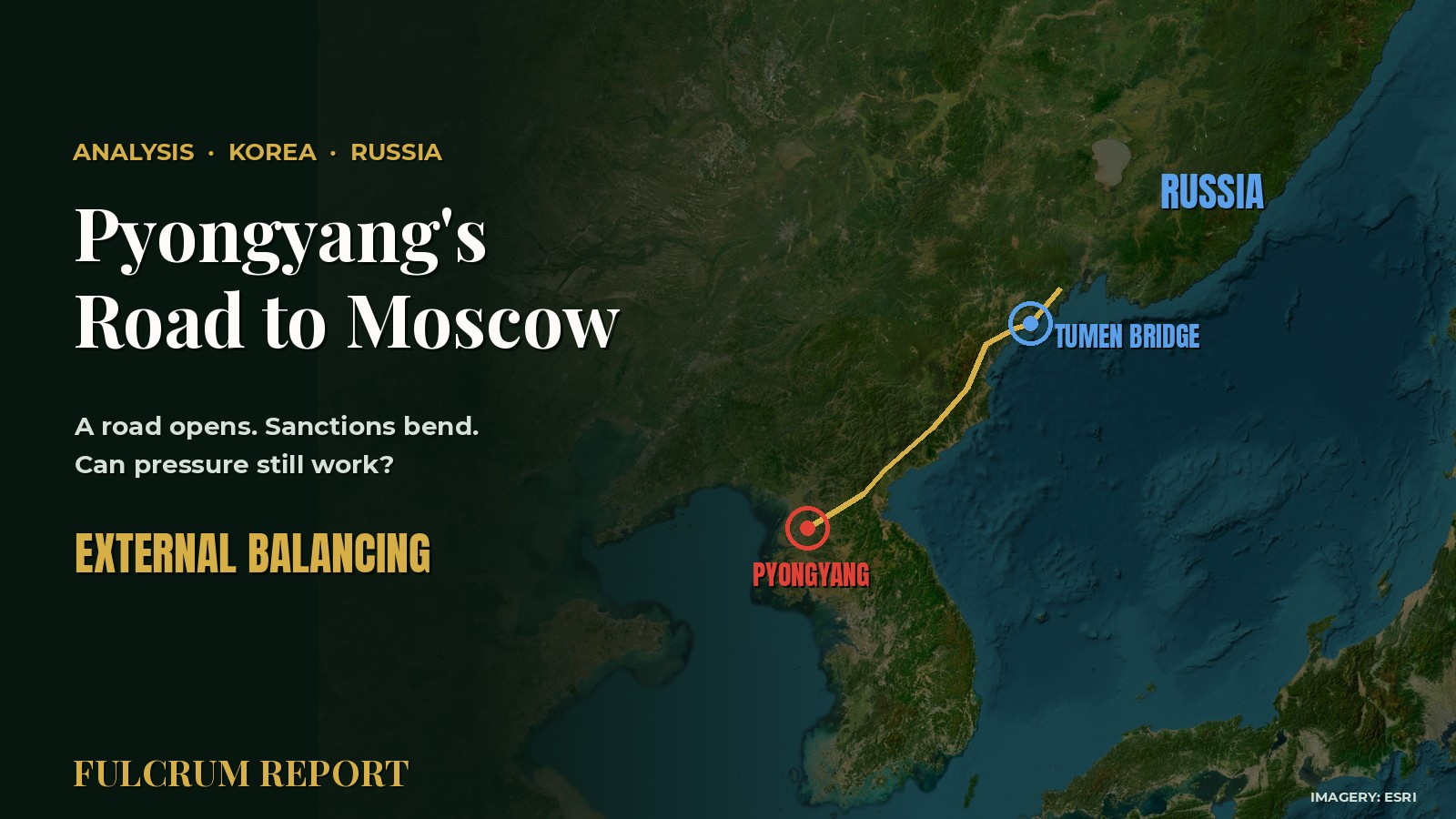
Pyongyang's Road to Moscow: Can Sanctions Still Work?
A second enrichment facility is reportedly going up at Yongbyon, and the Tumen River road bridge to Russia reportedly opened on September 8. When a major power offers a way around sanctions, how much pressure is left? An explainer on external balancing.
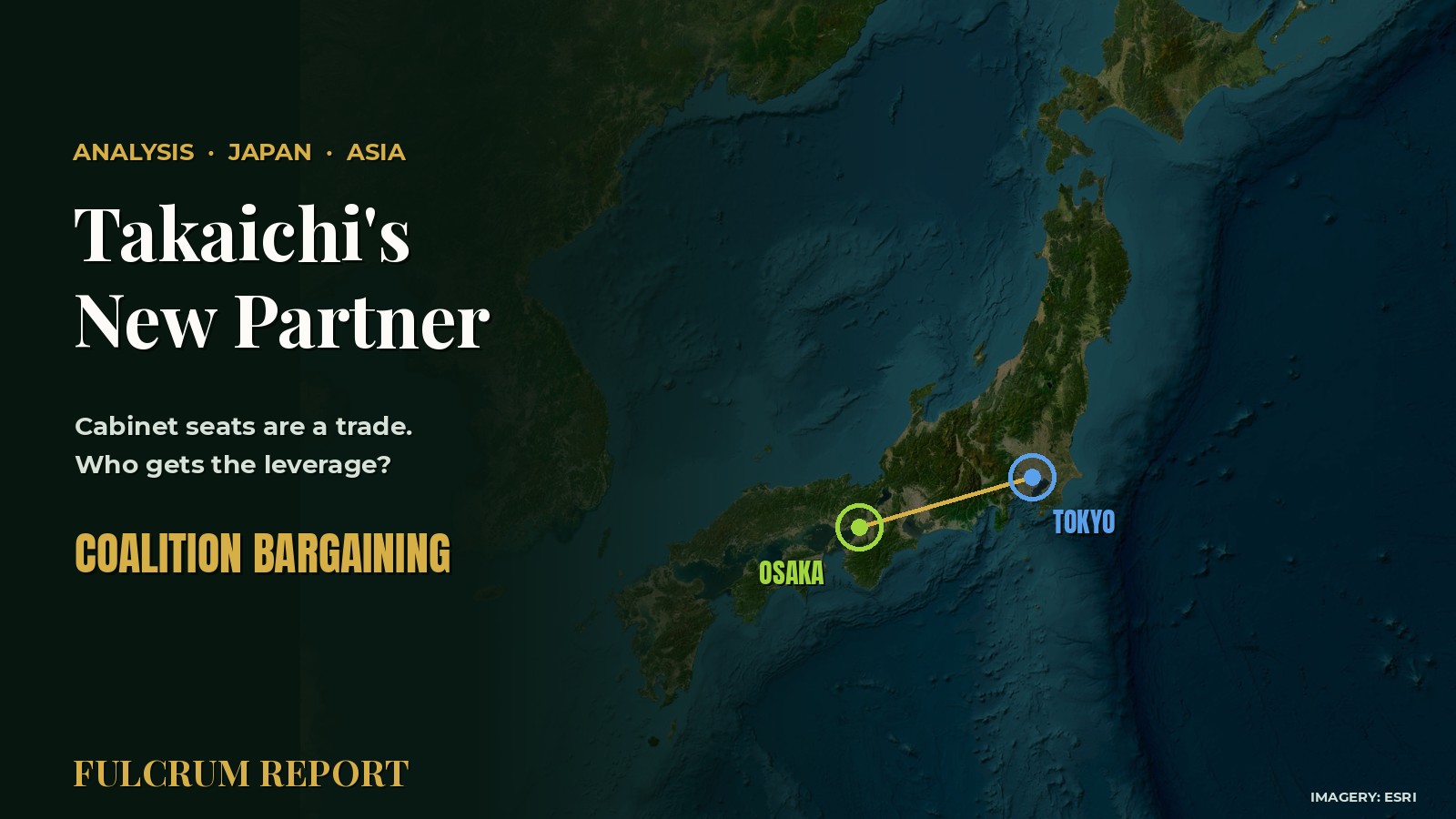
Takaichi's New Partner: Why Cabinet Seats Are a Trade
Sanae Takaichi reportedly reshuffled her cabinet on September 16 and 17, bringing in the Japan Innovation Party (Ishin) for the first time. Her camp holds two-thirds of the lower house but lacks an upper-house majority. A look at coalition bargaining and who gets the leverage.
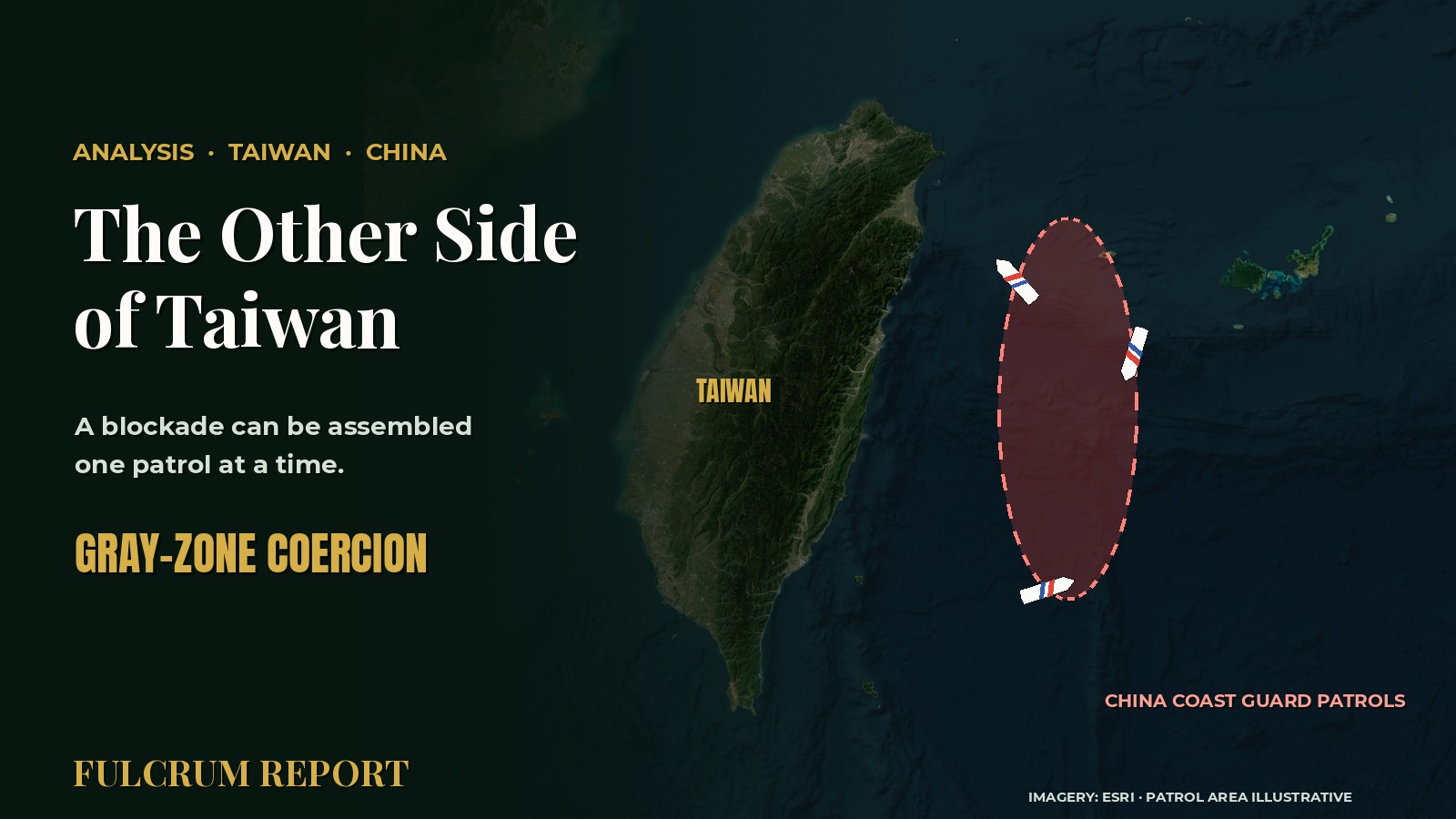
The Other Side of Taiwan: How a Blockade Gets Built Without Being Declared
China's Coast Guard has reportedly set up a regular presence east of Taiwan, framed as law enforcement, while a $14 billion U.S. arms package is pending. A look at gray-zone coercion, salami tactics and escalation control.