The Plague Question
A lab technician in Russia is dead, and Washington wants to know whether it was the plague. The real story is the dual-use dilemma — and how silence turns a very low risk into a high one.
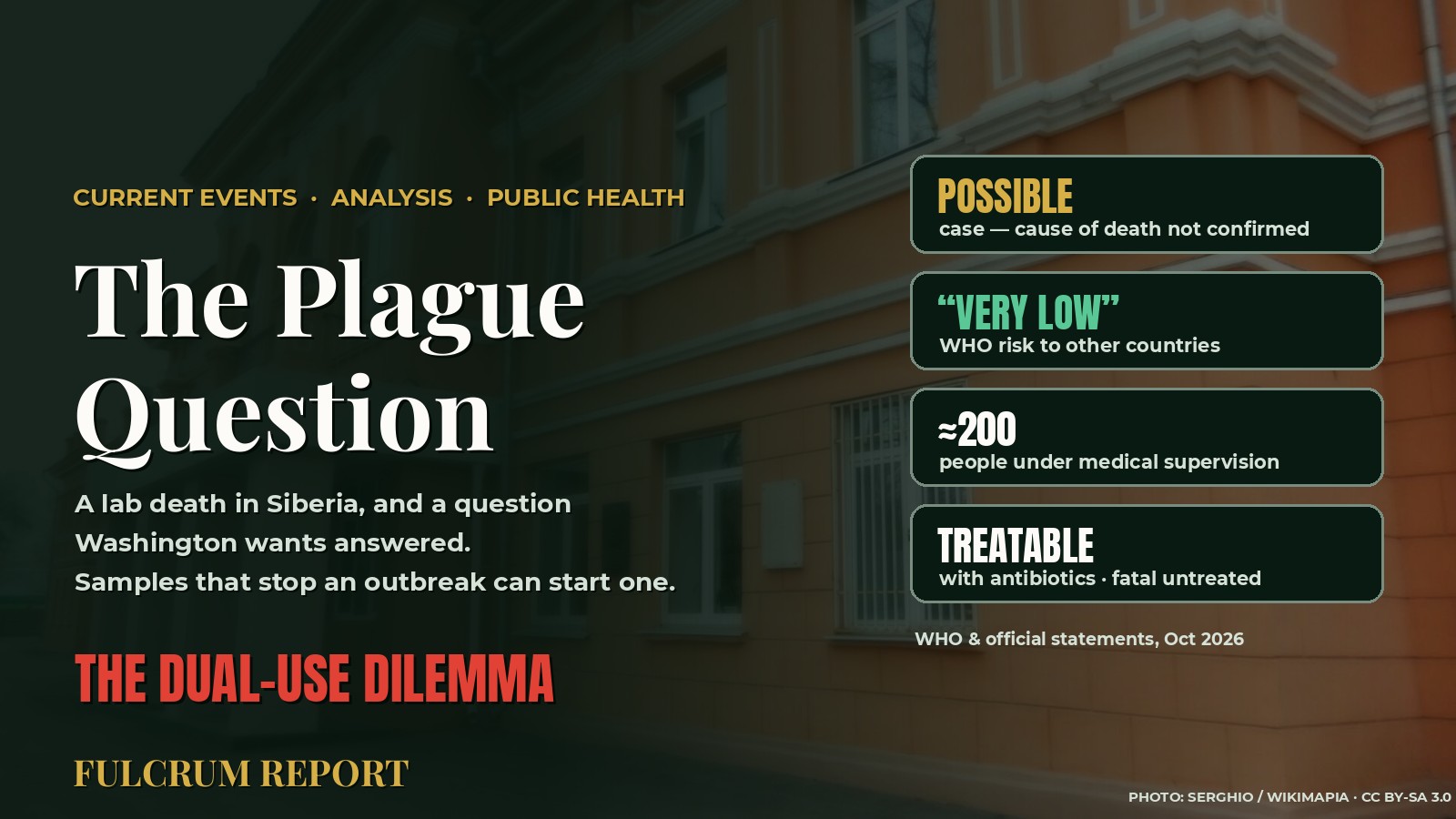
A 28-year-old lab technician in Russia is dead, and the question that followed is bigger than one death. Washington wants to know whether it was the plague. That the United States is asking at all tells you this stopped being a local medical story and became something closer to a trust problem.
Let me walk through what we actually know, because the gap between what's confirmed and what's being assumed is the whole story here.
What happened
The technician worked at an anti-plague research institute in the Irkutsk region of Siberia. After the death, nearly 200 people were placed under medical supervision and a local hospital was put under quarantine. Those are precautions, not proof of an outbreak, and it's worth keeping that distinction in mind.
Secretary of State Marco Rubio said it is “incumbent upon Russia” to share more information. The World Health Organization called it a possible case of pneumonic plague and rated the risk to other countries “very low.” Russian officials, for their part, say there is no evidence the technician died of plague, and have described a pneumonia of unknown cause. The cause of death has not been confirmed.
So hold two things at once: a possible case, and an official denial. Both can be reported honestly, and neither settles the matter.
What pneumonic plague actually is
Plague still carries the weight of the Middle Ages, so it helps to be precise. It's caused by a bacterium, Yersinia pestis — not a virus. Pneumonic plague is the form that settles in the lungs and spreads through airborne droplets, which usually means close contact with someone already sick. It is the deadliest form of the disease, the same family that drove the Black Death, which killed roughly a third of Europe's population between 1346 and 1353.
Here's the part that changes the fear level: antibiotics can treat it. The line you'll see — nearly always fatal — is true only without treatment. Caught early and treated, it's a very different illness than it was 700 years ago.
The dual-use dilemma
This is where I want to slow down, because it's the real reason the story matters.
The institute reportedly keeps plague samples to study how to prevent outbreaks. That's a normal, defensible reason to hold dangerous pathogens. But the same samples that help you stop an outbreak could, through an accident, a leak, or misuse, help start one. Scientists call this the dual-use dilemma: the knowledge and materials that protect us are the same ones that could hurt us. There's no version of the research that only has the good half.
I want to be careful here. The plague samples are reported, and there is no claim that this particular lab was doing anything exotic with them. The dilemma is general. It applies to any facility that holds dangerous biological material for good reasons.
Gain-of-function, and why people argue about it
A death like this tends to reopen an older fight over gain-of-function research — work that deliberately gives pathogens new abilities, like spreading more easily, so scientists can study what a more dangerous version might do. Most of that debate is about viruses, not bacteria, and again, nobody is alleging this lab did gain-of-function work. But the death pulls the whole argument back into the open.
The two sides deserve equal weight. Supporters say it helps us prepare for the next pandemic — you can't defend against a threat you refuse to understand. Critics say one accident could cause the very thing it's meant to prevent. Both arguments are serious, and both are widely held by people who know the field. I don't think the honest position is to pick a winner; it's to admit the trade-off is real.
Why silence makes it worse
Here's the pattern I keep coming back to. When a government shares little, people fill the gap — and they rarely fill it with the calmest explanation. An information vacuum tends to get filled with the worst-case version. That's not unique to Russia; it's how suspicion works everywhere. But it does mean that a lack of transparency can turn a very low medical risk into a very high political one.
That's the whole reason a possible plague case 4,000 miles from Washington became a State Department talking point. The virus of distrust spreads faster than any bacterium.
What I think it adds up to
The risk, by the WHO's own assessment, may genuinely be very low. I'd take that seriously rather than reach for the Black Death. But after a death at a lab that handles the exact pathogen in question, the hardest thing to contain isn't the disease. It's the suspicion. And suspicion is contained the same way outbreaks are: with information, shared early, by the people who have it.
So here's the question I'd put to you, the same one the story keeps circling back to: should labs do this kind of research at all? Tell me where you land.

About the author
Fulcrum Report
Independent Middle East analyst holding a PhD in Political Science. Fulcrum Report offers rigorous, framework-driven coverage of politics and geopolitics across the Levant and the wider region — analysis without agenda.
Related reading
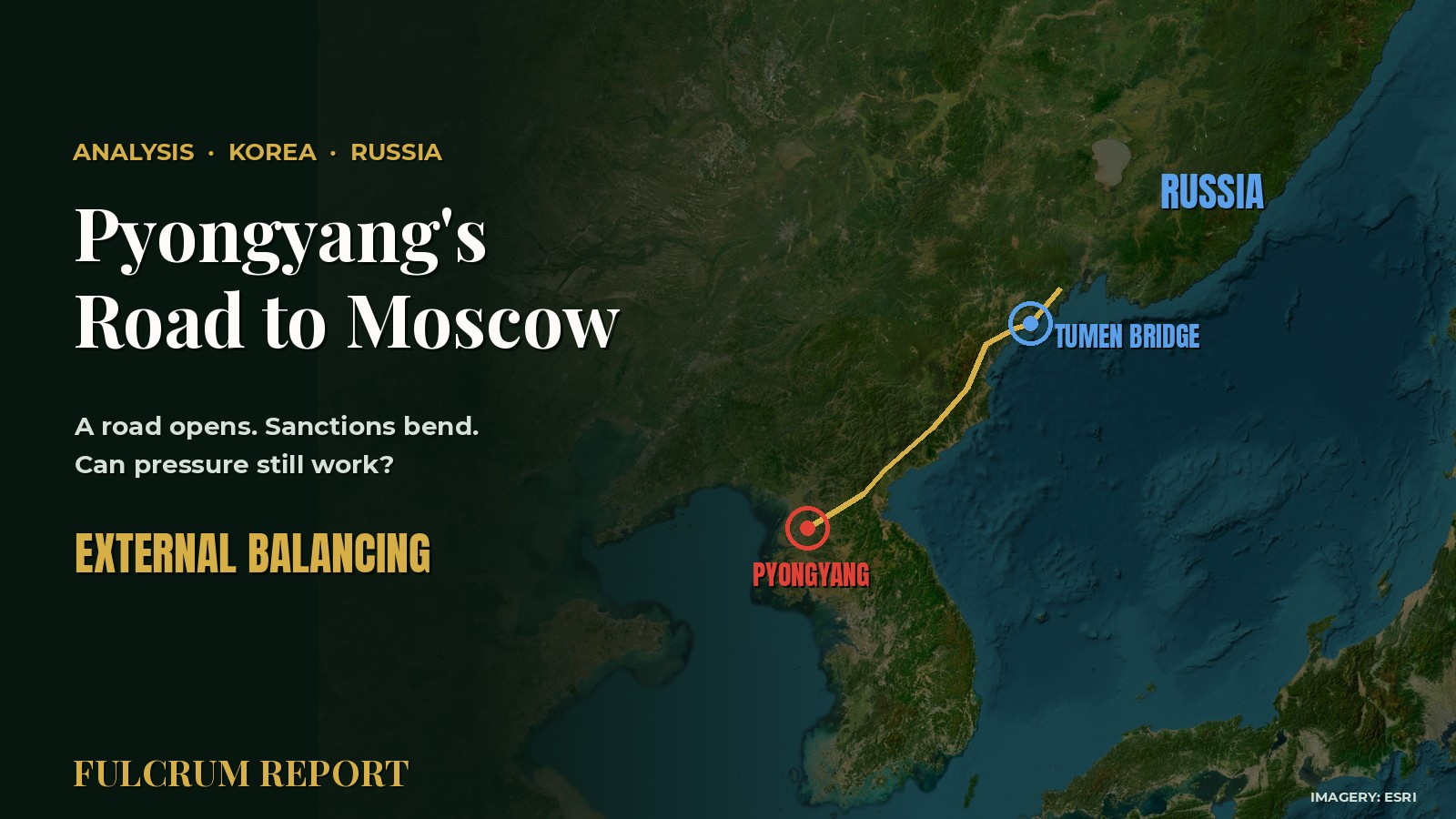
Pyongyang's Road to Moscow: Can Sanctions Still Work?
A second enrichment facility is reportedly going up at Yongbyon, and the Tumen River road bridge to Russia reportedly opened on September 8. When a major power offers a way around sanctions, how much pressure is left? An explainer on external balancing.
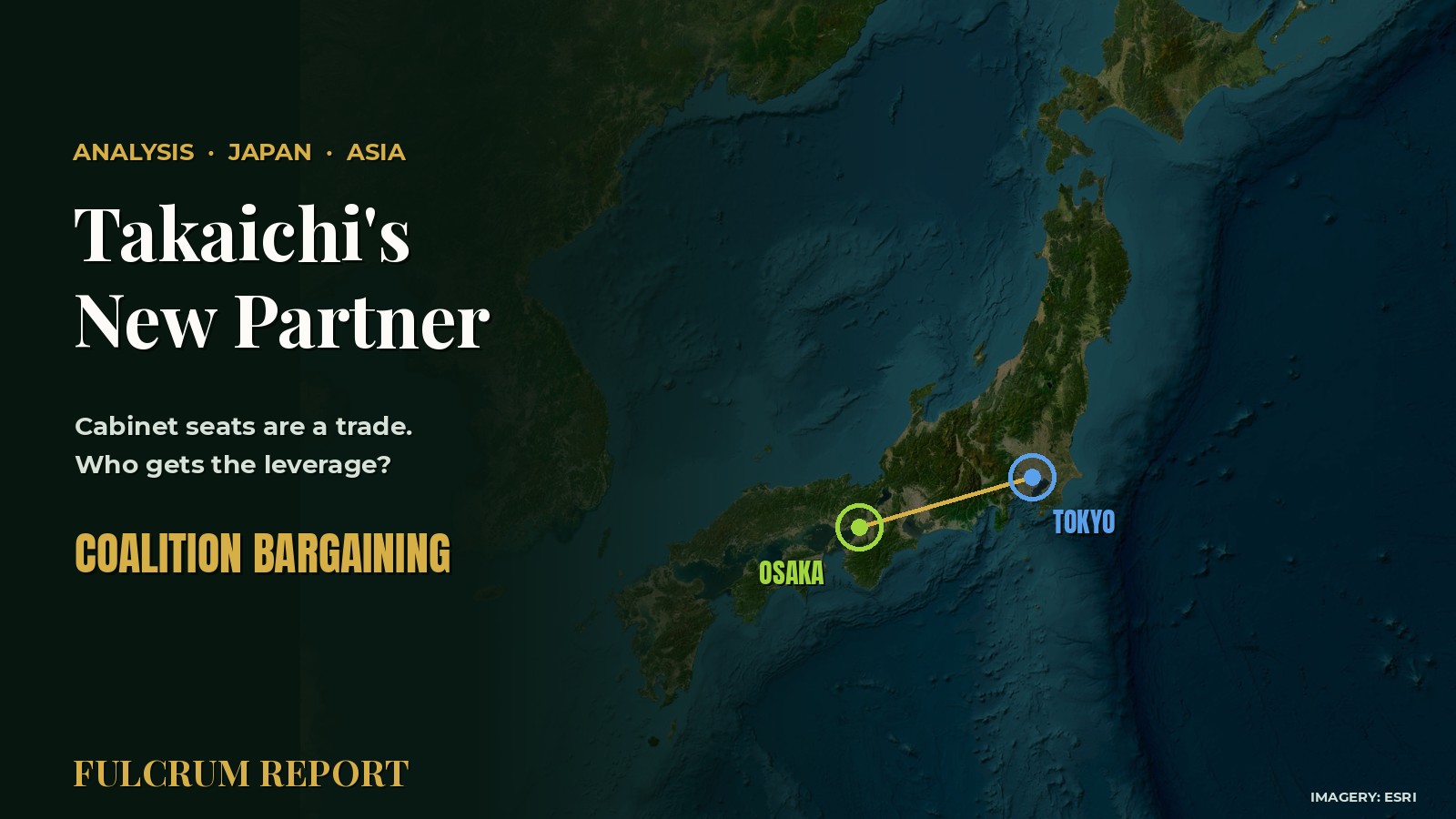
Takaichi's New Partner: Why Cabinet Seats Are a Trade
Sanae Takaichi reportedly reshuffled her cabinet on September 16 and 17, bringing in the Japan Innovation Party (Ishin) for the first time. Her camp holds two-thirds of the lower house but lacks an upper-house majority. A look at coalition bargaining and who gets the leverage.
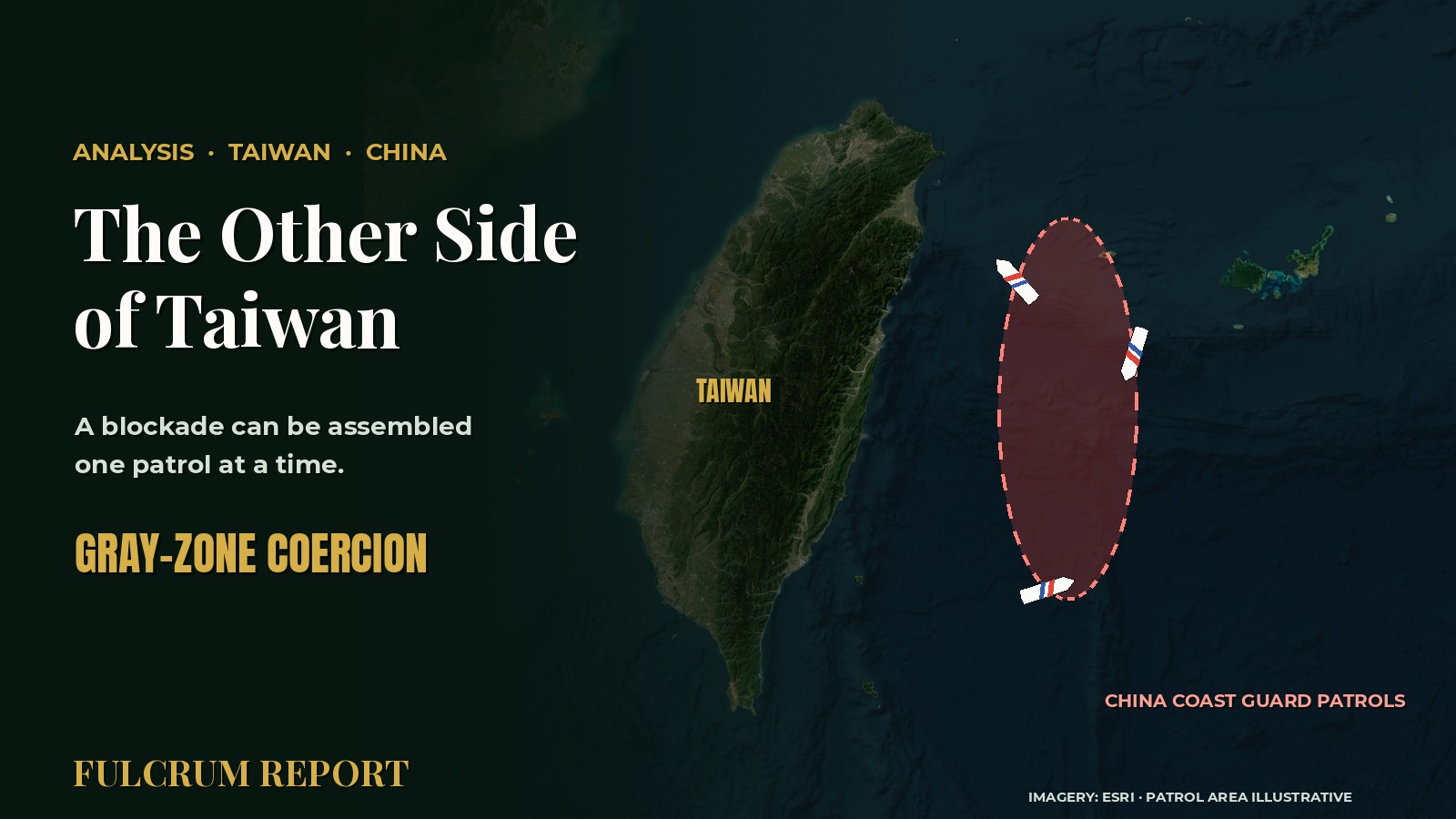
The Other Side of Taiwan: How a Blockade Gets Built Without Being Declared
China's Coast Guard has reportedly set up a regular presence east of Taiwan, framed as law enforcement, while a $14 billion U.S. arms package is pending. A look at gray-zone coercion, salami tactics and escalation control.