Qatar’s Peace-Through-Trade Gamble
Doha wants to make the next war too expensive for Tehran. Trade can make peace profitable. It can’t make it inevitable.
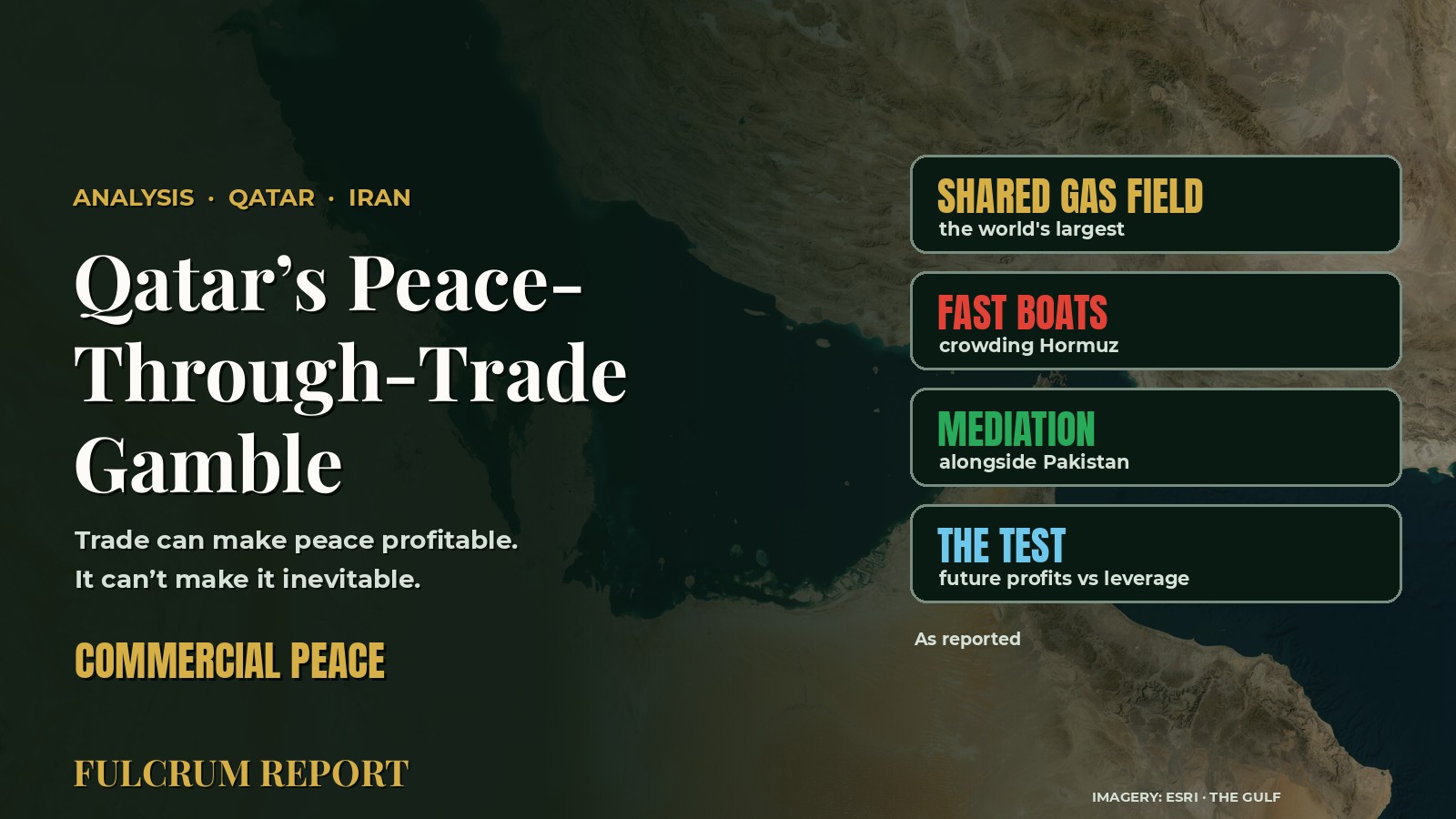
Most of the talk about restraining Iran is about weapons. Missile defense, carrier groups, deterrence by threat. Qatar is trying something different, and I think it deserves a closer look than it usually gets.
Qatar’s plan to restrain Iran isn’t more firepower. It’s making the next war too expensive for Tehran.
What Doha is proposing
The idea coming out of Doha is simple, as reported. Bind Iran’s economy so tightly to the Gulf that it has more to lose by disrupting it than by leaving it alone.
That’s not a new thought in Gulf diplomacy, but Qatar is better placed than most to push it. It has kept channels to Tehran open for years, even when its neighbors cut theirs. It talks to Washington and to Iran. And it has something with Iran that no other Gulf state has in quite the same way.
The gas field under the water
Qatar and Iran share the largest natural gas field in the world. On the Qatari side it’s called North Dome. On the Iranian side it’s South Pars. It’s one reservoir under the Gulf, split by a line on a map.
That field is the foundation of Qatar’s wealth, and it’s a huge part of Iran’s energy future too. Both countries have a direct stake in production staying calm and shipping staying open. If the Gulf turns into a war zone, both of them lose money from the same rock.
That’s the part of Doha’s argument I find most convincing. It isn’t abstract interdependence. It’s a specific, physical asset that both sides need.
Why now
The pressure around that asset is real. Iranian fast boats have been crowding the Strait of Hormuz, as reported, and aviation warnings have spread across the Gulf. Almost all of Qatar’s gas has to pass through Hormuz to reach its buyers. A crowded strait is a direct threat to Qatar’s business model.
So Qatar is doing two things at once. It’s pointing at the shared interest in the gas field, and it’s working as a mediator, alongside Pakistan, as reported. The aim is to turn economic dependence into a brake on escalation. Not a wall, a brake. Something that slows things down before they get out of hand.
The idea behind it
The academic name for this is commercial liberal peace. The basic claim is old. In the 1700s Montesquieu wrote that the natural effect of commerce is to lead to peace, because two nations that trade with each other become dependent on each other. People sometimes call this doux commerce, gentle commerce.
The most famous modern version came in 1910, when Norman Angell published The Great Illusion. Angell argued that the economies of Europe were so tangled together that war between the great powers would be ruinous for winners and losers alike. It wouldn’t pay.
Four years later Europe went to war anyway. Germany and Britain were each other’s major trading partners in 1914, and it didn’t stop them. That’s the standard critique, and it’s a fair one. Angell was right that the war would be ruinous. He was wrong if he thought that would be enough to prevent it.
So I wouldn’t frame Doha’s plan as idealism. It’s commercial leverage. The more Iran earns from gas, from shipping and from Gulf trade, the more any escalation threatens revenue Tehran needs. That’s a cold calculation, not a hopeful one.
Where it can break
Here’s the catch. Interdependence cuts both ways.
Robert Keohane and Joseph Nye made this point in the 1970s. Being tied together doesn’t mean being equally tied. Whoever depends less can use the other side’s dependence as a weapon. Iran knows Qatar needs Hormuz open. That gives Tehran leverage over Doha, not just the other way around.
The political scientist Dale Copeland added another piece in 1996. He argued that trade only keeps the peace when leaders expect the trade to keep flowing. If they think the future benefits are going to dry up anyway, through sanctions or a collapse in relations, the restraining effect disappears. Sometimes it even reverses.
Put simply, interdependence only restrains when losing future profits costs more than gaining immediate strategic leverage. If Tehran ever decides that a short, sharp crisis in Hormuz buys it more than the gas revenue it would lose, the economic ties won’t hold it back.
What I’d watch
Whether any concrete joint projects come out of the Doha proposal, or whether it stays at the level of ideas. How the fast-boat activity in Hormuz develops over the next few weeks. Whether the mediation with Pakistan produces anything Tehran publicly signs up to. And whether sanctions leave Iran enough of a future in Gulf trade to make the bet worth protecting, because Copeland’s point suggests that matters as much as anything Qatar does.
This is analysis, not a prediction. Qatar’s gamble is to move Iran across a threshold, the point where peace becomes more profitable than pressure. I think it’s a smart bet with a real basis. But the history lesson is clear enough. Trade can make peace profitable. It can’t make it inevitable.
So I’ll ask you what I asked on the reel. Would it work? Yes or no? Tell me in the comments, and follow @fulcrumreport for analysis without agenda.

About the author
Fulcrum Report
Independent Middle East analyst holding a PhD in Political Science. Fulcrum Report offers rigorous, framework-driven coverage of politics and geopolitics across the Levant and the wider region — analysis without agenda.
Related reading
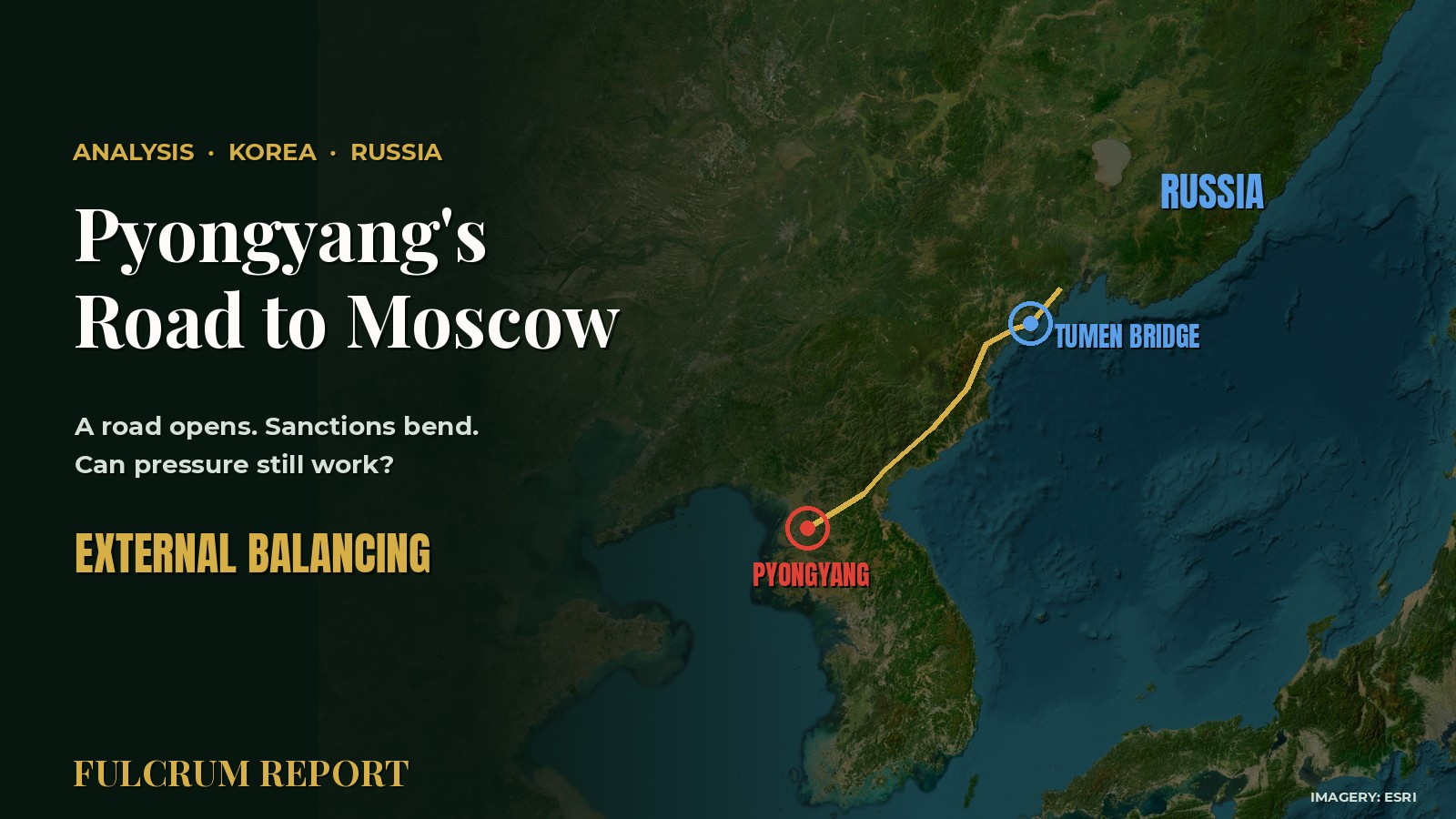
Pyongyang's Road to Moscow: Can Sanctions Still Work?
A second enrichment facility is reportedly going up at Yongbyon, and the Tumen River road bridge to Russia reportedly opened on September 8. When a major power offers a way around sanctions, how much pressure is left? An explainer on external balancing.
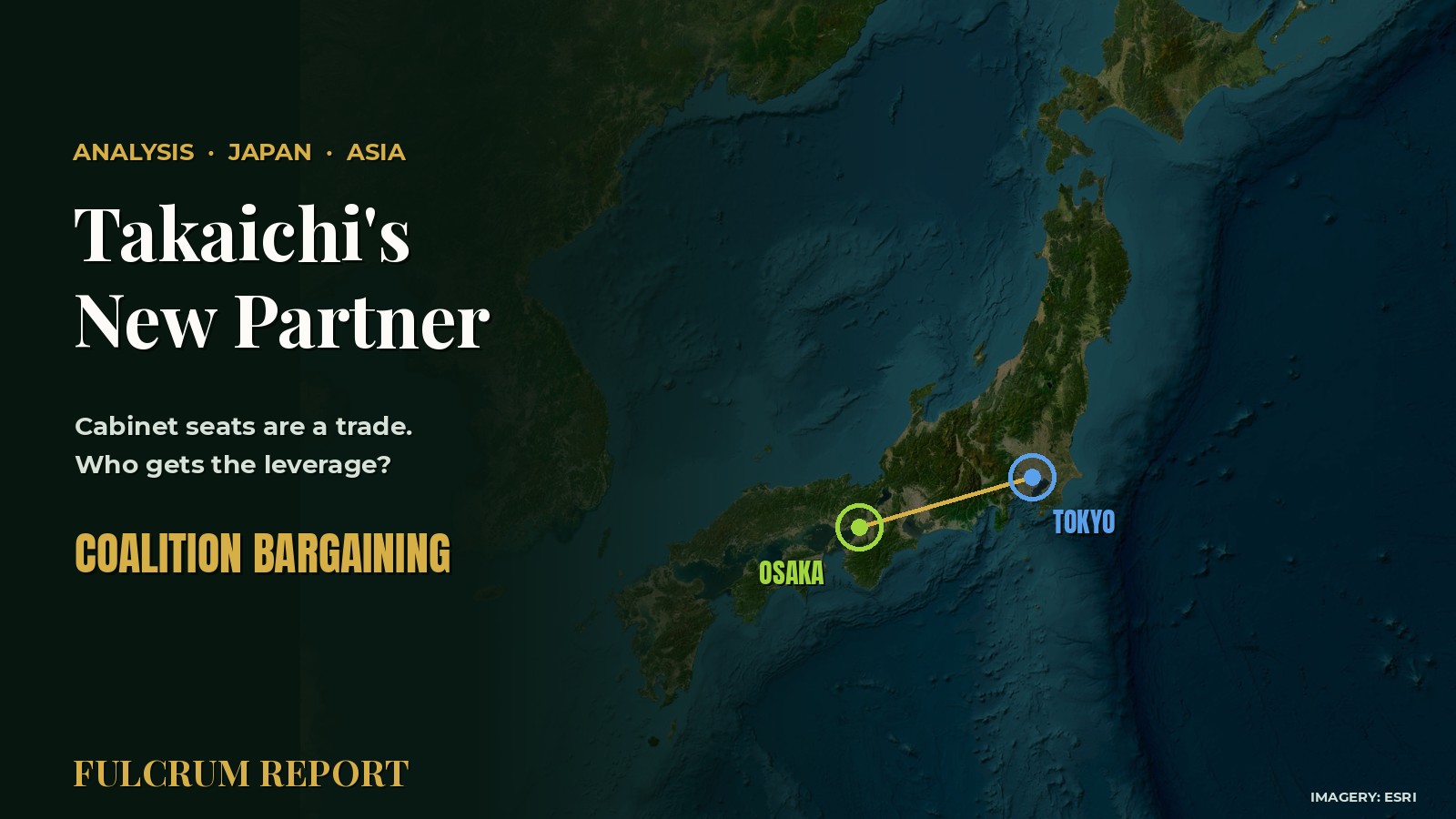
Takaichi's New Partner: Why Cabinet Seats Are a Trade
Sanae Takaichi reportedly reshuffled her cabinet on September 16 and 17, bringing in the Japan Innovation Party (Ishin) for the first time. Her camp holds two-thirds of the lower house but lacks an upper-house majority. A look at coalition bargaining and who gets the leverage.
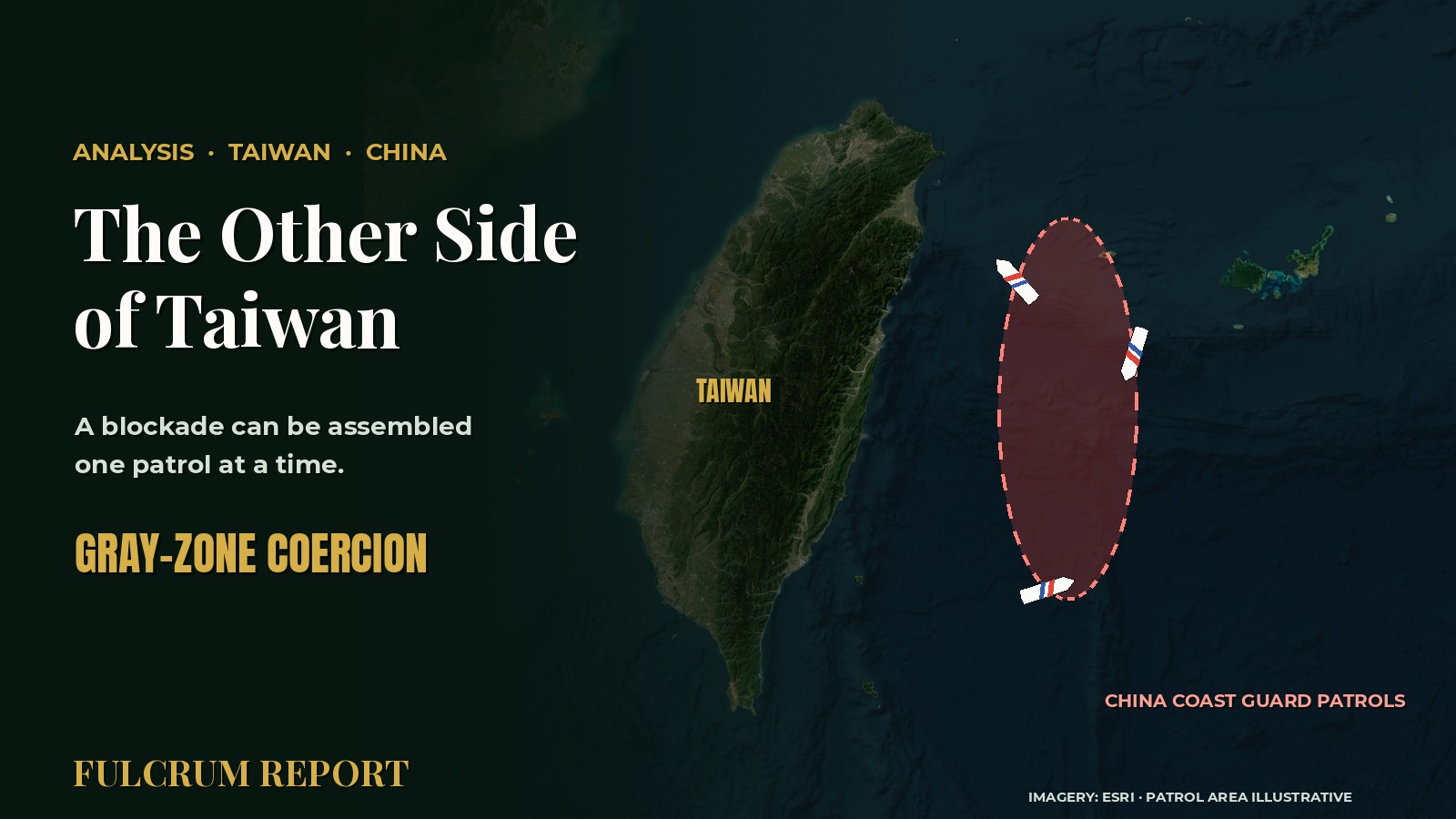
The Other Side of Taiwan: How a Blockade Gets Built Without Being Declared
China's Coast Guard has reportedly set up a regular presence east of Taiwan, framed as law enforcement, while a $14 billion U.S. arms package is pending. A look at gray-zone coercion, salami tactics and escalation control.