2.2 Million Rials: Sanctions Can Break an Economy Without Breaking a Regime
Iran’s currency lost more than half its value in a year. Economic D-Day and the blockade are real pressure. Whether they change anything in Tehran is a different question.
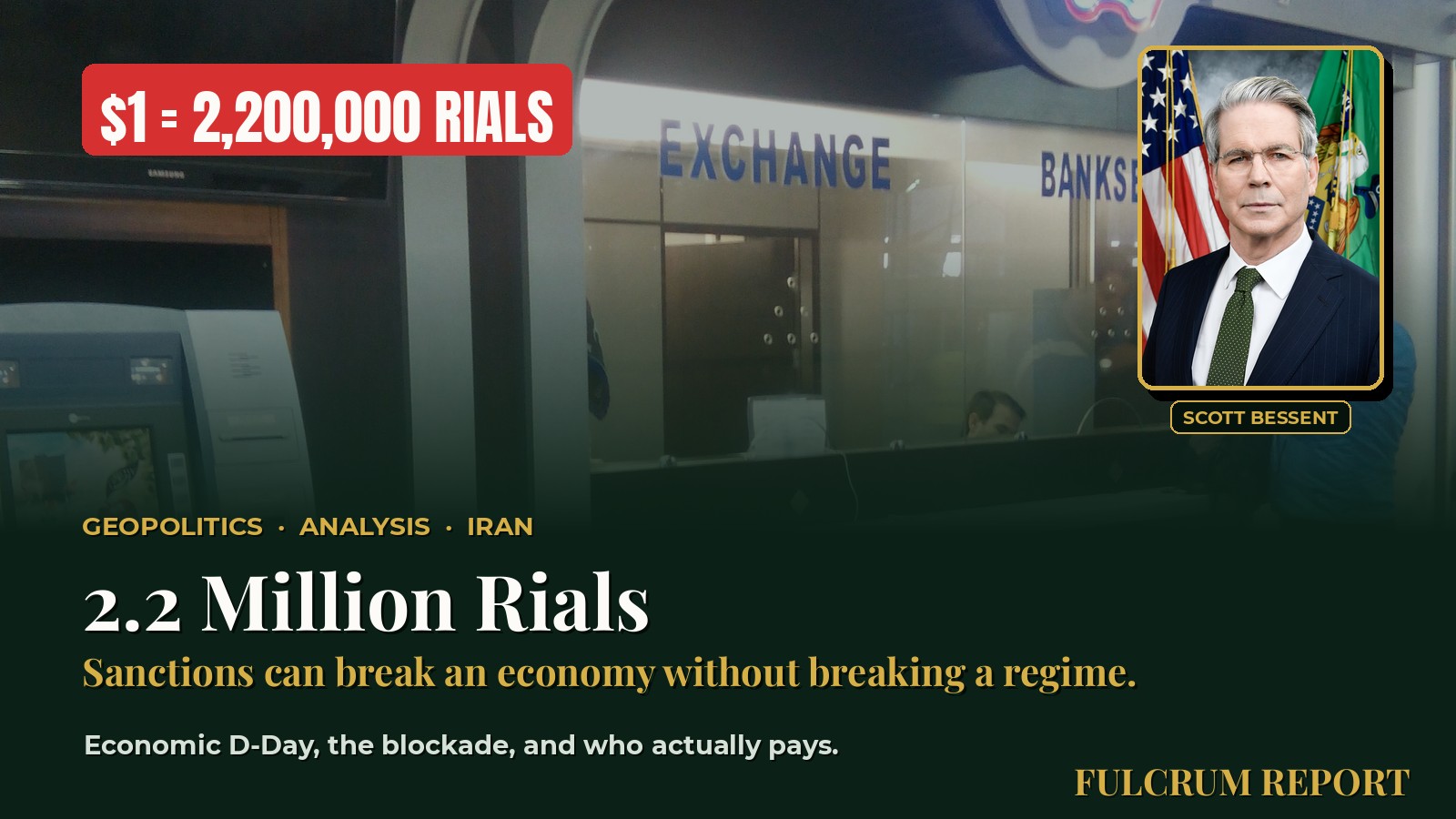
A year ago, one U.S. dollar bought about a million Iranian rials. In early September it crossed 2.2 million. That’s a currency that lost more than half its value in twelve months, and most of that damage came in the last six.
I keep seeing that number used as proof that the pressure campaign is working. I understand why. It’s a dramatic figure, and it reflects real hardship. But I think it answers a narrower question than people assume. It tells us the economy is breaking. It doesn’t tell us the regime is.
How we got to 2.2 million
The slide didn’t happen all at once. Last September the rial was trading at roughly 958,000 to the dollar on the open market. By March, a month into the war, it was around 1.35 million. By late August it was near two million, and on September 2 it went past 2.2 million.
Two things pushed it over the edge this summer. The first was the U.S. naval blockade of Iranian ports, which began in July and has been choking what’s left of Iran’s export trade. Oil is the obvious target, but it isn’t the only one. When goods can’t leave, dollars can’t come in, and a country that can’t earn hard currency watches its own money lose value.
The second was Scott Bessent. On August 24 the Treasury Secretary announced what he called an “Economic D-Day”, officially Operation Economic Outcast, and described it as the single greatest financial offensive ever marshalled against an adversary. It goes after the networks Iran uses to get around sanctions: shipping, oil, gold, digital assets, technology and aviation, with more than sixty entities named at the start. It also puts Iran’s trading partners on notice, which is where it could really bite, because China, India, Turkey, Iraq and the UAE are the channels that keep money moving.
Tehran’s response was telling. The finance minister, Ali Madanizadeh, dismissed the whole thing as a “diversion”. The central bank governor, Abdolnaser Hemmati, blamed the currency’s fall on “psychological factors”. Neither explanation will mean much to someone whose savings just halved.
Why a broken economy isn’t a broken regime
Here’s the part I think gets lost. Sanctions can break an economy without breaking a regime. The history of long sanctions campaigns, from Iraq in the 1990s to Cuba and North Korea, is full of economies that collapsed while the governments running them stayed put.
There are three reasons that happens, and all three are visible in Iran right now.
The pain lands on the wrong people first
When a currency halves, the people who feel it first are the ones with no way to protect themselves. Imported goods double in price. Rial savings evaporate. Wages paid in rials buy less every month. A shopkeeper in Tabriz or a teacher in Mashhad takes the hit long before anyone in the leadership notices a change in their own life.
Scarcity creates winners
Sanctions make legal trade harder, which makes illegal trade more valuable. Somebody still brings in the fuel, the electronics and the medicine. In Iran, much of that smuggling economy runs through networks tied to the state and the security services. The tighter the squeeze, the bigger the markup, and the more money flows to exactly the insiders the policy is meant to weaken. Iran’s dual exchange rate adds another layer, since whoever gets access to the cheaper official rate can make a fortune on the gap.
Hardship can pull people toward the state
This is the most counterintuitive piece. When ordinary life becomes precarious, people often become more dependent on the state, not less. Subsidies, rations, public-sector jobs and state-linked employers matter more when private savings are gone. Add an external enemy that can be blamed for all of it, and you get the rally-around-the-flag effect. A government that should be losing legitimacy gets a story to tell: we are under siege, and the siege is the reason you are suffering.
The uncomfortable conclusion
Put those together and you get an outcome that should make anyone who supports this policy pause. A collapsing currency may genuinely weaken Iran’s capacity, meaning less money for missiles, proxies and reconstruction. That matters. But the same process can leave the country’s leaders richer, more entrenched and no more willing to give in.
If the goal is to degrade what Iran can do, the rial’s fall is evidence of progress. If the goal is to change what Iran’s leaders decide, the evidence is much thinner.
What I’d watch
First, where the pain stops. If ordinary Iranians are absorbing the losses while the security services and their business networks are insulated, the regime’s core bargain is intact.
Second, the partners. The real test of Economic D-Day isn’t the list of sanctioned entities. It’s whether banks and traders in China, India, Turkey, Iraq and the UAE actually stop doing business, or just find new workarounds.
Third, behavior, not prices. A weaker rial is an input. The output that matters is whether Tehran changes course on anything, whether that’s negotiations, Hormuz or its regional partners.
The bottom line
The currency is collapsing. That part isn’t in doubt. Whether the policy follows is a completely different question, and I don’t think anyone should treat the first as an answer to the second.
So I’ll put it to you. Do sanctions work, and if so, what exactly are they working toward?

About the author
Fulcrum Report
Independent Middle East analyst holding a PhD in Political Science. Fulcrum Report offers rigorous, framework-driven coverage of politics and geopolitics across the Levant and the wider region — analysis without agenda.
Related reading
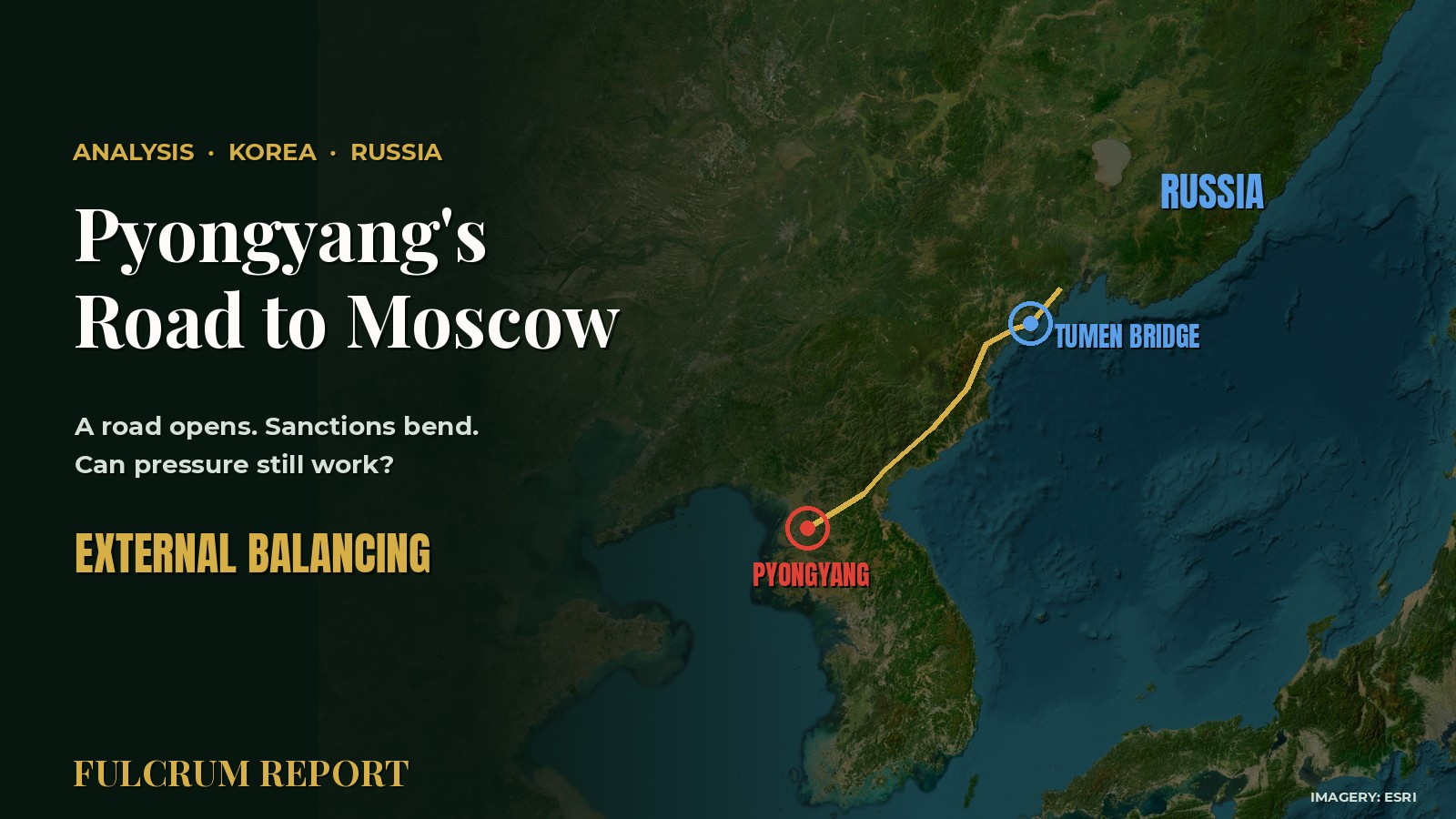
Pyongyang's Road to Moscow: Can Sanctions Still Work?
A second enrichment facility is reportedly going up at Yongbyon, and the Tumen River road bridge to Russia reportedly opened on September 8. When a major power offers a way around sanctions, how much pressure is left? An explainer on external balancing.
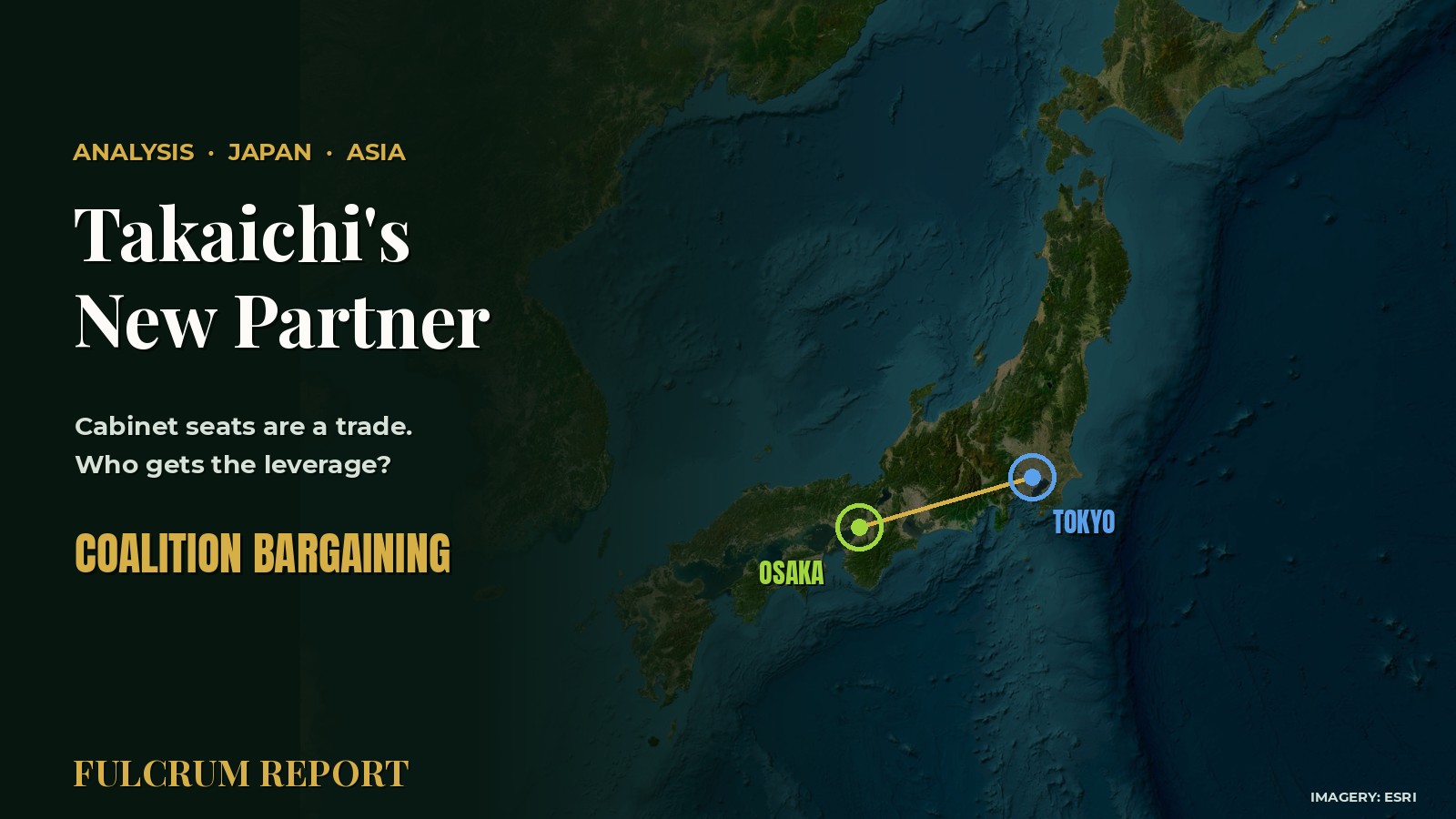
Takaichi's New Partner: Why Cabinet Seats Are a Trade
Sanae Takaichi reportedly reshuffled her cabinet on September 16 and 17, bringing in the Japan Innovation Party (Ishin) for the first time. Her camp holds two-thirds of the lower house but lacks an upper-house majority. A look at coalition bargaining and who gets the leverage.
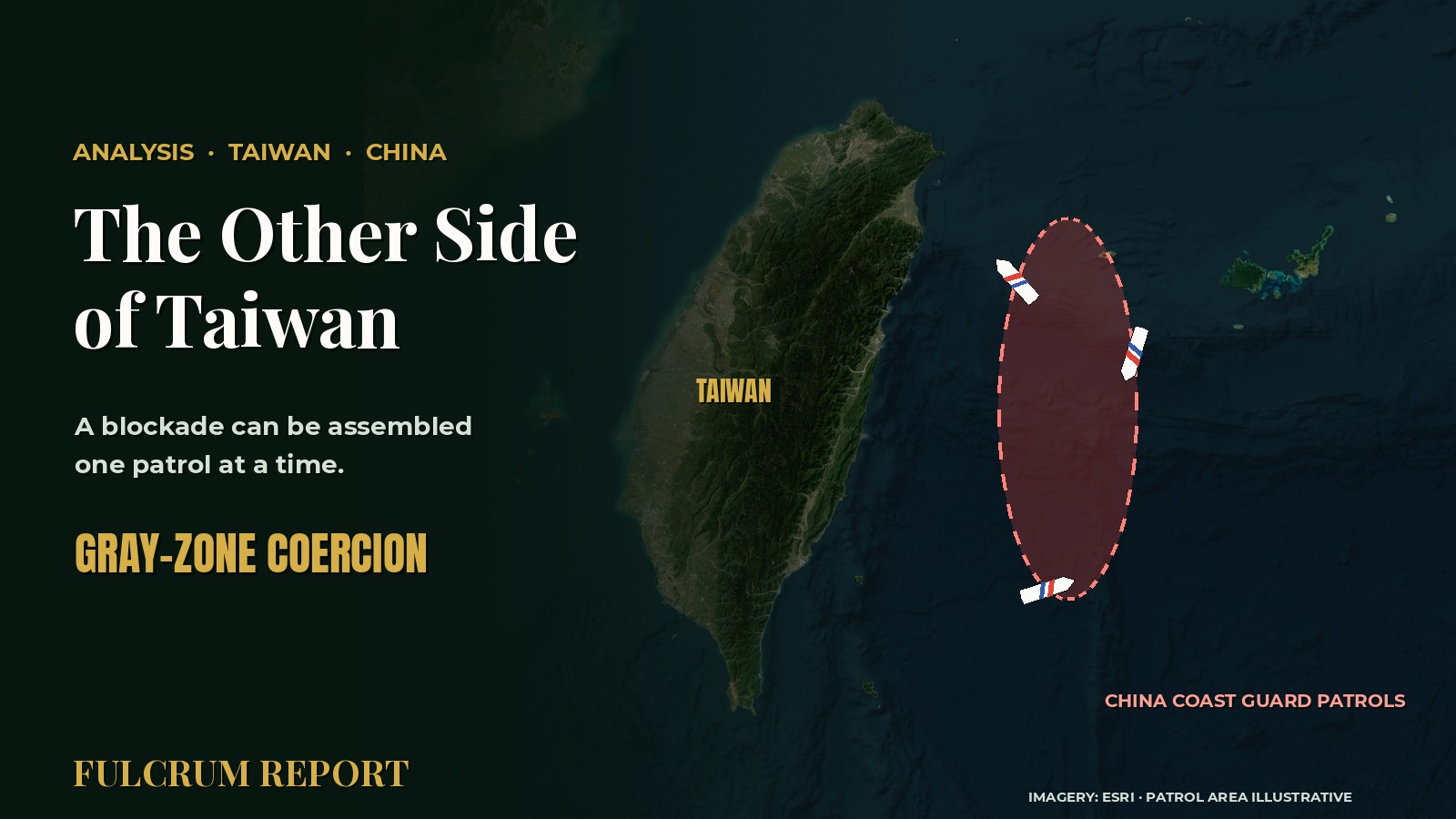
The Other Side of Taiwan: How a Blockade Gets Built Without Being Declared
China's Coast Guard has reportedly set up a regular presence east of Taiwan, framed as law enforcement, while a $14 billion U.S. arms package is pending. A look at gray-zone coercion, salami tactics and escalation control.