The Seven-Day Offer: Hormuz and the Commitment Problem
Iran offered to reopen the Strait of Hormuz within a week. Washington said no. The reason is a classic problem in international politics: nobody wants to move first.
Late this month, on the sidelines of the UN General Assembly, Iran made an offer that sounded almost too simple: give us a week, and the Strait of Hormuz reopens. Seven days. For a waterway that normally carries about a fifth of the world's oil and has been close to shut since March, that's a remarkable thing to put on the table.
Washington said no.
My first reaction, like a lot of people's, was to ask why. If the goal is to get the ships moving again, why would you turn down a plan to get the ships moving again? The answer, I think, tells us more about how this conflict works than almost anything else that's happened this month.
What was actually offered
The seven days weren't free. In return, Tehran asked for its frozen assets to be released, oil sanctions lifted, the US naval blockade ended and nuclear talks restarted. President Trump rejected the package, and his UN ambassador, Mike Waltz, described it as "too much up front" and a cynical attempt to win relief before delivering anything.
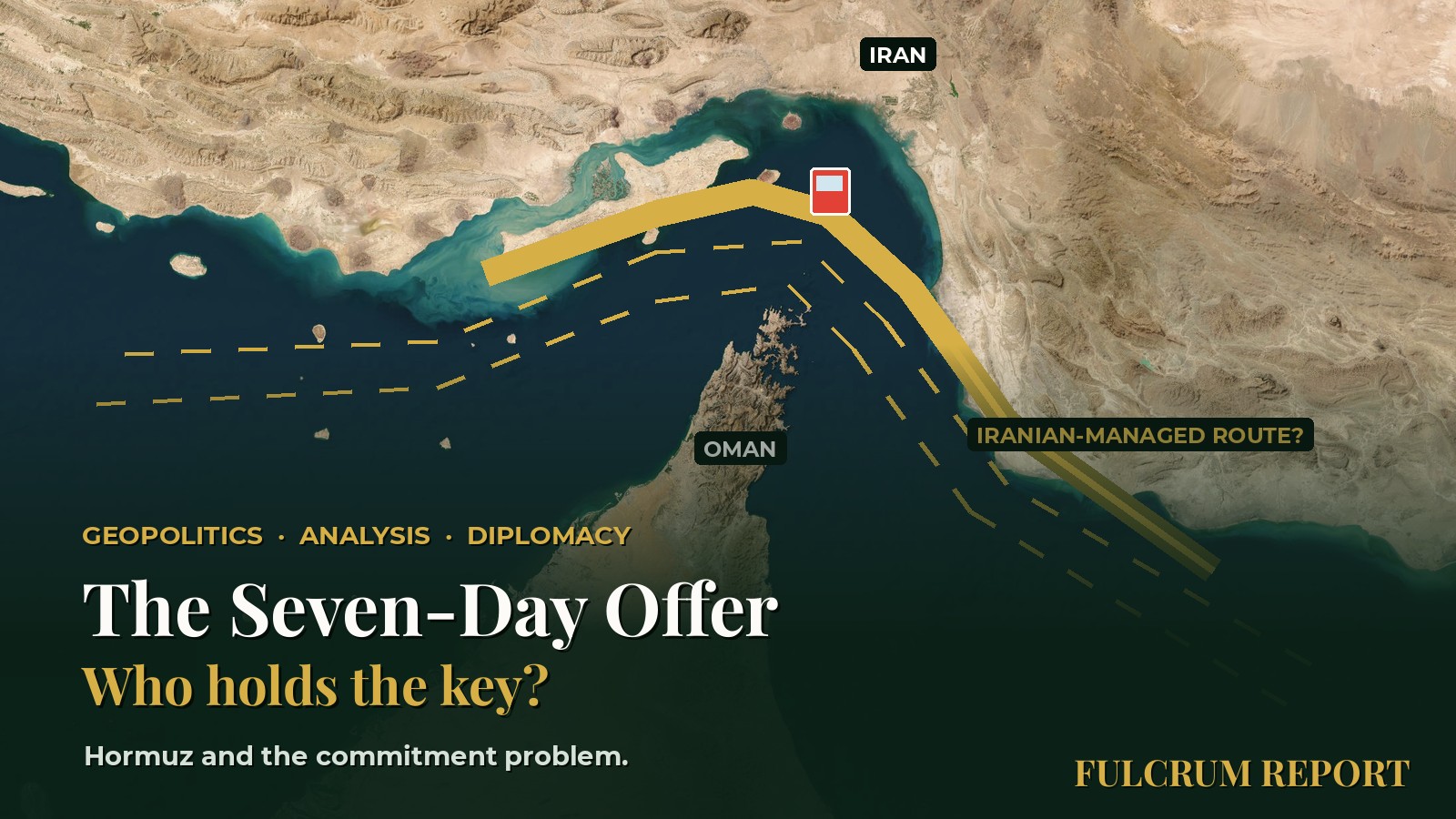
Iran then floated a second idea: an Iranian-managed corridor through Iranian and Omani waters. Ships would pass, but along a route Tehran would oversee.
The rest of the world wasn't waiting quietly. On September 25, eighty countries, in a joint statement led by Bahrain, demanded that the strait reopen and made the point that passage shouldn't come with tolls or conditions. Markets were less patient still. After the rejection, Brent crude rose more than 3 percent to around $107 a barrel.
The framework: the commitment problem
In my field we have a name for this kind of standoff. It's called the commitment problem, and it explains why rivals who both want a deal often can't make one.
The idea is simple. A deal only works if both sides believe the other will keep its word later, when keeping it has become inconvenient. Where there's no outside authority to enforce the terms, that belief is hard to build. And the side that moves first takes on most of the risk.
Look at this offer through that lens. If the United States lifts sanctions and ends the blockade first, Iran keeps its most valuable card, which is the ability to close the strait again. If Iran reopens first, the United States keeps its cards, the sanctions and the blockade, and has less reason to give them up. Whoever concedes first gives away their leverage. So nobody moves.
"Too much up front" is really a sentence about sequencing. Washington isn't necessarily saying the things Iran wants are off the table forever. It's saying it won't hand them over before it can see whether the strait stays open. Tehran, for its part, has every reason to expect that once the ships are moving, its leverage disappears and the promises made to it get quietly renegotiated. Both fears are rational, and that's what makes the problem so stubborn.
Why the corridor is the real story
The corridor proposal deserves more attention than it's getting. On the surface it's a compromise: trade restarts and everyone's shipping costs come down. But look at who ends up holding what.
An Iranian-run corridor makes Tehran the gatekeeper of the strait. It decides the route, the timing and, implicitly, who passes and on what terms. What has been a wartime weapon, the threat to close Hormuz, would become something closer to a permanent toll booth. It's the difference between a blockade that ends and an arrangement that lasts.
That's exactly why the eighty-country statement went out of its way to reject tolls and conditions on transit. Those governments aren't only worried about this month's oil price. They're worried about precedent. Once a coastal state is accepted as the manager of an international chokepoint, it's very hard to take that role back.
What I'll be watching
Two things. First, whether anyone can offer a sequence that makes the first move less dangerous: phased steps, third-party monitoring, perhaps an Omani role that neither side can easily walk away from. The planned Gulf-Iran meeting in Oman was postponed, but Iran's foreign minister has said diplomacy isn't closed. Commitment problems aren't unsolvable. They're solved by building ways to verify and punish broken promises, one step at a time.
Second, the wording of any deal about the corridor. Watch for who manages it, who inspects ships and whether any fees are attached. Those details will tell you who really won.
The bigger point
It's tempting to frame all this as a question of whether Hormuz reopens. I think that's the wrong question. The strait will reopen eventually, because too many economies depend on it. The real fight is over who holds the key afterward.
Who do you think should control the strait? I'd like to hear your answer.

About the author
Fulcrum Report
Independent Middle East analyst holding a PhD in Political Science. Fulcrum Report offers rigorous, framework-driven coverage of politics and geopolitics across the Levant and the wider region — analysis without agenda.
Related reading
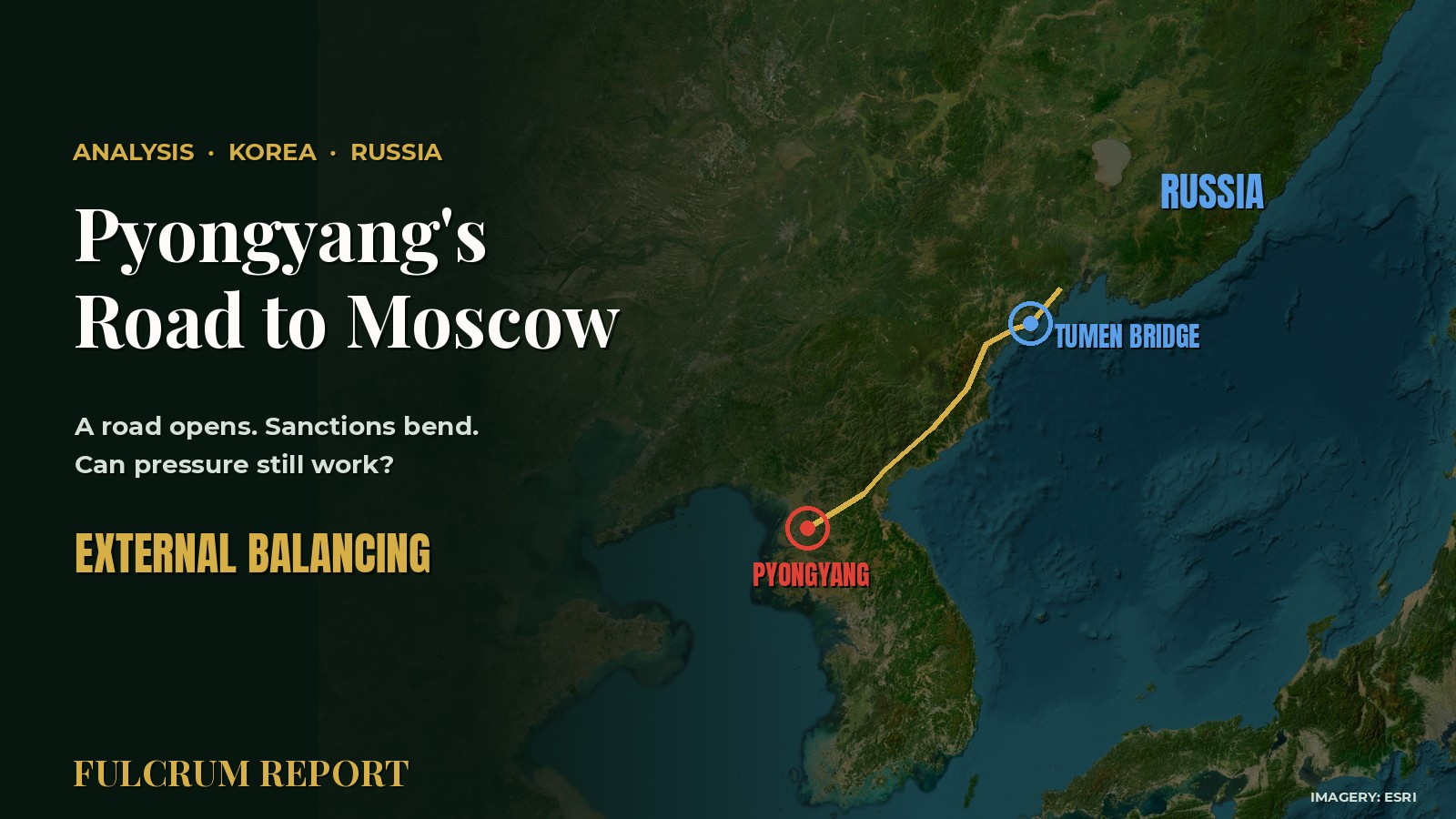
Pyongyang's Road to Moscow: Can Sanctions Still Work?
A second enrichment facility is reportedly going up at Yongbyon, and the Tumen River road bridge to Russia reportedly opened on September 8. When a major power offers a way around sanctions, how much pressure is left? An explainer on external balancing.
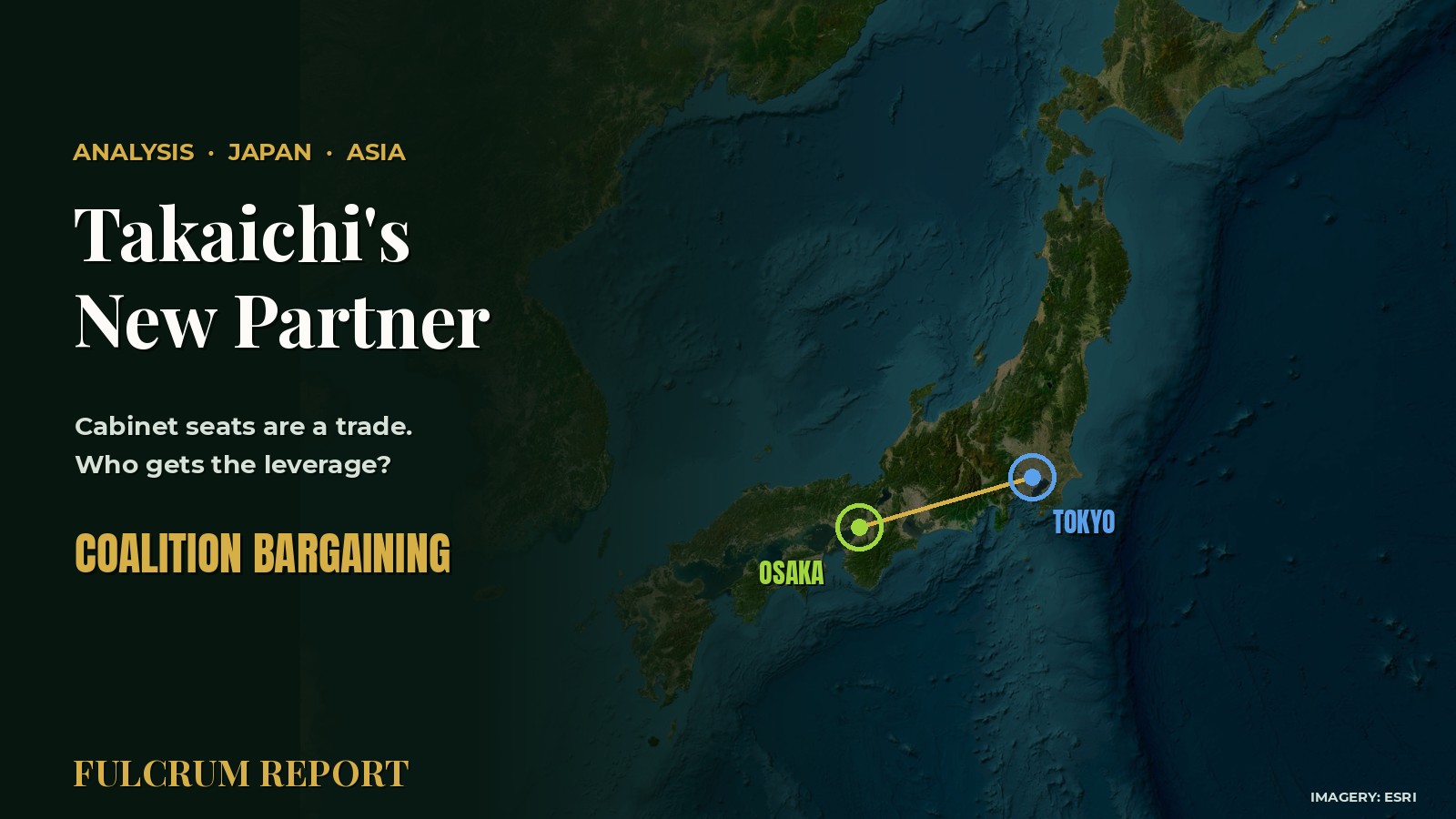
Takaichi's New Partner: Why Cabinet Seats Are a Trade
Sanae Takaichi reportedly reshuffled her cabinet on September 16 and 17, bringing in the Japan Innovation Party (Ishin) for the first time. Her camp holds two-thirds of the lower house but lacks an upper-house majority. A look at coalition bargaining and who gets the leverage.
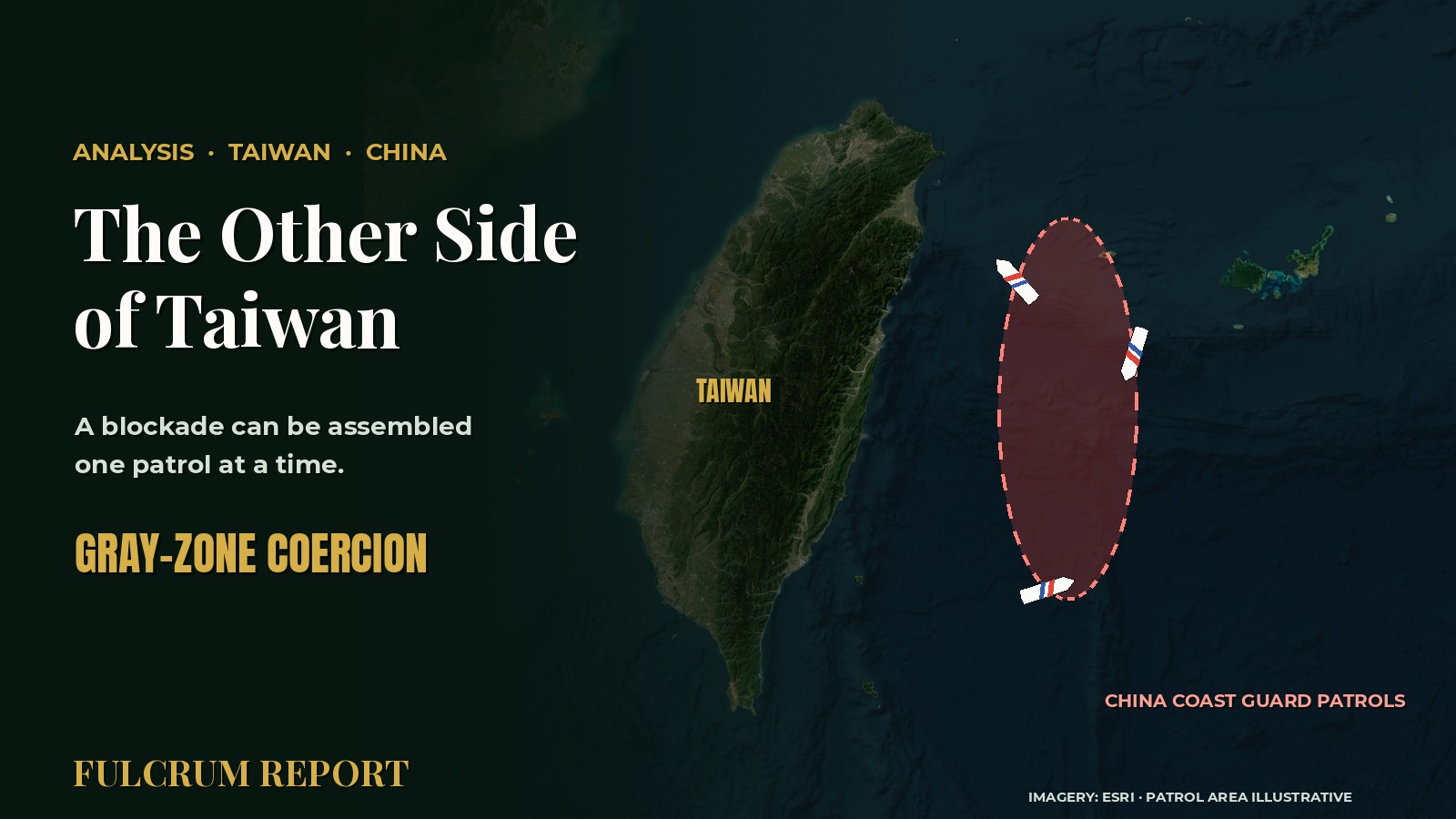
The Other Side of Taiwan: How a Blockade Gets Built Without Being Declared
China's Coast Guard has reportedly set up a regular presence east of Taiwan, framed as law enforcement, while a $14 billion U.S. arms package is pending. A look at gray-zone coercion, salami tactics and escalation control.