Stop Reading the Headlines. Start Reading the Board.
Iran, Gaza, oil, Lebanon and the West Bank look like separate crises. A systems-thinking view shows how one thread moves the whole region, and how the series fits together.
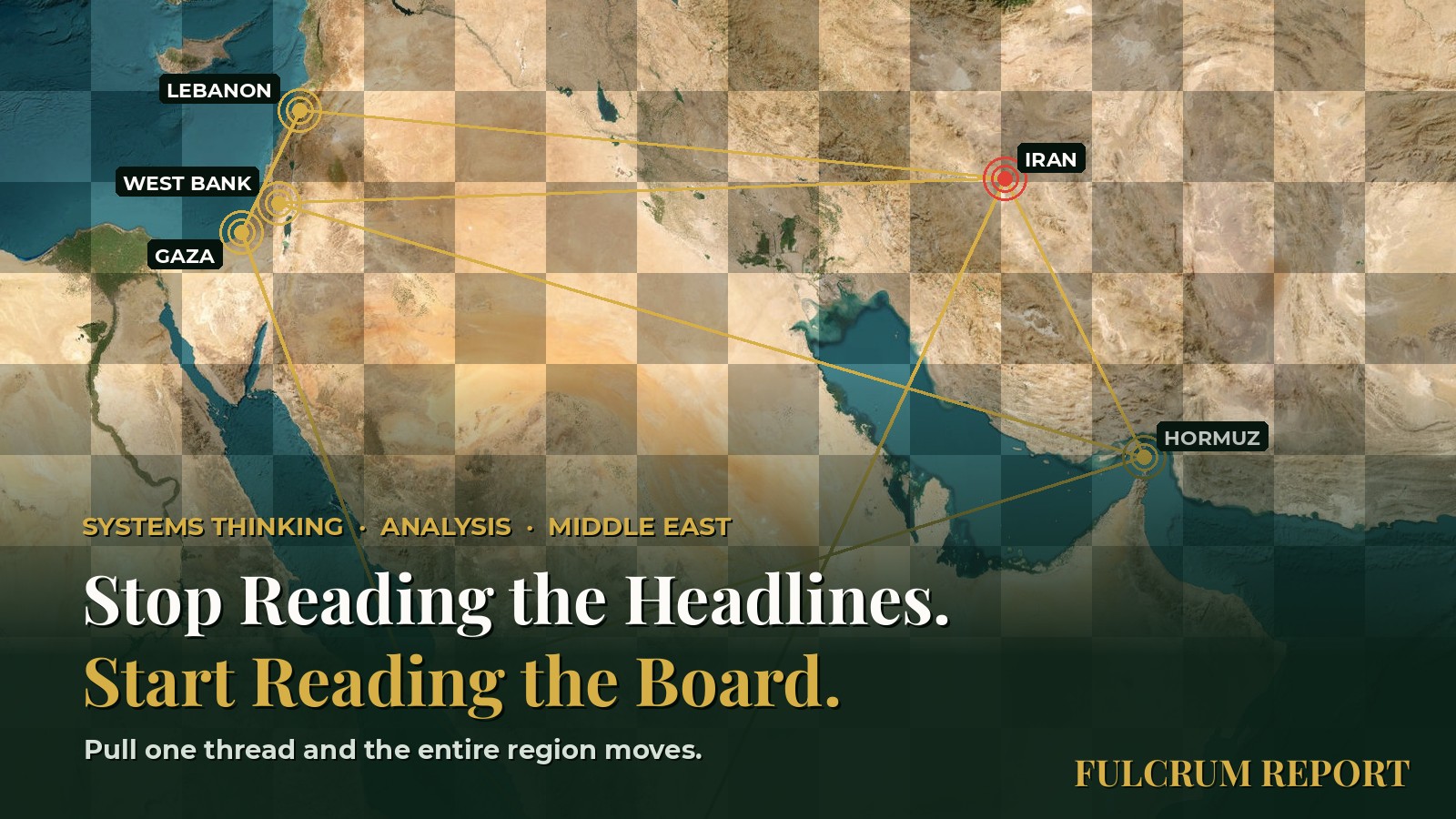
Iran, Gaza, oil, Lebanon, the West Bank. Open any news app and they show up as five separate stories, each with its own headline, its own panel of experts and its own news cycle. I spent the last several reels taking them apart one at a time. This post is about putting them back together, because the most important thing I've learned from the whole series is that they were never separate stories in the first place.
Pull one thread and the entire region moves.
One thread, followed all the way through
Start with the US-Iran war. The first thing it touches is the Strait of Hormuz, the narrow channel that a large share of the world's seaborne oil has to pass through. When shipping through Hormuz becomes dangerous or uncertain, traders, insurers and shippers don't wait for a full closure. They reprice risk right away, and some of the flow starts looking for other routes, including Saudi pipelines that carry crude west to Red Sea ports.
That pushes more of the region's energy trade toward the Red Sea, which is exactly where the Houthis have spent the last few years showing they can hit shipping. So the detour doesn't escape the risk. It runs straight into a second one. Insurance premiums climb, some ships take the long way around Africa, and freight costs rise again.
Those costs don't stay at sea. Fuel, freight, food and eventually rent all carry a piece of them, and that's how a war in the Gulf turns into inflation in places that have never heard of Bab el-Mandeb. I walked through that transmission chain in detail in #21, on how a drone in the Red Sea can end up in an American mortgage rate.
Meanwhile, something less visible is happening. The war absorbs global attention. Cameras, diplomats and editors all have limited bandwidth, and when it's pointed at Tehran and the Gulf, it isn't pointed at the West Bank. Less scrutiny means more room to act, and Israel has more room there than it would have in a quieter news month.
The same war also reshapes the diplomatic map. A country that is fighting a war can't credibly referee it. When Washington became a combatant, the mediator's chair didn't stay empty. China has been stepping into it, which was the core argument of #20.
That's one thread: a war, a strait, a shipping route, a price level, a news cycle, a land dispute and a diplomatic seat. Seven separate headlines, one causal chain.
The framework: systems thinking
The name for this way of looking at things is systems thinking. It isn't a theory of the Middle East specifically. It's a habit of mind that comes out of ecology, engineering and economics, and it rests on a simple idea: the behavior of a system comes from the connections between its parts, not from any single part on its own.
Applied to this region, I find it helps to track four channels every time something big happens. One crisis moves oil prices. It moves public attention. It changes military choices, meaning who fights where, with what, and who holds back. And it shifts diplomatic power, meaning who gets to sit at the table and who gets pushed away from it.
Then comes the part that makes it a system rather than a chain: those changes feed back into the next crisis. Higher oil prices change the budget math in Washington, Riyadh and Tehran. Attention moving away from one front lowers the cost of escalating there. A new mediator changes what each side thinks it can get at the table. The outputs of one crisis become the inputs of the next one. That's a feedback loop, and once you start looking for them you see them everywhere.
Why single headlines mislead
The news business is built around the event. Something happens, it gets a headline, and the story is framed as if it started that morning. That format isn't wrong so much as incomplete. It's good at telling you what happened and bad at telling you why it happened, or what it's about to set off.
It also produces a specific kind of error: fixing one problem and being surprised when another one gets worse. If you treat Hormuz as only an energy story, the Red Sea looks like a separate security story, inflation looks like a central bank story, and the West Bank looks like a local story. Every one of those framings is defensible on its own. Together they miss the thing that actually matters, which is that pressure on one point in the system gets redistributed to the others.
How the series fits together
This is also why I number my reels, and why I asked you to notice the numbers. Each one looked at a single part of this board, and the numbering is there so you can go back and watch them as a set.
#15 was about Putnam's two-level game, the idea that every leader negotiates on two boards at once, one abroad and one at home, and that the decisive front in the US-Iran war may be in Washington. #18 looked at Egypt and the Rafah gate, and how controlling a single crossing becomes foreign policy. #19 followed refugees and the way displacement shapes elections far from the battlefield. #20 covered two sides of the same shift: China positioning itself as the broker, and the Gulf states' fear of being left alone by America. #21 traced the Red Sea shock into household prices. #22 argued that Iran never had a remote control over its so-called proxies, that it runs something closer to a franchise with a lot of agency slack. #23 looked at the war of endurance, and how a state can win battles while its economy carries a cost that compounds.
On their own, each of those is a useful lens. Put them next to each other and they start explaining one another. The two-level game explains why Washington's choices move oil markets. Agency slack explains why the Houthis can escalate in the Red Sea on their own timetable. The war of endurance explains why a long conflict gets more fragile with every month, not less. Refugee flows explain why distant capitals end up with a stake in outcomes they can't control. And the broker story explains who benefits when the attention and credibility of the biggest player are tied up elsewhere.
Following the news versus understanding how it moves
There's a real difference between following the news and understanding how it moves. Following the news means you know what happened today. Understanding how it moves means you can make a reasonable guess about what today's event is likely to set off next week, and where.
That second skill doesn't require secret sources. It requires asking the same few questions every time. What does this do to energy and shipping? Where does attention go, and where does it leave? Who now has more room to act militarily, and who has less? Who gains standing as a mediator, and who loses it? And then the question that ties it together: how do those changes come back around?
The whole board
I'm not claiming the region is simple. It's crowded, it's messy, and plenty of what happens in it comes down to personalities, accidents and bad timing. But it isn't random. It moves according to connections that you can learn to see, and once you've seen them it's very hard to go back to reading the headlines one at a time.
That's the whole board, in one scene. If it made the region make a little more sense, share it with someone who is still reading the headlines one by one.

About the author
Fulcrum Report
Independent Middle East analyst holding a PhD in Political Science. Fulcrum Report offers rigorous, framework-driven coverage of politics and geopolitics across the Levant and the wider region — analysis without agenda.
Related reading
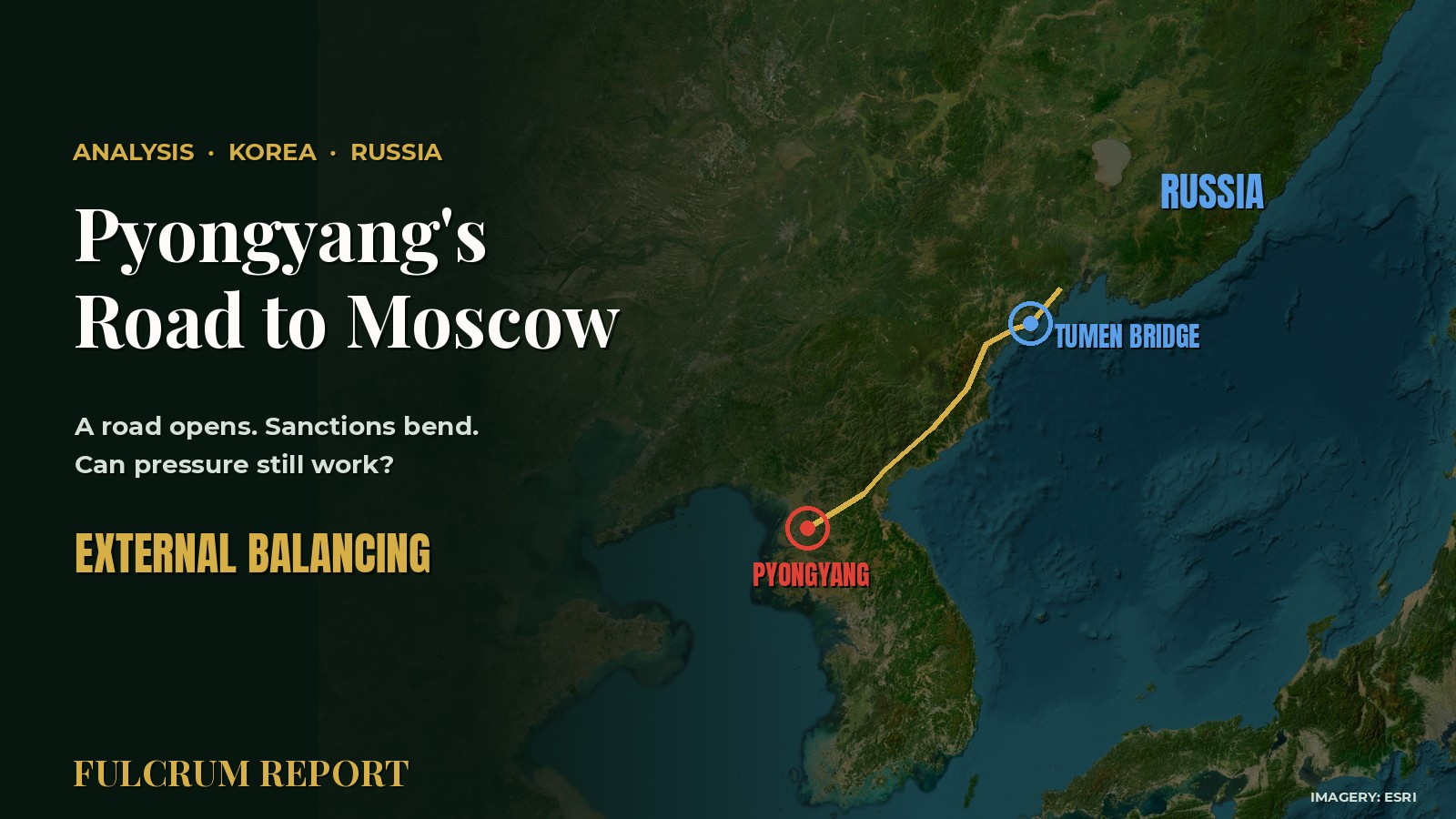
Pyongyang's Road to Moscow: Can Sanctions Still Work?
A second enrichment facility is reportedly going up at Yongbyon, and the Tumen River road bridge to Russia reportedly opened on September 8. When a major power offers a way around sanctions, how much pressure is left? An explainer on external balancing.
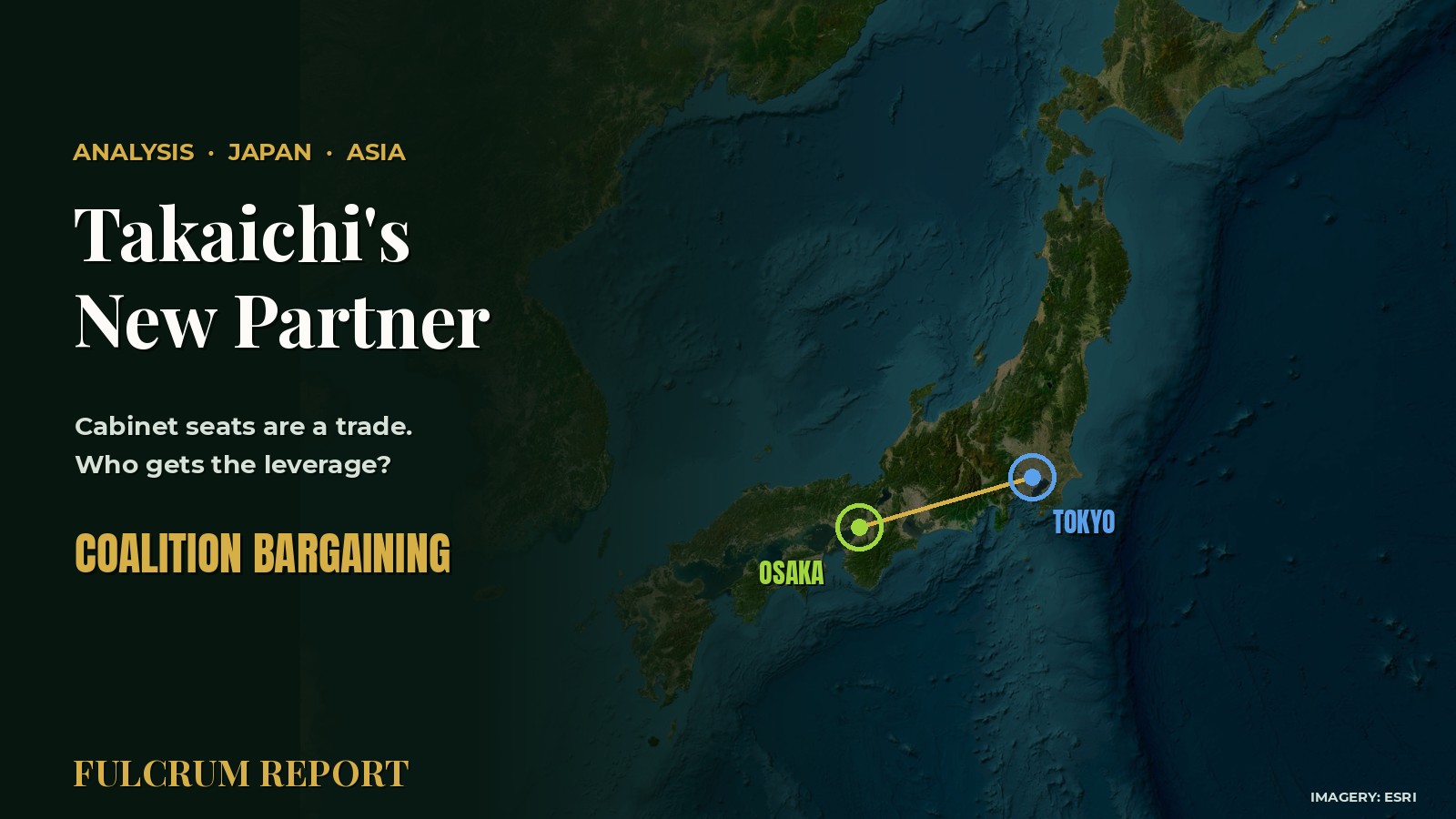
Takaichi's New Partner: Why Cabinet Seats Are a Trade
Sanae Takaichi reportedly reshuffled her cabinet on September 16 and 17, bringing in the Japan Innovation Party (Ishin) for the first time. Her camp holds two-thirds of the lower house but lacks an upper-house majority. A look at coalition bargaining and who gets the leverage.
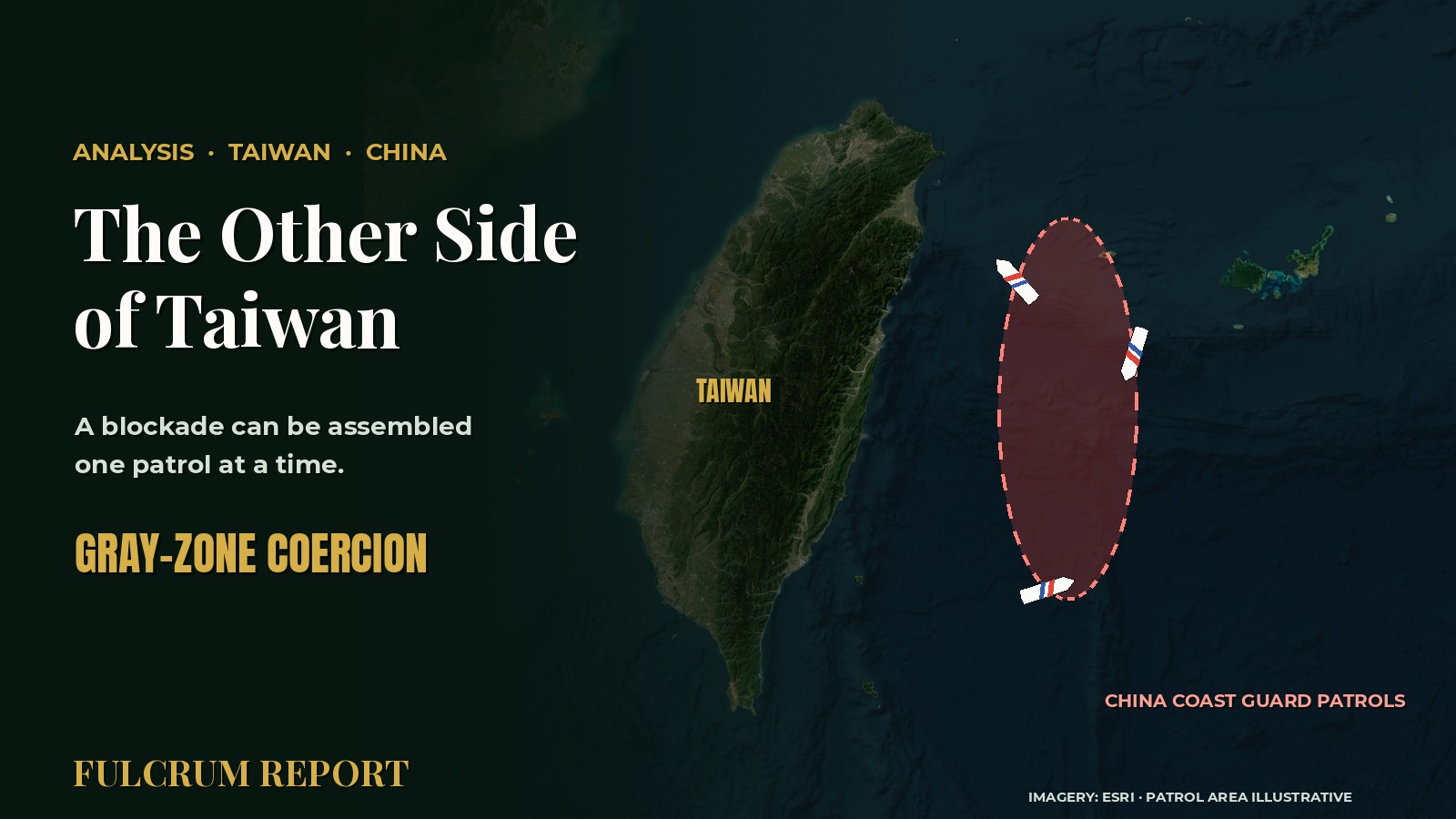
The Other Side of Taiwan: How a Blockade Gets Built Without Being Declared
China's Coast Guard has reportedly set up a regular presence east of Taiwan, framed as law enforcement, while a $14 billion U.S. arms package is pending. A look at gray-zone coercion, salami tactics and escalation control.