Syria's 'No Camps' Bet
Al-Sharaa wants every Syrian out of the camps. Who gets the contracts, the land and the housing will decide who backs the new order.
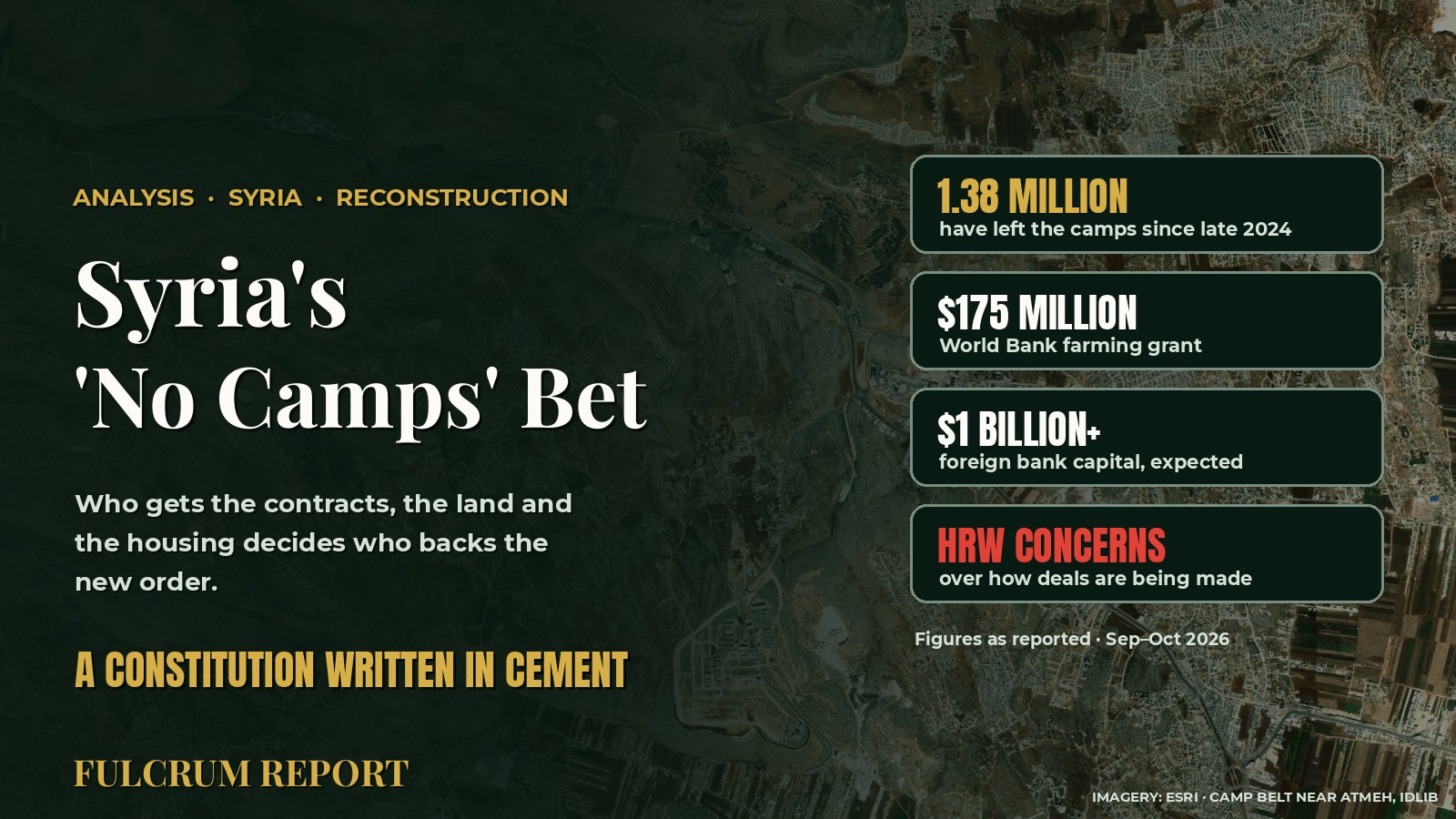
Here's a number that stopped me: 1.38 million.
That's how many Syrians have reportedly left displacement camps since late 2024, when the old regime fell. For anyone who has followed this war for more than a decade, that's a lot of people packing up tents and going somewhere else. Some of them have gone home. Some have gone to whatever is left of home.
Syria's president, Ahmad al-Sharaa, wants that number to reach everyone.
The pitch
At the UN General Assembly, al-Sharaa laid out what he called a "No Camps" vision: a Syria where nobody is still living under canvas or in a concrete block on the edge of an olive grove because their house is a pile of rubble.
The money is starting to move behind the idea. The World Bank approved a $175 million grant for farming. It's a grant, not a loan, which matters in a country with no room for more debt. On top of that, more than a billion dollars in foreign bank capital is expected to come in. I'd underline "expected". Promised money and delivered money are two very different things, and post-war countries learn that the hard way.
Then there's the warning. Human Rights Watch has raised concerns about how reconstruction deals are being made. I don't want to put words in their mouth beyond that, but it's worth knowing that this isn't a new worry for Syria. Under the old government, a 2018 property law, Law No. 10, let authorities carve out redevelopment zones, and HRW and others criticized it for putting displaced owners at risk of losing their land. The most famous project, Marota City in Damascus, went up on ground where people used to live. So when a rights group says "watch how the deals are made," Syrians have a recent memory of what that looks like when it goes wrong.
Why this is bigger than buildings
This is the part I keep coming back to.
We tend to talk about reconstruction like it's an engineering problem: roads, power lines, water pipes, apartment blocks. It is that. But people who study countries coming out of civil war have been saying for a long time that rebuilding is also state-building. Roland Paris made a version of this argument in his book At War's End, which argued that institutions need to come first, before quick elections and quick markets. World Bank researchers led by Paul Collier warned in Breaking the Conflict Trap that countries just out of a war are at serious risk of sliding back into one.
The simple way I'd put it: the rebuilding decides who wins the peace.
Think about the three things that get handed out. Contracts. Land. Housing. Whoever gets the contract to rebuild a district gets jobs to give and money to spend. Whoever gets the title to a plot gets a stake in the future. Whoever gets an apartment in the new block, and whoever doesn't, finds out very quickly where they stand.
People who benefit tend to back the order that gave them something. People who are left out tend to remember it.
The short-term trap
There's a real temptation here, and I understand it. When you're running a fragile country, the fastest way to get things built is to work through a small circle of people you trust and who can deliver. That can buy stability, and stability is not nothing after fourteen years of war.
But it's short-term stability. If the money flows through a narrow elite, the same pattern that fed anger before the war can quietly rebuild itself. A different set of faces at the top doesn't help much if the people at the bottom feel the same way they did in 2011: that the country is being run for someone else.
I'm not saying that's what is happening. It's too early to say, and I'm not going to claim things I can't show. I'm saying that's the risk this kind of rebuilding always carries, and it's why the HRW warning deserves more attention than a line in a news story.
What I'd watch
A few things would tell us which way this is going. Whether people who return can actually prove they own their homes and get them back. Whether contracts are published and open to bidding, or handed out quietly. Whether the farming money reaches farmers in places like rural Homs and Idlib, or gets stuck higher up. And whether the billion dollars shows up at all.
None of that is as exciting as a speech at the UN. All of it matters more.
Written in cement
Here's the line I ended the reel on, because I think it's true: Syria's reconstruction is also its constitution, written in cement.
A constitution is supposed to say who has rights and who has power. In practice, so does a map of who got the land, who got the contracts and who got a new front door. Syrians will read that map long before they read any legal document.
So I'll ask you what I asked on the reel. What does Syria need most right now: homes, jobs or justice? Tell me in the comments, and follow @fulcrumreport for analysis without agenda.

About the author
Fulcrum Report
Independent Middle East analyst holding a PhD in Political Science. Fulcrum Report offers rigorous, framework-driven coverage of politics and geopolitics across the Levant and the wider region — analysis without agenda.
Related reading
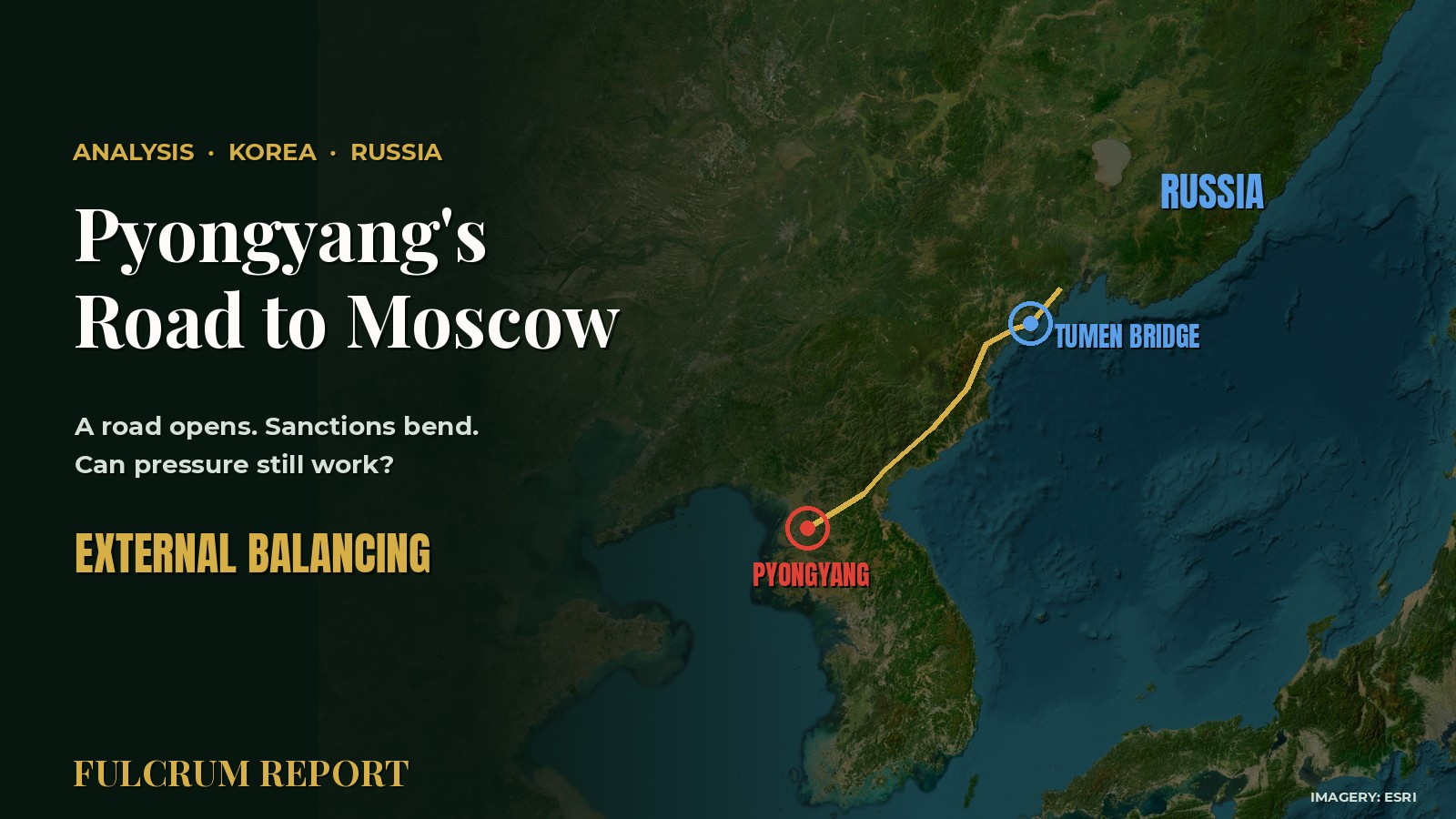
Pyongyang's Road to Moscow: Can Sanctions Still Work?
A second enrichment facility is reportedly going up at Yongbyon, and the Tumen River road bridge to Russia reportedly opened on September 8. When a major power offers a way around sanctions, how much pressure is left? An explainer on external balancing.
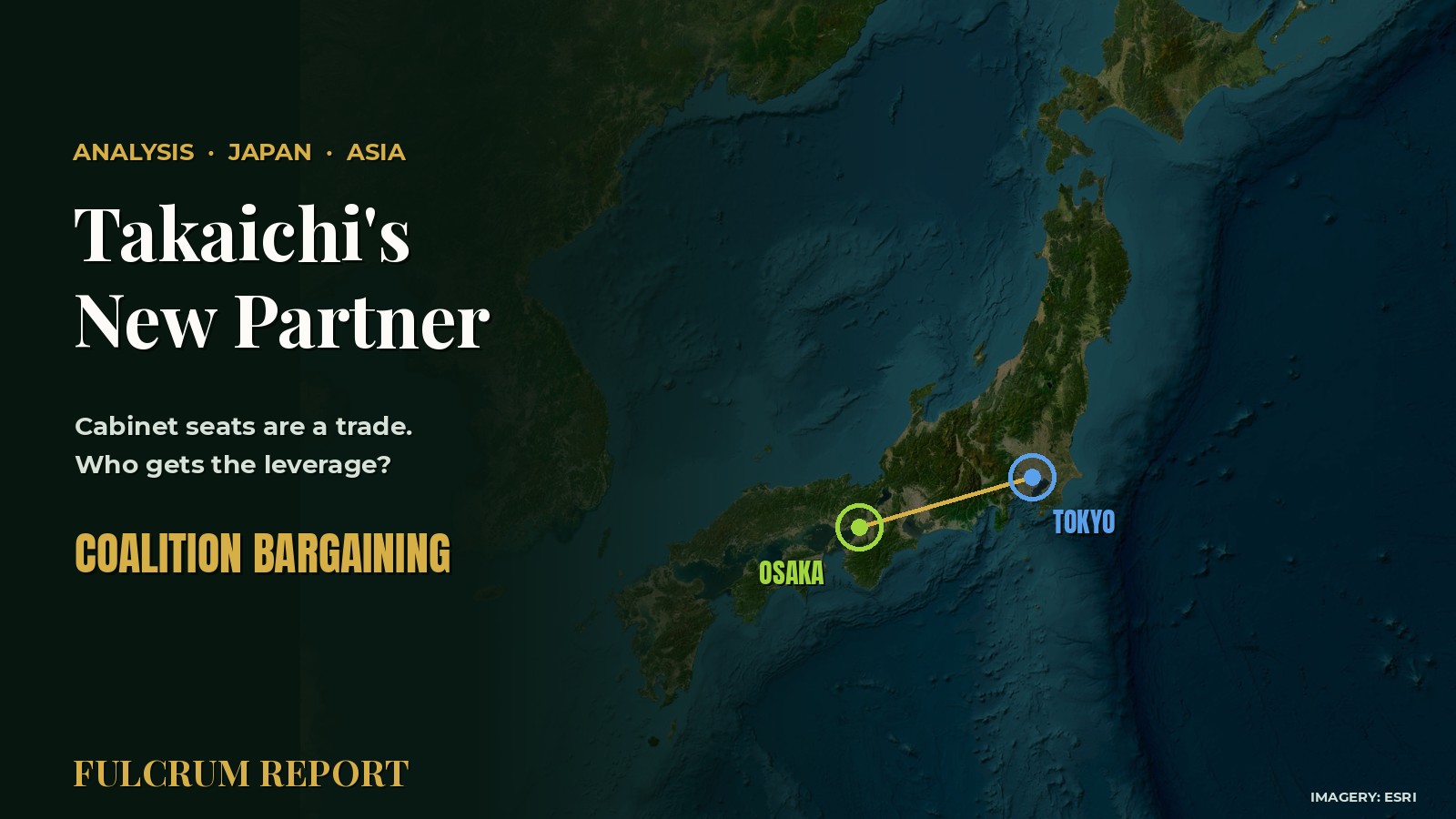
Takaichi's New Partner: Why Cabinet Seats Are a Trade
Sanae Takaichi reportedly reshuffled her cabinet on September 16 and 17, bringing in the Japan Innovation Party (Ishin) for the first time. Her camp holds two-thirds of the lower house but lacks an upper-house majority. A look at coalition bargaining and who gets the leverage.
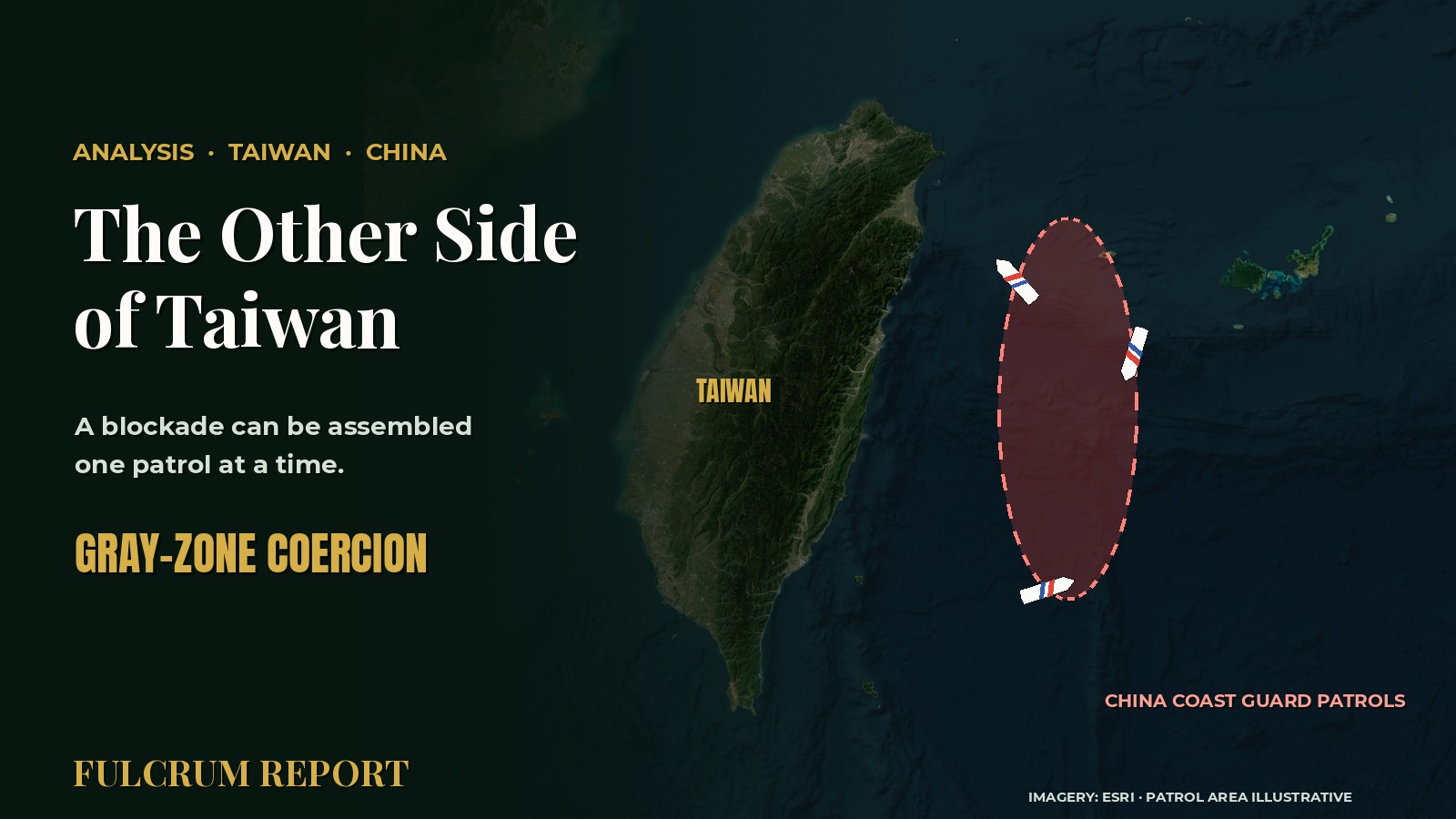
The Other Side of Taiwan: How a Blockade Gets Built Without Being Declared
China's Coast Guard has reportedly set up a regular presence east of Taiwan, framed as law enforcement, while a $14 billion U.S. arms package is pending. A look at gray-zone coercion, salami tactics and escalation control.