The G6: Is Europe Getting Faster by Getting Smaller?
Six EU states holding roughly 70% of the bloc's economy are reportedly teaming up to move faster on defense and China trade. What differentiated integration buys, and what it costs the other 21.
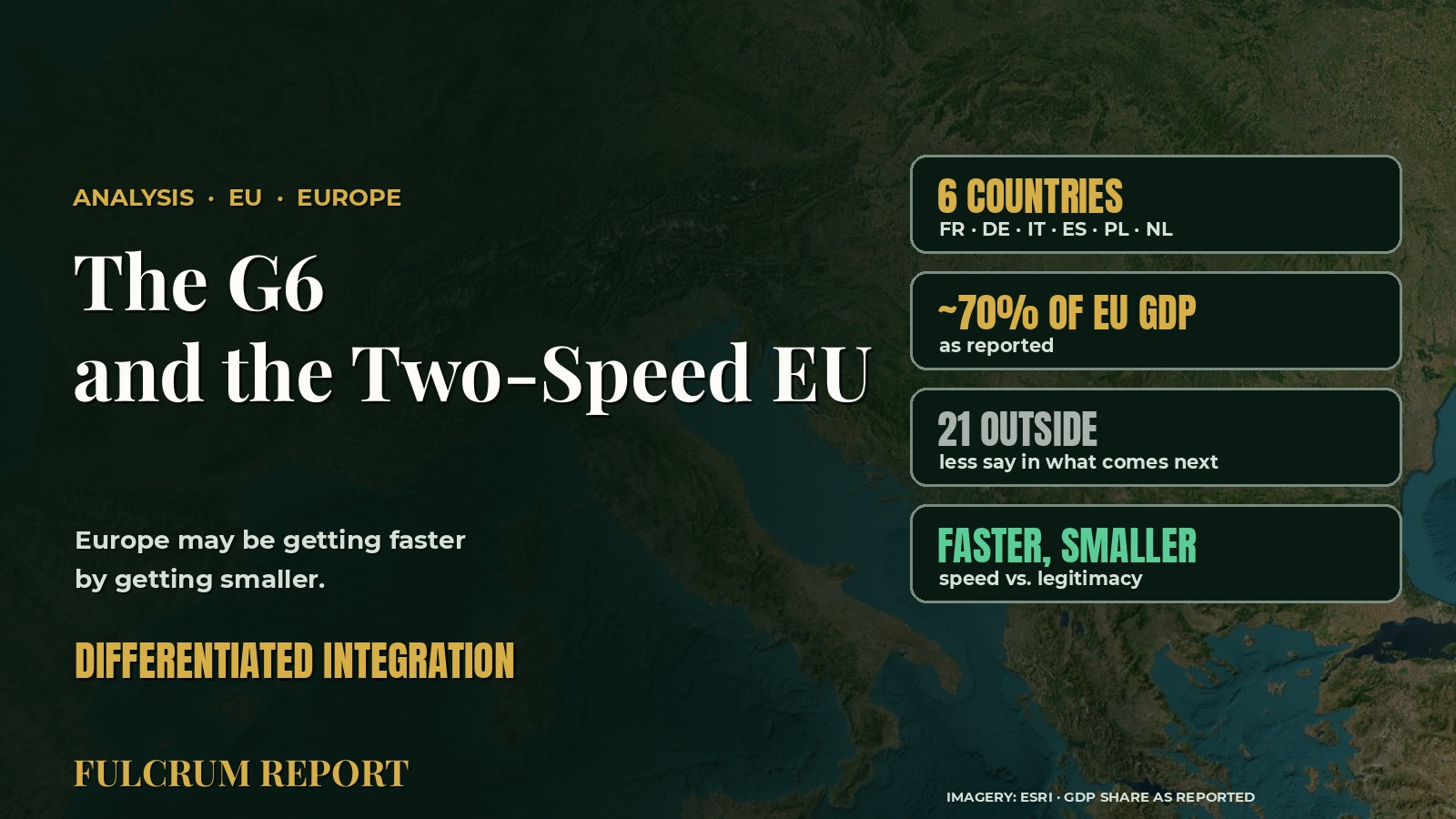
Six countries. Roughly seventy percent of the European Union's economy. And, if the reports are right, a growing impatience with the other twenty-one.
That's the short version of the G6 story, and I'll admit my first reaction was a shrug. Big EU states forming a club is not exactly breaking news. But the longer I sat with it, the more I thought this one deserves a closer look, because it goes straight at the rule that has defined how the EU makes its hardest decisions.
What's been reported
France, Germany, Italy, Spain, Poland and the Netherlands are reportedly forming a G6 to move faster on defense, trade with China and a handful of other files. They've also reportedly agreed on a joint roadmap for trade with China already.
The point of the group is to work around unanimity. In areas like foreign policy, security and tax, the EU usually needs all twenty-seven governments to agree. One capital saying no is enough to stall everything. The G6 is, in effect, six governments saying they don't want to wait for that anymore.
I'd treat the details carefully. The membership and the China roadmap are what's being reported; how formal the group becomes, and what it actually produces, is still an open question. The seventy percent figure is a rough share of EU GDP, and it'll shift a little depending on whose numbers you use.
The idea has a name
In the reel I said the idea is simple, and it is: let a smaller group move ahead when waiting for everyone holds things up. Political scientists call this differentiated integration.
Alexander Stubb, before he went into politics, wrote one of the clearest guides to it back in 1996. He sorted the options into three families. There's multi-speed Europe, where everyone agrees on the destination but some get there sooner. There's variable geometry, where a core group goes further and stays further ahead. And there's Europe à la carte, where each country picks the policies it likes. The G6 sits somewhere between the last two, and honestly, that's what makes it interesting.
Later work by Dirk Leuffen, Berthold Rittberger and Frank Schimmelfennig made a point I keep coming back to: differentiation isn't a breakdown of the EU. It's how the EU has actually grown. Most of the union's big projects started with fewer than everyone.
We've been here before
The euro is the obvious example. Not every member uses it, and the countries that do make plenty of decisions among themselves. Schengen, the passport-free zone, began as a deal between five countries outside the EU's formal structures and only later got folded in.
There's even an official route for this. The treaties have allowed enhanced cooperation since Amsterdam, tightened again at Lisbon, so that at least nine member states can go ahead on something when the rest won't. It has been used for things like divorce law and the unified patent.
And the political idea is older still. In 1994, Wolfgang Schäuble and Karl Lamers, two German Christian Democrats, published a paper arguing for a "core Europe" that would integrate faster than the rest. It caused a minor storm at the time. Thirty years on, the G6 looks a lot like that core, just with Poland and Spain in it and without the formal blueprint.
What the speed costs
Here's where my shrug wore off.
Fewer countries really can agree faster. That's just arithmetic. Six governments have fewer red lines between them than twenty-seven, and the G6 countries carry most of the EU's economic and military weight. On defense especially, where Europe has spent years talking about doing more, a smaller group that actually acts could matter.
But the countries outside the group get less say in what comes next. If the G6 settles a China trade line among themselves, a country like Hungary, Greece or Lithuania is handed a position it didn't shape. The formal mechanisms like enhanced cooperation come with rules that keep the door open and the process inside EU law. An informal club of big states doesn't have to.
That's the tension I'd watch. Scholars often frame it as efficiency versus legitimacy. You can get decisions made quickly, or you can get decisions that everyone feels bound by. The best EU deals manage both. A two-tier arrangement makes it harder.
Why I think this matters
So the G6 could speed up decisions while widening the gap between Europe's inner circle and everyone else. Getting a deal becomes easier. Keeping the wider EU on board becomes harder.
I don't think that makes the G6 good or bad on its own. It depends on whether the group stays open to others who want to join, whether what it agrees eventually feeds back into the EU's own rules, and whether smaller states feel like passengers or partners. If it goes the way Schengen did, it might end up being remembered as a useful push. If it hardens into a permanent top table, it'll feed exactly the resentment the EU's critics like to point to.
Either way, I keep coming back to the line I closed the reel with. Europe may be getting faster by getting smaller. Whether that's a fix or a split is the question I'd genuinely like your view on.
Further reading: Alexander C-G. Stubb, "A Categorization of Differentiated Integration," Journal of Common Market Studies (1996); Dirk Leuffen, Berthold Rittberger and Frank Schimmelfennig, Differentiated Integration: Explaining Variation in the European Union (2013); Wolfgang Schäuble and Karl Lamers, "Reflections on European Policy" (1994); Treaty on European Union, Article 20 (enhanced cooperation).

About the author
Fulcrum Report
Independent Middle East analyst holding a PhD in Political Science. Fulcrum Report offers rigorous, framework-driven coverage of politics and geopolitics across the Levant and the wider region — analysis without agenda.
Related reading
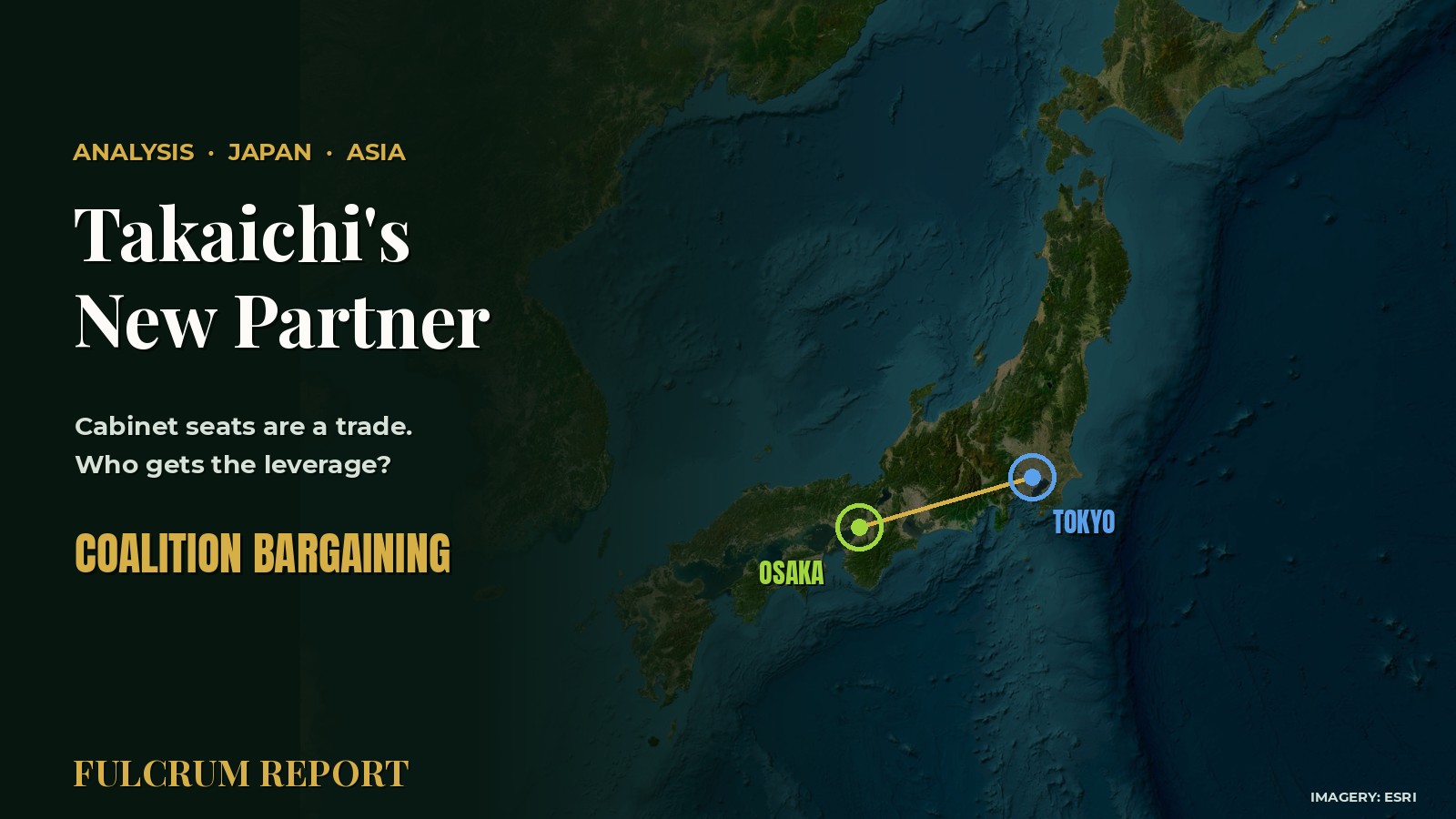
Takaichi's New Partner: Why Cabinet Seats Are a Trade
Sanae Takaichi reportedly reshuffled her cabinet on September 16 and 17, bringing in the Japan Innovation Party (Ishin) for the first time. Her camp holds two-thirds of the lower house but lacks an upper-house majority. A look at coalition bargaining and who gets the leverage.
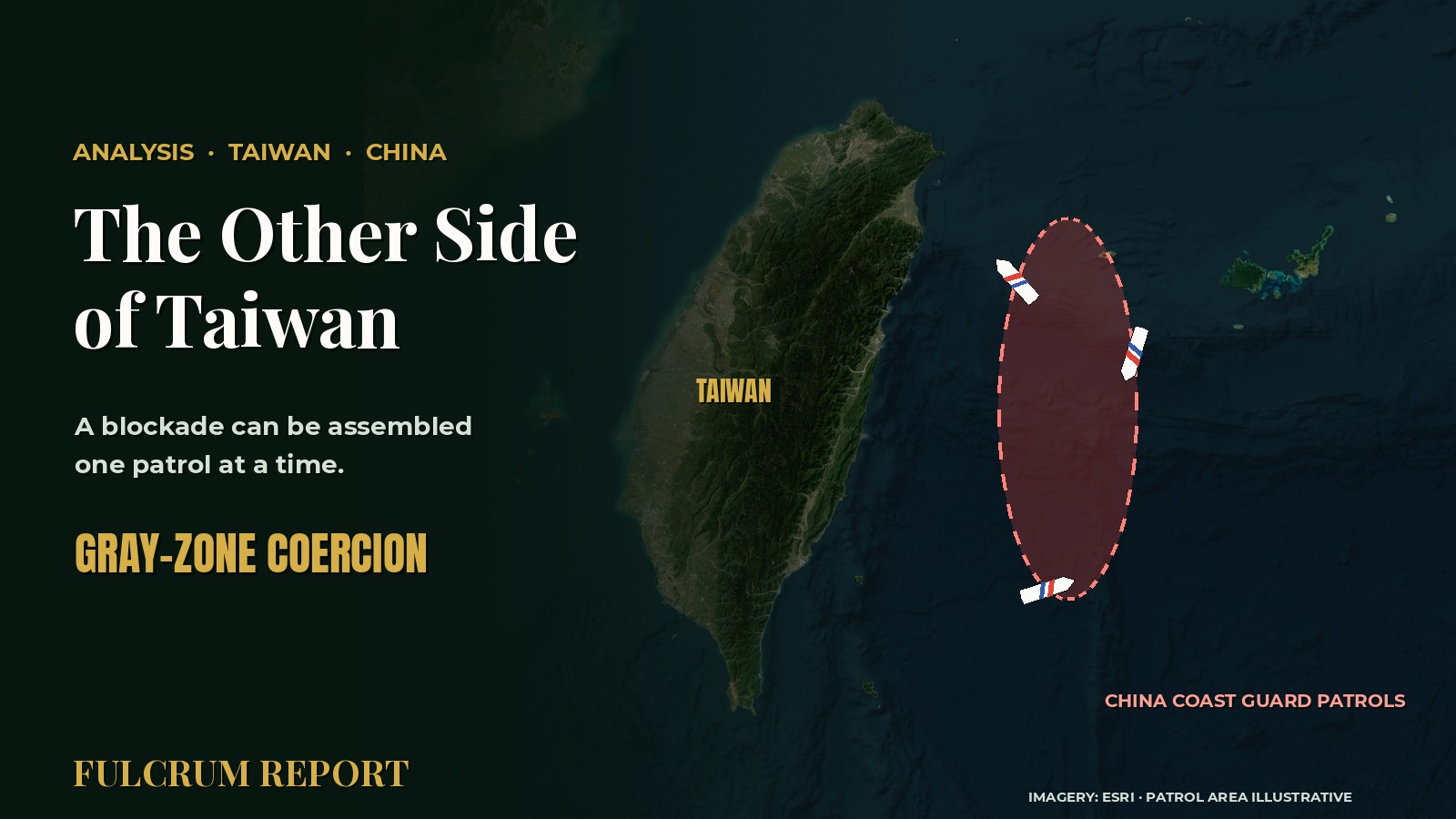
The Other Side of Taiwan: How a Blockade Gets Built Without Being Declared
China's Coast Guard has reportedly set up a regular presence east of Taiwan, framed as law enforcement, while a $14 billion U.S. arms package is pending. A look at gray-zone coercion, salami tactics and escalation control.
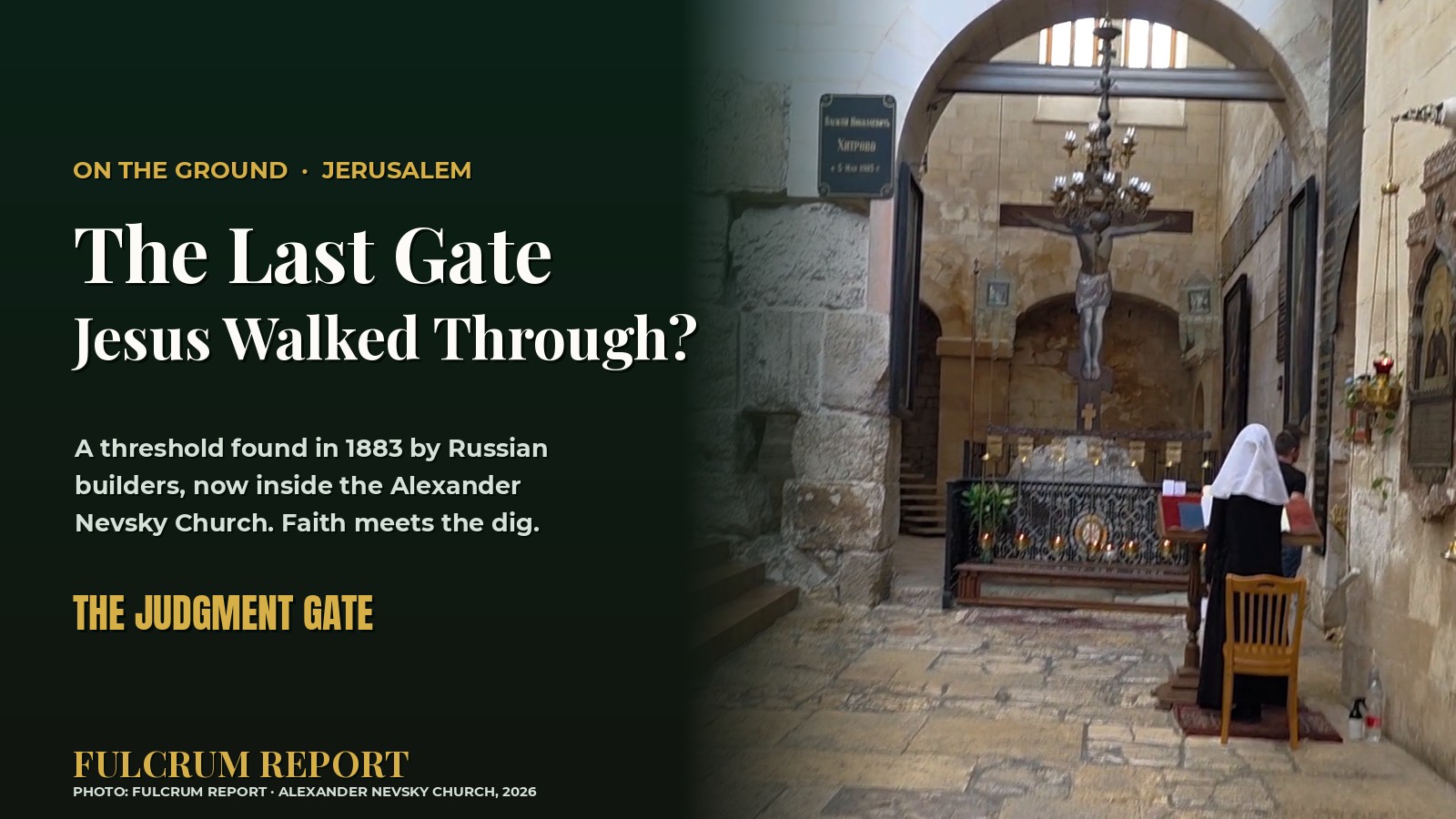
The Last Gate Jesus Walked Through?
The Threshold of the Judgment Gate, the "Eye of the Needle" and Constantine’s lost front door, inside Jerusalem’s Alexander Nevsky Church.