The War on Two Boards: Why the Iran Fight Is Decided in Washington
Robert Putnam’s two-level game explains why an unauthorized war’s limits are set at home — not on the battlefield.
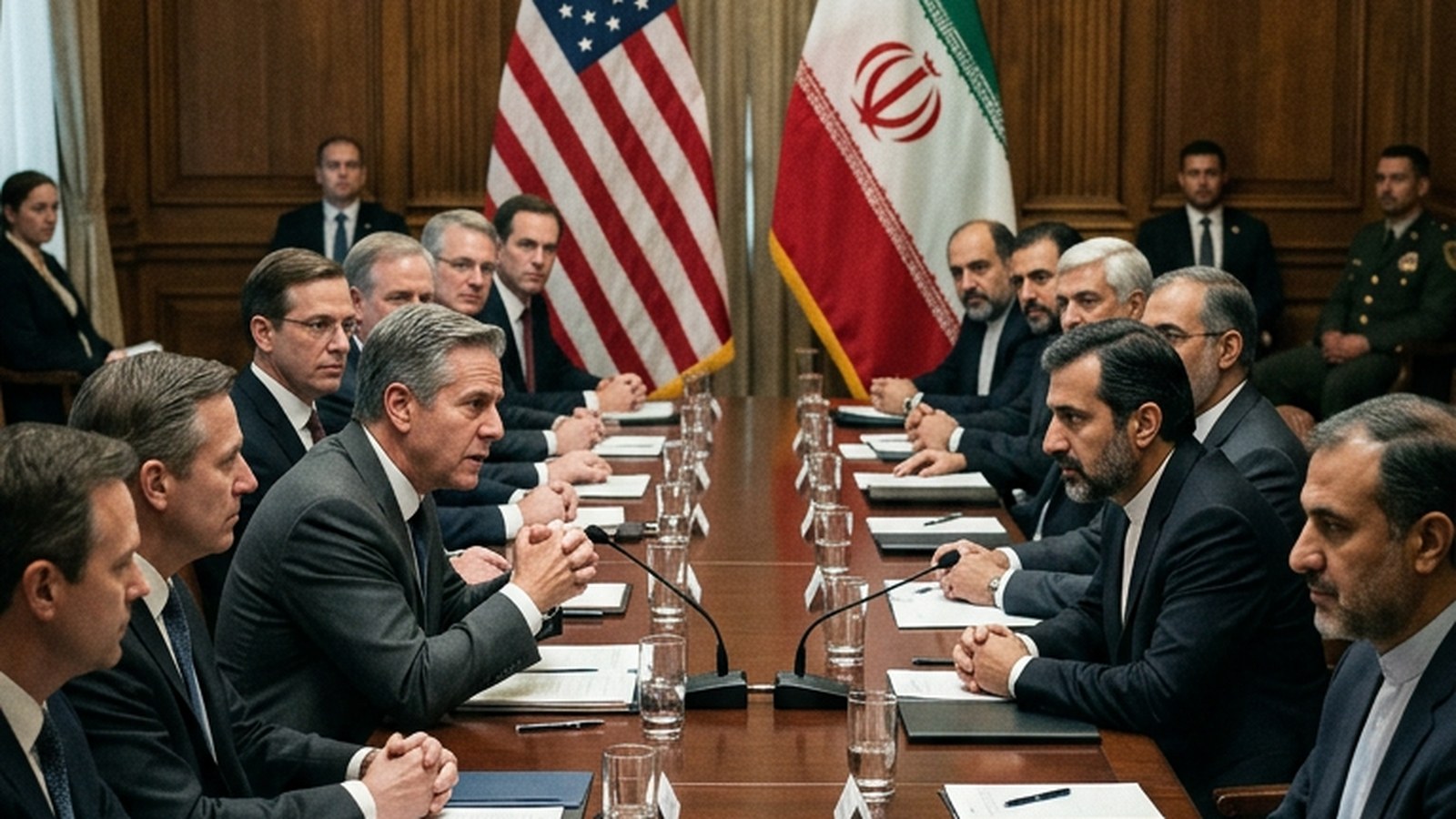
A war can be won or lost in two places at once. More than six months into an American military campaign against Iran that Congress never authorized, the decisive pressure is no longer coming only from the battlefield around Tehran. It is coming from Washington — from voters, from the price of gasoline, and from a constitutional question the country has spent fifty years avoiding.
The framers were deliberate about this. Article I of the Constitution gives Congress — not the president — the power to declare war. Article II makes the president Commander in Chief, able to repel sudden attacks and direct forces already committed. The line between initiating a war and conducting one has always been contested, and modern presidents have stretched it: Kosovo, Libya, and a long list of strikes carried out with no formal declaration at all.
After Vietnam, Congress tried to draw that line more sharply. The War Powers Resolution of 1973, passed over President Nixon’s veto, requires the president to notify Congress within 48 hours of committing forces to hostilities and to withdraw them within 60 days — with a 30-day window to leave — unless Congress authorizes the deployment. In practice, the resolution has been more honored in the breach than the observance. But it remains the legal backdrop against which an open-ended, unauthorized war becomes politically radioactive.
That is where the political scientist Robert D. Putnam becomes essential reading. In a 1988 article in the journal International Organization, Putnam argued that leaders engaged in international negotiation are never playing a single game. They play two simultaneously. At Level I, they bargain with the foreign adversary. At Level II, they must sell whatever they agree to — to their legislature, their party, their voters. He called it a two-level game.
Putnam’s key concept is the win-set: the range of possible deals that could actually be ratified at home. An agreement is only possible where the two sides’ win-sets overlap. Counterintuitively, a smaller domestic win-set can be a source of strength abroad — the negotiator who can credibly say “I could never get that through Congress” gains leverage at the bargaining table. The reverse is also true: a leader whose domestic coalition is fracturing has less room to maneuver, and everyone across the table knows it.
Apply that framework to the current fight and the logic of the war’s rhythm comes into focus. Escalation may strengthen the president’s hand against Iran, projecting resolve and raising the cost of defiance. But the same escalation weakens his coalition at home, because a widening war pushes energy prices higher, and higher energy prices feed inflation that voters feel directly at the pump and the checkout. The unpopularity of an unauthorized war deepens with every point of inflation. That is the squeeze: the move that helps on Board I hurts on Board II.
Seen this way, ceasefires are not only instruments for bargaining with Tehran. They are tools for stabilizing the domestic board — for buying down inflation, cooling political pressure, and preserving the coalition the president needs to keep fighting at all. The April ceasefire fits that pattern; so does the escalation that followed its collapse on July 8th, once the domestic cost of restraint was weighed against the strategic cost of backing down.
The reel version of this story runs about a minute. The deeper point takes a moment longer: the battlefield may be in Iran, but the war’s limits are set in Washington. Understanding that is the difference between watching the headlines and reading the game.

About the author
Fulcrum Report
Independent Middle East analyst holding a PhD in Political Science. Fulcrum Report offers rigorous, framework-driven coverage of politics and geopolitics across the Levant and the wider region — analysis without agenda.
Related reading
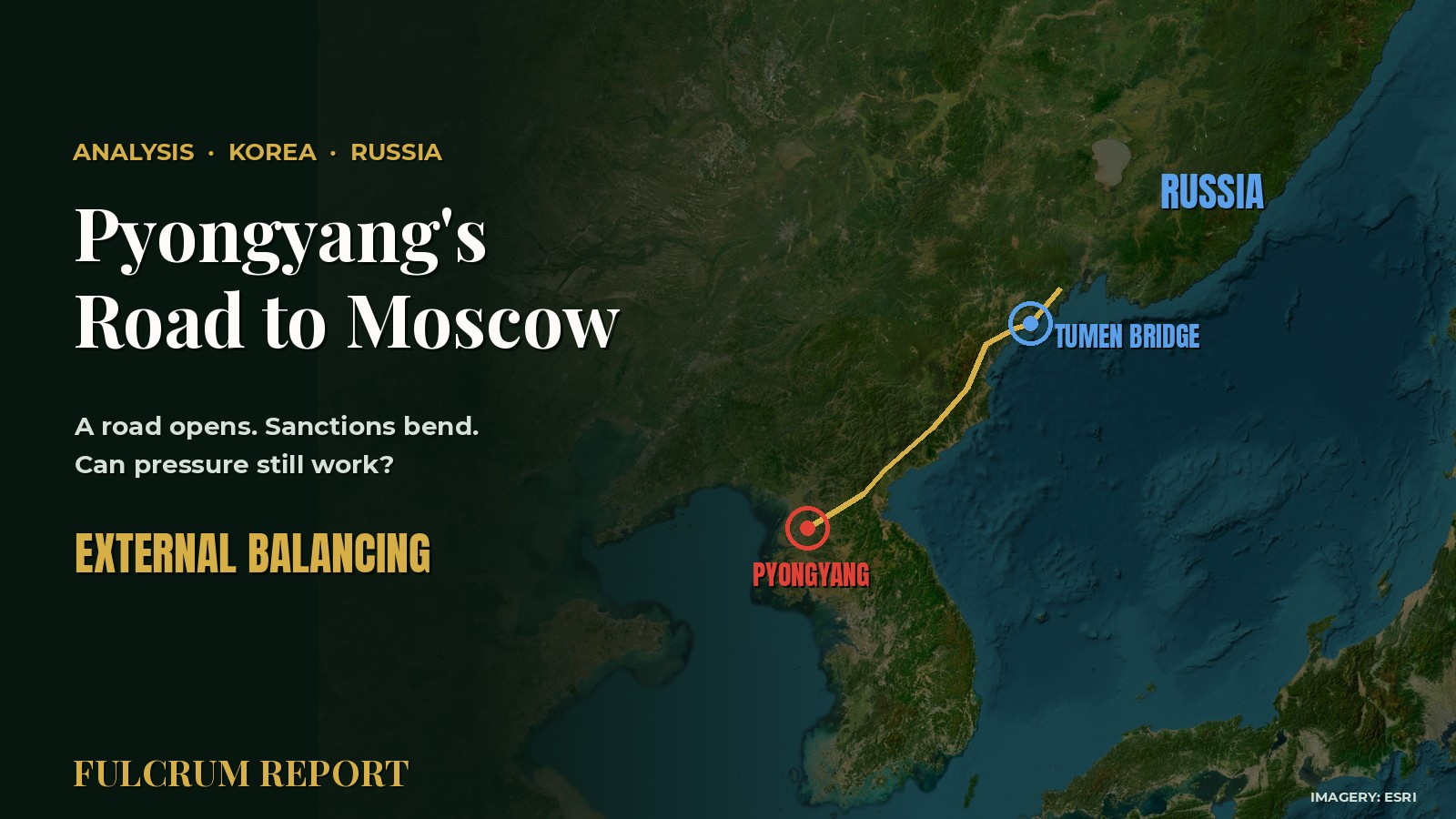
Pyongyang's Road to Moscow: Can Sanctions Still Work?
A second enrichment facility is reportedly going up at Yongbyon, and the Tumen River road bridge to Russia reportedly opened on September 8. When a major power offers a way around sanctions, how much pressure is left? An explainer on external balancing.
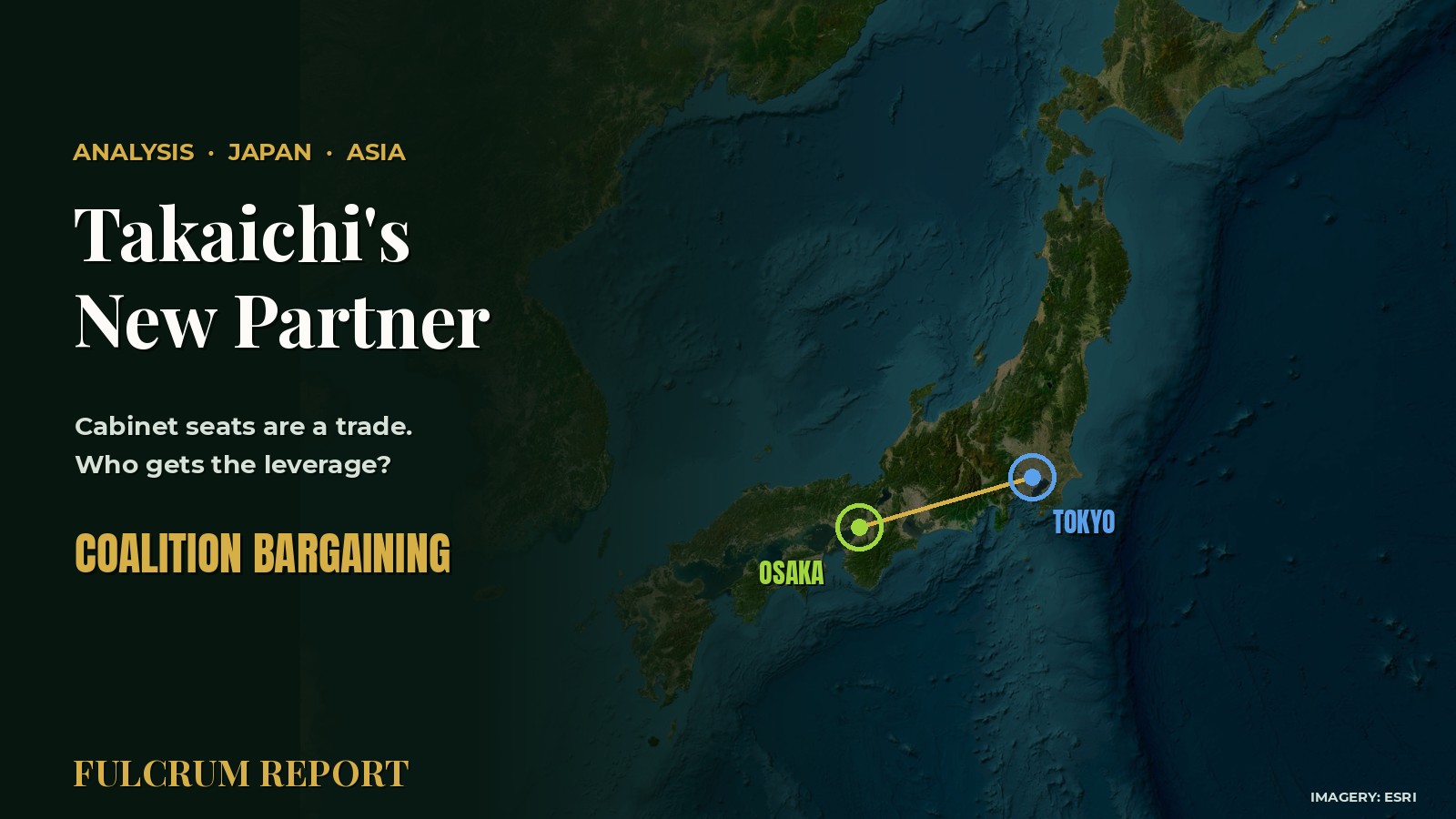
Takaichi's New Partner: Why Cabinet Seats Are a Trade
Sanae Takaichi reportedly reshuffled her cabinet on September 16 and 17, bringing in the Japan Innovation Party (Ishin) for the first time. Her camp holds two-thirds of the lower house but lacks an upper-house majority. A look at coalition bargaining and who gets the leverage.
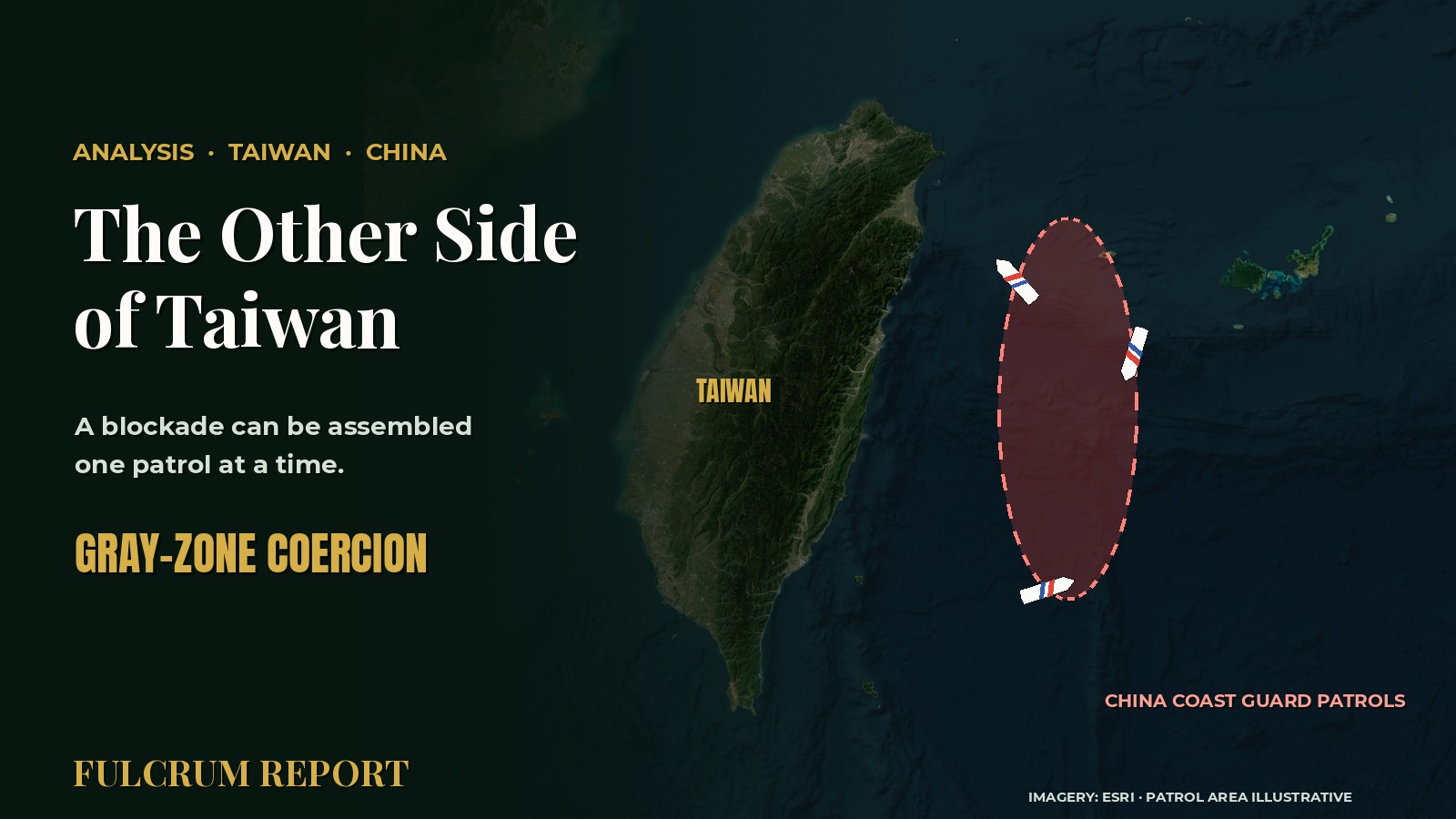
The Other Side of Taiwan: How a Blockade Gets Built Without Being Declared
China's Coast Guard has reportedly set up a regular presence east of Taiwan, framed as law enforcement, while a $14 billion U.S. arms package is pending. A look at gray-zone coercion, salami tactics and escalation control.