Who Decides?
The Supreme Court opened its term with Boulder v. Exxon and Suncor. Climate, guns, immigration and voting are all headed to the same nine judges.
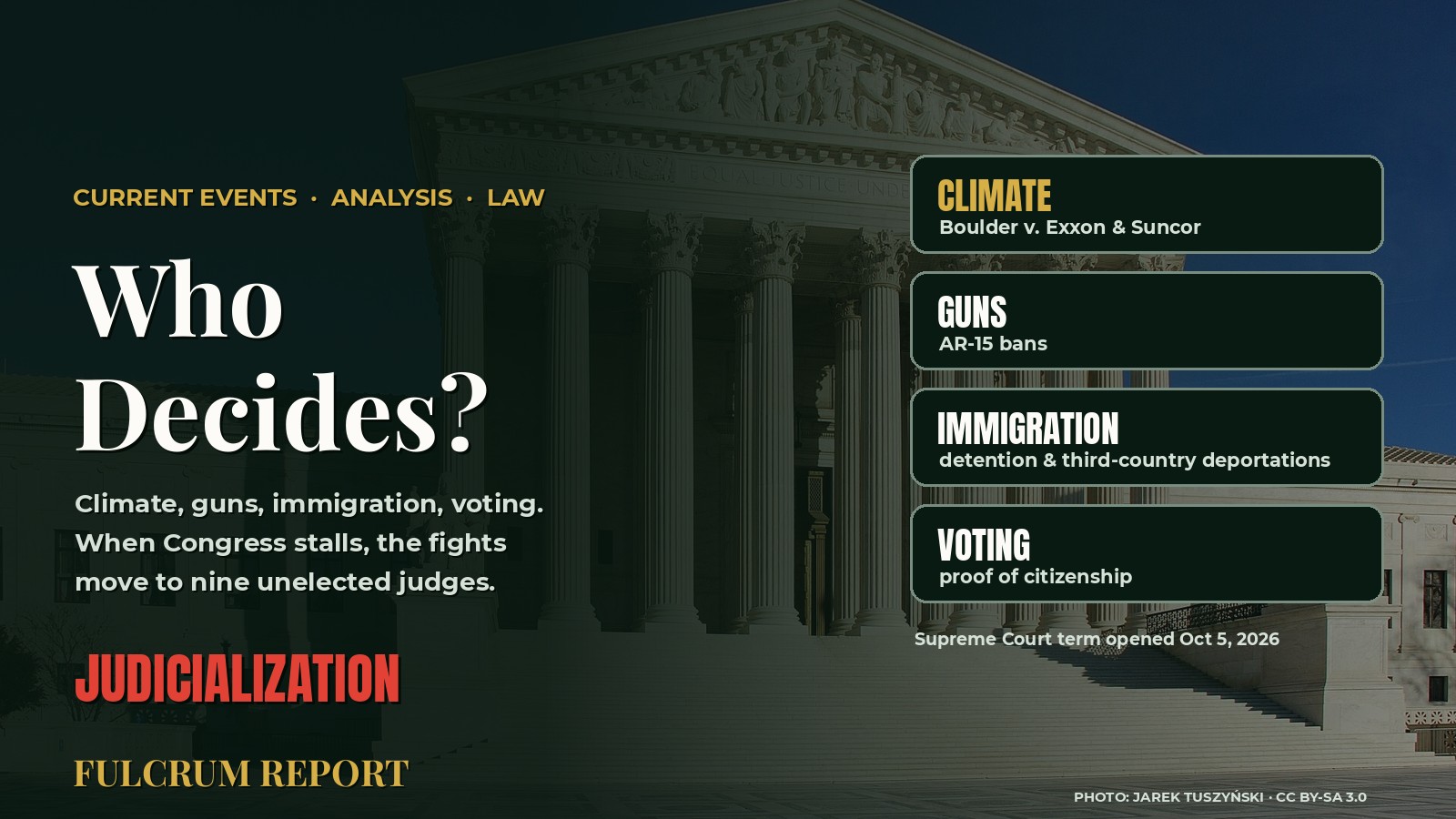
The Supreme Court opened its new term on Monday, October 5, and the first big case is a question worth billions: can oil companies be sued over climate change? It's a big case on its own. But it's also the first of several this term where the real question underneath is who gets to make the rule in the first place.
The case
In 2018, the City of Boulder and Boulder County, Colorado, sued ExxonMobil and Suncor Energy. Their claim is simple to state and hard to prove. They say the companies' fuels made local heat waves and wildfires worse, and that the companies should help pay for the damage. Anyone who has watched Colorado's fire seasons in recent years understands why a local government would want someone to share the bill.
The cost estimate behind the case comes from the Colorado Fiscal Institute, a left-leaning think tank. It puts the cost of climate change to the state at $37 billion over 25 years. That's an estimate from an advocacy-oriented group, not a court finding, and I'd read it that way. It does show how much money is at stake.
The companies' argument
Exxon and Suncor, backed by the Trump administration, aren't asking the Court to rule on the climate science. They argue something narrower that could end up mattering more. Pollution that crosses state and national lines, they say, should be governed by federal law, not by fifty different state courts applying their own rules. In their view, letting Boulder use state law here would let one city effectively regulate global emissions.
That's their argument, and it has real force. A patchwork of state verdicts would be hard to run. Boulder's side answers that Congress hasn't actually given people like them a federal remedy, so closing the state courthouse would leave them with nothing.
Why one city's case matters
If Boulder wins, dozens of similar lawsuits across the country can move forward. They haven't been won yet. They'd simply be allowed to go ahead. If the companies win, most of those cases likely stall. Either way, a ruling here sets the terms for a whole category of litigation.
The rest of the term
Later this term, the Court is also set to consider state bans on AR-15-style rifles, migrant detention and third-country deportations, and proof-of-citizenship requirements for voting. I'm not predicting how any of them come out. What I notice is that the list looks a lot like the list of things Congress has been stuck on for years.
The judicialization of politics
Political scientists have a name for this: the judicialization of politics. Ran Hirschl and others have tracked how, in democracies around the world, big moral and political questions keep moving from legislatures to courts. Partly that's because courts can't refuse to decide a case that is properly in front of them. Legislatures can, and often do.
This is my analysis, not a law of nature, but the pattern fits here. When Congress stalls on climate, guns, immigration and voting, those fights don't go away. Activists, cities, states and companies take them to court. And nine unelected judges, appointed for life, end up settling questions that elected lawmakers won't touch.
People on both sides tend to like this when they win and hate it when they lose. That's worth noticing. Whether you think the Court is the right place for these decisions shouldn't depend on which way a particular case goes.
What I'm watching
First, whether the justices decide the Boulder case on the big federal-versus-state question or find a narrower procedural way out. A narrow ruling would leave the larger fight for later. Second, whether Congress responds to any of these rulings with actual legislation, which would be the clearest sign that the legislature wants the question back. Third, how the Court handles the immigration and voting cases, which land closer to the next election.
The bottom line
This term isn't really about oil, or even about any single case. It's about who decides: Congress, the states, or the Court. Right now, mostly by default, the answer keeps being the Court.
Who do you think should decide?

About the author
Fulcrum Report
Independent Middle East analyst holding a PhD in Political Science. Fulcrum Report offers rigorous, framework-driven coverage of politics and geopolitics across the Levant and the wider region — analysis without agenda.
Related reading
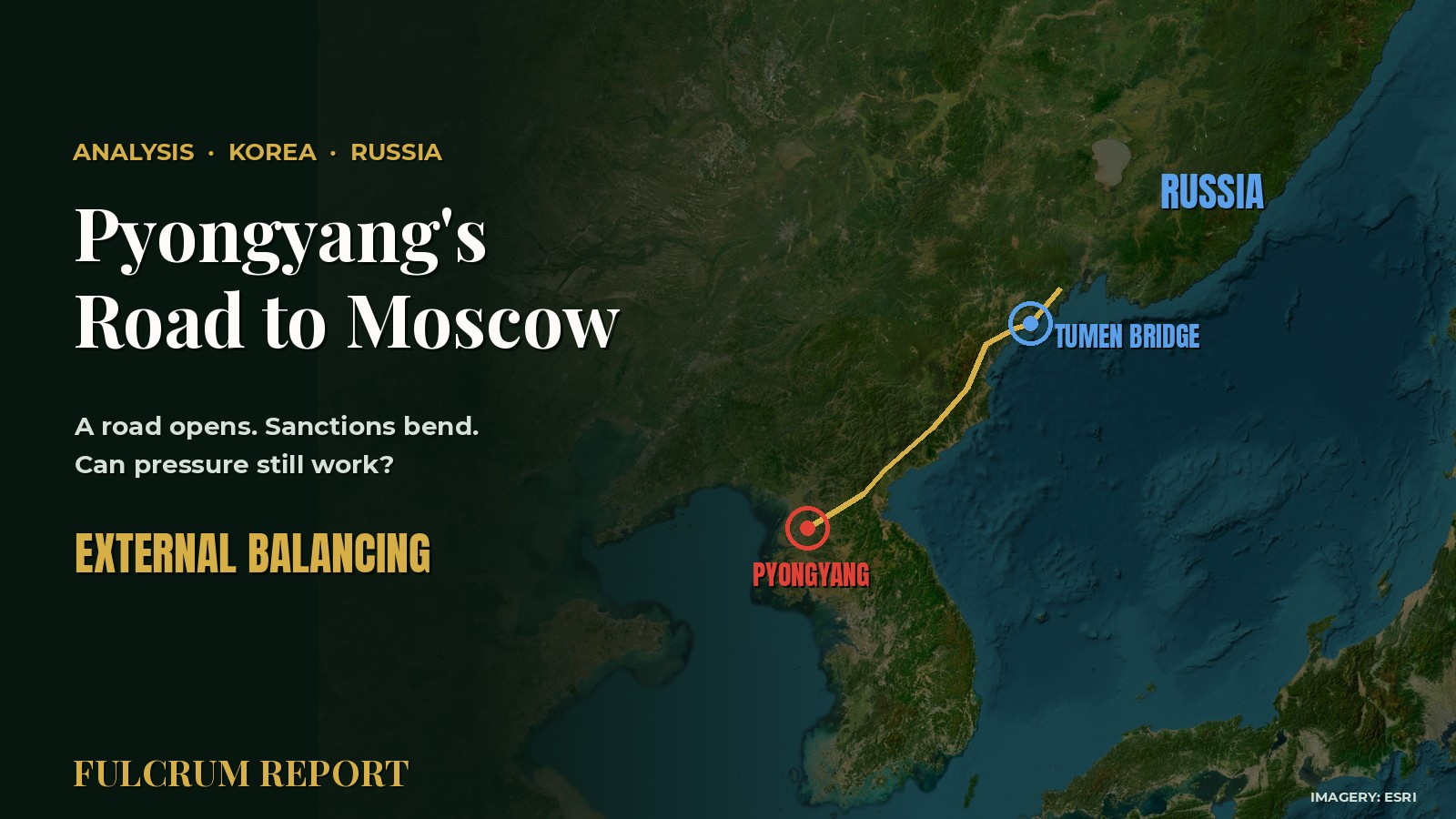
Pyongyang's Road to Moscow: Can Sanctions Still Work?
A second enrichment facility is reportedly going up at Yongbyon, and the Tumen River road bridge to Russia reportedly opened on September 8. When a major power offers a way around sanctions, how much pressure is left? An explainer on external balancing.
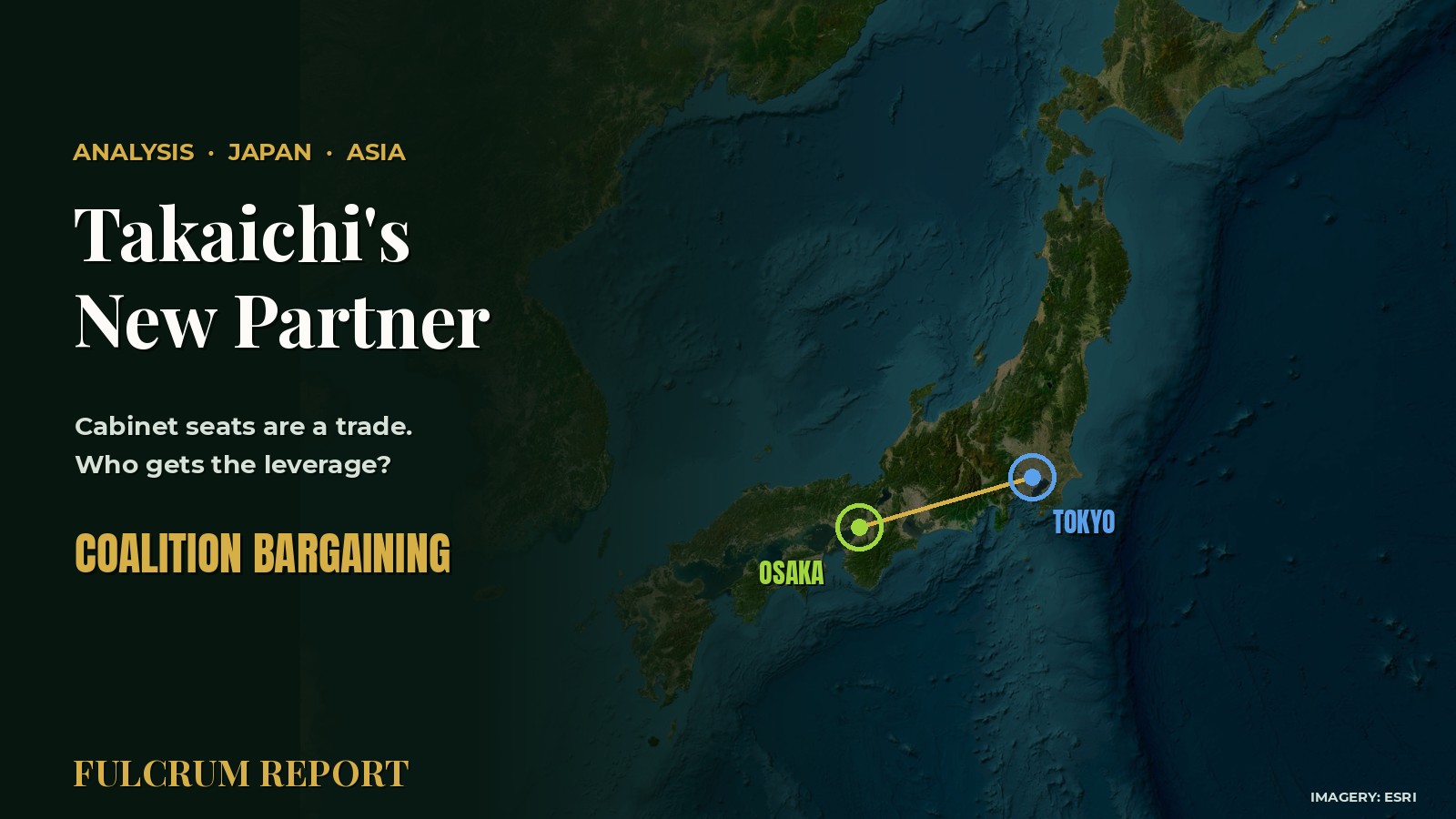
Takaichi's New Partner: Why Cabinet Seats Are a Trade
Sanae Takaichi reportedly reshuffled her cabinet on September 16 and 17, bringing in the Japan Innovation Party (Ishin) for the first time. Her camp holds two-thirds of the lower house but lacks an upper-house majority. A look at coalition bargaining and who gets the leverage.
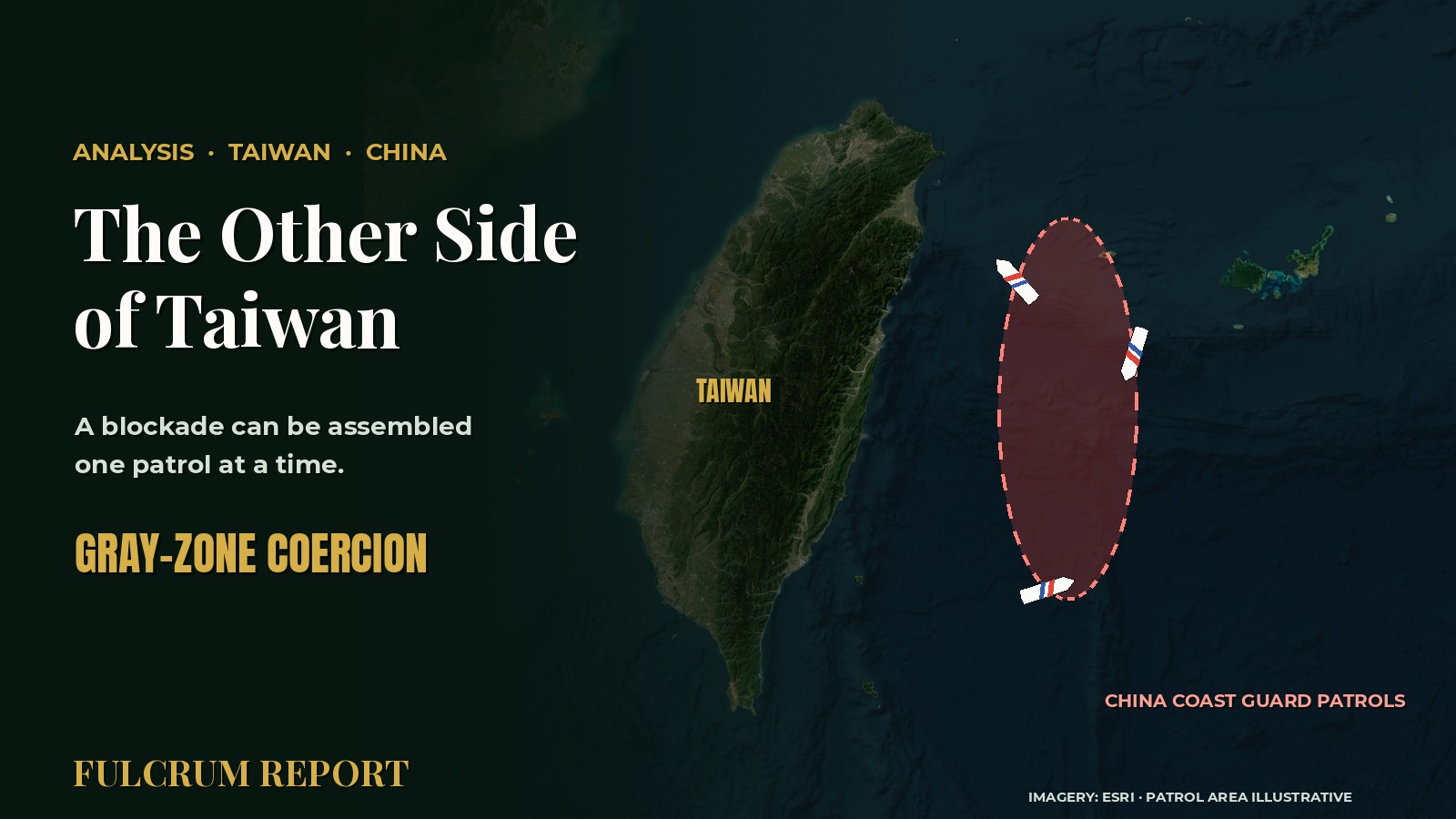
The Other Side of Taiwan: How a Blockade Gets Built Without Being Declared
China's Coast Guard has reportedly set up a regular presence east of Taiwan, framed as law enforcement, while a $14 billion U.S. arms package is pending. A look at gray-zone coercion, salami tactics and escalation control.