Who Runs Gaza Now?
Hamas's civil administration resigned on July 6 and handed its powers to a technocratic committee. The offices changed hands. The guns did not.
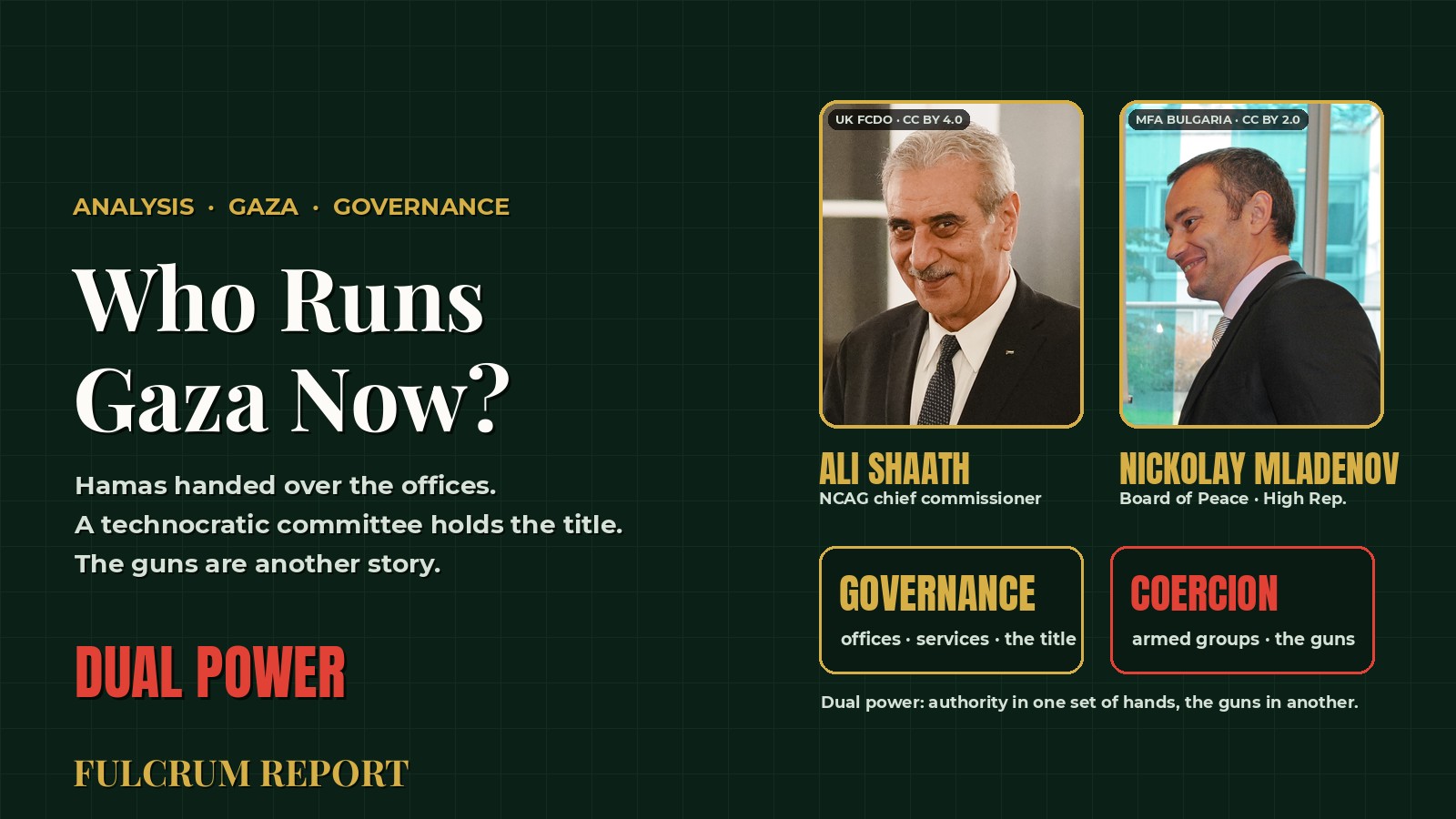
On July 6, Hamas's civil administration in Gaza resigned. The body it had been running, the Government Emergency Committee, was dissolved, and its head, Mohammed al-Farra, stepped down. The group's media office said its powers were going to a new technocratic committee. On paper, that means Hamas no longer runs Gaza's government.
So who does? The short answer is a committee most people outside the region haven't heard of. The longer answer is the one I keep coming back to, because on paper and on the ground aren't the same thing.
The committee on paper
The new body is the National Committee for the Administration of Gaza, usually shortened to NCAG. It was formed in January 2026 under UN Security Council Resolution 2803 and the US-backed 20-point plan, and it was launched in Cairo in mid-January. It's meant to be technocratic, which means professionals rather than party figures, and its job is civilian: health, education, water, policing, the everyday business of running a place.
It's led by Ali Shaath, a Gaza-born civil engineer and former Palestinian Authority deputy planning minister, who was named chief commissioner in January. He's been clear about what he thinks the committee needs to work, which is a single governing authority with one unified security apparatus. Keep that condition in mind.
One detail says a lot about where things stand. By most reports, Israel has not let the committee's members into Gaza, so it has worked largely from Cairo. That makes it a government for Gaza that mostly sits outside Gaza.
Who it answers to
The NCAG reports to the Board of Peace, an international body chaired by President Trump whose charter was signed at Davos on January 22. The board's High Representative for Gaza is Nickolay Mladenov, the Bulgarian diplomat who spent years as the UN's Middle East peace envoy. If you want to know who's supervising the handover day to day, he's the name to watch.
The second phase is stuck
Here's the problem. The plan was built in phases, and the second phase is where the hard parts are: disarming Hamas, Israel pulling back, and the reconstruction money that's tied to both. That phase has stalled on disarmament. The roadmap's principle is "one authority, one law, one weapon," with weapons going to the Palestinian committee, not to Israel. Hamas has not committed to full disarmament.
The reactions to the July 6 announcement showed the gap. Israel's foreign minister, Gideon Saar, dismissed it as spin. The Board of Peace's message was, in effect, that it wants actions, not promises. Both responses point at the same missing piece.
Authority without capacity
This is the part I think matters most, and I'd label it as analysis. There's a difference between authority and capacity. Authority is the title, the offices, the right to sign the papers. Capacity is the ability to make things happen and to stop others from making things happen. The new administration holds the title. In a place like Gaza after this war, real power belongs to whoever holds the guns.
Political scientists have a name for this: dual power. The term goes back to Russia in 1917, when a provisional government held formal authority while the Petrograd Soviet held the loyalty of soldiers and workers. Later scholars, Charles Tilly among them, wrote about the same pattern under different names. When governance and coercion sit in different hands, the formal government tends to be the weaker partner. The armed side usually wins out, sometimes openly and sometimes by setting quiet limits on what the official government can do.
That's a general pattern, not a prediction, and there are cases where it played out differently. But it explains why I don't read July 6 as the end of anything. A committee that can't enter Gaza, overseeing police it hasn't fully built, alongside an armed movement that hasn't disarmed, is a textbook case of the setup.
What I'm watching
First, whether NCAG members are allowed into Gaza and start working there rather than from Cairo. A government has to be present to govern. Second, any concrete step on weapons, even a partial or phased one, because that's what unlocks Israeli withdrawal and reconstruction money. Third, who actually controls policing on the street, because that's usually where dual power shows first.
The bottom line
Handing over the offices was the easy part. Handing over the weapons is the whole game. Until that happens, Gaza has two centers of power, one with the title and one with the guns.
What do you think phase two needs?

About the author
Fulcrum Report
Independent Middle East analyst holding a PhD in Political Science. Fulcrum Report offers rigorous, framework-driven coverage of politics and geopolitics across the Levant and the wider region — analysis without agenda.
Related reading
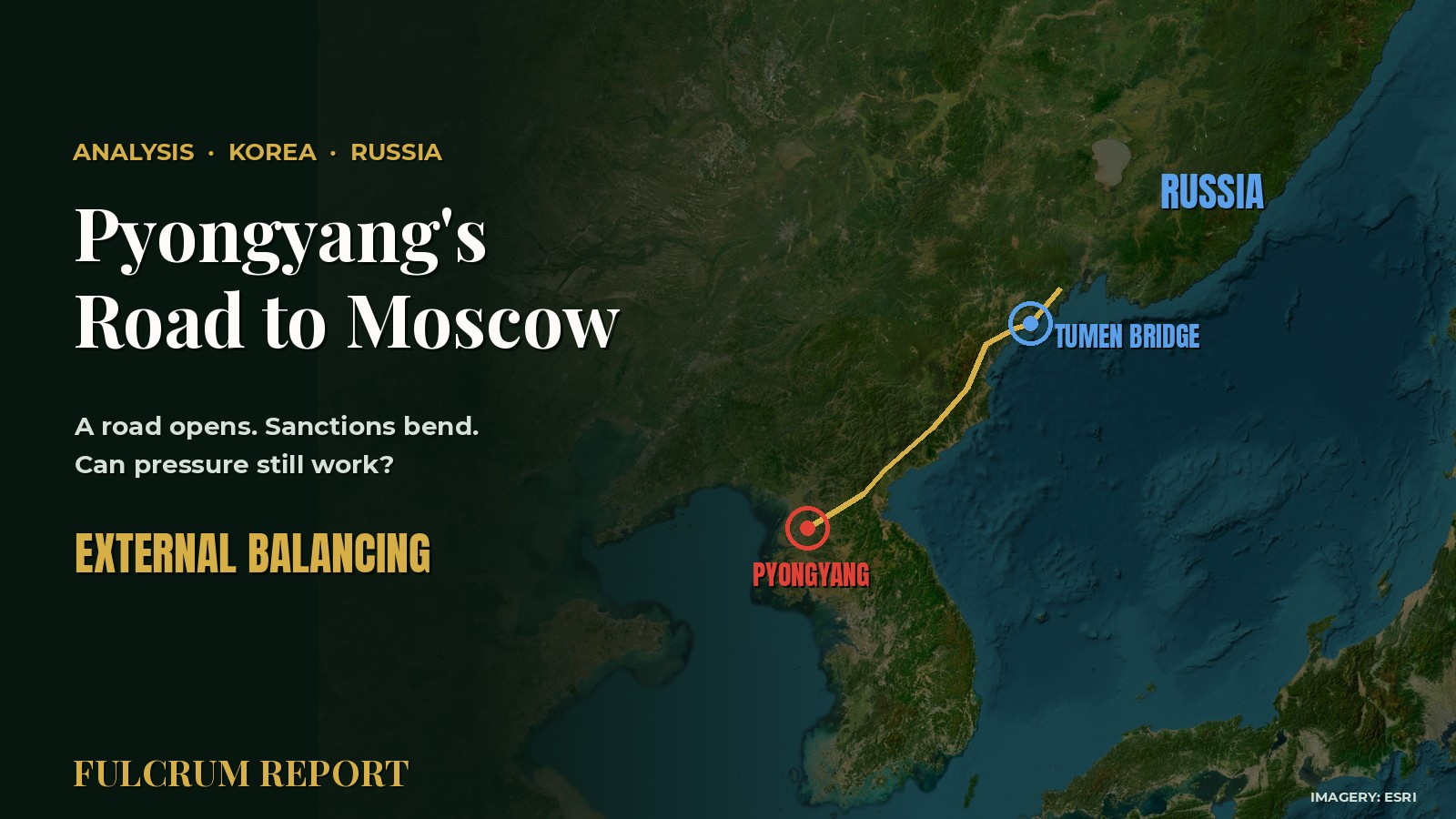
Pyongyang's Road to Moscow: Can Sanctions Still Work?
A second enrichment facility is reportedly going up at Yongbyon, and the Tumen River road bridge to Russia reportedly opened on September 8. When a major power offers a way around sanctions, how much pressure is left? An explainer on external balancing.
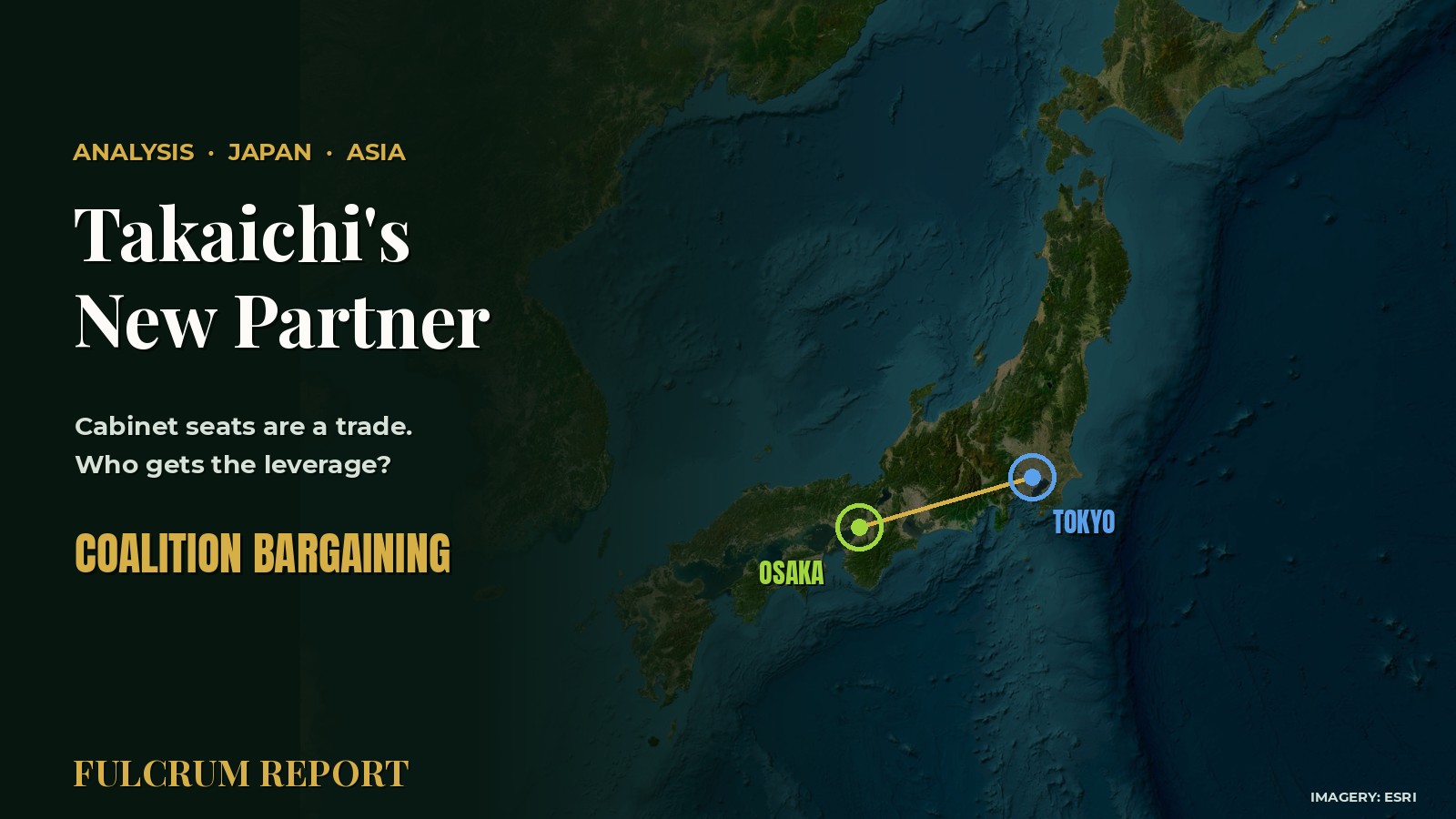
Takaichi's New Partner: Why Cabinet Seats Are a Trade
Sanae Takaichi reportedly reshuffled her cabinet on September 16 and 17, bringing in the Japan Innovation Party (Ishin) for the first time. Her camp holds two-thirds of the lower house but lacks an upper-house majority. A look at coalition bargaining and who gets the leverage.
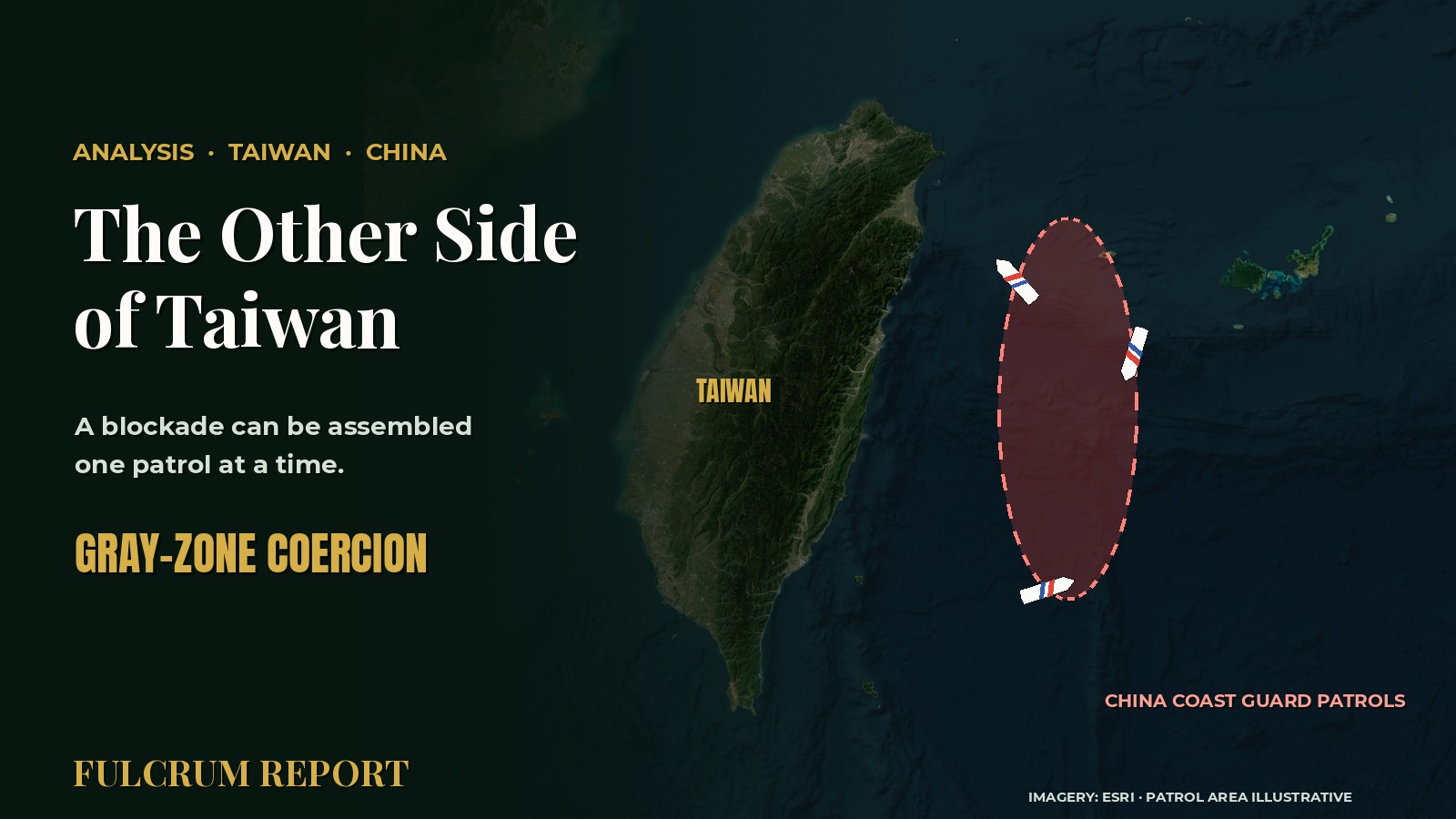
The Other Side of Taiwan: How a Blockade Gets Built Without Being Declared
China's Coast Guard has reportedly set up a regular presence east of Taiwan, framed as law enforcement, while a $14 billion U.S. arms package is pending. A look at gray-zone coercion, salami tactics and escalation control.